The FAA’s cabin-safety guidance tells passengers and crews to keep lithium batteries where a *thermal runaway* would be visible and accessible. A power bank in your lap or seat-back pocket does that. The same power bank buried in an overhead bin does the opposite.
Nearly 60 percent of aircraft thermal-runaway incidents already happen near the passenger seat — the most survivable setting, because someone notices heat or smoke in moments and crew can reach the device to cool it with water.
Most travelers treat the overhead bin as the orderly place for whatever doesn’t fit at the seat. The crew asks for bags up top, so up top they go. But for one item — a lithium-ion power bank — the *Federal Aviation Administration* (FAA) points the other way.
Keeping a power bank in your lap or seat-back pocket isn’t just a tidier habit. It’s the difference between a thermal runaway a flight attendant can reach and cool with water, and one buried behind three other bags where smoke is the first warning anyone gets.
The FAA won’t put an exact number of seconds on that difference. What it does do, in safety guidance to airlines, is tell them to keep lithium batteries visible and accessible — and to count overhead-bin stowage as a hazard in their formal risk assessments.
Where battery fires actually happen on a plane
UL TRIP database summaries from UL Standards & Engagement put nearly 60 percent of thermal runaway incidents on passenger aircraft in or around the passenger seat.
That number unsettles people, but it shouldn’t. The seat area is where these batteries live — and it’s also where an alert passenger can catch one early.
The 60 percent includes more than a lap. About a third of the incidents involved a device carried or held but not in use; roughly a quarter sat in a bag, backpack, or purse at the seat. Smaller shares involved devices in active use or charging from the aircraft’s outlets.
The most common culprit is a vape. E-cigarettes and their spare batteries are the largest single device category in some reviews, at roughly 32 percent of passenger thermal incidents, while laptops, phones, and standalone cells account for the rest.
The absolute count stays small — about 84 to 89 verified lithium battery incidents in one recent year, or more than one a week across passenger and cargo operations. Each one can still mean smoke, a diversion, or injuries.
Flight deals
most people never see
Our AI monitors 150+ airlines for pricing anomalies that traditional search engines miss. Air Traveler Club members save $650 per trip per person on average: see how it works.
Each deal saves 40–80% vs. regular fares:

What an overhead bin costs in detection and access
The FAA’s *SAFO 25002* guidance warns that a battery in an overhead bin may be hard to see, hard to reach, and unlikely to be watched by passengers or crew.
That is not a passive observation. The same document tells operators to treat stowage in areas that are hard to see or reach — overhead bins included — as a hazard to manage through safety risk assessment. It also directs airlines to instruct passengers and crew to carry batteries where a thermal runaway would be visible and reachable.
A thermal runaway in a lap is a moment. A thermal runaway in an overhead bin is a search.
One industry-reviewed case shows what delayed detection can cost: on a South Korean passenger flight, a suspected power bank in an overhead bin was crushed, entered thermal runaway while the plane was still on the ground, and flames moved through the cabin. All 176 people escaped, but the aircraft was a total write-off. Crushing from a bin lid is exactly the kind of damage that can start a runaway without anyone noticing.
The FAA’s guidance here is qualitative: hidden stowage delays detection, and delayed detection shrinks the response window.
From FAA guidance to airline boarding instructions
The baseline rule is older than most of the overhead-bin debate: spare lithium batteries, power banks included, are banned from checked baggage and must ride in the passenger cabin. The IATA spells out the same carry-on requirement in its passenger-facing documents.
Where inside the cabin, though, is where carriers have started to write sharper rules. *Singapore Airlines* is the most explicit. It requires power banks and spare batteries in cabin baggage, tells passengers to keep them in a seat-back pocket or under the seat in front, and says they should not go into the overhead compartments.
*Qantas* takes a softer line. It caps passengers at two power banks, each no more than 160 watt-hours, and says spare batteries and personal devices should be within reach — seat pocket or under-seat space first, a nearby overhead locker only as a fallback.
At the regulator level, International Air Transport Association-linked guidance and some national rules cap power banks at two per passenger and 100 watt-hours each, but stop short of dictating seat pocket versus overhead bin. The Civil Aviation Authority of Singapore still leaves that detail to airline policy. Policies for several other major carriers couldn’t be confirmed to that seat-pocket-versus-overhead-bin level of detail from public official pages, so they’re left out rather than guessed at.
| Airline | Checked baggage rule for power banks | Onboard storage location guidance |
|---|---|---|
| Singapore Airlines | Power banks and spare batteries are not permitted in checked baggage; they must be carried in cabin baggage. | Must be kept in easily accessible locations such as the seat‑back pocket or under the seat in front; power banks should not be stored in the cabin’s overhead compartments. |
| Qantas | Up to two power banks (each not exceeding 160 Wh) may be carried in carry‑on baggage only; not allowed in checked baggage. | Power banks, spare batteries, and personal electronic devices should be within reach during the flight, such as in the seat pocket or under the seat in front; if that is not possible, they may be placed in a nearby overhead locker. |
| Singapore Airlines (agent/FAQ wording) | Confirms power banks must be carried in cabin baggage on all SIA flights and are not permitted in checked baggage. | States that spare batteries and power banks should not be placed in the overhead compartment, but in locations such as cabin baggage under the seat in front or the seat‑back pocket. |
| Civil Aviation Authority of Singapore (regulator baseline) | Allows a maximum of two power banks per person on board flights, each not more than 100 Wh, and requires them to be carried, not checked. | Advises that power banks must not be charged on board and must be individually protected to prevent short circuits; detailed seat‑pocket versus overhead‑bin placement is not specified. |
Why Halon can’t save a battery buried overhead
The Federal Aviation Administration‘s Technical Center tested what different suppression agents actually do to a lithium cell fire, and the result is why location beats fire-extinguisher choice every time.
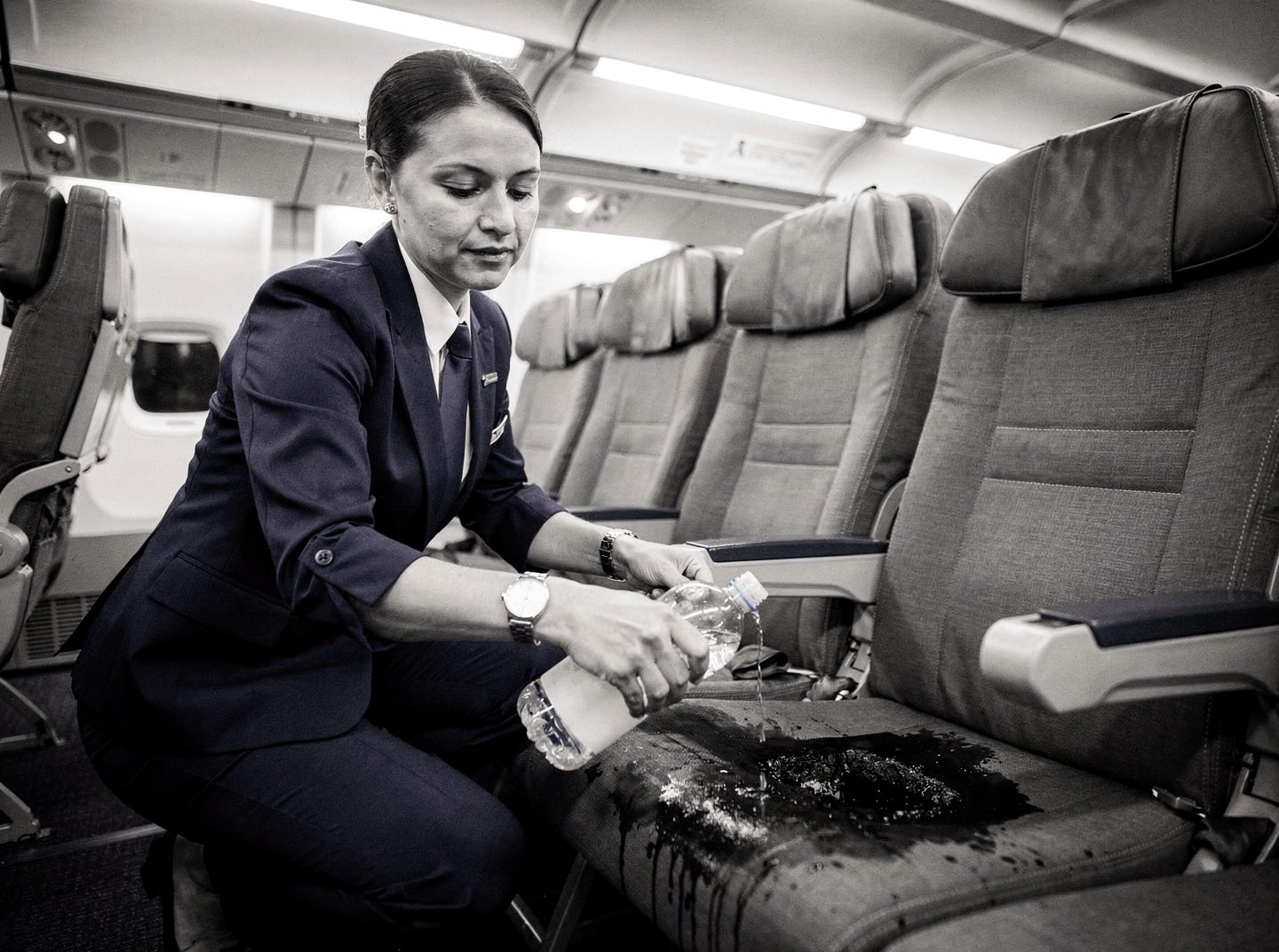
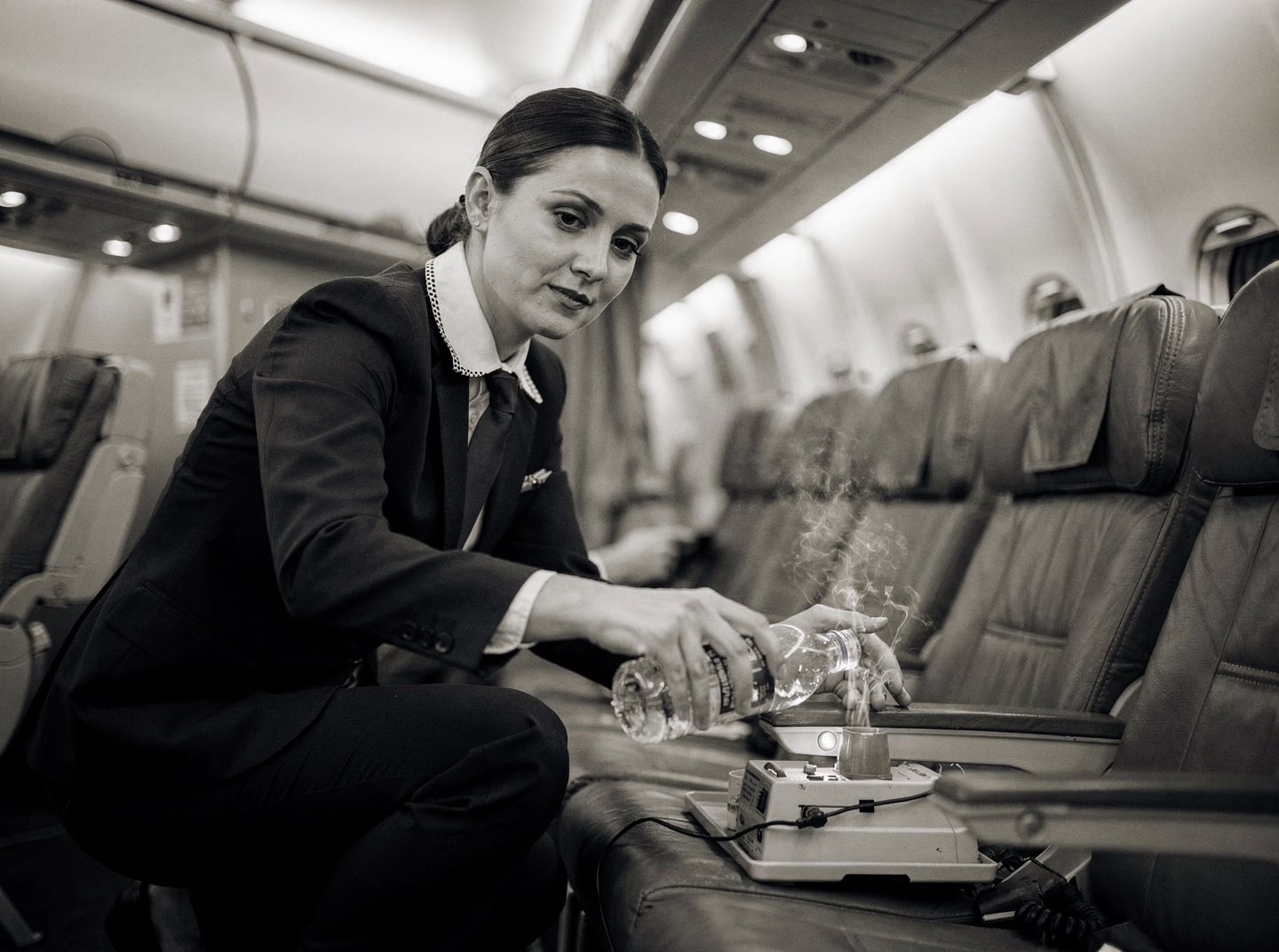
Gaseous agents like *Halon* knocked down the electrolyte flames, the tests found, but did nothing to stop thermal runaway from jumping cell to cell. Water-based agents did both: they extinguished the fire and stopped the propagation. Plain water worked.
That is the whole argument for early access. In a lap, a flight attendant can hit visible flames with a Halon unit and then dump water on the device before the reaction spreads. In an overhead bin, the Halon buys a few moments of dampened flame while the underlying runaway keeps building — and the water can’t arrive until crew unload half the bin to find the right bag.
Full-scale testing gives a sense of that clock. In one lithium-metal test, smoke reached the flight deck in under four minutes from the first observable fire, and battery-fire temperatures hit around 2,250°F at 12 minutes before termination with water — the water has to be in place early.
What this means for your next flight
Keep the power bank where you can see it and reach it: a seat-back pocket, a personal item under the seat in front, or on your person. The overhead bin is not a neutral spot for a lithium-ion cell.
If a crew member asks you to move a power bank out of the bin, that is not airline quirks — it’s the FAA’s risk reasoning applied at the cabin door. The instruction varies by carrier: Singapore Airlines now forbids overhead stowage outright, Qantas treats the bin as a last resort, and other airlines may not have written anything down yet.
One honest caveat: the FAA’s reasoning assumes an alert passenger and an awake crew. If you plan to sleep the whole flight, under the seat in front is still safer than overhead. A crew member can see and reach that spot without rousing you.
A containment bag is a useful extra where airlines stock one, but the FAA doesn’t currently require those products on aircraft. Location and quick water remain the working tools.

Questions? Answers.
Is it against the rules to put a power bank in the overhead bin?
No FAA regulation bans overhead-bin stowage outright, but carriers can. Singapore Airlines now forbids it, and Qantas calls the bin a last resort. Keeping the device visible and reachable is what the FAA asks for.
Why can’t Halon put out a lithium battery fire?
Halon suppresses visible flames but doesn’t stop the chemical runaway spreading between cells. Flight crews must follow up with water or another water-based liquid to cool the battery and halt propagation.
Can I put a power bank in checked baggage?
No. Spare lithium batteries, power banks, and portable rechargers are prohibited in checked baggage under FAA rules and must travel in the passenger cabin.
What should I do if a power bank starts smoking on board?
Alert a flight attendant immediately and don’t try to move a burning device yourself. Crew are trained to knock down flames with Halon and then cool the battery with water.