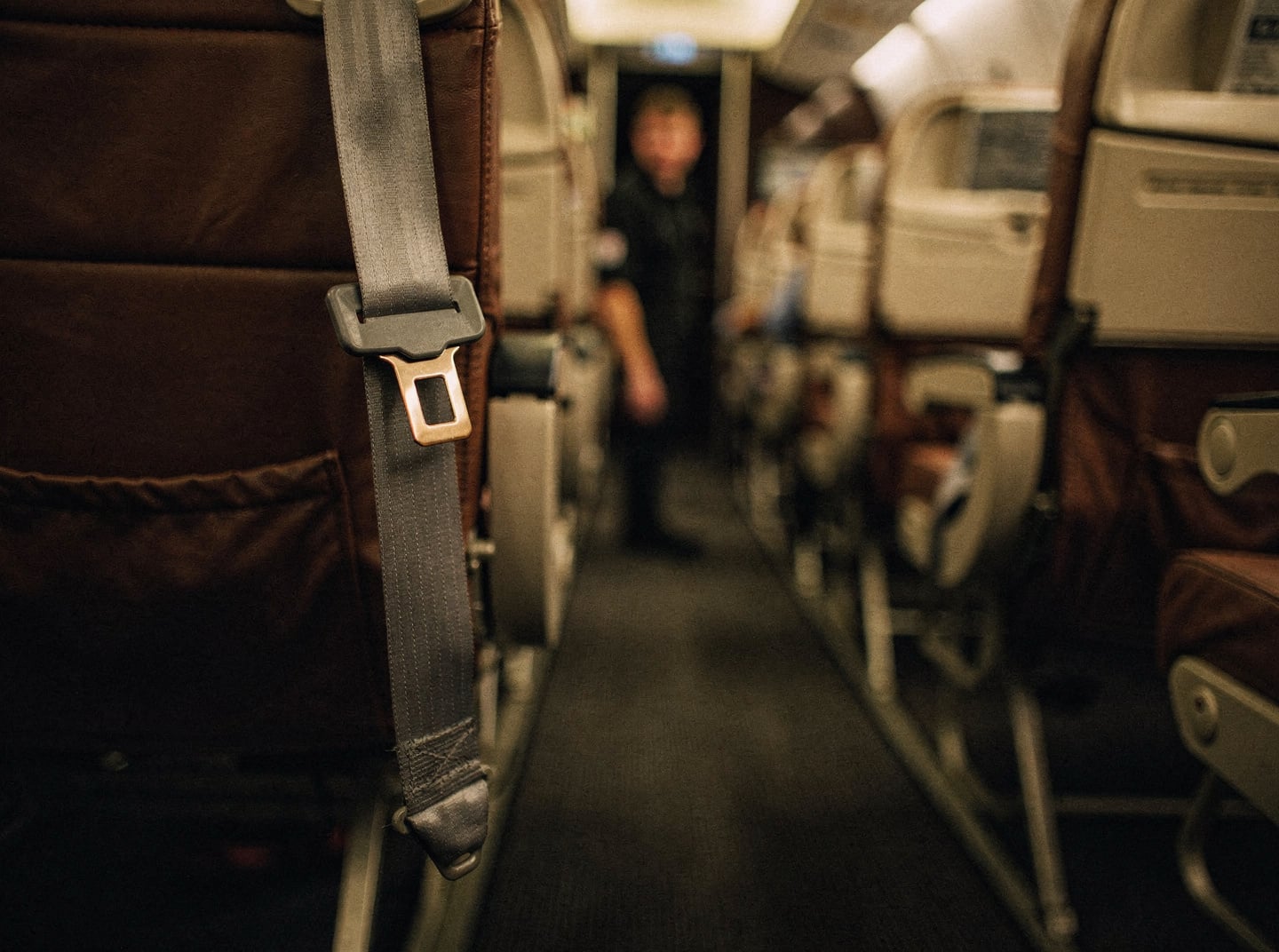
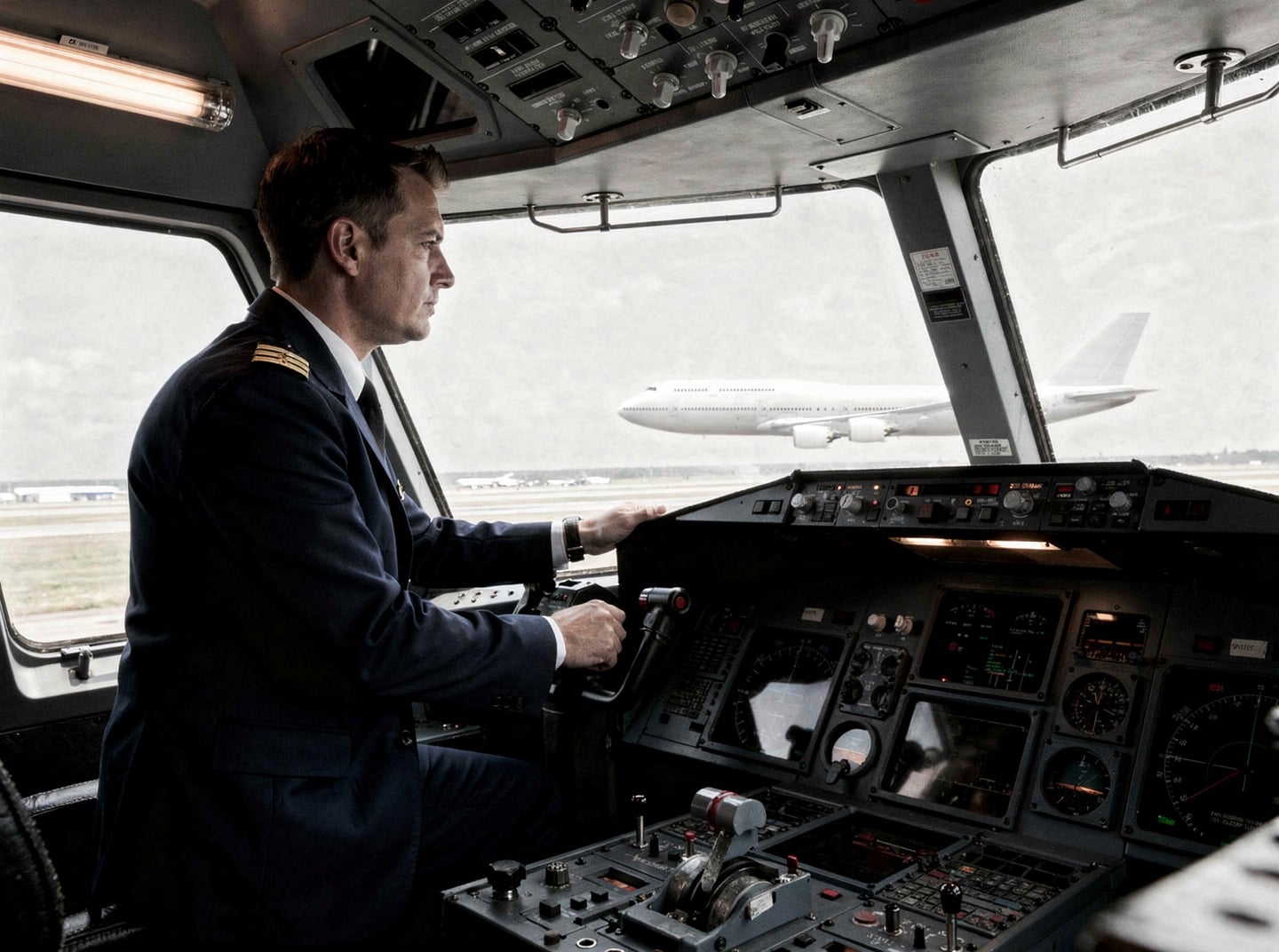
The Tokyo Convention gives an aircraft commander legal authority to restrain a disruptive passenger from the moment all external doors are closed after boarding — not from the moment the aircraft takes off. That means the power is already active during a gate hold, a long taxi queue, or a mechanical delay with everyone still seated.
The authority stays in force until a door opens again for disembarkation, or, after a forced landing, until local authorities formally take responsibility for the aircraft and everyone on board.
Picture a passenger three rows back, already agitated before the safety demonstration even starts. The aircraft hasn’t pushed back. It hasn’t taxied an inch.
Yet the crew’s legal footing to intervene is already exactly what it would be at cruising altitude over the Pacific.
That’s the part of the Tokyo Convention — formally the Convention on Offences and Certain Other Acts Committed on Board Aircraft, 1963 — that gets skipped over in most explainers. Coverage of the treaty tends to dwell on how it closed old jurisdictional gaps over international waters.
Less attention goes to a much more immediate operational fact: the commander’s specific power to restrain someone doesn’t wait for the takeoff roll. It switches on when the last door clicks shut.
For a traveler boarding a long-haul flight through a Western hub en route to Asia-Pacific, that distinction isn’t academic.
It’s the reason a flight attendant can involve the captain over a seatbelt argument during a 40-minute ground hold, and the reason that decision carries the same legal weight it would carry six hours into the flight.
Why the doors-closed moment matters more than takeoff
The Tokyo Convention actually contains two different clocks, and confusing them is easy. One governs the treaty’s general jurisdictional reach — offenses committed “in flight” in the broad sense, running from the moment power is applied for takeoff until the landing run ends. The other, narrower and more consequential for day-to-day operations, governs the commander’s specific restraint powers under Chapter III.
Article 5(2) sets that second clock: the commander’s authority runs from the moment all external doors are closed after embarkation, according to the treaty text maintained by the United Nations Office on Drugs and Crime, until any external door opens again for disembarkation.
Taxiing, a de-icing queue, a ground stop for a paperwork delay — all of it sits inside that window. Takeoff has nothing to do with when the power starts.
The gap between the two definitions used to be a genuine inconsistency in the treaty. The Montréal Protocol 2014 cleaned it up. It rewrote Article 1(3)(a) so the general “in flight” definition now matches the commander’s window exactly — doors closed to doors open, with forced-landing coverage continuing until competent authorities take over responsibility for the aircraft and the people aboard.
What Chapter III actually authorizes once the doors shut
Article 6 is the operative grant: the commander may take reasonable measures, including restraint, when it’s necessary to protect the aircraft or people on it, to maintain good order and discipline, or to allow a person to be delivered to authorities or disembarked. Article 7 then boxes in how long restraint can continue past landing — generally only if a non-contracting state refuses disembarkation, if a forced landing leaves no competent authority available, or if the restrained person agrees to keep flying under restraint to reach a place where they can be handed over.
Article 10 backs all of it with immunity: the commander, crew, passengers who assist, in-flight security officers, and the operator are shielded from liability for actions taken in line with the Convention.
Article 11 obliges contracting states to help restore control to the lawful commander if someone unlawfully seizes the aircraft or otherwise interferes.
None of this is confined to cruise altitude. It starts at the doors.
Flight deals
most people never see
Our AI monitors 150+ airlines for pricing anomalies that traditional search engines miss. Air Traveler Club members save $650 per trip per person on average: see how it works.
Each deal saves 40–80% vs. regular fares:

Two grounded, taxi-phase scenarios — and why no court case settles them
No publicly documented court judgment has turned on the doors-closed trigger in an airline–passenger dispute — that’s a real gap in the record, not a reason to assume the rule is untested in practice. So consider two situations built directly from the treaty text rather than any reported case.
First: a passenger becomes combative during a long tarmac hold, doors already sealed, aircraft still parked. Under Article 5(2), the commander’s Chapter III powers are already live. Restraint decided at that point rests on exactly the same legal footing as one made over the ocean — the aircraft is “in flight” for these purposes regardless of the wheels being stationary.
Second: a dispute erupts at the boarding door itself, before the last door is even shut. Here the commander’s specific Chapter III authority hasn’t technically engaged yet — general airline conduct policies and local law would govern instead, until that final door closes. The line is narrow, but it’s real, and it’s the kind of distinction a delayed departure can turn into a live question rather than a hypothetical one.
Why crew-manual language may not match the treaty word for word
The Convention states the rule; airlines still have to put it into practice.
Publicly available crew manuals that spell out the doors-closed trigger in the same language as Article 5(2) are hard to find — ICAO’s Doc 10117 is what working papers point operators toward when drafting their own procedures, rather than a single uniform script every carrier follows. That leaves room for one airline’s ground-hold protocol to read slightly differently from another’s, even though both are answering to the same treaty obligation underneath.
How door closure actually gets confirmed — and why that’s getting harder to pin down
The treaty’s language is simple: all external doors closed. The engineering behind confirming that is not.
Under 14 CFR 25.783, a door whose unlatching could be hazardous must be built so that someone can check it visually and know for certain that it is fully closed, latched, and locked. FAA guidance goes further: a lost or false signal that the door is closed, latched, and locked must be judged improbable.
EASA’s review of certain Boeing door configurations flagged a subtler problem: a positive indication that a door is securely shut isn’t automatically the mirror image of a reliable alert when it isn’t. As boarding bridges and sensor networks take over more of what a gate agent used to confirm by eye, that gap matters. No treaty authority or regulator has yet addressed whether a sensor’s closure signal and the Convention’s textual “doors closed” moment are legally the same instant — it’s an open question, not a settled one.
What this means for you
The jurisdictional reach behind that authority has also widened. The Montréal Protocol 2014, in force since 1 January 2020 and counting 47 States as parties as of April 2024, lets the state where a flight lands or the state that operates it prosecute serious onboard misconduct — not just the state where the aircraft happens to be registered. That matters if you’re on a foreign-registered aircraft operated by a carrier based somewhere else entirely.
Scale gives the rule its weight. IATA’s most recent global tally counted 93,107 unruly-passenger incident reports from over 140 operators, with the rate improving slightly from one incident per 307 flights to one per 355. Separate ICAO figures drawing on the Incident Data eXchange put 2024 at one incident per 395 flights.
Neither dataset breaks incidents down by phase of flight, so no one can currently say what share happen at the gate versus in the air — but the totals alone explain why keeping the commander’s authority switched on before takeoff isn’t a legal technicality. It’s a working necessity.

Questions? Answers.
Does the commander’s restraint authority end the instant the aircraft lands?
No. It continues until any external door opens for disembarkation, or, after a forced landing, until competent local authorities formally take over responsibility for the aircraft and everyone on board.
Can a restrained passenger be kept restrained after the flight lands?
Only in limited circumstances under Article 7 — for example, if a non-contracting state refuses to allow disembarkation, if a forced landing leaves no competent authority available, or if the person agrees to onward travel under restraint.
Which country’s laws apply if someone is restrained mid-flight?
Jurisdiction traditionally follows the aircraft’s state of registration. Since the Montréal Protocol 2014 entered into force, the state where the flight lands and the state that operates it can also assert jurisdiction over serious incidents.
Does an automated boarding door change when the commander’s authority legally begins?
No treaty body or regulator has addressed that question directly. Engineering standards require unambiguous confirmation that a door is closed, latched, and locked, but whether a sensor’s signal and the Convention’s “doors closed” moment are legally identical remains untested.