US/Canada South Korea 40–80% OFF
Cheap flights discovered by AI✨
Fly round-trip to Seoul for $500, while others pay $1,300+.
Our AI finds Superdeals to South Korea from all major airports in North America. You book directly with airlines for half the price—or less.
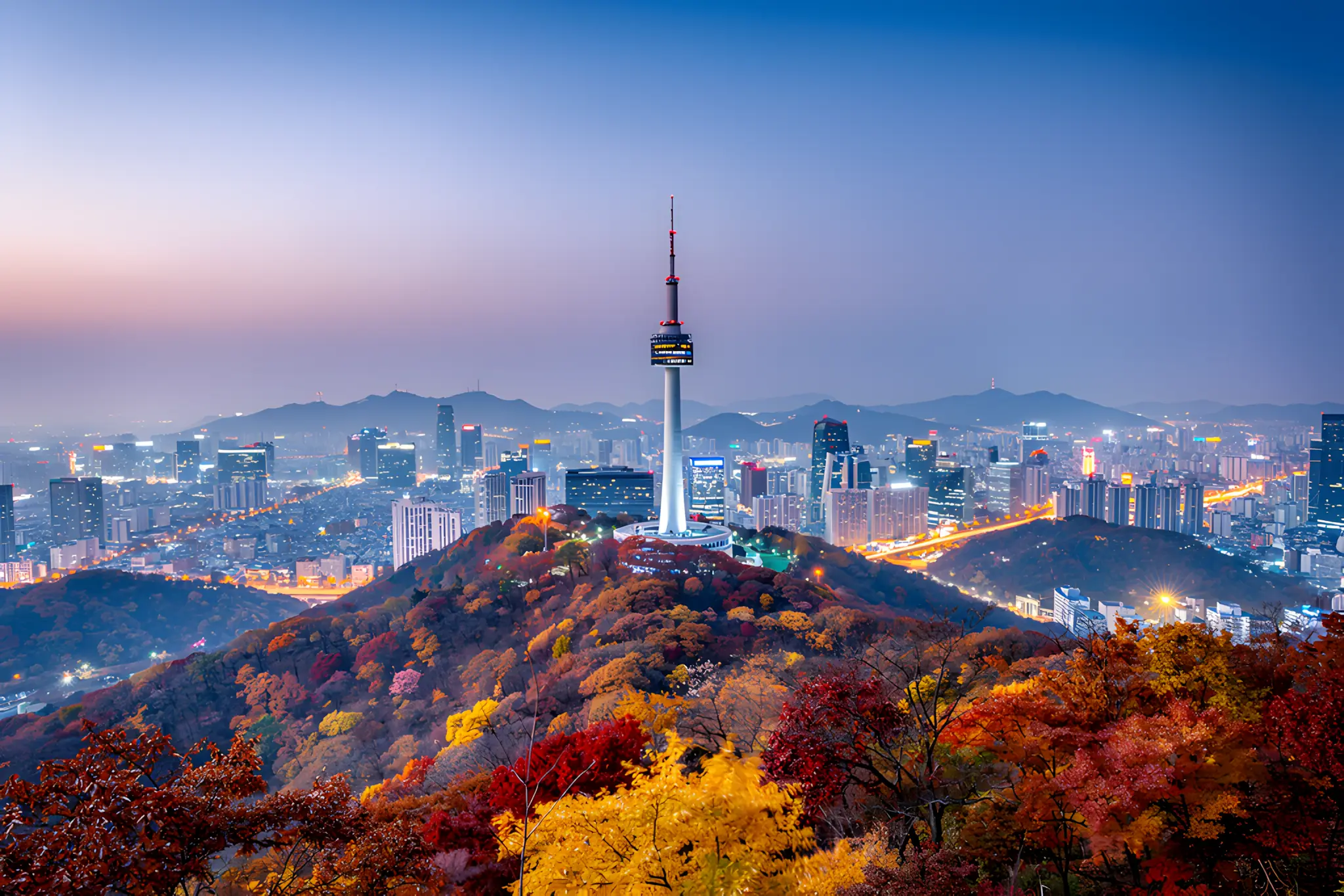

Why are flights to South Korea so expensive in 2026?
A major airline merger, rising fuel costs, and plane shortages have combined to push fares to South Korea to near-record highs.
To put it in perspective: a round-trip economy ticket from Los Angeles to Seoul cost around $950-$1,100 back in 2019. For late 2025, expect to pay $1,550-$1,900 for the same flight. That’s roughly a 70% jump.
So what’s going on? First, Korean Air bought its rival Asiana Airlines. These two used to compete fiercely on price. Now they’re one company, and the price wars are over. Second, flights are taking longer routes. U.S. and Korean planes can’t fly over Russia anymore due to bans. This adds extra fuel and time. Meanwhile, Chinese carriers can still use that shortcut, but their flights require layovers and sometimes visas. Third, Boeing is behind on delivering new planes. Airlines like United and American want to add more Seoul flights, but they simply don’t have enough aircraft.
There’s also a demand problem. K-pop and K-drama tourism is booming. Fans traveling for concerts often book regardless of price, keeping fares high. Popular carriers on this route include Korean Air, Delta, United, and budget option Air Premia.
The outlook: Don’t expect a big price drop soon. Air Premia is slowly adding flights, which should help by late 2026. Until then, book early and stay flexible with dates.
Meet Superdeals
Never overpay for flights again
You can save between 40% and 80% on your flights to South Korea — and to other Asian countries — with Air Traveler Club Superdeals.
We monitor all major airports in North America for cheap flights to Asia, including:
- Atlanta (ATL) — Georgia, US
- Toronto (YYZ) — Ontario, Canada
- Chicago (ORD) — Illinois, US
- Los Angeles (LAX) — California, US
- Denver (DEN) — Colorado, US
- Montréal (YUL) — Quebec, Canada
- Dallas (DFW) — Texas, US
- New York (JFK) — New York, US
- San Francisco (SFO) — California, US
- Vancouver (YVR) — BC, Canada

Departure airports in North America and destinations in APAC covered by Superdeals.
Superdeals to South Korea
Fly for half price (or less)
Airlines don't design their pricing systems to offer half-price tickets. However, when algorithms detect demand shortfalls for specific routes, automated systems apply steep discounts to fill planes. Airlines would rather accept losses than fly with empty seats.
ATC monitors thousands of routes from US/Canada 24/7, detecting Superdeals with 40–80% discounts. While a typical return flight from North America to Seoul costs $1,300+, with Superdeals you can often grab it for around $500:
Which airlines have promotions to South Korea right now?
We track and curate genuine offers from 150+ airlines, hand-picking only the most valuable for your wallet.
Which carriers have sales and special offers for flights in September, October, November and beyond? You can now browse the entire collection of active promotions:
Browse promos →Popular airlines with frequent offers from the US and Canada:

Travel hacks and insights
for North America — South Korea flights
Verified strategies to save money and avoid friction on routes to South Korea.
Avoid travel during Chuseok and Lunar New Year
Flight prices to Korea spike 50-80% during Chuseok (Korean Thanksgiving, usually Sept/Oct) and Seollal (Lunar New Year, Jan/Feb). Domestic travel within Korea also becomes impossible with sold-out trains and jammed highways.
If you must travel during these windows, book 6-8 months in advance. Conversely, the days immediately following these holidays often see price crashes as demand plummets. Check the exact lunar calendar dates before booking.
Air Premia undercuts major carriers by 30%
Air Premia, a hybrid carrier flying from LAX, EWR, and SFO to Seoul, typically prices 30-40% lower than Korean Air or Asiana. Economy seats offer 35 inches of pitch—comparable to domestic “Economy Plus”—making it a value leader. Roundtrip fares often dip below $900 when legacy carriers charge $1,400+.
However, their fleet is small, meaning irregular operations (cancellations) can lead to multi-day delays compared to major alliances. Book with travel insurance that covers carrier delays to mitigate this specific risk.
Vancouver departures save $300-600 vs West Coast
Flying Air Canada or WestJet from Vancouver (YVR) often saves $300-600 compared to direct departures from Los Angeles or Seattle due to aggressive transpacific pricing wars. The “Canada Loophole” works best for travelers who position via separate tickets.
Ensure a 4-hour buffer at YVR, as you must clear Canadian customs even for transit unless your airline participates in specific seamless transit protocols. The savings justify the extra hop only if the price difference exceeds $300.
US-Korea route guarantees 2 free bags
Transpacific routes between North America and South Korea operate on the “piece concept,” granting economy passengers two checked bags (23kg each) standard on full-service carriers like Korean Air, Asiana, and Delta.
This is a major advantage over European routes which often restrict to one. However, be careful with domestic connections in the US on separate tickets, as domestic carriers will charge for bags unless the itinerary is booked as a single through-ticket.
SmartPass app skips security lines
Incheon Airport’s “ICN SmartPass” app allows you to register your facial biometrics and passport before arriving at the airport. This grants access to designated express lanes at departure security.
It saves 20-30 minutes during morning peak hours (8 AM – 10 AM). You still need your physical passport and boarding pass for the final gate check, but the security checkpoint becomes a breeze. Download and register 24 hours prior.
AREX Express beats traffic for $7
The AREX Express Train travels non-stop from Incheon T1/T2 to Seoul Station in 43-51 minutes for about 9,500 KRW ($7). This beats the “Airport Limousine” buses which cost 17,000 KRW ($13) and get stuck in Seoul’s notorious traffic.
Only take the bus if your hotel is far from a subway station and you have heavy luggage. Otherwise, the train is faster, cheaper, and strictly on schedule, avoiding potential 90-minute rush hour delays.
What travelers ask most
Expert answers on routing, carriers, timing, and fees
Does the new “Workation” Digital Nomad visa apply to freelancers?
Yes, the F-1-D “Workation” visa launched in 2024 allows remote workers to stay in South Korea for up to one year (extendable to two). To qualify, you must be employed by a foreign company (or be a freelancer) and prove an annual income of roughly 85 million KRW (approx. $60,000-65,000 USD). This is a massive improvement over the standard 90-day tourist entry if you plan to work remotely, as working on a tourist status is technically a grey area.
Does WestJet still fly direct from Calgary to Seoul?
WestJet operates this route seasonally, typically from May through October. The service uses the 787 Dreamliner and is the only direct link from the Canadian Prairies to Korea, saving travelers a connection in Vancouver or Toronto. If you are planning a trip for late 2025, booking windows usually open 9-11 months in advance, and summer seats fill up quickly due to high demand.
How do I get an immediate tax refund on shopping?
Korea offers a convenient “Immediate Tax Refund” system at major marts and convenience stores for purchases between 30,000 and 500,000 KRW. Simply show your passport at the checkout counter, and the tax is deducted instantly from your total—no airport paperwork required. For larger purchases at department stores (over 500,000 KRW), you’ll get a receipt to scan at the automated kiosks at Incheon Airport before departure to get your cash back.
Is tipping expected at restaurants or for taxi drivers in Seoul?
No, tipping is not practiced in South Korea and can sometimes be considered rude or confusing. The price you see on the menu is the final price, often including tax and service. If you leave cash on the table, the waiter will likely run after you to return your “forgotten” money. For taxis, you can round up to the nearest 1,000 won if paying cash for convenience, but it is never expected or required.
Is it hard to find vegetarian food in South Korea?
It can be challenging, as even vegetable dishes often contain fish sauce, shrimp paste, or meat-based broth. The concept of “meat-free” isn’t always understood at traditional restaurants (ham might be considered a garnish, not meat). Your best strategy is to use the **HappyCow** app to find dedicated vegan restaurants or visit temple food restaurants (“Sanchon”) which are naturally vegan. At convenience stores, look for labels marked with the vegan certification logo, which has become more common recently.
How far in advance should I book for Cherry Blossom season?
For travel in early April (peak cherry blossom), aim to book flights 5-6 months in advance, around October or November. This is one of the most expensive times to fly to Korea, and last-minute deals are virtually non-existent. If you wait until January or February, expect fares to jump by $300-500 USD. Hotels in hotspots like Yeouido or Jinhae also sell out months ahead, so lock in your accommodation immediately after booking your flight.
Is a stopover in Tokyo worth it when flying to Seoul?
Yes, especially if you are flying mostly with United/ANA or American/JAL. Fares with a layover in Tokyo (NRT or HND) are often $200-300 cheaper than direct flights on Korean Air. Since the flight from Tokyo to Seoul is only 2.5 hours, you can easily turn a long layover into a “2-for-1” vacation by staying a few days in Japan. Just ensure your ticket allows a multi-day stopover, or book the legs separately if the math works out.
What is a realistic daily budget for a tourist in Seoul?
A comfortable mid-range budget is $120-150 USD per day. This covers a decent 3-star hotel or Airbnb ($70-90/night), public transport ($5), entry fees ($10), and plenty of food. You can eat incredibly well for cheap—a filling Kimbap lunch is $3, and BBQ dinner might be $20-30. If you are on a tight budget, staying in hostels and eating street food can drop costs to $60-80/day, while luxury travelers should budget $300+ for 5-star hotels and fine dining.
How does Air Traveler Club find cheap flights to Seoul?
We use AI-powered monitoring tools to scan thousands of flight combinations from North America to Asia 24/7, detecting pricing anomalies that regular searches miss. These might be “Superdeals” where a carrier like Asiana or Delta temporarily drops fares to fill seats, or competitive price wars. Our human experts verify every deal to ensure it has reasonable layovers and is with a reputable airline. You then receive an alert via our free newsletter and book directly with the airline—no middleman, just the lowest possible price.
Nonstop (direct) vs 1-stop
How much do flights from US/Canada to South Korea cost?
Nonstop North America-South Korea flights take 11-14 hours and cost 20-40% more than connecting alternatives. Major hubs—including Los Angeles, New York, and Toronto—offer the most frequent service, primarily to Seoul Incheon (ICN).
Direct service justifies its premium for business travelers, families, or when price differences stay below $200-300—otherwise, strategic one-stop routing typically delivers better value.
| Route | Airline | Aircraft | Avg Price | Avg ATC Price |
|---|---|---|---|---|
| Los Angeles (LAX) → Seoul Incheon (ICN) | Korean Air | 777-300ER, A380 | $1,600 | $525 (67% off) |
| San Francisco (SFO) → Seoul Incheon (ICN) | Asiana Airlines | A350-900 | $1,550 | $520 (66% off) |
| Seattle (SEA) → Seoul Incheon (ICN) | Delta Air Lines | A330-900neo | $1,500 | $495 (67% off) |
| New York (JFK) → Seoul Incheon (ICN) | Korean Air | 747-8I, 777-300ER | $1,800 | $585 (67% off) |
| Atlanta (ATL) → Seoul Incheon (ICN) | Delta Air Lines | A350-900 | $1,750 | $575 (67% off) |
| Chicago (ORD) → Seoul Incheon (ICN) | Asiana Airlines | 777-200ER | $1,650 | $545 (67% off) |
| Dallas/Fort Worth (DFW) → Seoul Incheon (ICN) | Korean Air | 787-9 | $1,700 | $565 (67% off) |
| Toronto (YYZ) → Seoul Incheon (ICN) | Air Canada | 787-9 | $1,550 | $515 (67% off) |
| Vancouver (YVR) → Seoul Incheon (ICN) | Air Canada | 787-9 | $1,450 | $485 (67% off) |
| Honolulu (HNL) → Seoul Incheon (ICN) | Korean Air | 787-9 | $1,300 | $435 (67% off) |
*Avg ATC Price: Superdeal fare published on our platform (40-80% savings compared to standard market rates). Learn more.
Best stopovers
for US/Canada to South Korea flights
Not all connections are created equal. When flying from the US/Canada to South Korea, routing through major airport hubs can deliver lower total fares, better-equipped aircraft, and access to airline stopover programs.
Tokyo NRT
with ANA / Japan Airlines
- Average savings: 25-35% vs non-stop flights
- Flight segments: ~10-11h North America-Tokyo + ~2.5h Tokyo-Seoul
- Typical connection: 2-4 hours (minimum 60 minutes)
- Stopover perks: Free multi-city stopovers
- Visa requirements: Most North America passports visa‑free up to 90 days
- Airport rating: 4-Star Skytrax hub with strong transit facilities
- Best for: Los Angeles, Vancouver, Seattle travelers seeking excellent award-flight availability
Seoul ICN
with Korean Air / Asiana Airlines
- Average savings: 30-40% vs non-stop flights
- Flight segments: North America-Seoul (~13h), then Seoul-Busan/Jeju (~1h)
- Typical connection: 2-3 hours (minimum 45 minutes)
- Stopover perks: Free transit tours
- Visa requirements: Most North America passports visa‑free or K-ETA
- Airport rating: 4-Star Skytrax airport with efficient terminals
- Best for: New York, Toronto, San Francisco travelers seeking family-friendly airport experience
Hong Kong HKG
with Cathay Pacific
- Average savings: 20-30% vs non-stop flights
- Flight segments: North America-Hong Kong (~14h), then Hong Kong-Seoul (~3.5h)
- Typical connection: 2-4 hours (minimum 60 minutes)
- Stopover perks: Free Hong Kong stopover
- Visa requirements: North America passports visa‑free short stays
- Airport rating: 5-Star Skytrax airport, strong lounge network
- Best for: Los Angeles, Chicago, Boston travelers seeking world-class lounge and dining options
Taipei TPE
with EVA Air / China Airlines
- Average savings: 25-40% vs non-stop flights
- Flight segments: Journey breaks into ~13h to Taipei, then ~2.5h to Seoul
- Typical connection: 2-4 hours (minimum 60 minutes)
- Stopover perks: Free half-day city tours
- Visa requirements: Most North America passports visa‑free up to 90 days
- Airport rating: 4-Star Skytrax rating, modern transit facilities
- Best for: Seattle, Vancouver, Houston travelers seeking lie‑flat business class value
Get real-time deal alerts
Activate real-time alerts and get notified the instant a new Superdeal to South Korea has been discovered.
Book these incredible price drops before they’re gone.
Set alerts →
Best airlines and aircraft
for long-haul flights to South Korea
Most travelers book US/Canada–South Korea flights by price and schedule—but aircraft choice determines whether you arrive refreshed or wrecked. Cabin pressurization, humidity, seat configuration, and service standards vary dramatically on this route.
Below are carriers we recommend—with superior configurations on flights from the US and Canada to South Korea.
Asiana Airlines
Boeing 787-9 Dreamliner
Five-time Skytrax winner Asiana uses the 787-9’s lower cabin altitude and larger windows, enhancing comfort for long-haul flights to Seoul.
- Route: Direct flights from Los Angeles (LAX)/San Francisco (SFO) → Seoul (ICN) (13-14hrs)
- Economy: 32″ pitch, 17.2″ width, 3-3-3 configuration, personal IFE with USB and AC power
- Business: 2-2-2 configuration, fully lie-flat 75″ seats, privacy partitions
- Standouts: 15.6″ HD IFE screens, onboard Wi-Fi (satellite), Korean & Western cuisine, amenity kits, mood lighting
- Typical Pricing: Economy $700-$1,100; Business $3,500-$5,500;
Air Canada
Airbus A350-900
Canada’s flagship Air Canada operates the A350-900 with lower cabin altitude and improved air quality, boosting passenger wellness on long transpacific flights.
- Route: Direct flights from Toronto (YYZ)/Vancouver (YVR) → Seoul (ICN) (12-13.5hrs)
- Economy: 31″ pitch, 17″ width, 3-3-3 layout, personal touchscreen IFE
- Business: 1-2-1 layout, fully lie-flat 79″ seats with direct aisle access
- Standouts: 16″ IFE displays, high-speed Wi-Fi, maple-inspired cuisine, noise-cancelling headphones, power outlets
- Typical Pricing: Economy $800-$1,200; Business $4,000-$6,000;
Korean Air
Boeing 777-300ER
Global 5-star Korean Air uses its 777-300ER with spacious cabins and state-of-the-art IFE to ensure a premium experience en route to Seoul.
- Route: Direct from Los Angeles (LAX)/New York (JFK) → Seoul (ICN) (13-14.5hrs)
- Economy: 33″ pitch, 18″ width, 3-3-3 seating, advanced touchscreen IFE system
- Business: 2-2-2 layout, fully flat 78″ seats with direct aisle access
- Standouts: 18″ IFE screens, onboard Wi-Fi, Korean cuisine catered by Michelin-star chefs, exclusive amenity kits
- Typical Pricing: Economy $850-$1,300; Business $4,500-$7,000;
Delta Air Lines
Airbus A350-900
North America’s major carrier Delta operates the A350-900, featuring a quiet cabin and advanced air filtration for a healthier transpacific journey.
- Route: Direct flights from Seattle (SEA)/Detroit (DTW) → Seoul (ICN) (11.5-13hrs)
- Economy: 31″ pitch, 17″ width, 3-3-3 layout, personal in-seat entertainment
- Business: 1-2-1 configuration, lie-flat 79″ seats, aisle access for all
- Standouts: 16″ IFE, onboard Wi-Fi, premium dining options, noise-reducing headsets
- Typical Pricing: Economy $750-$1,150; Business $3,900-$5,800;
Fly better for less
Travel insights, proven strategies, and insider tips.

Best aircraft for long-haul flights

The Continental Hop Trick — North American edition

Flying to Asia from Canada: best airports, cheapest routes, insider tips