US/Canada Taiwan 40–80% OFF
Cheap flights discovered by AI✨
Fly round-trip to Taipei for $350, while others pay $900+.
Our AI finds Superdeals to Taiwan from all major airports in North America. You book directly with airlines for half the price—or less.
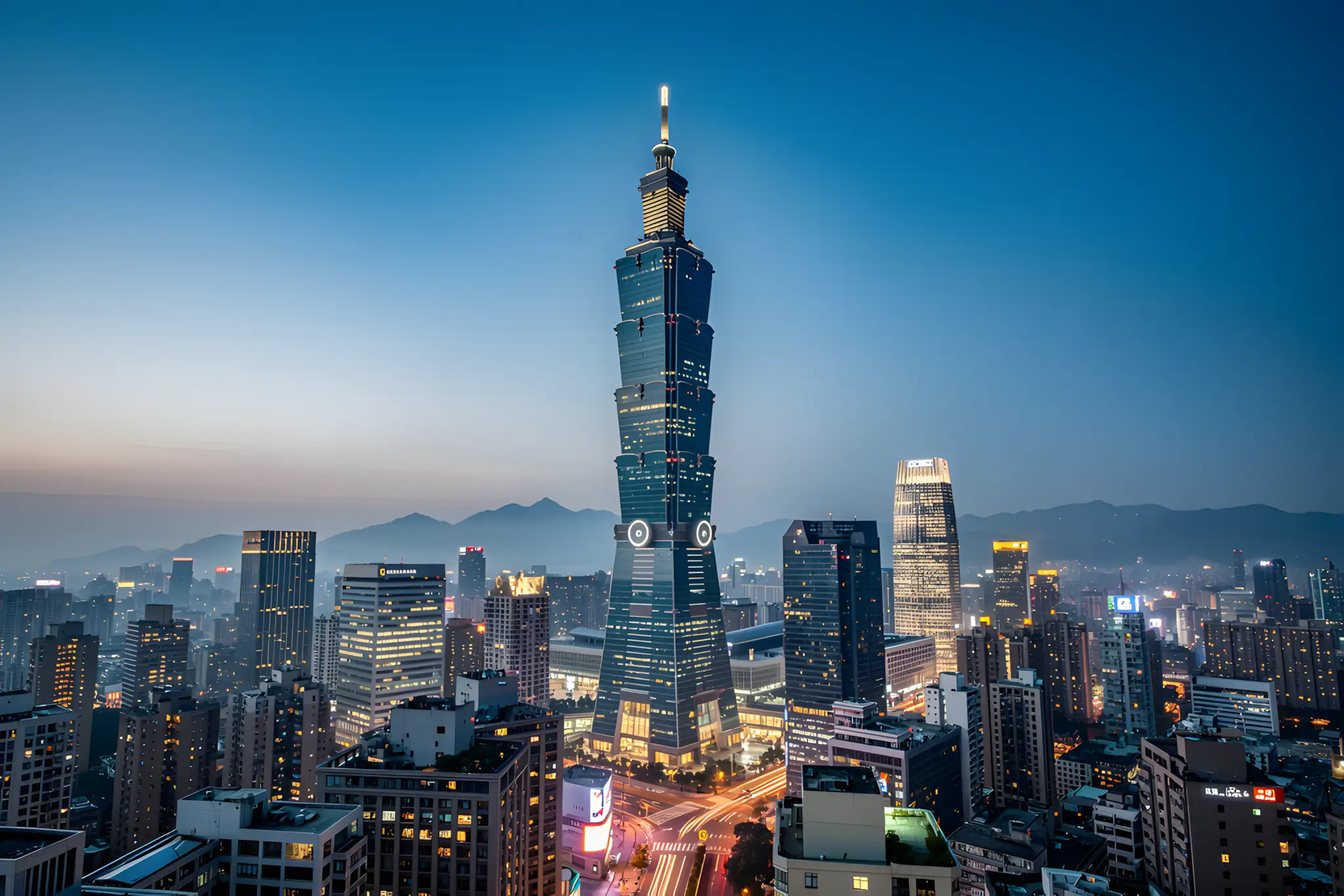

Why are flights to Taiwan so expensive in 2026?
A perfect storm of politics, popularity, and plane shortages is keeping Taiwan airfare stubbornly high.
If you’re seeing $1,300 or more for a round-trip economy ticket from Los Angeles to Taipei, you’re not imagining things. Back in 2019, that same flight cost around $800. Today, even budget-friendly carriers are charging 60% more.
So what’s going on? First, flights between North America and China are still heavily restricted. Before the pandemic, Chinese carriers offered cheap fares that kept everyone competitive. Those flights are mostly gone, so Taiwan’s airlines face less pressure to lower prices.
Second, Taiwan has become a major connecting hub. Over 60% of passengers on flights to Taipei are actually heading somewhere else, like Vietnam or the Philippines. You’re now competing for seats with all those travelers passing through.
Third, new planes aren’t arriving fast enough. Airlines like EVA Air, China Airlines, and Starlux want to add more flights, but Boeing and Airbus delivery delays are holding them back.
Finally, Taiwan’s booming tech industry means business travelers are snapping up premium seats. This pushes everyone else into pricier fare categories.
The outlook: Don’t expect relief soon. Until China flights fully resume and new aircraft arrive, Taiwan fares will likely stay elevated through late 2025. Book early and be flexible with dates for the best deals.
Meet Superdeals
Never overpay for flights again
You can save between 40% and 80% on your flights to Taiwan — and to other Asian countries — with Air Traveler Club Superdeals.
We monitor all major airports in North America for cheap flights to Asia, including:
- Atlanta (ATL) — Georgia, US
- Toronto (YYZ) — Ontario, Canada
- Chicago (ORD) — Illinois, US
- Los Angeles (LAX) — California, US
- Denver (DEN) — Colorado, US
- Montréal (YUL) — Quebec, Canada
- Dallas (DFW) — Texas, US
- New York (JFK) — New York, US
- San Francisco (SFO) — California, US
- Vancouver (YVR) — BC, Canada

Departure airports in North America and destinations in APAC covered by Superdeals.
Superdeals to Taiwan
Fly for half price (or less)
Airlines don't design their pricing systems to offer half-price tickets. However, when algorithms detect demand shortfalls for specific routes, automated systems apply steep discounts to fill planes. Airlines would rather accept losses than fly with empty seats.
ATC monitors thousands of routes from US/Canada 24/7, detecting Superdeals with 40–80% discounts. While a typical return flight from North America to Taipei costs $900+, with Superdeals you can often grab it for around $350:
Which airlines have promotions to Taiwan right now?
We track and curate genuine offers from 150+ airlines, hand-picking only the most valuable for your wallet.
Which carriers have sales and special offers for flights in September, October, November and beyond? You can now browse the entire collection of active promotions:
Browse promos →Popular airlines with frequent offers from the US and Canada:

Travel hacks and insights
for North America — Taiwan flights
Verified strategies to save money and avoid friction on routes to Taiwan.
Don’t bring pork or pay $6,200 fine
Taiwan enforces aggressive biosecurity laws to prevent African Swine Fever. Bringing any pork products—including jerky, sausages, or ham sandwiches—results in an immediate NT$200,000 (~$6,200 USD) fine for first-time offenders. Repeat offenders face NT$1 million fines.
Detection dogs and X-ray machines check 100% of hand luggage from high-risk areas. Discard any food items in the amnesty bins before immigration. The “I forgot” excuse is not accepted and the fine must be paid before entry is permitted.
Seattle departures offer new pricing sweet spots
Seattle (SEA) has become a major battleground with Delta, EVA Air, China Airlines, and Starlux all operating direct routes to Taipei as of late 2025. This overcapacity has driven fares down by 15-20% compared to historical averages.
Travelers based in Portland or the Midwest should check Seattle pricing first. Connecting through SEA often yields lower fares than routing through traditional hubs like SFO or LAX due to this fierce four-way competition.
Transit via Tokyo saves time to Songshan
Flying from North America to Tokyo Haneda (HND) and connecting to Taipei Songshan (TSA) lands you right in downtown Taipei. This route avoids the 45-60 minute commute from the main Taoyuan (TPE) airport.
Japan Airlines and ANA offer seamless connections for this route. While the total flight time might be slightly longer due to the layover, arriving at Songshan saves hassle and taxi fare, putting you 15 minutes from Taipei 101.
Typhoon IRROPS rebooking strategy
During typhoon season (June-October), flights to Taiwan are frequently delayed or cancelled. If a typhoon is forecast, call your airline’s international reservations line immediately to switch to a flight 24 hours earlier or later before the mass cancellations occur.
Airlines usually issue travel waivers 48 hours out. Don’t wait for the cancellation text. Proactively rerouting through a different hub (like moving from a Tokyo connection to a direct flight) can save your trip from a multi-day delay.
EVA Air premium economy offers best value
EVA Air’s premium economy on the 777-300ER features a dedicated cabin with 38-inch pitch and 2-4-2 configuration. On transpacific routes, the upgrade cost is often just $300-400 one-way over standard economy, a bargain for 14 hours of flight time.
This equates to roughly $25 per hour for significantly more space and better meals. Avoid the upgrade on shorter regional connections where the hard product difference is negligible; save your budget for the long-haul transpacific segment.
US citizens skip immigration lines with e-Gate
US and Canadian citizens can register for Taiwan’s e-Gate system to use automated immigration lanes. Enrollment takes 2 minutes at the immigration counter on your first arrival—just ask the officer to enroll you after clearing the manual booth.
Once registered, you can use the automated gates for exit and all future entries. This bypasses manual queues that can stretch to 45 minutes during peak times. Look for the “e-Gate” enrollment signage before the immigration hall.
What travelers ask most
Expert answers on routing, carriers, timing, and fees
Can I bring my vape or e-cigarette into Taiwan?
No, absolutely do not bring any vaping devices or e-liquids into Taiwan. The country enforces a total ban on the import, sale, and use of electronic cigarettes, with no exceptions for personal use by tourists. Customs screenings are thorough, and fines for bringing these items into the country start at NT$50,000 (approx. $1,550 USD). Leave all vaping gear at home; travelers have reported confiscation and immediate fines upon arrival at Taoyuan Airport.
Has the Taiwan High Speed Rail (HSR) pass price changed for tourists?
The “Buy 1 Get 1 Free” promo for HSR tickets ended, but the standard 20-30% discount for foreign tourists remains available when booking through platforms like Klook or KKday. As of 2025, you must reserve your specific seat online after purchasing the pass to avoid standing in long manual redemption lines at the station. Prices for a 3-day unlimited pass are approximately $75 USD, which is exceptional value if you plan to visit Kaohsiung or Tainan. Book at least 3 days in advance to secure the tourist rate.
How has the 3G network sunset affected tourists in Taiwan?
Taiwan fully shut down its 3G network in mid-2024, meaning your phone must support VoLTE (Voice over LTE) to make calls, including emergency calls. Most modern US/Canadian smartphones (iPhone 8 and newer, recent Samsungs) work fine, but older unlocked devices may only be able to use data, not voice. If your phone is incompatible with VoLTE roaming, you will need to use apps like WhatsApp, LINE, or FaceTime for all calls. Check your phone settings to ensure VoLTE is enabled before you fly.
Do US and Canadian citizens need a visa for Taiwan?
No, US and Canadian passport holders enjoy visa-exempt entry for stays up to 90 days. You just need a passport valid for your entire intended period of stay (though 6 months validity is recommended to avoid airline boarding issues). You do not need to apply for an ESTA-style authorization beforehand; simply fill out the arrival card (paper or online) and present your passport at immigration. Note that the 90-day limit is strict and usually cannot be extended in-country, so plan your departure accordingly.
What is the EasyCard and where do I buy one?
The EasyCard (or iPASS) is a reloadable smart card essential for paying for MRT, buses, convenience stores, and even some taxis. Buy one immediately at the airport MRT station or any 7-Eleven/FamilyMart for NT$100 (approx. $3 USD), then load it with cash. It saves you from buying individual tokens and offers small discounts on transit transfers. You can tap it to pay for almost anything under NT$1,000 at convenience stores, making it incredibly convenient for grabbing water or snacks without handling loose change.
Is tap water safe to drink in Taiwan?
Generally, you should not drink tap water directly without boiling it first. While water leaving treatment plants is clean, aging pipes in buildings can cause contamination. Most hotels provide free bottled water daily, and nearly all public stations, temples, and museums have water dispensers with hot, warm, and cold filtered water. Bring a reusable bottle and fill up at these stations—it’s safe, free, and environmentally friendly.
Do I need to tip in restaurants or taxis?
No, tipping is not part of Taiwanese culture and is generally not expected. High-end restaurants will automatically add a 10% service charge to your bill, but this goes to the house, not the waiter. In taxis, drivers will return your exact change, though rounding up to the nearest NT$10 is appreciated but not required. Leaving cash on the table at a local eatery will likely result in the staff chasing you down to return your “forgotten” money.
What are the rules for eating on the MRT subway?
The “No Eating or Drinking” rule on the MRT is strictly enforced and includes water and chewing gum. The “yellow line” on the floor before the ticket gates marks the start of the prohibited zone. Violators face steep fines starting at NT$1,500 (approx. $45 USD), and stations are heavily monitored by staff and cameras. Finish your bubble tea or snack before you tap through the gates to avoid an expensive mistake.
Nonstop (direct) vs 1-stop
How much do flights from US/Canada to Taiwan cost?
Nonstop North America-Taiwan flights take 13-15 hours and cost 20-40% more than connecting alternatives. Major hubs—including Los Angeles, San Francisco, and Seattle—offer the most frequent service, primarily to Taoyuan International Airport (TPE).
Direct service justifies its premium for business travelers, families, or when price differences stay below $200-300—otherwise, strategic one-stop routing typically delivers better value.
| Route | Airline | Aircraft | Avg Price | Avg ATC Price |
|---|---|---|---|---|
| Los Angeles (LAX) → Taipei (TPE) | EVA Air | 777-300ER | $1,200 | $300 (75% off) |
| San Francisco (SFO) → Taipei (TPE) | United Airlines | 787-9 | $1,150 | $290 (75% off) |
| Seattle (SEA) → Taipei (TPE) | Delta Air Lines | 777-200ER | $1,100 | $275 (75% off) |
| Seattle (SEA) → Taipei (TPE) | STARLUX Airlines | A350-900 | $1,250 | $310 (75% off) |
| Seattle (SEA) → Taipei (TPE) | China Airlines | 777-300ER | $1,180 | $295 (75% off) |
| Vancouver (YVR) → Taipei (TPE) | EVA Air | 777-300ER | $1,120 | $280 (75% off) |
| Dallas/Fort Worth (DFW) → Taipei (TPE) | EVA Air | 777-300ER | $1,220 | $305 (75% off) |
| Chicago (ORD) → Taipei (TPE) | China Airlines | 777-300ER | $1,280 | $320 (75% off) |
| Houston (IAH) → Taipei (TPE) | EVA Air | 777-300ER | $1,240 | $310 (75% off) |
| New York (JFK) → Taipei (TPE) | China Airlines | 777-300ER | $1,300 | $325 (75% off) |
*Avg ATC Price: Superdeal fare published on our platform (40-80% savings compared to standard market rates). Learn more.
Best stopovers
for US/Canada to Taiwan flights
Not all connections are created equal. When flying from the US/Canada to Taiwan, routing through major airport hubs can deliver lower total fares, better-equipped aircraft, and access to airline stopover programs.
Tokyo NRT
with ANA / Japan Airlines
- Average savings: 20-30% vs non-stop flights
- Flight segments: ~11h North America-Tokyo + ~3h Tokyo-Taipei
- Typical connection: 2-4 hours (minimum 60 minutes)
- Stopover perks: Free multi-city stopovers
- Visa requirements: Visa-free transit for most North America passports
- Airport rating: 4-Star Skytrax hub with strong transit facilities
- Best for: Los Angeles, Vancouver, Seattle travelers seeking excellent award flight availability
Seoul ICN
with Korean Air / Asiana Airlines
- Average savings: 18-28% vs non-stop flights
- Flight segments: North America-Seoul (~13h), then Seoul-Taipei (~2.5h)
- Typical connection: 2-3 hours (minimum 45 minutes)
- Stopover perks: Free transit tours
- Visa requirements: Visa-free transit for most North America passports
- Airport rating: Consistently top-ranked Skytrax airport
- Best for: San Francisco, Toronto, New York travelers seeking family-friendly airport experience
Hong Kong HKG
with Cathay Pacific
- Average savings: 22-32% vs non-stop flights
- Flight segments: Split into ~15h North America-Hong Kong and ~1.5h Hong Kong-Taipei legs
- Typical connection: 2-4 hours (minimum 60 minutes)
- Stopover perks: Free Hong Kong stopover
- Visa requirements: Visa-free entry for most North America passports
- Airport rating: 5-Star Skytrax rating with premium lounges
- Best for: Los Angeles, Vancouver, Chicago travelers seeking world-class lounge and dining options
Tokyo HND
with ANA / Japan Airlines
- Average savings: 18-25% vs non-stop flights
- Flight segments: Two-leg journey: ~10h North America-Haneda, ~3h Haneda-Taipei
- Typical connection: 1.5-3 hours (minimum 55 minutes)
- Stopover perks: Up to 6-night stopover
- Visa requirements: Visa-free transit for most North America passports
- Airport rating: 5-Star Skytrax airport with short transfers
- Best for: San Francisco, Dallas, New York travelers seeking minimal connection times
Get real-time deal alerts
Activate real-time alerts and get notified the instant a new Superdeal to Taiwan has been discovered.
Book these incredible price drops before they’re gone.
Set alerts →
Best airlines and aircraft
for long-haul flights to Taiwan
Most travelers book US/Canada–Taiwan flights by price and schedule—but aircraft choice determines whether you arrive refreshed or wrecked. Cabin pressurization, humidity, seat configuration, and service standards vary dramatically on this route.
Below are carriers we recommend—with superior configurations on flights from the US and Canada to Taiwan.
China Airlines
Airbus A350-900
Five-time Skytrax Asia’s Best Airline winner, Airbus A350-900’s quieter cabin and advanced air filtration enhance long-haul comfort to Taipei.
- Route: Direct flights from Los Angeles and San Francisco → Taipei (12-13 hrs)
- Economy: 31″ pitch, 18″ width, 3-3-3 configuration, adjustable headrests, USB/AAC power ports
- Business: 1-2-1 configuration, fully lie-flat 76″ seats, direct aisle access for all passengers
- Standouts: 16” HD IFE screens, wifi available (paid), multi-course meals with Taiwanese and international cuisine
- Typical Pricing: Economy $700-$1,100; Business $2,800-$4,200;
Eva Air
Boeing 777-300ER
World Airline Awards “Five-Star” rated, Boeing 777-300ER delivers spacious cabins and premium amenities on nonstop flights to Taipei.
- Route: Direct flights from Los Angeles, Vancouver, and Toronto → Taipei (12-14 hrs)
- Economy: 33″ pitch, 18″ width, 3-4-3 configuration, ergonomic seats, personal power ports
- Business: 1-2-1 reverse herringbone, fully lie-flat 76″ seats, direct aisle access
- Standouts: 16” HD IFE with over 300 movies, Panasonic wifi (paid), multi-course Taiwanese and Western meals, enhanced hygiene standards
- Typical Pricing: Economy $750-$1,200; Business $3,000-$4,500;
Air Canada
Boeing 787-9 Dreamliner
Canada’s flagship carrier uses Boeing 787-9 Dreamliner’s improved fuel efficiency and higher humidity to enhance passenger comfort on Taiwan routes.
- Route: 1-stop via Vancouver or direct seasonal from Toronto → Taipei (~14-16 hrs total)
- Economy: 31″ pitch, 17.5″ width, 3-3-3 layout, personal touchscreen IFE, USB power
- Business: 1-2-1 configuration, lie-flat 77″ seats, direct aisle access
- Standouts: 11.1” HD IFE, Gate-to-gate wifi (paid), Canadian and Asian fusion meals, Maple Leaf Lounge access at hubs
- Typical Pricing: Economy $900-$1,400; Business $3,500-$5,500;
United Airlines
Boeing 787-9 Dreamliner
Star Alliance member United Airlines flies Boeing 787-9 Dreamliner nonstop, combining fuel efficiency with improved passenger comfort to Taiwan.
- Route: Direct from San Francisco and Newark → Taipei (~13-14 hrs)
- Economy: 31″ pitch, 17″ width, 3-3-3 configuration, personal on-demand IFE
- Business: 1-2-1 Polaris seating, fully lie-flat 78″ beds, aisle access for all
- Standouts: 16” touchscreen, wifi (paid), chef-curated meals, Polaris lounge access
- Typical Pricing: Economy $950-$1,350; Business $3,800-$5,600;
China Airlines and Eva Air firmly protect their premium brand positioning, offering limited public discounts. Our Superdeals from Air Traveler Club reveal discounts of 40-70%, with Economy fares as low as $420 and Business class around $1,200, valid for brief booking windows before prices rebound within 3-7 days.
Conversely, Air Canada and United Airlines regularly run airline promos, including flash sales, companion fares, and bonus baggage offers. Our Airline Promos feed selects the most valuable campaigns, ensuring members access timely, high-value offers for North America–Taiwan travel.
Fly better for less
Travel insights, proven strategies, and insider tips.

Best aircraft for long-haul flights

Finding Superdeals that match your schedule

The top North America to APAC airlines. Routes & hacks.