Australasia Japan 40–80% OFF
Cheap flights discovered by AI✨
Fly round-trip to Tokyo for A$450, while others pay A$1400+.
Our AI finds Superdeals to Japan from all major airports in Australia and New Zealand. You book directly with airlines for half the price—or less.

Why are flights to Japan so expensive in 2026?
A perfect storm of staff shortages at Japanese airports and the weak Yen making everyone want to visit has pushed flights from Australia to Japan to record highs.
To put it in perspective, a return flight from Sydney to Tokyo that cost around $1,000 in 2019 now regularly sits above $2,000 on carriers like Qantas, JAL, and ANA. That’s more than double what you’d have paid just a few years ago.
So what’s going on? First, Japanese airports simply don’t have enough workers. Baggage handlers, refuellers, and catering staff are in short supply, meaning airports can’t handle more flights even if airlines wanted to add them. When there are fewer seats available but more people wanting them, prices go up.
Second, the Australian dollar is incredibly strong against the Yen right now. This makes hotels and food in Japan feel cheap, so travellers are willing to pay more for flights knowing they’ll save money on the ground. Airlines know this and price accordingly.
Third, competition has thinned out. Virgin Australia pulled back from Japan routes, and Chinese carriers offering cheaper indirect flights haven’t fully returned. With fewer options, the remaining airlines have little reason to drop prices.
The outlook: Don’t expect a dramatic drop anytime soon. Until Japanese airports solve their staffing crisis, this pricing is likely here to stay through 2025 and beyond.
Meet Superdeals
Never overpay for flights again
You can save between 40% and 80% on your flights to Japan — and to other Asian countries — with Air Traveler Club Superdeals.
We monitor all major airports in Australia and New Zealand for cheap flights to Asia, including:
- Sydney (SYD) — AU
- Melbourne (MEL) — AU
- Auckland (AKL) — NZ
- Brisbane (BNE) — AU
- Perth (PER) — AU
- Christchurch (CHC) — NZ
- Adelaide (ADL) — AU
- Cairns (CNS) — AU
- Gold Coast (OOL) — AU
- Wellington (WLG) — NZ
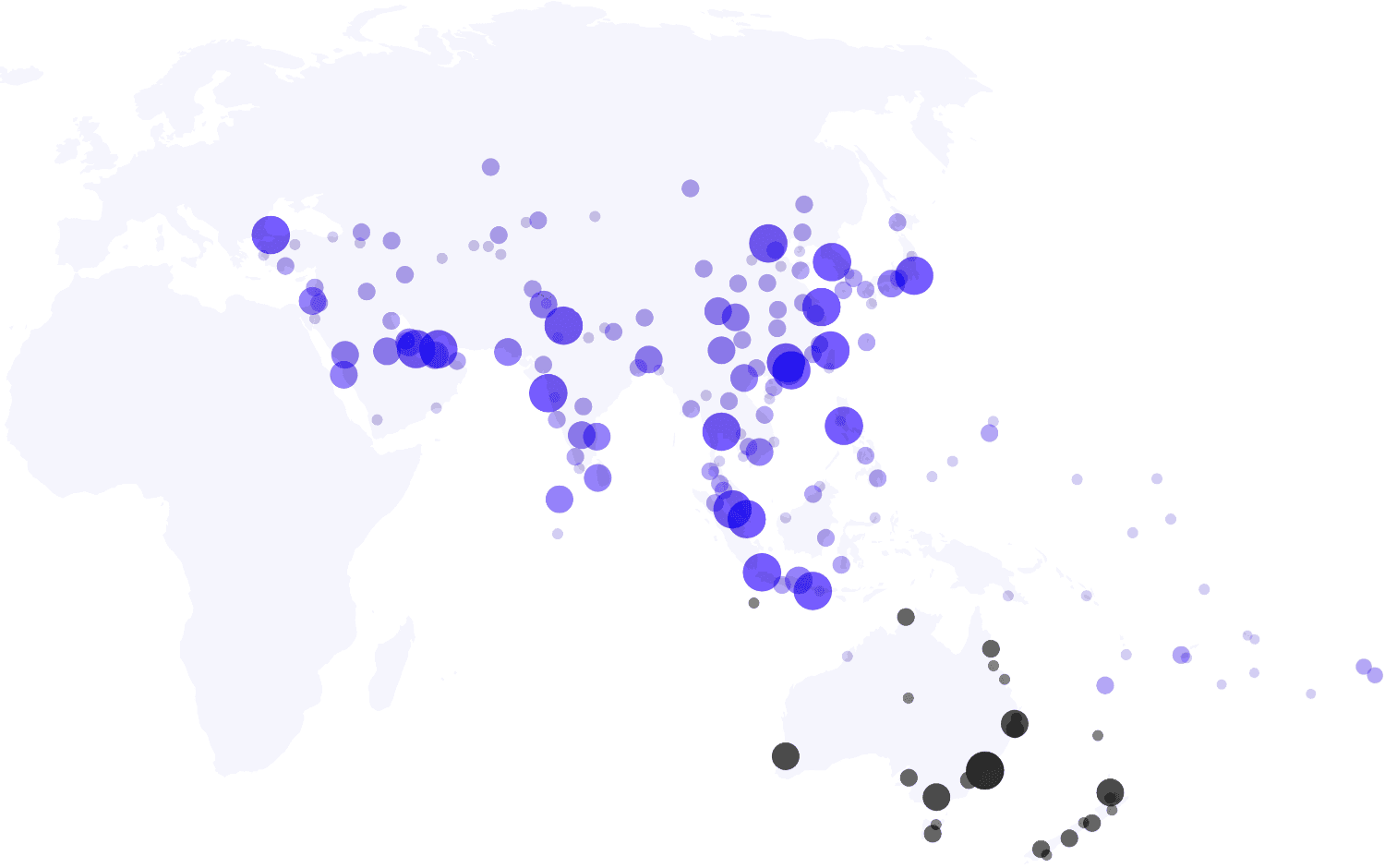
Departure airports in Australia/New Zealand and destinations in APAC covered by Superdeals.
Superdeals to Japan
Fly for half price (or less)
Airlines don't design their pricing systems to offer half-price tickets. However, when algorithms detect demand shortfalls for specific routes, automated systems apply steep discounts to fill planes. Airlines would rather accept losses than fly with empty seats.
ATC monitors thousands of routes from Australasia 24/7, detecting Superdeals with 40–80% discounts. While a typical return flight from Australia and New Zealand to Tokyo costs A$1400+, with Superdeals you can often grab it for around A$450:
Which airlines have promotions to Japan right now?
We track and curate genuine offers from 150+ airlines, hand-picking only the most valuable for your wallet.
Which carriers have sales and special offers for flights in February, March, April and beyond? You can now browse the entire collection of active promotions:
Browse promos →Popular airlines with frequent offers from Australia and New Zealand:

Travel hacks and insights
for Australia and New Zealand — Japan flights
Verified strategies to save money and avoid friction on routes to Japan.
Declare all food to avoid $3,756 AUD fines
Returning to Australia or New Zealand from Japan requires strict biosecurity compliance. Border Force officers actively target flights from Tokyo for undeclared food items, specifically fruit, eggs, and meat products often found in bento boxes.
Fines for undeclared items can reach $3,756 AUD (12 penalty units) for serious breaches. Use the amnesty bins before the biosecurity checkpoint to discard uneaten airplane food. When in doubt, always tick “Yes” on the Incoming Passenger Card.
Cairns routing saves $400-600 vs direct Sydney flights
Flying Jetstar via Cairns (CNS) to Narita consistently undercuts direct Qantas or ANA flights from Sydney and Melbourne by 30-40%. While direct full-service fares often exceed $1,500 AUD during peak December windows, Cairns connections typically sit in the $800-1,000 range.
The trade-off is the narrow-body A321LR experience on the Cairns-Tokyo leg versus wide-body comfort. To mitigate risk, always book as a single itinerary (through-ticket) to ensure baggage is checked through and connections are protected during Queensland’s summer storm season.
Jetstar Starter fares exclude essential items
Jetstar’s base “Starter” fares from Australia to Japan exclude checked bags, meals, and seat selection. Adding a 20kg bag at the airport costs $50-75 AUD per sector, and purchasing meals onboard is 20-30% more expensive than pre-booking.
If you need luggage and food, purchase the “Plus” bundle during initial booking. It is almost always cheaper than adding individual items later. Be aware that the base fare allows only 7kg of carry-on, which is strictly weighed at the gate.
Book Niseko flights 6 months early for ski season
December to February flights to Sapporo (CTS) connecting via Tokyo skyrocket if booked inside 90 days. Adding domestic connections on ANA or JAL can add $300-400 AUD to your ticket price when purchased late.
Use the “Japan Explorer Pass” or “ANA Experience Japan” fares which offer domestic segments for roughly ¥11,000 ($110 AUD) to foreign tourists. Secure these add-ons immediately after confirming your international long-haul ticket to lock in availability before the ski rush.
SmartGate speeds up Australian return
Upon returning to Australia, use the SmartGate kiosks if you hold an ePassport from Australia, NZ, or Japan. This automated process takes less than 2 minutes, bypassing the manual immigration queues that can stretch for an hour during morning arrival peaks.
You no longer need to stamp your passport. However, you still need to submit your Incoming Passenger Card to a Border Force officer after the gate, where the biosecurity screening takes place.
Currency exchange at destination airports
Avoid exchanging AUD/NZD for JPY at Australian/New Zealand airports where spreads are 10-15%. Exchange rates at Narita and Haneda arrival halls are significantly better. Alternatively, use 7-Eleven ATMs in Japan which accept foreign cards and offer near-market rates.
Japan is still a cash-heavy society. While credit card acceptance is growing, you will need cash for ticket machines, older restaurants, and temples. Withdraw ¥20,000-30,000 immediately upon arrival.
What travelers ask most
Expert answers on routing, carriers, timing, and fees
Can I use the new Japanese banknotes in all ticket machines now?
Yes, most major transport hubs and convenience stores have updated their machines to accept the new banknotes issued in mid-2024. However, you may still encounter older ticket machines in rural stations or small ramen shops that only accept the old currency or coins. It is smart to keep a mix of 1,000 yen notes and coins handy, or rely on your IC card (Suica/Pasmo) which works universally regardless of the cash update.
What are the current entry rules for the Gion district in Kyoto?
Private alleys in Kyoto’s Gion district remain closed to tourists to protect Geisha and residents from harassment, a policy strictly enforced since 2024. You can still walk along the main Hanamikoji Street, but venturing into the narrow private side streets will result in a fine of ¥10,000 (approx. €60). Signs are clearly posted in multiple languages, so stick to the public thoroughfares to avoid penalties and respect local privacy.
Do I need a voltage converter for European electronics?
Yes and no—check your device labels carefully. Japan operates on 100V, while Europe uses 230V; most modern phone, laptop, and camera chargers are “multi-voltage” (100-240V) and only require a simple Type A (two flat pin) plug adapter.
However, high-wattage heating appliances like European hairdryers or straighteners will not work and may even be damaged without a heavy, expensive voltage transformer. It is much easier to rely on the high-quality hairdryers provided by Japanese hotels than to bring your own.
Can I add a Suica card to my European Android phone?
Generally no, unless your Android phone was purchased in Japan. Most European Android models lack the specific “Osaifu-Keitai” (FeliCa) chip required for Japanese transit cards. iPhone users, however, can easily add a Suica, PASMO, or ICOCA card to their Apple Wallet regardless of where they bought their device.
If you have an Android, you will need to buy a physical card (Welcome Suica or Pasmo Passport) at the airport or use cash to buy paper tickets. Alternatively, check if your specific model supports the new digital ticketing apps, though physical cards remain the most reliable backup.
Is an eSIM better than Pocket Wi-Fi for Japan?
For most solo travelers or couples, an eSIM is cheaper, more convenient, and eliminates the hassle of carrying (and charging) an extra device. Plans from providers like Ubigi or Airalo cost around €10-15 for 10GB of data and activate instantly upon arrival.
Pocket Wi-Fi is only superior if you are traveling in a group of 3+ people who need to share a single connection or if you have multiple devices (laptop, tablet, phone) requiring heavy data usage. Note that Pocket Wi-Fi requires pickup/return at the airport, whereas an eSIM is purely digital and impossible to lose.
Do taxis in Japan accept credit cards?
Yes, virtually all taxis in major cities like Tokyo, Kyoto, and Osaka accept credit cards and IC cards (Suica/Pasmo). You can tap your card on the payment terminal attached to the headrest at the end of the ride.
In very rural areas, cash might still be required, so carrying some yen is wise. For ease of use, download the “GO” or “Uber” app, which allows you to hail taxis and pay automatically through the app, overcoming any language barriers with the driver.
How does Air Traveler Club find cheap flights to Japan?
We use AI to monitor over 150 airlines 24/7, detecting pricing anomalies that occur when airlines adjust their algorithms or launch new routes. For example, while a standard Frankfurt-Tokyo fare might be €1,200, our system can catch temporary drops to €650 on premium carriers like ANA or Lufthansa. Every deal is verified by human experts to ensure it has reasonable layovers before we alert our free newsletter subscribers. You then book directly with the airline, locking in the savings securely.
Are the Superdeals to Japan legitimate tickets?
Yes, absolutely—these are standard, scheduled flight tickets issued directly by the airlines. The “deal” is simply a temporary price drop we detected, not a special “distressed” inventory or a mistake fare that might be cancelled. You book directly on the airline’s own website (e.g., JAL, Finnair, or Qatar Airways), meaning you get full consumer protections, earn miles, and have a standard confirmed ticket. We just provide the intelligence on *when* to book to save 40-80%.
Nonstop (direct) vs 1-stop
How much do flights from Australasia to Japan cost?
Nonstop AU/NZ-Japan flights take 9-11 hours and cost 20-40% more than connecting alternatives. Major hubs—including Sydney, Melbourne, and Auckland—offer the most frequent service, primarily to Tokyo (Haneda and Narita) and Osaka (Kansai).
Direct service justifies its premium for business travelers, families, or when price differences stay below A$200-300—otherwise, strategic one-stop routing typically delivers better value.
| Route | Airline | Aircraft | Avg Price | Avg ATC Price |
|---|---|---|---|---|
| Sydney (SYD) → Tokyo (HND) | Qantas | 787-9 | A$1,500 | A$465 (69% off) |
| Sydney (SYD) → Tokyo (NRT) | Japan Airlines | 787-9 | A$1,450 | A$435 (70% off) |
| Melbourne (MEL) → Tokyo (HND) | Qantas | 787-9 | A$1,550 | A$465 (70% off) |
| Melbourne (MEL) → Tokyo (NRT) | Japan Airlines | 787-9 | A$1,500 | A$465 (69% off) |
| Brisbane (BNE) → Tokyo (NRT) | Qantas | 787-9 | A$1,450 | A$435 (70% off) |
| Cairns (CNS) → Tokyo (NRT) | Jetstar | 787-8 | A$1,100 | A$330 (70% off) |
| Perth (PER) → Tokyo (NRT) | All Nippon Airways (ANA) | 787-8 | A$1,700 | A$515 (70% off) |
| Auckland (AKL) → Tokyo (NRT) | Air New Zealand | 787-9 | A$1,600 | A$480 (70% off) |
| Auckland (AKL) → Tokyo (NRT) | Japan Airlines | 787-9 | A$1,550 | A$465 (70% off) |
| Gold Coast (OOL) → Tokyo (NRT) | Jetstar | 787-8 | A$1,050 | A$315 (70% off) |
*Avg ATC Price: Superdeal fare published on our platform (40-80% savings compared to standard market rates). Learn more.
How the 5th-freedom loophole can cut your flight costs by thousands
Welcome to the overlooked world of fifth-freedom flights. These legal, rare, and often underpriced routes create some of the cheapest fares—yet most travelers have never heard of them…
Best stopovers
for Australasia to Japan flights
Not all connections are created equal. When flying from the Australasia to Japan, routing through major airport hubs can deliver lower total fares, better-equipped aircraft, and access to airline stopover programs.
Tokyo NRT
with Qantas / Jetstar / Japan Airlines
- Average savings: 25-35% vs non-stop flights
- Flight segments: ~10h Sydney-Tokyo + ~1.5h Tokyo-Sapporo/Osaka/Fukuoka
- Typical connection: 2-4 hours (minimum 60 minutes)
- Stopover perks: Up to 6-night stopover
- Visa requirements: Most Australasia passports visa-free 90 days
- Airport rating: 4-Star Skytrax airport with efficient terminals
- Best for: Sydney, Melbourne, Brisbane travelers seeking extended Japan stopover flexibility
Tokyo HND
with All Nippon Airways / Qantas
- Average savings: 20-30% vs non-stop flights
- Flight segments: Australia-Haneda (~10h), then Haneda-Sapporo/Kyushu (~1.5-2h)
- Typical connection: 2-3 hours (minimum 55 minutes)
- Stopover perks: Free multi-city stopovers
- Visa requirements: Australasia passports usually visa-free short stays
- Airport rating: 5-Star Skytrax airport, top global rankings
- Best for: Sydney, Auckland, Melbourne travelers seeking award-winning business class value
Osaka KIX
with Jetstar / Japan Airlines
- Average savings: 30-40% vs non-stop flights
- Flight segments: Split into ~10h Australia-Osaka and ~1-1.5h Osaka-domestic Japan legs
- Typical connection: 2-4 hours (minimum 60 minutes)
- Stopover perks: Modern terminal with premium lounge access
- Visa requirements: Most Australasia passports enjoy visa-free entry
- Airport rating: 4-Star Skytrax rating, comfortable facilities
- Best for: Sydney, Gold Coast, Cairns travelers seeking Kansai cultural stopovers
Tokyo NRT/HND
with Qantas / Jetstar / Japan Airlines / ANA
- Average savings: 20-30% vs non-stop flights
- Flight segments: Two-leg journey: ~11h Auckland-Tokyo, ~1.5h Tokyo-domestic Japan
- Typical connection: 2-4 hours typical
- Stopover perks: Modern terminals with extensive shopping and dining
- Visa requirements: New Zealand passports typically visa-free 90 days
- Airport rating: Among highest-rated airports in East Asia
- Best for: Auckland, Wellington, Christchurch travelers seeking easy onward domestic network
Get real-time deal alerts
Activate real-time alerts and get notified the instant a new Superdeal to Japan has been discovered.
Book these incredible price drops before they’re gone.
Set alerts →
Best airlines and aircraft
for long-haul flights to Japan
Most travelers book Australasia–Japan flights by price and schedule—but aircraft choice determines whether you arrive refreshed or wrecked. Cabin pressurization, humidity, seat configuration, and service standards vary dramatically on this route.
Below are carriers we recommend—with superior configurations on flights from the US and Canada to Japan.
All Nippon Airways (ANA)
Boeing 787-9 Dreamliner
Five-star Skytrax rated ANA employs the 787-9’s advanced composite design for lower cabin altitude and humidity, enhancing comfort on North America–Japan routes.
- Route: Direct from Los Angeles, San Francisco, Vancouver to Tokyo Haneda/Narita (9–11hrs)
- Economy: 31″ pitch, 17.2″ width, 3-3-3 configuration, personal IFE, USB power ports
- Business: 1-2-1 configuration, fully lie-flat seats (78″), direct aisle access
- Standouts: 16″ HD touchscreen IFE with extensive entertainment, Wi-Fi available, regional Japanese meals with international options
- Typical Pricing: Economy A$1,200–1,800; Business A$6,000–8,500;
Japan Airlines (JAL)
Airbus A350-900
Seven-time Skytrax awardee JAL uses the spacious A350 cabin with lower noise levels and advanced air filtration, optimizing long-haul comfort to and from North America.
- Route: Direct flights from Los Angeles, Dallas/Fort Worth, Vancouver to Tokyo Narita/Haneda (9.5–11.5hrs)
- Economy: 31″ pitch, 17.2″ width, 3-3-3 layout, personal IFE, power outlets
- Business: 2-2-2 configuration, fully lie-flat seats (78″), wider aisle access than older models
- Standouts: 19″ HD IFE screens, in-flight Wi-Fi, regional gourmet meals, refined Japanese hospitality experience
- Typical Pricing: Economy A$1,150–1,900; Business A$6,200–9,000;
Air Canada
Boeing 787-9 Dreamliner
Canada’s largest carrier operates the fuel-efficient 787-9 with improved cabin pressure and humidity for better passenger well-being across its Vancouver–Tokyo nonstop route.
- Route: Direct Vancouver to Tokyo Narita/Haneda (9–10hrs)
- Economy: 31″ pitch, 17″ width, 3-3-3 configuration, seatback IFE, power and USB ports
- Business: 1-2-1 reverse herringbone, fully lie-flat seat (76″), aisle access for all
- Standouts: 16″-18″ IFE screens, Wi-Fi available, complimentary meals with Canadian and Asian fusion options
- Typical Pricing: Economy A$1,100–1,700; Business A$4,500–7,500;
United Airlines
Boeing 787-9 Dreamliner
United uses the 787-9’s advanced air filtration and quieter engines for a relaxing long-haul experience on nonstop flights connecting multiple US hubs and Tokyo.
- Route: Direct San Francisco, Chicago, Newark to Tokyo Narita (10–12hrs)
- Economy: 31-32″ pitch, 17″ width, 3-3-3 arrangement, personal IFE, power ports
- Business: 1-2-1 Polaris seats, fully lie-flat (78″), aisle access for each seat
- Standouts: 16″ seatback IFE, Wi-Fi availability, regionally inspired menus, amenity kits
- Typical Pricing: Economy A$1,200–1,800; Business A$5,000–8,000;
Fly better for less
Travel insights, proven strategies, and insider tips.

How to book Superdeals

What are Superdeals? What’s the catch?

Best Aussie airport hubs for cheap flights to Asia (and beyond)