Australasia South Korea 40–80% OFF
Cheap flights discovered by AI✨
Fly round-trip to Seoul for A$500, while others pay A$1300+.
Our AI finds Superdeals to South Korea from all major airports in Australia and New Zealand. You book directly with airlines for half the price—or less.
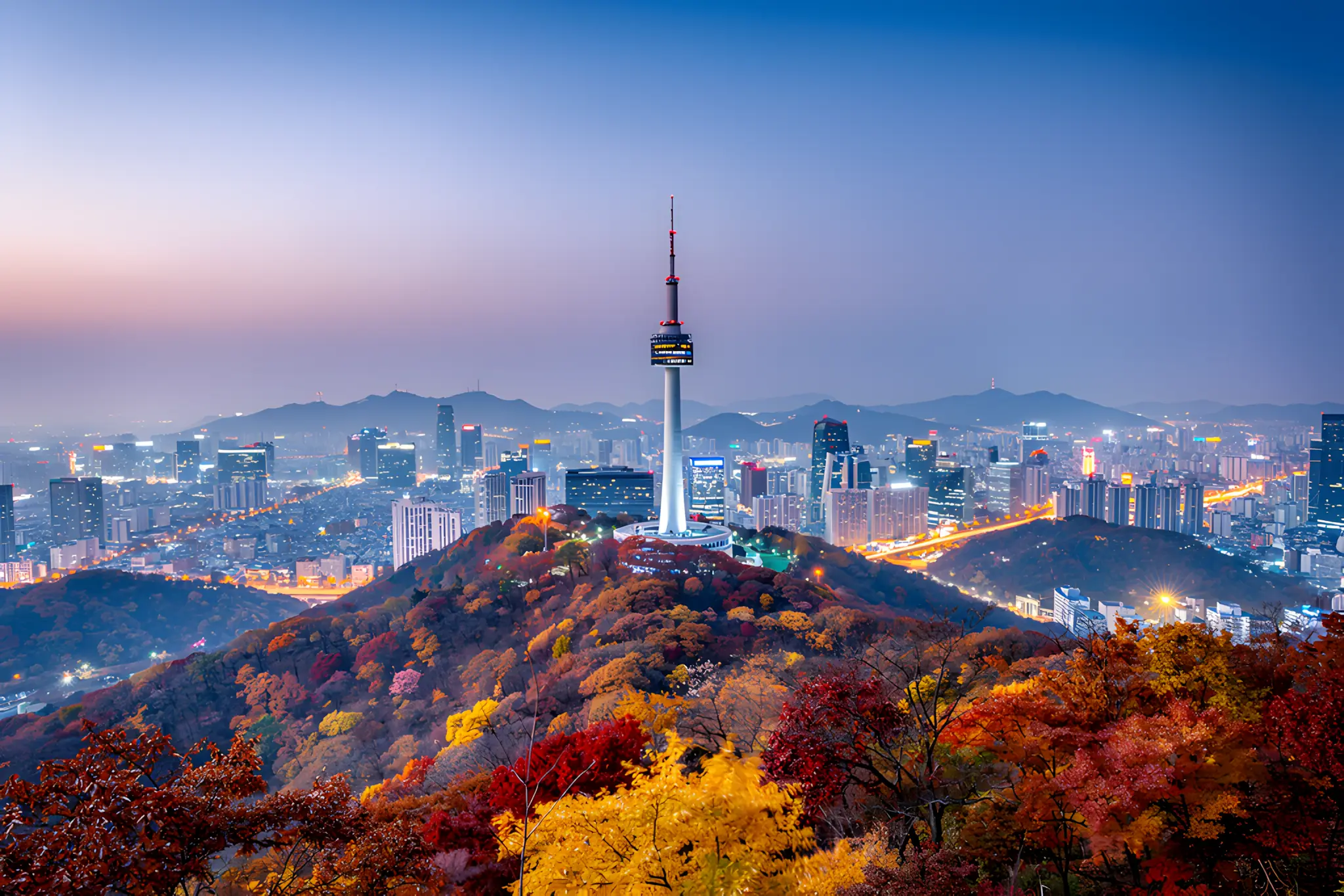

Why are flights to South Korea so expensive in 2026?
A mega airline merger and a major world summit have combined to push prices to Korea through the roof.
Right now, a return economy ticket from Sydney to Seoul on Korean Air or Qantas is sitting around $1,950 to $2,400 AUD. That is roughly 70% more than what you would have paid in 2019 for the same flight.
So what is going on? First, Korean Air swallowed up its main rival Asiana Airlines. For years, Asiana kept prices competitive by offering cheaper fares. Now that they are one company, there is nobody undercutting Korean Air on this route. Second, South Korea is hosting the APEC Summit in November 2025. Airlines know business travelers and government officials will pay top dollar, so they are holding back their cheapest seats. Third, both Qantas and Korean Air are dealing with delayed aircraft deliveries, meaning they simply cannot add more flights to meet demand.
Budget options like Jetstar and T’way Air are flying the route, but even their fares have crept up to $1,050 to $1,400 AUD once you add bags and meals. That is where full-service prices used to be.
The outlook: Do not expect bargains until well into 2026. Once the APEC crowds clear and the merged Korean Air settles, prices may ease slightly. For now, book early and consider flying midweek to find the best available fares.
Meet Superdeals
Never overpay for flights again
You can save between 40% and 80% on your flights to South Korea — and to other Asian countries — with Air Traveler Club Superdeals.
We monitor all major airports in Australia and New Zealand for cheap flights to Asia, including:
- Sydney (SYD) — AU
- Melbourne (MEL) — AU
- Auckland (AKL) — NZ
- Brisbane (BNE) — AU
- Perth (PER) — AU
- Christchurch (CHC) — NZ
- Adelaide (ADL) — AU
- Cairns (CNS) — AU
- Gold Coast (OOL) — AU
- Wellington (WLG) — NZ
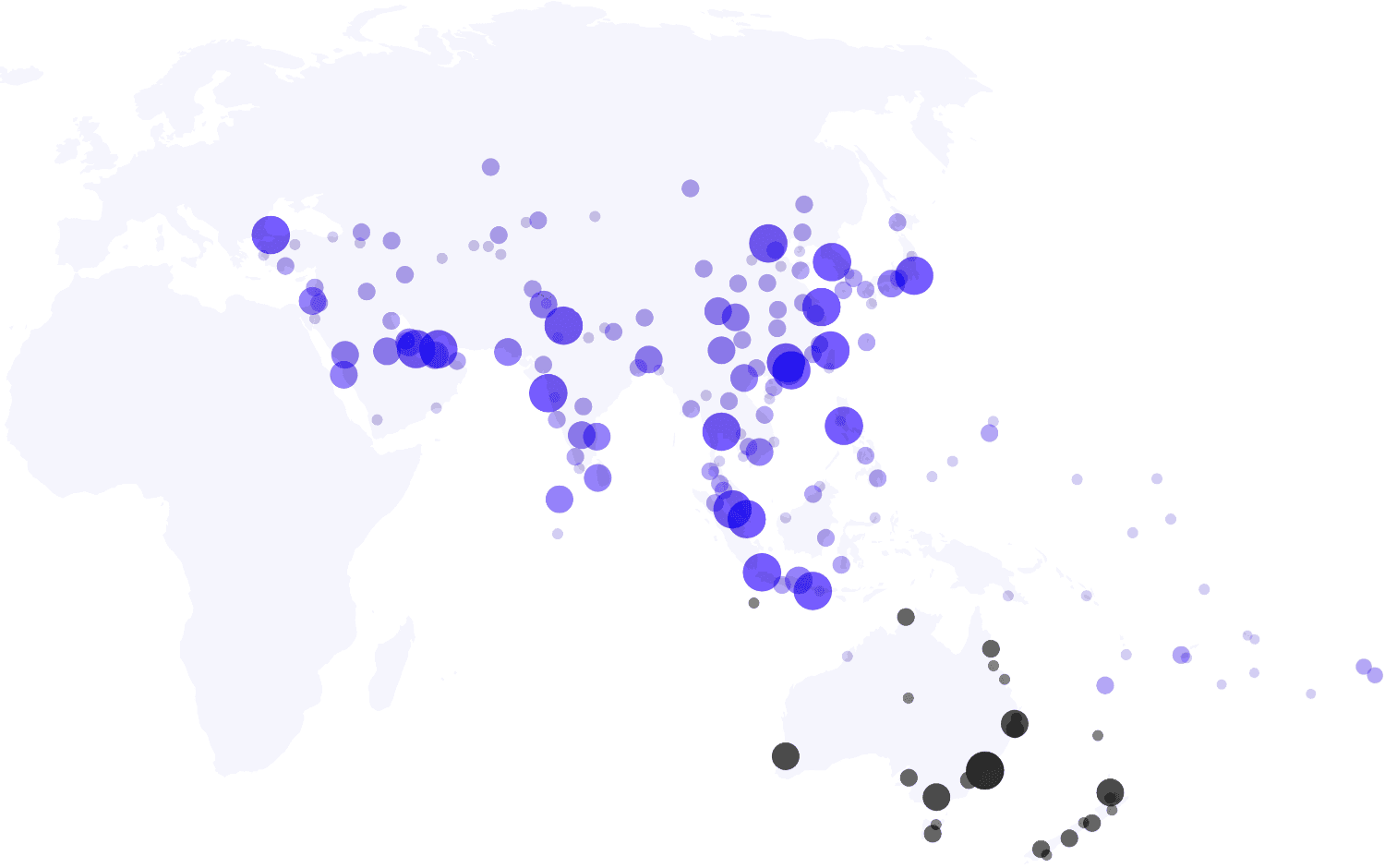
Departure airports in Australia/New Zealand and destinations in APAC covered by Superdeals.
Superdeals to South Korea
Fly for half price (or less)
Airlines don't design their pricing systems to offer half-price tickets. However, when algorithms detect demand shortfalls for specific routes, automated systems apply steep discounts to fill planes. Airlines would rather accept losses than fly with empty seats.
ATC monitors thousands of routes from Australasia 24/7, detecting Superdeals with 40–80% discounts. While a typical return flight from Australia and New Zealand to Seoul costs A$1300+, with Superdeals you can often grab it for around A$500:
Which airlines have promotions to South Korea right now?
We track and curate genuine offers from 150+ airlines, hand-picking only the most valuable for your wallet.
Which carriers have sales and special offers for flights in September, October, November and beyond? You can now browse the entire collection of active promotions:
Browse promos →Popular airlines with frequent offers from Australia and New Zealand:

Travel hacks and insights
for Australia and New Zealand — South Korea flights
Verified strategies to save money and avoid friction on routes to South Korea.
Medical insurance is mandatory
Healthcare in South Korea is high-quality but expensive for non-residents. An ER visit can cost $500+ AUD instantly. Australian Medicare does not cover you overseas.
Ensure your travel insurance specifically covers “winter sports” if you plan to ski in Gangwon-do. Many basic credit card policies exclude skiing or snowboarding injuries. Read the PDS carefully; a broken leg on the slopes can cost $50,000+ in evacuation and surgery.
T’way Air saves 40% vs Qantas direct
South Korean low-cost carrier T’way Air operates Sydney-Seoul Incheon using A330 widebodies, often pricing 35-45% below Qantas and Korean Air. While Qantas December fares spike to $2,200+ AUD, T’way often holds inventory at $1,200-1,400 AUD.
The trade-off is amenities: meals and checked bags are often unbundled in the cheapest fare classes. However, the flight time is identical. For families of four, this carrier switch saves over $3,000 AUD on peak holiday travel.
Sydney positioning saves $400 vs Melbourne
Sydney (SYD) serves as the primary gateway with high competition from Qantas, Jetstar, Korean Air, Asiana, and T’way. Melbourne and Brisbane have fewer direct options, often relying on expensive connections.
Melbourne-Seoul fares often exceed Sydney departures by $400-600 AUD. Booking a separate $150 domestic hop to Sydney to connect with a cheaper international ticket creates net savings of $250+ per person. Allow 4 hours for terminal transfer in Sydney.
Korean Air legroom beats Qantas economy
Korean Air’s economy class on the B777 and B747-8 (if scheduled) typically offers 33-34 inches of seat pitch. In contrast, Qantas and Jetstar 787s offer 31-32 inches.
On a 10.5-hour flight, those 2 inches make a massive difference for tall travelers. Additionally, Korean Air’s layout is often 3-3-3 on 777s (wider seats) versus the tighter 3-4-3 industry standard. Check SeatGuru for your specific flight number before booking.
Winter baggage allowance strategy
Traveling to Korea in December means packing heavy coats and boots. Korean Air and Asiana typically offer 1x23kg or generous carry-on limits. Low-cost carriers like T’way and Jetstar charge up to $80 AUD per bag if not pre-booked.
Purchase the “Bundle” or “Value” pack during initial booking. Adding a 20kg bag at the airport counter can cost $150+ AUD. Wear your heaviest coat onto the plane to save 2-3kg of checked weight.
Gimpo transfer trap warning
Avoid itineraries that connect from Incheon (ICN) to Gimpo (GMP) for domestic flights to Busan or Jeju. These airports are 40km apart. You must clear immigration, collect bags, and take a 40-minute train or bus ride.
A “3-hour connection” listed on a search engine is technically impossible with bags and immigration. Always fly into the same airport you depart from, or allow a minimum of 5 hours for an ICN-GMP transfer.
What travelers ask most
Expert answers on routing, carriers, timing, and fees
What is the new “Climate Card” for tourists in Seoul?
The Climate Card is Seoul’s new unlimited transit pass, and the tourist-specific version recently launched in 2025 offers incredible value. For a flat fee of roughly ₩5,000-15,000 (about €3.50-10), you get unlimited rides on subways and buses within Seoul for 1, 2, 3, or 5 days. This beats the traditional T-Money card where you pay per ride, especially if you plan to explore multiple neighborhoods like Gangnam, Hongdae, and Myeongdong in a single day. You can buy these physical cards at Seoul tourism plazas or convenience stores near major subway stations.
What is the WOWPASS and is it better than T-Money?
The WOWPASS is a prepaid debit card for tourists that solves the payment issue since many local shops reject foreign cards, while T-Money is strictly for transport. WOWPASS acts as both: you load it with Euros (or other currencies) at airport kiosks, and it functions as a local Korean debit card for shopping *and* a transit card for subways. It’s superior for convenience because it lets you pay at card-only kiosks in cafes and restaurants without triggering foreign transaction fees. However, you still need a basic T-Money card capability (built-in to WOWPASS) to ride the bus.
How cold is Seoul in December?
Seoul is brutally cold in December, often colder than London or Paris due to Siberian winds, with temperatures dropping to -10°C (14°F) at night. The air is extremely dry, making the cold feel sharper, and wind chill is a serious factor. You need a heavy down jacket (long padding is the local style), thermal base layers, gloves, and a scarf. Don’t underestimate the urban wind tunnels between skyscrapers; dress like you are going to Scandinavia, not the Mediterranean.
Is dining alone acceptable in Korean culture?
Yes, the culture of “Honbap” (eating alone) has exploded recently, though traditional BBQ places still often require a minimum order of two servings. Western-style cafes, noodle shops, and department store food courts are perfectly comfortable for solo diners. If you want Korean BBQ alone, look for restaurants specifically advertising “1 person set” menus, or be prepared to pay for two portions of meat. Convenience stores also offer high-quality full meals with seating areas if you want a quick, judgment-free dinner.
Do I need a power adapter for South Korea?
Likely not, as South Korea uses the same Type F (Schuko) and Type C outlets found in most of Europe (Germany, France, Spain, etc.). The standard voltage is 220V at 60Hz, which is compatible with European electronics. If you are coming from the UK or Ireland (Type G plugs), you will definitely need an adapter. For travelers from mainland Europe, your phone chargers and hair dryers will plug directly into the wall without issues.
How does the expanded Incheon Airport Terminal 2 affect my arrival?
The Phase 4 expansion of Incheon Airport (ICN), fully operational as of early 2025, has reshuffled airline terminal assignments. Several SkyTeam and Star Alliance partners have moved into the expanded Terminal 2 areas, reducing congestion but potentially changing where your flight lands. Double-check your arrival terminal on your ticket, as the transfer between T1 and T2 takes 15-20 minutes by shuttle bus. The expansion also introduced new “Smart Pass” biometric lanes that speed up immigration processing if you register your face and passport via the mobile app beforehand.
How does Air Traveler Club find cheap flights to Seoul?
We use AI-powered tools to monitor pricing across 150+ airlines 24/7, specifically looking for unadvertised drops on routes from Europe to Asia. When an algorithm anomaly occurs—like a Lufthansa flight from Munich to Seoul dropping from €1,100 to €580—our system flags it instantly. A human expert then verifies the deal is real and bookable before sending it to our free newsletter subscribers. You book directly with the airline, ensuring full consumer protection while paying nearly half the standard rate.
Why are your flight deals cheaper than Google Flights?
Google Flights shows you the current market price *right now*, whereas we detect temporary pricing windows that most people miss. Airlines often adjust “fare buckets” silently to fill capacity, creating short-lived opportunities where premium seats sell for economy prices. For example, we might catch a Swiss Air flight to Incheon for €520 that lasts only 14 hours before jumping back to €950. Our free newsletter alerts you during that critical window so you can book the same flight as everyone else, just for significantly less.
Nonstop (direct) vs 1-stop
How much do flights from Australasia to South Korea cost?
Nonstop AU/NZ-South Korea flights take 10-11 hours and cost 20-40% more than connecting alternatives. Major hubs—including Sydney, Melbourne, and Brisbane—offer the most frequent service, primarily to Seoul Incheon (ICN).
Direct service justifies its premium for business travelers, families, or when price differences stay below A$200-300—otherwise, strategic one-stop routing typically delivers better value.
| Route | Airline | Aircraft | Avg Price | Avg ATC Price |
|---|---|---|---|---|
| Sydney (SYD) → Seoul Incheon (ICN) | Korean Air | 777-300ER, A330-300 | A$1,600 | A$545 (66% off) |
| Sydney (SYD) → Seoul Incheon (ICN) | Asiana Airlines | A350-900 | A$1,550 | A$505 (67% off) |
| Melbourne (MEL) → Seoul Incheon (ICN) | Asiana Airlines | A350-900 | A$1,500 | A$495 (67% off) |
| Brisbane (BNE) → Seoul Incheon (ICN) | Jetstar | 787-8 | A$1,200 | A$395 (67% off) |
| Brisbane (BNE) → Seoul Incheon (ICN) | Korean Air | 787-9 | A$1,550 | A$510 (67% off) |
| Perth (PER) → Seoul Incheon (ICN) | T’way Air | A330-300 | A$1,350 | A$455 (66% off) |
| Auckland (AKL) → Seoul Incheon (ICN) | Korean Air | 787-9 | A$1,700 | A$575 (66% off) |
| Gold Coast (OOL) → Seoul Incheon (ICN) | Jetstar | 787-8 | A$1,250 | A$415 (67% off) |
*Avg ATC Price: Superdeal fare published on our platform (40-80% savings compared to standard market rates). Learn more.
Best stopovers
for Australasia to South Korea flights
Not all connections are created equal. When flying from the Australasia to South Korea, routing through major airport hubs can deliver lower total fares, better-equipped aircraft, and access to airline stopover programs.
Tokyo NRT
with Japan Airlines / ANA
- Average savings: 25-35% vs non-stop flights
- Flight segments: ~10h Australia/New Zealand-Tokyo + ~2.5h Tokyo-South Korea
- Typical connection: 2-4 hours (minimum 60 minutes)
- Stopover perks: Up to 6-night stopover
- Visa requirements: Visa-free 90 days for Australia/NZ passport holders
- Airport rating: 4-star Skytrax hub with strong transit facilities
- Best for: Sydney, Melbourne, Auckland travelers seeking excellent award seat availability
Seoul ICN
with Korean Air / Asiana Airlines
- Average savings: 20-30% vs non-stop flights
- Flight segments: Australia/New Zealand-Seoul (~11-12h), then Seoul-South Korea domestic (~1h)
- Typical connection: 2-5 hours (minimum 45 minutes)
- Stopover perks: Free transit tours
- Visa requirements: Visa-free 90 days for Australia/NZ passport holders
- Airport rating: 4-star Skytrax airport with strong shopping
- Best for: Brisbane, Perth, Christchurch travelers seeking family-friendly airport facilities
Hong Kong HKG
with Cathay Pacific
- Average savings: 30-40% vs non-stop flights
- Flight segments: Australia/New Zealand-Hong Kong (~9-11h), then Hong Kong-South Korea (~3.5h)
- Typical connection: 2-3 hours (minimum 60 minutes)
- Stopover perks: Free Hong Kong stopover
- Visa requirements: Visa-free 90 days for Australia/NZ passport holders
- Airport rating: 5-star Skytrax airport with premium lounges
- Best for: Sydney, Melbourne, Auckland travelers seeking world-class lounge and dining options
Taipei TPE
with China Airlines / EVA Air
- Average savings: 30-45% vs non-stop flights
- Flight segments: Journey breaks into ~11h to Taipei, then ~2.5h to South Korea
- Typical connection: 2-4 hours (minimum 60 minutes)
- Stopover perks: Modern terminal with premium lounge access
- Visa requirements: Visa-free 90 days for Australia/NZ passport holders
- Airport rating: 4-star Skytrax airport, efficient for transfers
- Best for: Brisbane, Adelaide, Wellington travelers seeking consistently lower premium-cabin pricing
Get real-time deal alerts
Activate real-time alerts and get notified the instant a new Superdeal to South Korea has been discovered.
Book these incredible price drops before they’re gone.
Set alerts →
Best airlines and aircraft
for long-haul flights to South Korea
Most travelers book Australasia–South Korea flights by price and schedule—but aircraft choice determines whether you arrive refreshed or wrecked. Cabin pressurization, humidity, seat configuration, and service standards vary dramatically on this route.
Below are carriers we recommend—with superior configurations on flights from the US and Canada to South Korea.
Korean Air
Boeing 787-9 Dreamliner
Skytrax 5-star carrier with Boeing 787-9 offering improved cabin humidity and quieter flight for better comfort on long-haul routes to North America.
- Route: Direct Seoul (ICN) → Toronto (YYZ)/Los Angeles (LAX) (13-14 hrs)
- Economy: 32″ pitch, 18″ width, 3-3-3 configuration, personal IFE screens, USB ports
- Business: 1-2-1 configuration, fully lie-flat seats ~78″, direct aisle access
- Standouts: 16″ HD touchscreen IFE, KrisWorld entertainment with Korean and international content, WiFi available, multi-course Korean and Western meals
- Typical Pricing: Economy A$1,200-1,800; Business A$5,500-8,000;
Air Canada
Boeing 787-9 Dreamliner
Canada’s flagship carrier uses Boeing 787-9 for efficient long-haul flights with better air quality and lighting, enhancing passenger well-being on transpacific sectors.
- Route: Direct Toronto (YYZ)/Vancouver (YVR) → Seoul (ICN) (11-13 hrs)
- Economy: 31-32″ pitch, 17-18″ width, 3-3-3 layout, personal touchscreens
- Business: 1-2-1 reverse herringbone seats, lie-flat 76-79″, aisle access
- Standouts: 16″ HD IFE systems, WiFi, seasonal Canadian and Asian-inspired meals, premium amenity kits
- Typical Pricing: Economy A$1,100-1,700; Business A$5,000-7,500;
United Airlines
Airbus A350-900
United’s Airbus A350-900 features advanced aerodynamic design and quieter cabins, enhancing comfort on routes between western Canada/USA and South Korea with fuel-efficient operations.
- Route: 1-stop via San Francisco (SFO) or direct Vancouver (YVR) → Seoul (ICN) (11-14 hrs)
- Economy: 31″ pitch, 18″ width, 3-3-3 cabin config, personal touch-screen IFE
- Business: 1-2-1 Polaris seats, fully lie-flat ~78″, aisle access
- Standouts: 16″ screen IFE, WiFi available, enhanced catering including Korean BBQ options, amenity kits designed for relaxation
- Typical Pricing: Economy A$1,100-1,600; Business A$4,800-7,200;
Asiana Airlines
Airbus A350-900
Five-star Asiana Airlines operates the technologically advanced Airbus A350-900, offering superior air quality and mood lighting for a premium journey from North America to Seoul.
- Route: Direct Los Angeles (LAX)/New York (JFK) → Seoul (ICN) (12-14 hrs)
- Economy: 32″ pitch, 18″ width, 3-3-3 seating, HD personal IFE
- Business: 1-2-1 configuration with fully lie-flat seats up to 78″
- Standouts: 17″ IFE screens, high-speed WiFi, premium Korean and western gourmet meals, wellness kits
- Typical Pricing: Economy A$1,250-1,900; Business A$5,500-8,200;
Fly better for less
Travel insights, proven strategies, and insider tips.

Best aircraft for long-haul flights

Airline stopover programs. Turn your layover into a bonus vacation.

Priced out of Asia? How the fifth-freedom loophole can cut your flight costs by thousands.