Europe New Zealand 40–80% OFF
Cheap flights discovered by AI✨
Fly round-trip to Auckland for €500, while others pay €1,300+.
Our AI finds Superdeals to New Zealand from all major airports in Europe. You book directly with airlines for half the price—or less.


Why are flights to New Zealand so expensive in 2026?
A perfect storm of new taxes, airport fee hikes, and longer flight paths has pushed fares to New Zealand to near-record levels.
To put it in perspective: a return flight from London to Auckland that cost around £1,000 in 2019 now runs between £1,650 and £2,100 for late 2025. That’s not just inflation at work.
Here’s what’s driving those prices up. First, New Zealand tripled its tourist tax in October 2024. The levy jumped from $35 to $100 NZD per person. Add in higher visa fees, and a family of four faces roughly €450 in extra costs before even booking a flight. Second, Auckland Airport has raised its charges by 30-40% to pay for upgrades. Airlines like Air New Zealand and Qantas have warned these fees will hit ticket prices directly. Third, European carriers flying via hubs like Singapore or Dubai must avoid Russian airspace ban zones. This adds hours of extra flying time and burns more fuel. Finally, Chinese carriers that once offered budget-friendly connecting routes haven’t fully returned to pre-pandemic levels, leaving Emirates and Singapore Airlines with less pressure to compete on price.
The outlook: Don’t expect a big drop soon. These taxes and fees are locked in for years. Your best bet is booking well ahead and staying flexible on dates.
Meet Superdeals
Never overpay for flights again
You can save between 40% and 80% on your flights to New Zealand — and to other Asian countries — with Air Traveler Club Superdeals.
We monitor all major airports in Europe for cheap flights to Asia, including:
- London (LHR) — UK
- Paris (CDG) — France
- Amsterdam (AMS) — Netherlands
- Madrid (MAD) — Spain
- Frankfurt (FRA) — Germany
- Rome (FCO) — Italy
- Athens (ATH) — Greece
- Vienna (VIE) — Austria
- Zurich (ZRH) — Switzerland
- Warsaw (WAW) — Poland
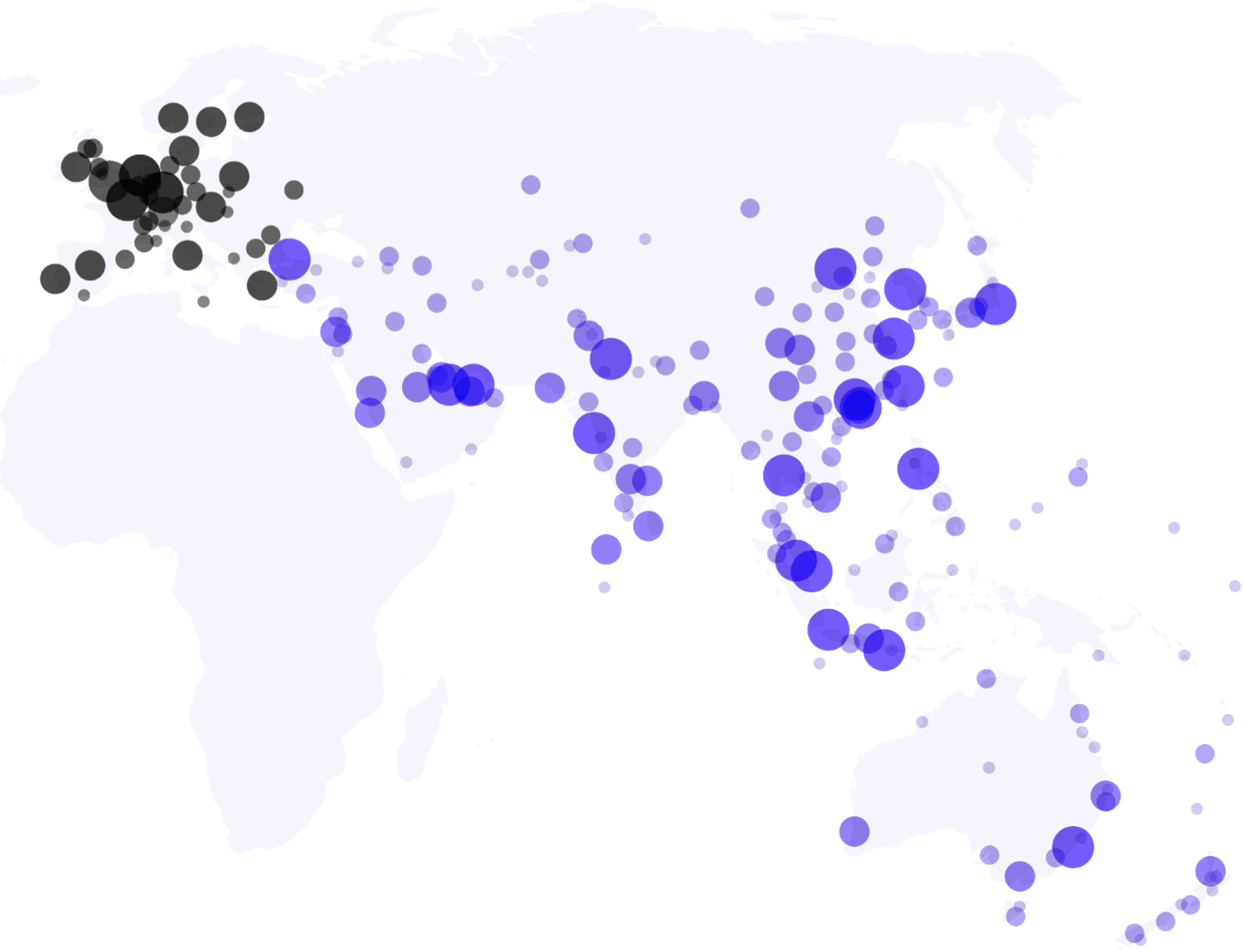
Departure airports in Europe and destinations in APAC covered by Superdeals.
Superdeals to New Zealand
Fly for half price (or less)
Airlines don't design their pricing systems to offer half-price tickets. However, when algorithms detect demand shortfalls for specific routes, automated systems apply steep discounts to fill planes. Airlines would rather accept losses than fly with empty seats.
ATC monitors thousands of routes from Europe 24/7, detecting Superdeals with 40–80% discounts. While a typical return flight from Europe to Auckland costs €1,300+, with Superdeals you can often grab it for around €500:
Which airlines have promotions to New Zealand right now?
We track and curate genuine offers from 150+ airlines, hand-picking only the most valuable for your wallet.
Which carriers have sales and special offers for flights in February, March, April and beyond? You can now browse the entire collection of active promotions:
Browse promos →Popular airlines with frequent offers from Europe:

Travel hacks and insights
for Europe — New Zealand flights
Verified strategies to save money and avoid friction on routes to New Zealand.
Biosecurity fines hit $400 NZD instantly
New Zealand issues instant $400 NZD infringement notices for undeclared biosecurity risk goods. An apple forgotten in your backpack or a honey sandwich can trigger this fine immediately.
There are amnesty bins before the biosecurity checkpoint. Dump any food there. If in doubt, declare it on your arrival card. Declaring an item never results in a fine, even if it’s confiscated. Hiding it does.
Transit via Asia avoids US immigration hassles
Flying to New Zealand via US hubs (LAX, SFO, IAH) requires all passengers to clear US immigration, collect bags, and re-check them, even for “direct” transfers. This requires an ESTA ($21) and adds 2-3 hours of stress.
Routing via Asian hubs like Singapore, Dubai, or Doha allows bags to be checked through to Auckland. Passengers simply walk to the next gate without clearing immigration. Always choose Asian transits over US transits for a seamless journey.
Air New Zealand OneUp upgrade strategy
Air New Zealand’s “OneUp” bidding system allows passengers to bid for upgrades from Economy to Premium Economy or Business. Offers 20-30% above the minimum bid often s\\ucceed on flights with light premium loads.
The secret is checking seat maps via ExpertFlyer before bidding. If the business cabin is wide open (J9 availability) 72 hours out, a low-range bid has a high success probability. Confirmed upgrades clear 3-7 days before travel.
Singapore Airlines baggage allowance advantage
Singapore Airlines uses the “weight concept” for flights to New Zealand, offering 25-30kg regardless of the number of bags. This is often more flexible than the “piece concept” (2x23kg) used on trans-Pacific routes via the US.
This flexibility allows you to pack multiple smaller bags or odd-shaped items without paying extra piece fees. However, strict weight limits apply, so weigh everything before leaving home to avoid expensive per-kg excess charges.
Declare hiking boots to avoid biosecurity delays
New Zealand has the world’s strictest biosecurity. You must declare all outdoor equipment, including hiking boots and tents. If you declare them, officers simply inspect and clean them for free if needed.
If you fail to declare dirty equipment, you face a $400 instant fine. Pack your outdoor gear at the top of your bag for easy access during inspection. Clean all soil off soles before travel to speed up the process.
Return ticket proof strictly enforced
New Zealand immigration strictly requires proof of onward or return travel. Airlines at your European departure point will verify this and deny boarding if you have a one-way ticket.
If you plan to travel flexibly, book a fully refundable return ticket or use a service like OnwardTicket to hold a valid reservation. Showing a bank balance is rarely accepted as a substitute for a ticket.
What travelers ask most
Expert answers on routing, carriers, timing, and fees
Are there biosecurity delays at Auckland Airport in late 2025?
Yes, expect 45-90 minute queues for biosecurity screening during the morning arrival bank (6:00 AM – 11:00 AM). New Zealand has intensified screening for hiking gear and outdoor equipment to protect against invasive species. To speed up your exit, clean all footwear thoroughly before packing and declare absolutely everything on your digital form. Travelers with “nothing to declare” who are found with an apple or muddy boots face an instant NZ$400 fine (approx. €220).
How has the Euro to NZ Dollar exchange rate trended in late 2025?
The Euro remains strong against the Kiwi dollar, with 1 EUR buying approximately NZ$1.75-1.85 as of late 2025. This gives European tourists excellent purchasing power for dining and activities. A typical flat white coffee costs NZ$5.50-6.00 (€3.00-3.30), and a decent pub meal runs NZ$30-35 (€16-19). Despite local inflation, the favorable exchange rate helps offset the higher cost of long-haul flights.
Are there new restrictions on freedom camping for the 2025/26 summer?
Yes, stricter enforcement of the “certified self-contained” rule is in full effect for the 2025/26 season. You can only freedom camp on public land if your vehicle has a fixed (plumbed) toilet and a green warrant card; portable chemical toilets no longer qualify. Council rangers actively patrol popular spots in Queenstown and Coromandel, issuing NZ$400 fines for non-compliance. If renting a smaller van without a fixed toilet, you must stay in paid campgrounds or holiday parks.
Which new airline routes from Europe to New Zealand launched in 2025?
Turkish Airlines has expanded its reach with flights to Sydney and Melbourne via Singapore, offering a new one-stop option for Europeans connecting to New Zealand via a short trans-Tasman hop. This adds competition to the traditional Emirates (Dubai), Qatar Airways (Doha), and Singapore Airlines routes. While not a direct Europe-NZ flight, the single-ticket connection through Istanbul often provides competitive pricing, especially for departures from Southern and Eastern Europe.
Do I need a transit visa if connecting through Australia?
Yes, this is a common trap for European travelers flying Qantas or Emirates via Sydney or Melbourne. Unless you stay airside for under 8 hours and your luggage is checked through, you typically need a visa. Most Europeans are eligible for the free eVisitor (Subclass 651) or the Transit Visa (Subclass 771). Apply for this at least 2-3 weeks before travel, as being denied boarding in Europe because you lack an Australian transit visa is a frequent and costly mistake.
How strict is the carry-on weight limit on domestic NZ flights?
Extremely strict, especially on Jetstar and smaller Air New Zealand turboprop flights. The limit is typically 7kg total for carry-on, and staff frequently weigh bags at the gate. If you are connecting from a generous international flight (e.g., Emirates 10kg+ allowance) to a domestic hop, be prepared to check your roll-aboard bag. Pre-purchasing checked luggage is far cheaper online than paying the punitive excess fees at the gate.
Should I exchange Euros for NZ Dollars before leaving Europe?
No, you will get terrible rates exchanging EUR for NZD in Europe. Use an ATM at Auckland Airport upon arrival or pay with a travel-friendly card (like Revolut or Wise) which offers mid-market rates. Cash is rarely needed in New Zealand except for small roadside stalls or laundromats; almost every café, market stall, and taxi accepts contactless payment. Carrying large amounts of cash is unnecessary and less secure.
Is Premium Economy worth the extra cost for this route?
For a 24-30 hour journey, Premium Economy is often considered the “sweet spot” for value. You typically get a wider seat, leg rest, and priority check-in for about €800-1,200 more than Economy, compared to the €3,000+ jump to Business. On airlines like Air New Zealand or Singapore Airlines, the extra sleep quality can mean arriving ready to explore rather than losing two days to exhaustion. If your budget allows, it is highly recommended for the ultra-long-haul leg.
Nonstop (direct) vs 1-stop
How much do flights from Europe to New Zealand cost?
No nonstop service exists between Europe and New Zealand. All routings require at least one connection, with total journey times of 24-28 hours depending on hub choice.
This is standard for the route—most travelers connect through Singapore (SIN), Dubai (DXB), or Doha (DOH) with minimal hassle. Select connection times of 2.5-4 hours for international-to-international transfers—enough buffer for customs, security, and gate changes without excessive waiting.
All ATC Superdeals are manually verified for optimal connection times and efficient hub routing.
| Route | Airline(s) | Journey Time | Avg Price | Avg ATC Price |
|---|---|---|---|---|
| London (LHR) → Singapore (SIN) → Auckland (AKL) | Singapore Airlines / Air New Zealand | 25h 30m | €1,550 | €465 (70% off) |
| Frankfurt (FRA) → Singapore (SIN) → Christchurch (CHC) | Lufthansa / Singapore Airlines | 26h 00m | €1,600 | €480 (70% off) |
| Paris (CDG) → Singapore (SIN) → Wellington (WLG) | Singapore Airlines / Air New Zealand | 26h 30m | €1,570 | €470 (70% off) |
| Amsterdam (AMS) → Singapore (SIN) → Auckland (AKL) | KLM / Singapore Airlines | 25h 45m | €1,650 | €495 (70% off) |
| London (LHR) → Dubai (DXB) → Auckland (AKL) | Emirates | 25h 00m | €1,500 | €450 (70% off) |
| Madrid (MAD) → Dubai (DXB) → Christchurch (CHC) | Emirates | 27h 00m | €1,650 | €495 (70% off) |
| Rome (FCO) → Doha (DOH) → Auckland (AKL) | Qatar Airways | 26h 30m | €1,700 | €510 (70% off) |
| Munich (MUC) → Doha (DOH) → Wellington (WLG) | Qatar Airways | 27h 00m | €1,650 | €495 (70% off) |
| Zurich (ZRH) → Singapore (SIN) → Queenstown (ZQN) | Swiss / Singapore Airlines | 27h 30m | €1,700 | €510 (70% off) |
| Dublin (DUB) → Dubai (DXB) → Auckland (AKL) | Emirates | 26h 30m | €1,600 | €480 (70% off) |
*Avg ATC Price: Superdeal fare published on our platform (40-80% savings compared to standard market rates). Learn more.
How the 5th-freedom loophole can cut your flight costs by thousands
Welcome to the overlooked world of fifth-freedom flights. These legal, rare, and often underpriced routes create some of the cheapest fares—yet most travelers have never heard of them…
Best stopovers
for Europe to New Zealand flights
Not all connections are created equal. When flying from the Europe to New Zealand, routing through major airport hubs can deliver lower total fares, better-equipped aircraft, and access to airline stopover programs.
Singapore SIN
with Singapore Airlines / Lufthansa
- Average savings: 18% vs non-stop flights
- Flight segments: ~12.5h Europe-Singapore + ~10h Singapore-New Zealand
- Typical connection: 2-5 hours (minimum 60 minutes)
- Stopover perks: Free Singapore stopover package
- Visa requirements: Most Europe passports enter visa‑free up to 90 days
- Airport rating: Skytrax 5-star hub, regularly top-ranked globally
- Best for: London, Frankfurt, Paris travelers seeking award-winning airport experience and smooth connections
Doha DOH
with Qatar Airways
- Average savings: 22% vs non-stop flights
- Flight segments: Europe-Doha (~6.5h), then Doha-New Zealand (~16.5h)
- Typical connection: 2-4 hours (minimum 45 minutes)
- Stopover perks: Hotels from $14/night
- Visa requirements: Many Europe passports get visa-free or simple e-visa
- Airport rating: 5-star airport with strong on-time performance
- Best for: Madrid, Rome, Berlin travelers seeking long-haul comfort and strong economy cabin
Dubai DXB
with Emirates
- Average savings: 20% vs non-stop flights
- Flight segments: Split into ~7h Europe-Dubai and ~17h Dubai-New Zealand legs
- Typical connection: 2-4 hours (minimum 60 minutes)
- Stopover perks: Free hotel with meals and transfers
- Visa requirements: Many Europe passports receive visa-on-arrival entry
- Airport rating: Large global hub with extensive premium facilities
- Best for: Amsterdam, Zurich, Vienna travelers seeking A380 cabins and strong business-class value
Hong Kong HKG
with Cathay Pacific
- Average savings: 16% vs non-stop flights
- Flight segments: Two-leg journey: ~11.5h Europe-Hong Kong, ~10.5h Hong Kong-New Zealand
- Typical connection: 2-5 hours (minimum 60 minutes)
- Stopover perks: Free Hong Kong stopover
- Visa requirements: Most Europe passports enjoy visa-free entry up to 90 days
- Airport rating: 5-star airport with efficient transfers and lounges
- Best for: Munich, Brussels, Copenhagen travelers seeking balanced flight lengths and strong on-time record
Get real-time deal alerts
Activate real-time alerts and get notified the instant a new Superdeal to New Zealand has been discovered.
Book these incredible price drops before they’re gone.
Set alerts →
Best airlines and aircraft
for long-haul flights to New Zealand
Most travelers book Europe–New Zealand flights by price and schedule—but aircraft choice determines whether you arrive refreshed or wrecked. Cabin pressurization, humidity, seat configuration, and service standards vary dramatically on this route.
Below are carriers we recommend—with superior configurations on flights from the US and Canada to New Zealand.
Air New Zealand
Boeing 787-9 Dreamliner
Star Alliance member and New Zealand’s flag carrier operates the 787-9 offering reduced cabin altitude and humidity for enhanced long-haul comfort.
- Route: 1-stop via Singapore (SIN) or Auckland (AKL), major Europe hubs (London/Frankfurt) → Auckland (24-28 hrs)
- Economy: 31″ pitch, 17″ width, 3-3-3 layout, personal touch screens, USB charging
- Business: 1-2-1 reverse herringbone, lie-flat 76″ seats, direct aisle access
- Standouts: 10.6″ HD IFE with extensive content, high-speed Wi-Fi (satellite), premium New Zealand cuisine, Skycouch option in Economy
- Typical Pricing: Economy €1,000-1,400; Business €5,000-7,500;
Lufthansa
Airbus A350-900
Five-time Skytrax award winner uses the A350’s quieter cabin and lower altitude for superior comfort on long-haul flights to New Zealand via Frankfurt.
- Route: 1-stop via Frankfurt (FRA) → Auckland (approx. 24-26 hrs total)
- Economy: 31″ pitch, 18″ width, 3-3-3 layout, personal HD screens
- Business: 1-2-1 layout, fully flat 76″ seats, direct aisle access
- Standouts: 16″ HD IFE screens, high-speed Wi-Fi available, multi-course meals with regional options, amenity kits
- Typical Pricing: Economy €1,100-1,600; Business €5,500-8,000;
British Airways
Airbus A350-1000
Flag carrier of the United Kingdom leverages the A350-1000 for quieter cabins and advanced humidity control on flights connecting London to New Zealand via Hong Kong.
- Route: 1-stop via London Heathrow (LHR) → Hong Kong (HKG) → Auckland (AKL) (approx. 24-30 hrs)
- Economy: 31″ pitch, 18″ width, 3-3-3 layout, touchscreen IFE
- Business: 1-2-1 staggered layout, lie-flat 78″ seats, aisle access
- Standouts: 17.3″ HD IFE, Wi-Fi with multiple packages, British-inspired meals with wine pairing, Club World lounge access
- Typical Pricing: Economy €1,100-1,700; Business €5,500-7,800;
Turkish Airlines
Airbus A350-900
Star Alliance member known for Turkish hospitality flies A350-900 on Europe-New Zealand routes via Istanbul, combining modern comfort with cultural cuisine.
- Route: 1-stop via Istanbul (IST) → Auckland (AKL) (approx. 26-29 hrs)
- Economy: 32″ pitch, 18″ width, 3-3-3 layout, personal entertainment systems
- Business: 1-2-1 layout, fully lie-flat 78″ seats, direct aisle access
- Standouts: 16″ IFE screens with extensive programming, Wi-Fi available, award-winning multi-course meals with Turkish specialties, generous baggage allowance
- Typical Pricing: Economy €900-1,400; Business €4,500-7,000;
Fly better for less
Travel insights, proven strategies, and insider tips.

Are EU-banned airlines unsafe? Why travel advisories don’t tell you everything.

Best airlines for Europe to Asia flights on a shoestring budget

Airline stopover programs. Turn your layover into a bonus vacation.