Europe Japan 40–80% OFF
Cheap flights discovered by AI✨
Fly round-trip to Tokyo for €350, while others pay €900+.
Our AI finds Superdeals to Japan from all major airports in Europe. You book directly with airlines for half the price—or less.
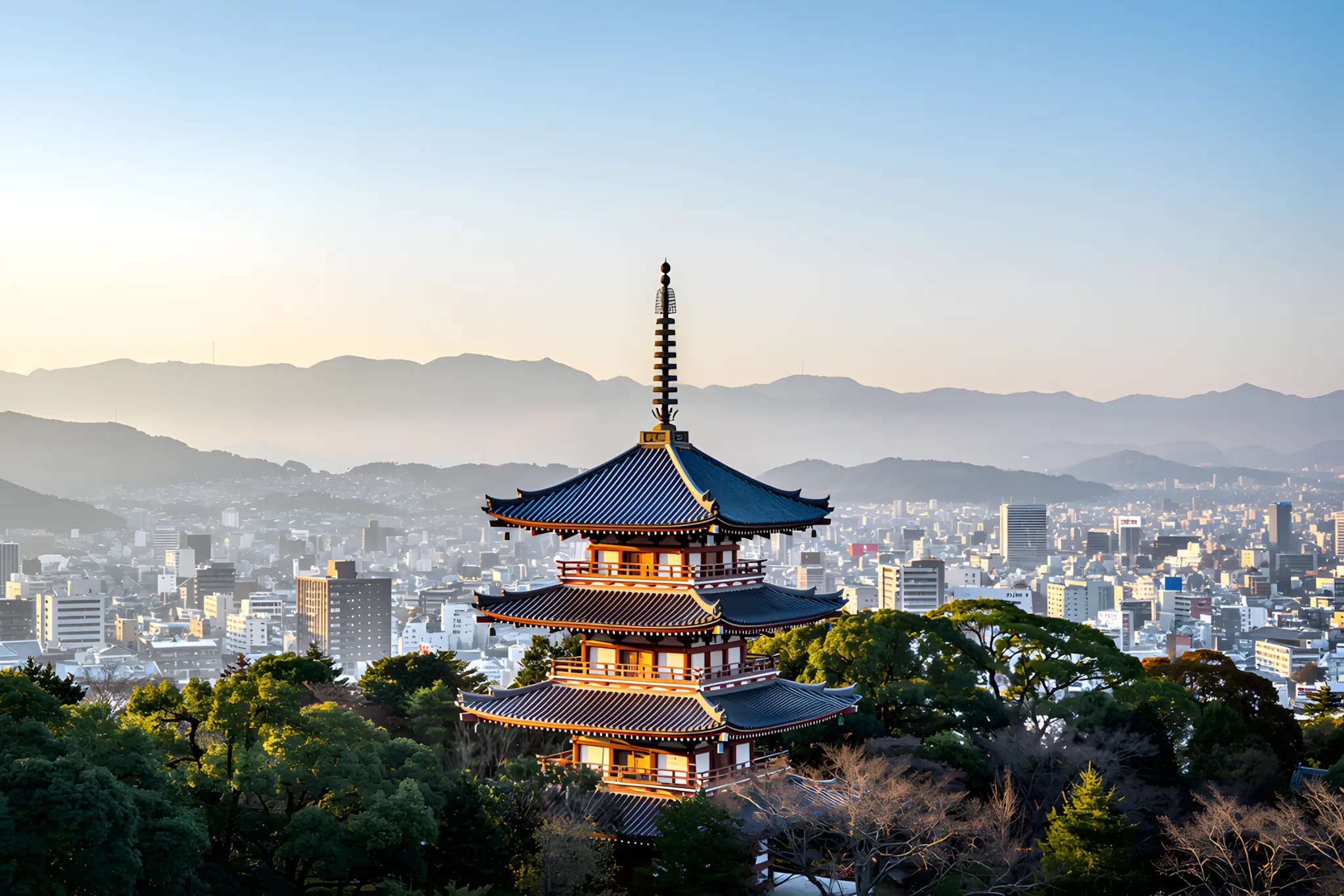

Why are flights to Japan so expensive in 2026?
A perfect storm of flight path detours, a massive world fair, and a weak Japanese currency has pushed airfares from Europe to Japan to near-record highs.
To give you an idea: a direct London-to-Tokyo flight on British Airways or JAL could cost you £1,350 to £1,650 in late 2025. That’s nearly double what you’d pay just a few years ago.
So what’s going on? First, the Russian airspace ban means European and Japanese airlines can’t fly the shortest route over Siberia anymore. Planes now take a 2-4 hour detour, burning more fuel and needing extra crew members. That cost gets passed straight to you.
Second, World Expo 2025 in Osaka is drawing millions of visitors. Even after it ends in October, planes stay packed because airlines can’t simply add more flights. They’re stuck waiting on delayed aircraft deliveries.
Third, the weak yen makes Japan a bargain once you land. Hotels and meals cost less, so travellers are willing to stomach pricier flights. More demand means higher fares.
Here’s a budget tip: Chinese carriers like Air China offer connecting flights via Beijing for £650 to £850. They can still fly over Russia, keeping their costs down.
The outlook: Don’t expect big drops until the airspace reopens or new aircraft arrive. Realistically, that means prices stay elevated through 2026 at least.
Meet Superdeals
Never overpay for flights again
You can save between 40% and 80% on your flights to Japan — and to other Asian countries — with Air Traveler Club Superdeals.
We monitor all major airports in Europe for cheap flights to Asia, including:
- London (LHR) — UK
- Paris (CDG) — France
- Amsterdam (AMS) — Netherlands
- Madrid (MAD) — Spain
- Frankfurt (FRA) — Germany
- Rome (FCO) — Italy
- Athens (ATH) — Greece
- Vienna (VIE) — Austria
- Zurich (ZRH) — Switzerland
- Warsaw (WAW) — Poland
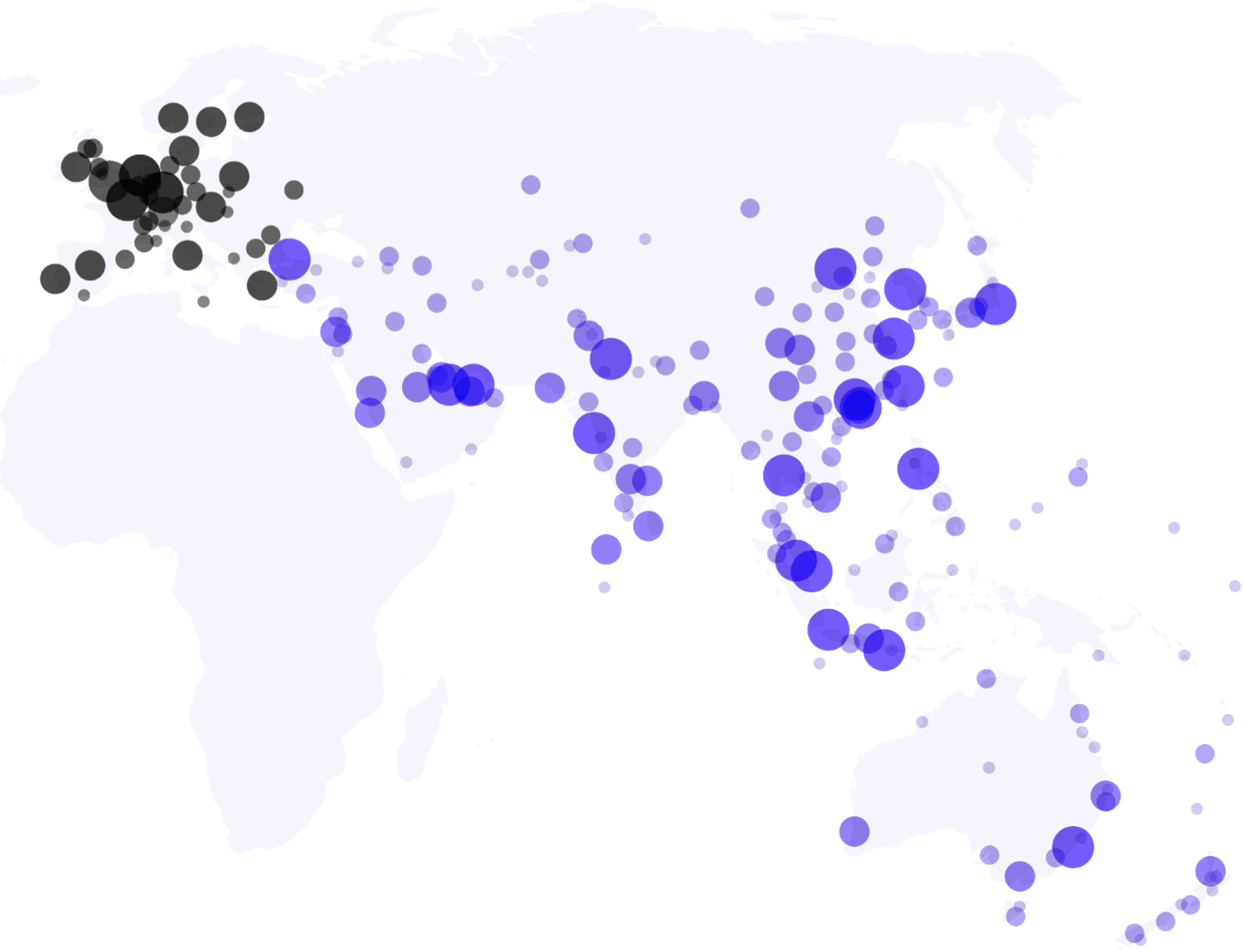
Departure airports in Europe and destinations in APAC covered by Superdeals.
Superdeals to Japan
Fly for half price (or less)
Airlines don't design their pricing systems to offer half-price tickets. However, when algorithms detect demand shortfalls for specific routes, automated systems apply steep discounts to fill planes. Airlines would rather accept losses than fly with empty seats.
ATC monitors thousands of routes from Europe 24/7, detecting Superdeals with 40–80% discounts. While a typical return flight from Europe to Tokyo costs €900+, with Superdeals you can often grab it for around €350:
Which airlines have promotions to Japan right now?
We track and curate genuine offers from 150+ airlines, hand-picking only the most valuable for your wallet.
Which carriers have sales and special offers for flights in February, March, April and beyond? You can now browse the entire collection of active promotions:
Browse promos →Popular airlines with frequent offers from Europe:

Travel hacks and insights
for Europe — Japan flights
Verified strategies to save money and avoid friction on routes to Japan.
Typhoon season peaks August-September
Typhoons frequently disrupt flights to/from Japan in late summer. August and September see the highest risk of cancellations. If traveling during this window, ensure your travel insurance explicitly covers “trip interruption due to weather.”
Shinkansen trains also stop during typhoons. If a storm is forecast, move travel plans forward or backward by a day. Airlines usually issue “weather waivers” allowing free date changes 2-3 days before the storm hits.
Chinese carriers save €400-600 vs direct flights
Air China, China Eastern, and China Southern offer Europe-Japan fares 35-50% cheaper than Lufthansa, Air France, or JAL. While direct flights average €1,100-1,400, these carriers frequently file fares in the €550-750 range via Shanghai (PVG) or Beijing (PEK).
The trade-off is travel time; layovers add 3-6 hours to the journey. However, the 144-hour visa-free transit policy in China allows you to leave the airport, effectively adding a mini-trip to Shanghai or Beijing for zero visa cost if your connection is long enough.
Open-jaw tickets save backtracking costs
Booking an “open-jaw” ticket—flying into Tokyo (NRT/HND) and out of Osaka (KIX)—typically costs the same as a standard roundtrip. This strategy saves the $140+ cost and 3-hour travel time of a Shinkansen bullet train ticket required to return to Tokyo.
Use the “Multi-city” search function on Google Flights. This is particularly effective for itineraries covering the “Golden Route” (Tokyo-Kyoto-Osaka), allowing you to fly home directly after finishing your trip in the Kansai region.
Arrival showers refresh for $10
Both Haneda and Narita airports offer excellent public shower facilities landside (after customs). At Haneda Terminal 3, 30 minutes costs ¥1,500 ($10); at Narita, it’s similar. This is invaluable if you arrive in the morning and can’t check into your hotel until 3 PM.
Towels, shampoo, and hairdryers are provided. It’s a small investment that beats wandering Tokyo exhausted and unwashed after a 13-hour flight. Look for “Shower Rooms” signage in the arrival halls.
Bid for upgrades on JAL/ANA
Both JAL and ANA offer bid-for-upgrade systems for Economy to Premium Economy. Emails are sent to eligible passengers 7 days before departure. Successful bids often range from €150-250, significantly lower than the fare difference at booking.
Check the seat map availability before bidding. If the Premium Economy cabin looks empty, a minimum bid has a high chance of success. Note that upgrades usually don’t increase your baggage allowance or mileage earning—you get the seat and service only.
Strict medication laws affect entry
Japan has strictly prohibits stimulant-based medications, including Adderall and Vicks inhalers containing pseudoephedrine. Bringing these can result in arrest and deportation. Codeine is also restricted and may require a “Yunyu Kakunin-sho” (Import Confirmation) certificate.
Check the Japanese Ministry of Health website for the latest restricted list. If you need prescription meds, bring a copy of your prescription and a doctor’s letter. Never bring unmarked pills; keep everything in original packaging.
What travelers ask most
Expert answers on routing, carriers, timing, and fees
Can I still visit the Geisha district in Kyoto?
Yes, but with strict new limitations enforced since 2024 to combat overtourism. You can still walk on the main public streets of Gion like Hanamikoji, but tourists are now banned from entering the narrow private side alleys where geisha live and work. Violators face fines of 10,000 yen (about €60). Always look for signage indicating prohibited areas and respect the local residents by not chasing geisha for photos, a practice that led to these restrictions in the first place.
Do I need a reservation to climb Mt. Fuji?
Yes, a mandatory booking system is now in effect for the popular Yoshida Trail on the Yamanashi side. Climbers must pay a 2,000 yen fee (approx. €12) and spots are capped at 4,000 hikers per day to prevent overcrowding and improve safety. Reservations open online months in advance and sell out quickly for the climbing season (July to early September). If you plan to summit, book your slot and mountain hut accommodation as soon as they become available.
Do I still need the Visit Japan Web app for entry?
Yes, completing your details on the Visit Japan Web site before departure is highly recommended to speed up arrival procedures. The system has been streamlined into a single QR code that covers both Immigration and Customs declaration. While you can technically fill out paper forms on the plane, the digital lane at airports like Haneda and Narita is generally faster. Complete the registration at least 24 hours before your flight to ensure your QR code is ready upon landing.
Is Japan still cheap for European tourists?
Yes, the Japanese Yen remains historically weak against the Euro, making on-the-ground costs exceptionally low for European visitors. High-quality meals often cost just €6-10, and 4-star hotel rooms in major cities can be found for €80-120. While flight prices have risen due to routing detours, the savings on food, accommodation, and shopping once you arrive make the total trip cost very competitive compared to visiting the US or other parts of Europe.
What is the “Takkyubin” luggage service and should I use it?
Takkyubin (luggage forwarding) is a reliable service that transports your suitcases between hotels or from the airport to your hotel, usually arriving the next day. It costs roughly 2,000-3,000 yen (€12-18) per bag and saves you from hauling heavy luggage through crowded train stations and up staircases. Most hotels and convenience stores (look for the Black Cat logo) can arrange this for you. It is highly recommended for travel between Tokyo and Kyoto, allowing you to take the Shinkansen with just a small day pack.
Will my European electronics work in Japanese outlets?
Likely not without an adapter, and possibly a converter. Japan uses Type A plugs (two flat pins, same as the US) and operates on 100V, whereas Europe uses Type C/F plugs and 230V. While most modern phone and laptop chargers are “dual voltage” (100-240V) and only need a simple plug adapter, high-wattage appliances like hair dryers or shavers from Europe will not work and may burn out. Check the label on your device; if it doesn’t say “100V” or “100-240V,” leave it at home.
Is an eSIM or Pocket Wi-Fi better for Japan?
For solo travelers or couples, an eSIM (like Airalo or Ubigi) is cheaper and more convenient, costing around €10-20 for 10GB of data without the hassle of carrying an extra device. However, if you are a group of 3-4 people or have multiple devices (laptops, tablets), renting a Pocket Wi-Fi at the arrival airport is often better value. Pocket Wi-Fi offers unlimited high-speed data that everyone can share for about €5-8 per day, ensuring the whole family stays connected.
What should I do if an earthquake hits while I’m there?
Japan is earthquake-prone, but infrastructure is incredibly resilient. If you feel shaking, stay away from glass windows and cover your head with a pillow or jacket. Do not run outside immediately as falling debris is the biggest danger. Download the “Safety Tips” app or “Yurekuru Call” for English alerts. If you are on the coast and feel a strong quake, move to higher ground immediately in case of tsunami warnings. Trains will stop automatically; wait for instructions from staff who are well-trained for these events.
How does Air Traveler Club find cheap flights to Japan?
We use AI-powered monitoring tools to scan thousands of flight combinations from European hubs to Tokyo, Osaka, and Fukuoka 24/7. Our system detects pricing anomalies—sudden drops caused by new route launches or airline algorithm adjustments—which our human experts then manually verify for quality. We alert our free newsletter subscribers immediately when we find fares like Frankfurt to Tokyo for €650 instead of the usual €1,200. You then book directly with the airline to lock in the savings.
Nonstop (direct) vs 1-stop
How much do flights from Europe to Japan cost?
Nonstop Europe-Japan flights take 11-14 hours and cost 20-40% more than connecting alternatives. Major hubs in United Kingdom, Germany, and France—including London, Frankfurt, and Paris—offer the most frequent service, primarily to Tokyo (HND/NRT) and Osaka (KIX).
Direct service justifies its premium for business travelers, families, or when price differences stay below €300-400—otherwise, strategic one-stop routing typically delivers better value.
| Route | Airline | Aircraft | Avg Price | Avg ATC Price |
|---|---|---|---|---|
| London (LHR) → Tokyo (HND) | Japan Airlines | 777-300ER, A350-1000 | €1,250 | €415 (67% off) |
| London (LHR) → Tokyo (HND) | British Airways | 787-9, 777-300ER | €1,150 | €400 (65% off) |
| Paris (CDG) → Tokyo (HND) | Japan Airlines | 787-9 | €1,200 | €420 (65% off) |
| Frankfurt (FRA) → Tokyo (NRT) | Japan Airlines | 787-9 | €1,150 | €400 (65% off) |
| Helsinki (HEL) → Tokyo (HND) | Finnair | A350-900 | €1,050 | €365 (65% off) |
| Helsinki (HEL) → Osaka (KIX) | Finnair | A350-900 | €1,000 | €350 (65% off) |
| Frankfurt (FRA) → Osaka (KIX) | Lufthansa | 787-9, 747-8 | €1,150 | €400 (65% off) |
| Madrid (MAD) → Tokyo (NRT) | Iberia | A350-900 | €1,100 | €385 (65% off) |
| Zurich (ZRH) → Tokyo (HND) | SWISS | 777-300ER | €1,150 | €400 (65% off) |
| Rome (FCO) → Tokyo (HND) | All Nippon Airways (ANA) | 787-9 | €1,150 | €400 (65% off) |
*Avg ATC Price: Superdeal fare published on our platform (40-80% savings compared to standard market rates). Learn more.
How the 5th-freedom loophole can cut your flight costs by thousands
Welcome to the overlooked world of fifth-freedom flights. These legal, rare, and often underpriced routes create some of the cheapest fares—yet most travelers have never heard of them…
Best stopovers
for Europe to Japan flights
Not all connections are created equal. When flying from the Europe to Japan, routing through major airport hubs can deliver lower total fares, better-equipped aircraft, and access to airline stopover programs.
Istanbul IST
with Turkish Airlines
- Average savings: 20-30% vs non-stop flights
- Flight segments: ~3.5h Europe-Istanbul + ~10h Istanbul-Japan
- Typical connection: 2-4 hours (minimum 60 minutes)
- Stopover perks: Complimentary hotel and tours
- Visa requirements: Most Europe passports visa-free or e-visa for Türkiye
- Airport rating: 4-star Skytrax hub with extensive amenities
- Best for: London, Paris, Rome travelers seeking cultural exploration during transit
Helsinki HEL
with Finnair / Japan Airlines
- Average savings: 15-25% vs non-stop flights
- Flight segments: Europe-Helsinki (~3h), then Helsinki-Japan (~9.5h)
- Typical connection: 1.5-3 hours (minimum 35 minutes)
- Stopover perks: Free Helsinki stopover routing
- Visa requirements: Schengen rules apply for Europe-region passports
- Airport rating: 4-star Skytrax, compact and efficient
- Best for: Berlin, Amsterdam, Milan travelers seeking minimal connection times
Doha DOH
with Qatar Airways
- Average savings: 25-40% vs non-stop flights
- Flight segments: Split into ~6h Europe-Doha and ~9h Doha-Japan legs
- Typical connection: 2-5 hours (minimum 45 minutes)
- Stopover perks: Hotels from $14/night
- Visa requirements: Many Europe passports get visa-free or visa-on-arrival
- Airport rating: 5-star Skytrax airport with premium facilities
- Best for: Madrid, Zurich, Vienna travelers seeking award-winning business class cabins
Dubai DXB
with Emirates
- Average savings: 20-35% vs non-stop flights
- Flight segments: Two-leg journey: ~6.5h Europe-Dubai, ~9h Dubai-Japan
- Typical connection: 2-4 hours (minimum 60 minutes)
- Stopover perks: Free hotel with meals and transfers
- Visa requirements: Many Europe passports eligible for visa-on-arrival
- Airport rating: 4-star Skytrax, major A380 superhub
- Best for: Frankfurt, Munich, Brussels travelers seeking A380 premium cabins and lounges
Get real-time deal alerts
Activate real-time alerts and get notified the instant a new Superdeal to Japan has been discovered.
Book these incredible price drops before they’re gone.
Set alerts →
Best airlines and aircraft
for long-haul flights to Japan
Most travelers book Europe–Japan flights by price and schedule—but aircraft choice determines whether you arrive refreshed or wrecked. Cabin pressurization, humidity, seat configuration, and service standards vary dramatically on this route.
Below are carriers we recommend—with superior configurations on flights from the US and Canada to Japan.
Lufthansa
Boeing 787-9 Dreamliner
Five-time Skytrax awardee Lufthansa operates the 787-9 with advanced composite materials offering lower cabin altitude and humidity, enhancing passenger comfort on Europe-Tokyo routes.
- Route: Direct Frankfurt (FRA) → Tokyo Narita (NRT) (11hrs)
- Economy: 31″ pitch, 18″ width, 3-3-3 layout, personal HD touchscreen, USB, power outlets
- Business: 2-2-2 configuration, lie-flat 78″ seats, direct aisle access, ample storage
- Standouts: 13.3″ seatback IFE with extensive content, onboard WiFi (satellite broadband), multi-course meals by top chefs, amenity kits
- Typical Pricing: Economy €700-1,200; Business €3,500-5,500;
Finnair
Airbus A350-900
Finnair, known for its Arctic premium service, uses A350-900’s quiet composite airframe and superior air quality for a restful Europe-Helsinki-Tokyo experience.
- Route: 1-stop via Helsinki (HEL) FRA/Paris CDG/London LHR → Tokyo Haneda (HND) (11-13hrs total)
- Economy: 31″ pitch, 18″ width, 3-3-3 layout, adjustable headrests, power outlets
- Business: 1-2-1 layout, fully lie-flat 78″ seats, direct aisle access, privacy panels
- Standouts: 13.3″ 4K Ultra HD IFE, fast Ka-band WiFi, Nordic-inspired meals, Finnish design amenity kits
- Typical Pricing: Economy €650-1,100; Business €3,200-5,000;
Turkish Airlines
Boeing 787-9 Dreamliner
Award-winning Turkish Airlines combines the 787-9’s fuel efficiency and comfort with Istanbul’s strategic hub to provide seamless Europe-Asia connectivity to Tokyo.
- Route: 1-stop via Istanbul (IST) London/Munich/CDG → Tokyo Narita (NRT) (14-16hrs total)
- Economy: 31″ pitch, 18″ width, 3-3-3 layout, large personal screens, USB, power ports
- Business: 2-2-2 configuration, lie-flat 78″ seats, privacy dividers, personal storage
- Standouts: 15.4″ HD IFE with thousands of entertainment hours, onboard WiFi, award-winning Turkish and international cuisine, generous lounge access
- Typical Pricing: Economy €600-1,000; Business €3,000-4,800;
British Airways
Airbus A350-1000
British Airways operates the new A350-1000 on London-Tokyo routes, offering advanced cabin pressure and wide seats for improved passenger wellbeing on long hauls.
- Route: Direct London Heathrow (LHR) → Tokyo Haneda (HND) (12hrs)
- Economy: 31″ pitch, 18″ width, 3-3-3 layout, touchscreen IFE, USB, power sockets
- Business: 1-2-1 club-suite layout, fully flat 78″ beds, direct aisle access, adjustable mood lighting
- Standouts: 18″ 4K seatback IFE screens, fast WiFi, British cuisine with seasonal menus, noise-cancelling headphones
- Typical Pricing: Economy €750-1,250; Business €4,000-6,000;
Fly better for less
Travel insights, proven strategies, and insider tips.

The Continental Hop Trick — European edition

Finding Superdeals that match your schedule

Airline stopover programs. Turn your layover into a bonus vacation.