Europe China 40–80% OFF
Cheap flights discovered by AI✨
Fly round-trip to Shanghai for €350, while others pay €900+.
Our AI finds Superdeals to China from all major airports in Europe. You book directly with airlines for half the price—or less.


Why are flights to China so expensive in 2026?
A ban on European airlines flying over Russia has made tickets from Europe to China much pricier—especially if you want to fly with a Western airline.
Here’s the problem. Airlines like British Airways and Lufthansa can’t use Russian airspace. That forces them to fly the long way around. A flight from Frankfurt to Shanghai now takes almost 14 hours on Lufthansa. The same trip on Air China? Just 11 hours. That extra time means more fuel, more crew costs, and higher ticket prices for you.
The result is stark. A round-trip from London to Shanghai on British Airways costs around £1,150. The same trip on China Eastern? About £580. That’s nearly double the price for a slower flight.
Things get worse because several airlines have simply given up. Virgin Atlantic stopped flying to Shanghai. British Airways paused Beijing flights. Fewer seats means less competition and higher prices on what’s left.
Meanwhile, Chinese carriers are filling the gap with cheaper fares. And China’s new visa-free policy for European tourists has boosted demand at exactly the wrong time.
The outlook: Don’t expect big drops soon. Until Western airlines regain access to Russian airspace—which depends on politics, not travel trends—they’ll keep charging premium prices or avoiding the route altogether. Your best bet for savings? Consider flying with a Chinese carrier instead.
Meet Superdeals
Never overpay for flights again
You can save between 40% and 80% on your flights to China — and to other Asian countries — with Air Traveler Club Superdeals.
We monitor all major airports in Europe for cheap flights to Asia, including:
- London (LHR) — UK
- Paris (CDG) — France
- Amsterdam (AMS) — Netherlands
- Madrid (MAD) — Spain
- Frankfurt (FRA) — Germany
- Rome (FCO) — Italy
- Athens (ATH) — Greece
- Vienna (VIE) — Austria
- Zurich (ZRH) — Switzerland
- Warsaw (WAW) — Poland
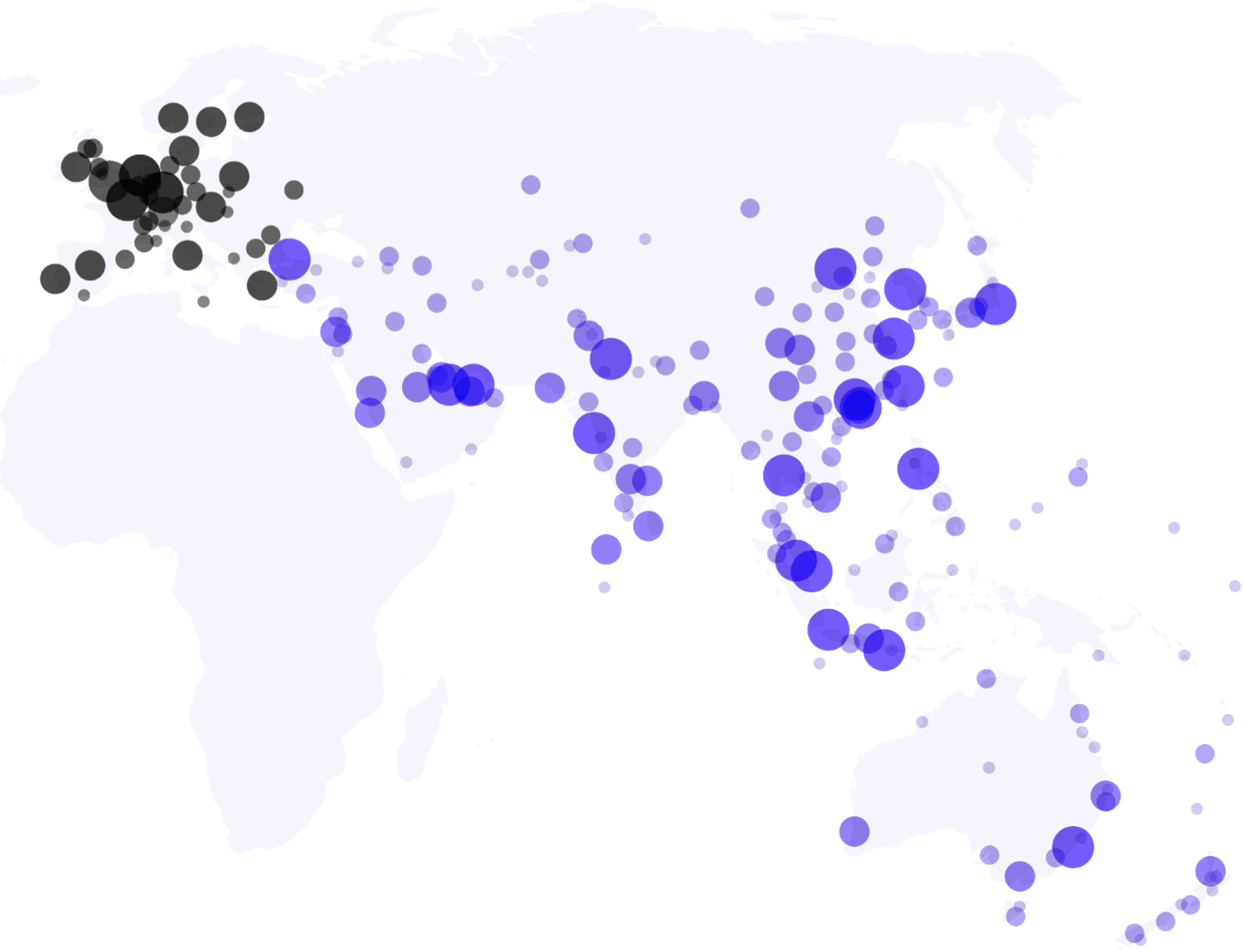
Departure airports in Europe and destinations in APAC covered by Superdeals.
Superdeals to China
Fly for half price (or less)
Airlines don't design their pricing systems to offer half-price tickets. However, when algorithms detect demand shortfalls for specific routes, automated systems apply steep discounts to fill planes. Airlines would rather accept losses than fly with empty seats.
ATC monitors thousands of routes from Europe 24/7, detecting Superdeals with 40–80% discounts. While a typical return flight from Europe to Shanghai costs €900+, with Superdeals you can often grab it for around €350:
Which airlines have promotions to China right now?
We track and curate genuine offers from 150+ airlines, hand-picking only the most valuable for your wallet.
Which carriers have sales and special offers for flights in February, March, April and beyond? You can now browse the entire collection of active promotions:
Browse promos →Popular airlines with frequent offers from Europe:

Travel hacks and insights
for Europe — China flights
Verified strategies to save money and avoid friction on routes to China.
Shanghai transfer warning: PVG vs SHA
Shanghai has two major airports: Pudong (PVG) for international and Hongqiao (SHA) for many domestic flights. They are 50km apart. Connecting between them requires a 90-minute subway ride or a 60-minute taxi in traffic.
Avoid itineraries that land in PVG and depart from SHA unless you have at least a 5-hour gap. Missed connections due to airport transfers are rarely covered by airlines unless booked on a single ticket with a valid Minimum Connection Time.
Military airspace causes frequent delays
The People’s Liberation Army controls roughly 70-80% of Chinese airspace, leaving narrow corridors for commercial flights. ATC delays are chronic and unpredictable, often lasting hours without clear explanation (“flow control”).
Never book tight connections (under 2 hours) or non-refundable onward travel immediately after landing. Afternoon and evening flights accumulate cascading delays; morning departures are statistically more reliable.
Medical evacuation insurance is critical
While healthcare in major Chinese cities is good, serious incidents may require evacuation to Hong Kong or Bangkok. Chinese hospitals often demand upfront payment in cash or local cards before treatment.
Ensure your travel insurance explicitly covers “medical evacuation” with a limit of at least €100,000. Policies from providers like Allianz or AXA are preferred over credit card insurance, which can be difficult to verify with Chinese hospital administrators.
144-hour transit visa allows regional access
If you don’t qualify for visa-free entry, use the 144-hour (6-day) transit visa. You must fly Europe → China → Third Country (e.g., London-Shanghai-Tokyo). You cannot return to the same country (London-Shanghai-London fails).
This allows 6 days of travel within a specific region (e.g., Shanghai+Jiangsu+Zhejiang). You must hold a confirmed seat on an onward flight. Apply at the dedicated “144-hour transit” desk upon arrival, not the regular visa line.
Install VPNs before boarding flight
Google, WhatsApp, Instagram, and many Western news sites are blocked in China. You cannot download VPN apps once you land because the app stores themselves are often restricted or the VPN sites are blocked.
Install and test 2-3 credible VPNs (like Astrill or ExpressVPN) while still in Europe. Roaming data on a European SIM card often bypasses the firewall, but it’s expensive. Wi-Fi at airports will be behind the firewall.
DiDi is the only viable taxi app
Uber does not operate in China. The local equivalent is DiDi Chuxing. You can access DiDi directly through the Alipay app in English. It is significantly safer and cheaper than hailing random cabs.
DiDi rides have fixed pricing estimates and tracked GPS, preventing the “broken meter” scams common with street taxis. Payment is automatic via your linked Alipay. Never get in a “black car” (unlicensed taxi) at airports.
What travelers ask most
Expert answers on routing, carriers, timing, and fees
Did China extend visa-free entry for European citizens in late 2025?
Yes, China recently confirmed the extension of its 15-day visa-free policy for citizens of France, Germany, Italy, the Netherlands, Spain, and several other European nations through the end of 2026. This update, announced in November 2025, allows you to enter for tourism, business, or transit without applying for a visa beforehand.
If your trip exceeds 15 days, you must still apply for a standard tourist (L) visa at a Chinese Visa Application Service Center. This policy has significantly reduced travel friction, but ensure your passport is valid for at least six months beyond your entry date to avoid boarding denial.
Can I use European credit cards in China without Alipay as of late 2025?
Yes, acceptance has improved significantly following a government mandate in mid-2025 requiring 3-star hotels, monuments, and major taxi fleets to accept foreign Visa and Mastercards. While you can now swipe your card at major tourist sites like the Forbidden City or the Bund, smaller vendors and street food stalls still strictly use QR codes.
For a seamless experience, you should still link your European credit card to the Alipay or WeChat app. The transaction limit for foreigners was recently raised to $2,000 USD (approx. €1,900) per single transaction, making it easier to pay for hotels and high-end dining digitally.
Do I really need a VPN to use the internet in China?
Yes, absolutely—if you want to use Google, WhatsApp, Instagram, Gmail, or YouTube, you must have a solution to bypass the “Great Firewall.” The most reliable method for tourists is an international roaming eSIM (like Airalo or Holafly), which routes your data through a foreign server and bypasses censorship automatically.
If you prefer using hotel Wi-Fi, you must install a paid VPN app (like Astrill or ExpressVPN) *before* you arrive in China, as the download sites for these apps are blocked once you land. Free VPNs rarely work and can be security risks.
What is the “Tea House Scam” and how do I avoid it?
This is the most common tourist trap in Beijing and Shanghai, usually starting near Tiananmen Square or People’s Park. An overly friendly “student” who speaks perfect English will approach you, ask to practice the language, and suggest visiting a nearby traditional tea house.
Once there, you’ll be served tea and snacks, then hit with a bill for €100-300 or more with aggressive staff demanding payment. To avoid this, never follow strangers to a second location. If you want to experience a tea ceremony, research a reputable venue yourself or ask your hotel concierge to book one.
Do I need to carry my passport everywhere in China?
Yes, you should carry your physical passport at all times. It is required to buy train tickets, check into hotels, enter museums (like the Forbidden City), and sometimes even to enter university campuses or secure areas. Police conduct random checks, though rare for tourists.
Keep a digital copy on your phone cloud as a backup. If you are worried about losing it, buy a secure neck pouch or money belt. Unlike in Europe where a driver’s license suffices for ID, in China, your passport is the only document that matters.
Which translation app works best offline?
Google Translate is excellent but requires a VPN to work; however, its offline mode works if you download the Chinese language pack *before* arrival. For a more reliable local alternative, download the Baidu Translate app or Microsoft Translator, which work well without a VPN.
The most useful feature is “camera translation”—point your phone at a menu or sign to see instant English overlays. For voice conversation, speak slowly and use simple sentences to get the best accuracy when talking to taxi drivers or shopkeepers.
Is tipping expected in Chinese restaurants?
No, tipping is not part of the culture in mainland China and can sometimes be seen as rude or confusing. In restaurants, taxi cabs, and bars, you simply pay the exact amount shown on the bill or meter. Service charges are occasionally added in high-end Western hotels, but that’s it.
The only exception might be tour guides or private drivers catering specifically to Western tourists, where a small tip is appreciated but never mandatory. Save your cash—service is generally fast and efficient without the extra incentive.
Nonstop (direct) vs 1-stop
How much do flights from Europe to China cost?
Nonstop Europe-China flights take 10-12 hours and cost 20-40% more than connecting alternatives. Major hubs in United Kingdom, Germany, and France—including London, Frankfurt, and Paris—offer the most frequent service, primarily to Beijing (PEK), Shanghai (PVG), and Guangzhou (CAN).
Direct service justifies its premium for business travelers, families, or when price differences stay below €200-300—otherwise, strategic one-stop routing typically delivers better value.
| Route | Airline | Aircraft | Avg Price | Avg ATC Price |
|---|---|---|---|---|
| London (LHR) → Beijing (PEK) | Air China | 777-300ER, A350-900 | €850 | €215 (75% off) |
| London (LHR) → Shanghai (PVG) | China Eastern, British Airways | 777-300ER, 787-9 | €900 | €230 (74% off) |
| London (LHR) → Guangzhou (CAN) | China Southern | 787-9 | €880 | €220 (75% off) |
| Frankfurt (FRA) → Beijing (PEK) | Air China, Lufthansa | A350-900, 747-8 | €820 | €210 (74% off) |
| Frankfurt (FRA) → Shanghai (PVG) | China Eastern, Lufthansa | A350-900, 777-300ER | €860 | €220 (74% off) |
| Paris (CDG) → Beijing (PEK) | Air China, Air France | 787-9, A350-900 | €830 | €210 (75% off) |
| Paris (CDG) → Shanghai (PVG) | China Eastern, Air France | 777-300ER, A350-900 | €870 | €220 (75% off) |
| Amsterdam (AMS) → Shanghai (PVG) | China Eastern, KLM | 787-9, 777-300ER | €840 | €210 (75% off) |
| Munich (MUC) → Beijing (PEK) | Air China, Lufthansa | A350-900 | €820 | €205 (75% off) |
| Rome (FCO) → Beijing (PEK) | Air China | A350-900 | €800 | €200 (75% off) |
*Avg ATC Price: Superdeal fare published on our platform (40-80% savings compared to standard market rates). Learn more.
How the 5th-freedom loophole can cut your flight costs by thousands
Welcome to the overlooked world of fifth-freedom flights. These legal, rare, and often underpriced routes create some of the cheapest fares—yet most travelers have never heard of them…
Best stopovers
for Europe to China flights
Not all connections are created equal. When flying from the Europe to China, routing through major airport hubs can deliver lower total fares, better-equipped aircraft, and access to airline stopover programs.
Istanbul IST
with Turkish Airlines
- Average savings: 20–30% vs non-stop flights
- Flight segments: ~3–4h Europe-Istanbul + ~9–10h Istanbul-China (Beijing/Shanghai)
- Typical connection: 2–4 hours (minimum 60 minutes)
- Stopover perks: Complimentary hotel and tours
- Visa requirements: Most Europe passports visa‑free or e‑visa for Türkiye
- Airport rating: 4-star Skytrax hub with strong transit facilities
- Best for: London, Paris, Frankfurt travelers seeking cultural city exploration on layover
Doha DOH
with Qatar Airways
- Average savings: 15–25% vs non-stop flights
- Flight segments: Europe-Doha (~6h), then Doha-China (~8–9h to Guangzhou/Beijing)
- Typical connection: 2–3 hours (minimum 45 minutes)
- Stopover perks: Hotels from $14/night
- Visa requirements: Many Europe passports get visa‑free entry to Qatar
- Airport rating: 5-star Skytrax airport with premium lounges
- Best for: Paris, Milan, Munich travelers seeking award-winning business class products
Dubai DXB
with Emirates
- Average savings: 10–20% vs non-stop flights
- Flight segments: Split into ~6–7h Europe-Dubai and ~7–8h Dubai-China (Beijing/Shanghai)
- Typical connection: 2–4 hours (minimum 75 minutes)
- Stopover perks: Free hotel with meals and transfers
- Visa requirements: Many Europe passports receive visa‑free or visa‑on‑arrival
- Airport rating: 4-star hub with extensive shopping and dining
- Best for: Madrid, Rome, Zurich travelers seeking A380 cabins and lie‑flat seats value
Helsinki HEL
with Finnair
- Average savings: 15–30% vs non-stop flights
- Flight segments: Two-leg journey: ~2–3h Central Europe-Helsinki, ~8–9h Helsinki-China
- Typical connection: 1.5–3 hours (minimum 35 minutes)
- Stopover perks: Free stopover flexibility
- Visa requirements: Schengen rules apply for Europe passports in Finland
- Airport rating: 4-star airport known for efficient transfers
- Best for: Berlin, Vienna, Amsterdam travelers seeking short total travel time via polar route
Get real-time deal alerts
Activate real-time alerts and get notified the instant a new Superdeal to China has been discovered.
Book these incredible price drops before they’re gone.
Set alerts →
Best airlines and aircraft
for long-haul flights to China
Most travelers book Europe–China flights by price and schedule—but aircraft choice determines whether you arrive refreshed or wrecked. Cabin pressurization, humidity, seat configuration, and service standards vary dramatically on this route.
Below are carriers we recommend—with superior configurations on flights from the US and Canada to China.
Lufthansa
Airbus A350-900
Five-time Skytrax award winner Lufthansa flies the fuel-efficient A350 with lower cabin altitude, enhancing comfort on long-haul Europe to China flights.
- Route: Direct Frankfurt → Beijing (10-11 hrs)
- Economy: 31″ pitch, 18″ width, 3-3-3 config, adjustable headrests, personal IFE
- Business: 1-2-1 config, fully lie-flat 78″ seats, direct aisle access
- Standouts: 16-inch HD touchscreen IFE with extensive content, high-speed WiFi, multi-course meals with German and Asian options
- Typical Pricing: Economy €700-900; Business €3,200-4,500;
Turkish Airlines
Boeing 787-9 Dreamliner
Skytrax 5-star Turkish Airlines deploys the 787-9 Dreamliner from Istanbul, offering quieter cabins and advanced air filtration for Asia bound comfort.
- Route: 1-stop Istanbul → Shanghai (via IST) (13-14 hrs total)
- Economy: 31″ pitch, 17.5″ width, 3-3-3 config, multiple USB ports
- Business: 2-2-2 config, angled lie-flat 67″ seats
- Standouts: HD personal screens, WiFi available, renowned Turkish cuisine onboard with local Turkish tea service
- Typical Pricing: Economy €600-850; Business €2,500-3,700;
Air France
Airbus A350-900
Air France uses the A350’s advanced cabin environment on direct Paris-Asia routes, supporting quiet flights and enhanced humidity for passenger wellbeing.
- Route: Direct Paris Charles de Gaulle → Guangzhou (11-12 hrs)
- Economy: 31″ pitch, 18″ width, 3-3-3 configuration, adjustable headrest
- Business: 1-2-1 reverse herringbone config, fully flat 78″ seats with storage
- Standouts: Large 16-inch HD IFE with French and Chinese selections, high-speed WiFi, multi-course French and Asian fusion meals
- Typical Pricing: Economy €750-950; Business €3,000-4,200;
Finnair
Airbus A350-900
Finnair, Northern Europe’s leading long-haul carrier, uses the A350 for quieter flights cooling humidity for Asia routes, with a strategic hub in Helsinki.
- Route: Direct Helsinki → Beijing (8-9 hrs)
- Economy: 31″ pitch, 18″ width, 3-3-3 config, ergonomic seats
- Business: 1-2-1 config, fully flat 78″ seats, direct aisle access
- Standouts: 15.6-inch touch screens with Nordic and Asian programming, high-speed Viasat WiFi, Scandinavian-inspired meals with Asian influences
- Typical Pricing: Economy €700-850; Business €3,200-4,000;
Fly better for less
Travel insights, proven strategies, and insider tips.

Best European airport hubs for cheap, comfy flights to Asia

Best aircraft for long-haul flights

Priced out of Asia? How the fifth-freedom loophole can cut your flight costs by thousands.