Quick summary
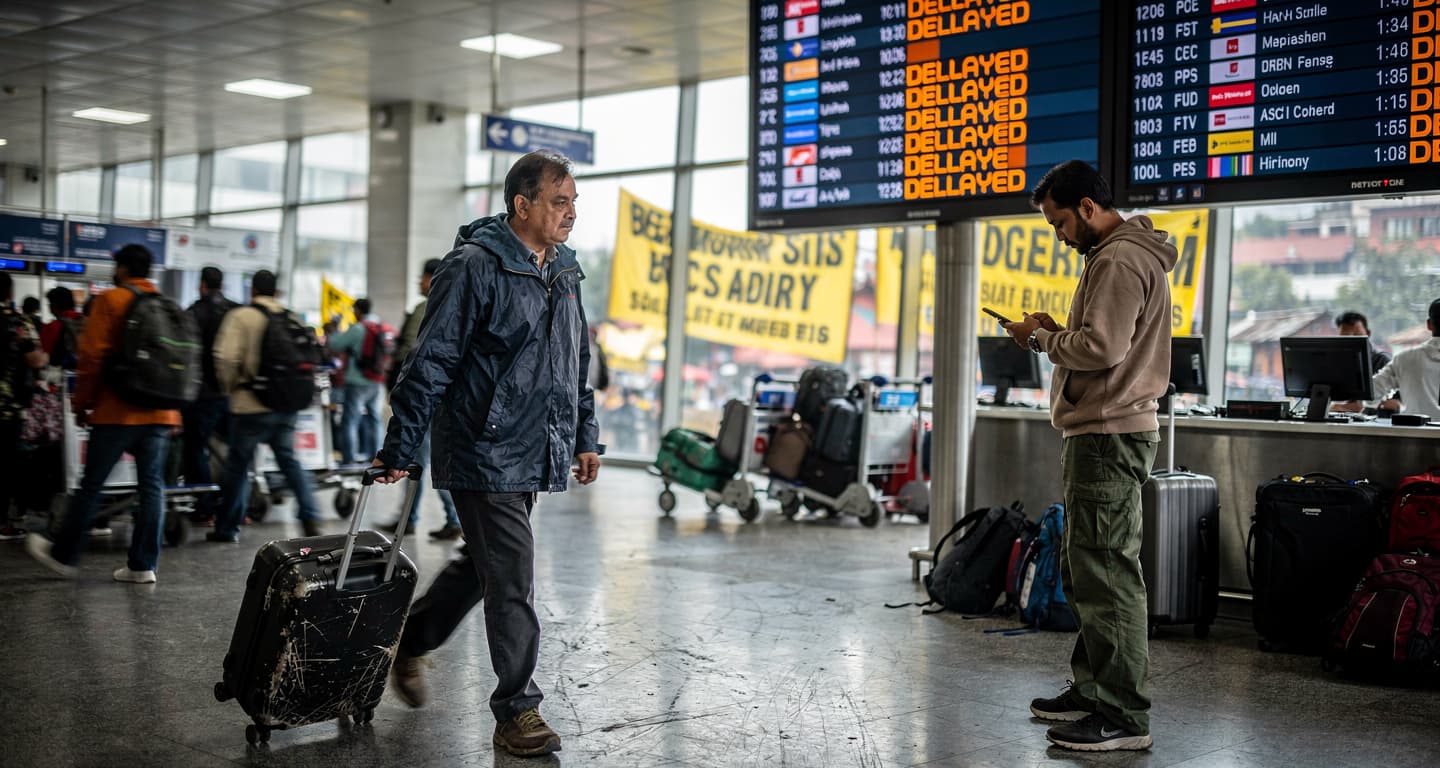
The UK government announced on May 4, 2026 that airlines can cancel and consolidate flights without losing their airport slot rights — a direct response to jet fuel prices that have roughly doubled since Iran conflict disrupted Strait of Hormuz shipping. The policy covers eight major UK airports including Heathrow, Gatwick, Manchester, and Stansted, and requires airlines to give passengers a minimum 14 days’ notice before any cancellation. Passengers retain full rights to rebooking, refunds, and compensation under existing UK passenger protection rules.
No immediate fuel supply crisis exists — the government describes this as contingency planning. Secondary routes and off-peak business flights face the highest consolidation risk through August.
The UK government has formally unlocked a mechanism that lets airlines cancel summer flights without penalty — and British travelers with bookings between May and August 2026 need to act now.
Transport Secretary Heidi Alexander confirmed the slot rule relaxation on May 4, stating the government would “do everything we can to insulate our country from the impact of the situation in the Middle East.” Jet fuel prices have roughly doubled following Iran conflict and Strait of Hormuz disruption, leading to flight cuts by airlines globally — and the UK’s contingency response effectively gives carriers a structured exit from routes they can no longer afford to operate.
The mechanism works by suspending the strict use-it-or-lose-it slot rules that normally force airlines to operate flights or forfeit future rights. Airlines can now hand back slots temporarily, consolidate thin routes, and reduce overall fuel burn — while preserving their slot portfolio for next season. The trade-off for travelers: more cancellations are coming, but they will arrive with notice rather than at the departure gate.
Business routes and off-peak leisure flights are the primary targets. High-frequency holiday routes — London to Spain, France, Greece — are more likely to survive because load factors justify the fuel cost. The routes most at risk are single-daily-frequency services, regional airport connections, and flights operated at commercially marginal times.
What the slot relaxation actually means for your booking
Under the new rules, British Airways, easyJet, Ryanair, Jet2, TUI, and Virgin Atlantic — all members of trade body Airlines UK, which welcomed the announcement — can cancel flights and return slots at Heathrow, Gatwick, Stansted, Manchester, Luton, London City, Birmingham, and Bristol without those slots being reallocated to competitors next season.
The 14-day minimum notice requirement is the critical protection. Rob Bishton, chief executive of the UK Civil Aviation Authority, stated explicitly that airlines “should offer a choice between a refund or alternative travel arrangements, including with another airline, if a flight is cancelled.” That last clause matters: you are not limited to rebooking on the same carrier.
Fuel shortage does not automatically exempt airlines from compensation under UK law. The European Commission has indicated carriers may avoid EU261 compensation if they prove fuel shortage caused disruption and all reasonable steps were taken — but the UK government has not formally designated fuel shortages as extraordinary circumstances. That distinction could be worth €250 to €600 per passenger depending on flight distance.
Background analysis from Air Traveler Club highlights the elevated cancellation risk for UK summer travel, noting that the International Energy Agency has warned Europe could face shortages by June 2026 if alternative supply sources are not secured at scale — a timeline that puts the peak school-holiday window directly in the risk zone.
| Route type | Cancellation risk | Reason | Traveler action |
|---|---|---|---|
| High-frequency holiday routes (London–Spain, London–France, London–Greece) | Low | High load factors justify fuel cost; multiple daily departures absorb consolidation | Confirm booking; monitor airline email |
| Secondary leisure routes (regional airports, single daily frequency) | High | Thin margins; first candidates for slot hand-back under new rules | Contact airline this week; request written status confirmation |
| Off-peak business routes (early morning, late evening, weekday-only) | High | Low load factors; consolidation reduces fuel demand without losing peak slots | Shift to primary routes or premium carriers with larger fuel reserves |
| Premium cabin on trunk routes (London–New York, London–Dubai) | Low–Medium | Revenue per seat justifies operation; fuel efficiency per passenger higher | Monitor; premium bookings typically receive priority rebooking |
| Budget carrier thin routes (Wizz Air, Ryanair secondary bases) | Medium–High | Low-cost model operates thinner margins; less buffer against doubled fuel costs | Book refundable fares or travel insurance; monitor airline announcements weekly |
Flight deals
most people never see
Our AI monitors 150+ airlines for pricing anomalies that traditional search engines miss. Air Traveler Club members save $650 per trip per person on average: see how it works.
Each deal saves 40–80% vs. regular fares:

Why the compensation question is not settled — and why that matters
The slot relaxation announcement is the visible policy. The less-visible fight is over whether airlines will owe passengers compensation when they use it.
Under UK261 — the post-Brexit equivalent of EU261 — airlines owe between £220 and £520 per passenger for cancellations unless the disruption qualifies as extraordinary circumstances. Volcanic ash, severe weather, and security threats have historically qualified. Fuel price spikes have not — at least not automatically. The UK government has not yet formally designated the current fuel shortage as extraordinary circumstances, which means airlines cancelling flights under the new slot rules could still face compensation claims.
That ambiguity is deliberate, or at least unresolved. Airlines will likely argue the Iran conflict constitutes force majeure. Passengers who claim within six years — and document their cancellation notice — have a reasonable case under current law. The CAA has not signaled it will grant blanket exemptions.
One practical implication: if your flight is cancelled with more than 14 days’ notice, compensation thresholds under UK261 may not apply regardless of the fuel situation. The 14-day notice rule is itself a legal safe harbor. Cancellations inside that window — if any airline jumps the gun — carry the full compensation obligation.
Steps to protect your summer trip now
Secondary and off-peak routes face real consolidation risk through August — these actions need to happen in the next 48–72 hours, not the week before departure.
- Confirm your flight status in writing. Call your airline directly (BA: 0844 493 0787, easyJet: 0330 365 5000, Ryanair: +353 1 249 7791) and ask specifically whether your route is under review for consolidation. Email confirmation is better than a verbal assurance.
- Check your credit card benefits immediately. Cards including the American Express Platinum, Chase Sapphire Reserve, and Citi Prestige carry trip cancellation coverage up to $10,000 — but claims must be filed within 90 days of the cancellation notice, and the ticket must have been purchased on that card. Pull your card’s benefit guide now, before you need it.
- Understand your compensation rights before the airline calls you. Visit the CAA’s passenger rights guidance to confirm what you’re owed. If cancelled with less than 14 days’ notice, you may be entitled to €250–€600 per person — and the fuel shortage does not automatically waive that right under current UK law.
- For new bookings, choose frequency over price. Routes with four or more daily departures can absorb one cancelled service without stranding you. Single-frequency routes cannot. Use Google Flights or Skyscanner to check how many daily options exist before booking.
- Families with school-age children should act first. Half-term and summer break slots on secondary routes are exactly the type of service airlines will consolidate. Confirm status three weeks before departure — not three days.
Watch: The CAA’s implementation date for slot relaxation rules — expected May–June 2026. If confirmed on schedule, expect airline cancellation notices to begin arriving by late May for June–July flights. Also watch for Strait of Hormuz reopening announcements — if shipping resumes, fuel prices may stabilize within four to six weeks, reducing cancellation pressure significantly.

Questions? Answers.
Does the UK fuel shortage count as extraordinary circumstances — meaning airlines don’t have to pay compensation?
The UK government has not formally designated the current fuel shortage as extraordinary circumstances under UK261. That means airlines cancelling flights under the new slot rules may still owe passengers £220–£520 per person depending on flight distance. The European Commission has signaled EU carriers may avoid compensation if they prove all reasonable steps were taken, but UK law has not followed that position. File your claim and let the CAA adjudicate — do not assume the airline is exempt.
Which UK airports are covered by the new slot relaxation rules?
The policy covers eight airports: Heathrow, Gatwick, Stansted, Manchester, Luton, London City, Birmingham, and Bristol. If your departure airport is not on this list, the standard use-it-or-lose-it rules still apply to your carrier — though fuel cost pressure affects all airlines regardless of slot rules.
If my flight is cancelled, can I demand rebooking on a different airline?
Yes. The CAA chief executive explicitly stated airlines “should offer a choice between a refund or alternative travel arrangements, including with another airline.” You are not obligated to accept a rebooking on the same carrier if the alternative schedule doesn’t work for you. If the airline refuses, escalate to the CAA or an approved alternative dispute resolution scheme.
What if I booked through a travel agent rather than directly with the airline?
Your passenger rights under UK261 apply regardless of how you booked — the obligation sits with the operating airline. Contact the airline directly to confirm flight status and initiate any rebooking or refund. Your travel agent may also have package holiday protections (ATOL) that provide additional cover if the trip as a whole is cancelled.
Is the Strait of Hormuz closure permanent, or could this resolve quickly?
The situation remains active as of early May 2026. The UK government has noted it imports jet fuel from multiple sources not solely dependent on the Strait of Hormuz, including the United States. If shipping through the Strait resumes, industry estimates suggest fuel prices could stabilize within four to six weeks — potentially reducing cancellation pressure before the peak August window. No reopening timeline has been confirmed.