Quick summary
Jhon Raul Vizcaino Ramirez pleaded guilty on June 9, 2026, to five federal counts — including two counts of assaulting TSA officers and one count of entering a secure airport area by false pretenses — after attempting to pass through a checkpoint at Harry Reid International Airport (LAS) on November 3, 2025, using a boarding pass in someone else’s name. He faces up to 10 years in federal prison and a fine of up to $250,000, with sentencing set for September 10, 2026.
Ramirez had entered the U.S. illegally in 2022 and was released due to a lack of detention space. After sentencing, he will be transferred to Immigration and Customs Enforcement (ICE).
A man who entered the United States illegally and was released into the country due to detention capacity constraints has pleaded guilty to a violent assault on federal security officers at one of America’s busiest airports. The attack — which included punching a TSA officer in the face, kicking another, and attempting to stab Las Vegas Metropolitan Police Department officers with a pen grabbed from an officer’s pocket — began when Ramirez was asked to show ID at the LAS checkpoint after presenting a boarding pass that did not match his identity.
He refused. What followed was not a misunderstanding — it was a federal crime in progress.
The guilty plea covers five counts under federal law: two counts of interference with security screening personnel, two counts of assault or impeding persons assisting federal officers, and one count of entry by false pretenses to a secure area of an airport. Ramirez is currently held in custody. Following his September 10 sentencing hearing in the District of Nevada, he will be handed to ICE for immigration proceedings.
The case lands at a moment when TSA officer assaults are rising across U.S. airports — and when the agency’s checkpoint ID enforcement is under sharper public scrutiny than at any point in recent memory.
What happened at the LAS checkpoint on November 3
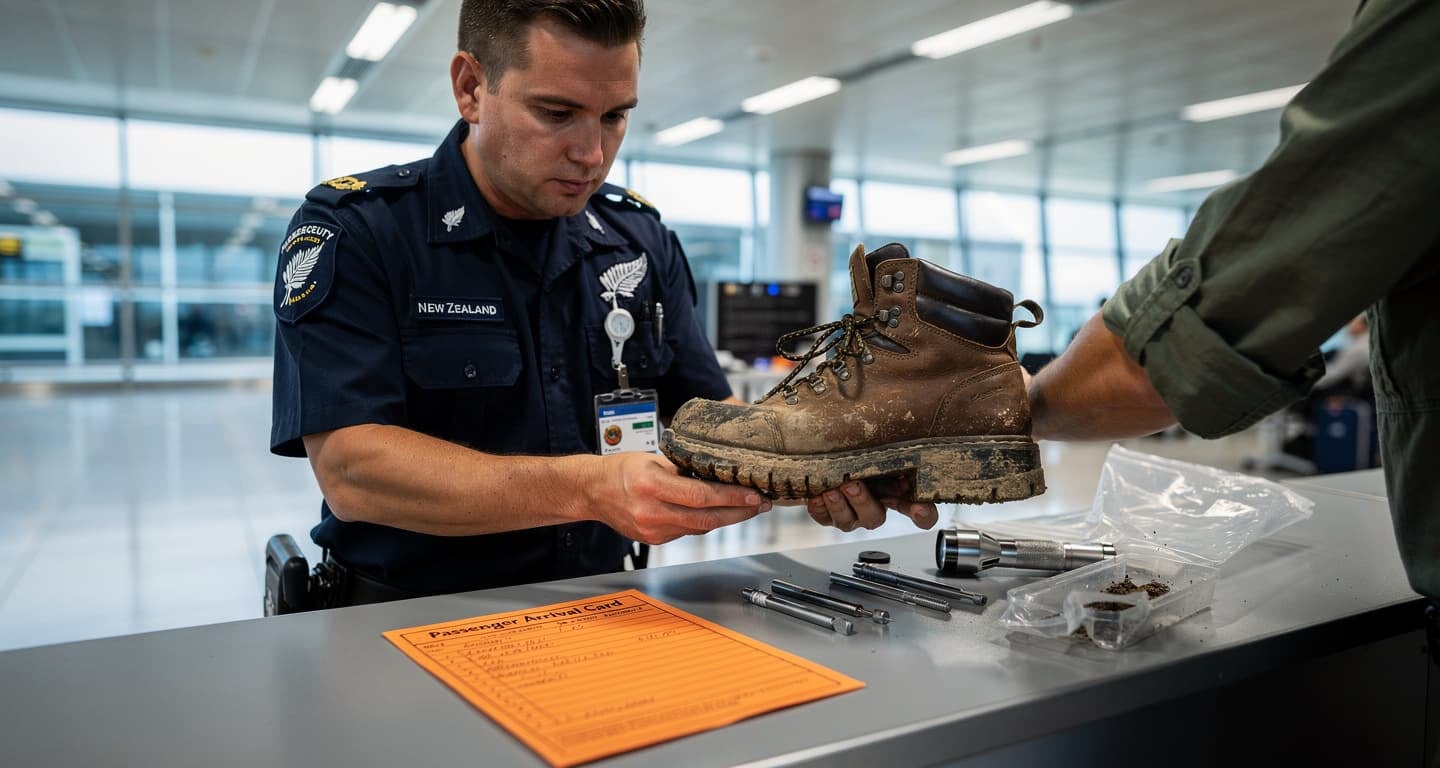
Ramirez approached the TSA security checkpoint at Harry Reid International carrying a boarding pass issued in another person’s name. TSA officers, following standard procedure, requested government-issued photo ID. He refused to produce any.
What the federal complaint describes next is not a verbal dispute that got out of hand. Ramirez struck a TSA officer in the face, removed the officer’s glasses, and kicked both a TSA officer and an LVMPD officer. At one point, he grabbed a pen from an officer and attempted to use it as a weapon against responding police. Federal charges confirm all of this.
The U.S. Attorney’s Office for the District of Nevada is prosecuting the case under statutes that implement TSA’s authority under 49 CFR Part 1540 and Part 1542 — the federal regulations governing civil aviation security and airport security programs. These are not administrative violations. They are federal criminal statutes, and the maximum exposure reflects that.
| Count | Charge | Maximum penalty |
|---|---|---|
| 2 counts | Interference with security screening personnel | Up to 10 years per count |
| 2 counts | Assault, resisting, or impeding persons assisting federal officers | Up to 10 years per count |
| 1 count | Entry by false pretenses to a secure area of an airport | Up to 10 years |
| Combined exposure | Fine and supervised release | Up to $250,000 fine + 3 years supervised release |
This is not an isolated incident. In March 2026, a passenger at Dallas Love Field assaulted two TSA agents and fractured a Dallas Police Department officer’s orbital bone after being directed to an alternative ID-verification lane. The pattern is consistent: checkpoint ID enforcement triggers confrontation, and confrontation is increasingly turning violent.
This case also follows a separate incident at Houston’s George Bush Intercontinental Airport, where a man used a fake boarding pass to clear TSA entirely and board a United Airlines flight before a flight attendant noticed he had no assigned seat — after the aircraft was already taxiing. The LAS case shows what happens when officers catch the attempt at the checkpoint. The Houston case shows what happens when they don’t.
Flight deals
most people never see
Our AI monitors 150+ airlines for pricing anomalies that traditional search engines miss. Air Traveler Club members save $650 per trip per person on average: see how it works.
Each deal saves 40–80% vs. regular fares:

Why checkpoint ID enforcement is getting harder, not easier
TSA’s identity-verification system was built on a straightforward premise: the name on your boarding pass must match the name on your government-issued ID. When those two things align, you move through. When they don’t, the system is supposed to stop you.
What the Ramirez case exposes is the gap between policy and execution under pressure. Officers who flag a mismatch must then manage a passenger who may become hostile — with limited physical backup and a queue of hundreds behind them. During the last partial government shutdown, when TSA officers worked without pay, assaults on airport security personnel surged by as much as 500%. The agency has been managing a staffing and morale problem at the same time it faces rising checkpoint confrontations.
The practical result for travelers is a checkpoint environment that is becoming less flexible, not more. Officers who have seen colleagues assaulted are not inclined to give the benefit of the doubt on documentation edge cases. Expect firmer enforcement of ID rules, faster escalation to law enforcement when a passenger refuses to comply, and less tolerance for “I forgot my ID” scenarios — particularly at high-volume leisure airports like LAS.
What every traveler needs to do before the next checkpoint
TSA checkpoint enforcement at LAS and across U.S. airports is operating with zero tolerance for ID irregularities — this case, and the broader pattern of officer assaults, means officers are escalating faster and with less discretion than before.
- Match your ID to your ticket exactly. The name on your reservation must match your government-issued photo ID character for character. Middle names, suffixes, and name order matter. Check TSA’s acceptable ID list before you travel — REAL ID-compliant licenses, passports, and passport cards are the safest options.
- Never travel on a ticket issued in another person’s name. Using a friend’s or family member’s boarding pass to access the secure area is treated as entry by false pretenses — a federal crime, not a ticketing technicality. There is no workaround and no grace period.
- If you’ve lost your ID, arrive early and ask for alternative verification. TSA’s Identity Verification Call Center process exists for genuine cases. Request it calmly, before you reach the front of the line. Arguing aggressively or refusing to comply will not get you through — it will get you detained.
- Never make physical contact with a TSA officer or responding law enforcement. Any physical confrontation at a checkpoint — regardless of how the situation started — triggers federal assault charges. If you believe you’ve been treated unfairly, comply, board your flight, and file a complaint afterward through official channels or legal counsel.
Watch: Ramirez’s sentencing hearing on September 10, 2026 — if prosecutors emphasize officer safety and deterrence in their sentencing memo, expect TSA to follow with updated internal guidance tightening protocols for non-compliant passengers. If sentencing is relatively lenient, current procedures are likely to remain unchanged.

Questions? Answers.
What happens if I show up at a TSA checkpoint without a valid ID?
TSA officers may initiate an alternative identity-verification process through the agency’s Identity Verification Call Center. This takes additional time and may result in enhanced screening. You will not automatically be denied boarding, but you may be. Arriving early and informing officers proactively — rather than waiting until you’re at the front of the line — significantly improves the outcome.
Is using someone else’s boarding pass a criminal offense or just a ticketing violation?
It is a federal criminal offense. Entering a secure airport area using a boarding pass in another person’s name constitutes entry by false pretenses under federal aviation security statutes. The maximum penalty is up to 10 years in prison. Airlines may also permanently ban passengers involved in such incidents.
What charges can a passenger face for assaulting a TSA officer?
Federal law treats TSA officers as protected federal employees. Assaulting, resisting, or impeding a TSA officer — or anyone assisting them — carries a maximum of 10 years per count under federal criminal statutes. These charges are prosecuted by the U.S. Attorney’s Office, not local prosecutors, and carry federal sentencing guidelines.
Will this case change TSA screening procedures at LAS or other airports?
No immediate procedural overhaul is expected. TSA and DHS are more likely to issue incremental policy clarifications on ID verification and officer safety over the next 6–12 months. The most visible change for travelers will be lower tolerance for documentation edge cases and faster escalation to law enforcement when a passenger refuses to comply — particularly at high-volume airports like LAS.