Quick summary
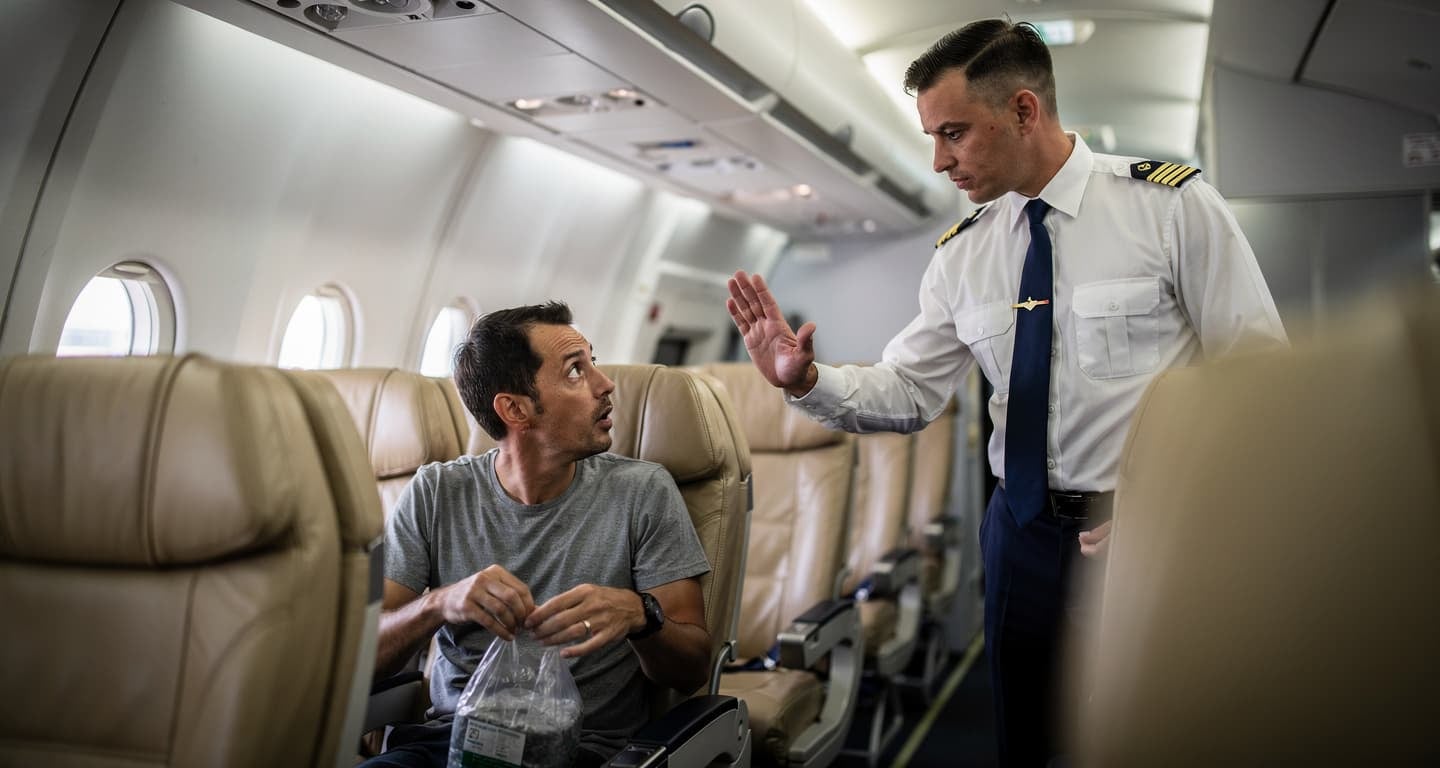
Starting May 1, 2026, American Airlines requires passengers to keep power banks visible and within reach during flights, bans recharging them onboard, and limits travelers to two power banks maximum under 100 watt-hours each. The policy targets lithium battery fires in overhead bins, where crew cannot quickly detect or suppress thermal runaway — a risk that forced 97 battery incidents involving smoke or fire on US flights in 2025 alone.
The rule applies to all American flights departing May 1 or later. Power banks must stay in seatback pockets, on tray tables, or on passengers’ bodies — not buried in carry-ons or overhead compartments.
American tightens battery rules after fire spike
American Airlines announced the policy change on April 25, citing FAA guidance on lithium battery thermal runaway. The new rules cap passengers at two portable chargers per person, require them to remain visible throughout the flight, and prohibit recharging them from seat power or USB ports.
Passengers may still use power banks to charge phones or laptops — but only if the charger stays in plain sight and within arm’s reach. Devices can be charged directly from aircraft seat power without restriction.
The policy follows a 2025 FAA safety alert warning that portable chargers in overhead bins or buried in bags delay firefighting response. Halon fire suppression systems onboard suppress flames but do not stop thermal runaway — the chemical chain reaction that causes lithium batteries to overheat and ignite. The most effective containment method is cooling with large amounts of water, which requires crew to locate the source immediately.
The new AA policy aligns with FAA limits, which cap spare lithium batteries over 100–160 watt-hours to two per person with airline approval; power banks exceeding 160Wh are prohibited on passenger aircraft entirely. Current American policy allows up to four lithium-ion batteries under 100Wh in carry-on bags — the May 1 rules tighten that to two power banks maximum.
| Factor | Before May 1 | After May 1 | Impact |
|---|---|---|---|
| Maximum per passenger | 4 batteries <100Wh | 2 power banks <100Wh | Must discard extras |
| Storage during flight | Carry-on bags allowed | Visible and reachable only | No overhead bins |
| Onboard recharging | Permitted | Banned | Cannot plug into seat power |
| Using to charge devices | Allowed anywhere | Allowed if visible | Must stay on tray/lap |
Southwest moved first, United and Delta watching closely
Southwest Airlines implemented near-identical power bank restrictions on April 20, 2026 — about one week before American’s announcement. Southwest limits passengers to one portable charger, requires visibility or under-seat storage, and bans onboard recharging or overhead bin placement. The airline had already required power banks to be visible while in use since May 2025, making the April 20 update an incremental tightening.
According to a video report, United Airlines may require power banks to be kept within reach during flights, with crew trained to intervene if devices feel warm or are improperly charged. Southwest’s stricter one-charger limit contrasts with American’s two-charger allowance, though both carriers ban overhead bin storage and onboard recharging.
International carriers have adopted even stricter policies. Lufthansa does not permit power banks to be used onboard, allows carrying two per passenger, and restricts storage to seat pockets, on passengers, or under seats — not in overhead bins. Singapore Airlines limits to two power banks, bans them in overhead bins, prohibits charging them onboard, and does not permit inflight use. Emirates allows passengers to bring only one power bank under 100Wh and bans inflight use entirely.
Flight deals
most people never see
Our AI monitors 150+ airlines for pricing anomalies that traditional search engines miss. Air Traveler Club members save $650 per trip per person on average: see how it works.
Each deal saves 40–80% vs. regular fares:

How FAA regulates lithium batteries on aircraft
The FAA certifies American Airlines under 14 CFR Part 121 for hazardous materials, including lithium batteries via the PackSafe program. Audits occur annually via IOSA and FAA ramp inspections. American’s new policy aligns exactly with FAA guidance: spare batteries under 100Wh are unlimited for personal use (now capped at two for practicality), batteries between 100–160Wh need airline approval, and batteries exceeding 160Wh are banned.
Damaged or unlabeled power banks are confiscated by TSA at security checkpoints. The policy exceeds FAA minimums by mandating visibility for inflight monitoring, addressing over 300 US battery incidents in 2025 — mostly involving vapes and power banks. No deviations from FAA standards exist; the policy enhances thermal runaway mitigation and was certified safe before implementation.
US airlines board fire containment bags and heat-resistant gloves on aircraft to isolate burning electronics. Once a device catches fire and is contained, the bag is stored in a metal cart in the galley until the aircraft lands. The FAA reported 97 battery incidents involving smoke, fire, or extreme heat in 2025 and 89 in 2024 — a trend that prompted the agency’s safety alert and subsequent airline policy changes.
What to do before your next American flight
The May 1 deadline leaves little time for passengers with near-term bookings to adjust.
- Check your power banks’ watt-hour rating. The rating is printed on the device or listed in manufacturer specs. Divide milliamp-hours (mAh) by 1,000 and multiply by voltage to calculate Wh if not labeled. Discard any exceeding 100Wh or bring only two total.
- Test seat power reliability on your next flight. Charge your phone directly from American’s seat USB to confirm it works before relying on it for long-hauls. Some older aircraft lack functioning ports.
- Pack power banks in an accessible pocket. Seatback pockets work, but tray tables and under-seat areas also qualify as “visible and within reach.” Avoid burying them in bags you’ll stow overhead.
- Expect gate checks. Flight attendants may visually scan for compliance during boarding or midflight. Non-compliance can result in crew intervention or removal from the aircraft under FAA hazardous materials enforcement rules.
- Review American’s restricted items page. The airline’s official guidance at aa.com lists all battery restrictions, including approval requirements for 100–160Wh devices.
Watch: FAA lithium battery incident reports post-May 1 — if fires decrease on American flights, expect rapid adoption by Delta and United, standardizing visible power bank rules across US majors by Q3 2026.
Questions? Answers.
Can I still charge my phone from the seat power outlet?
Yes. American’s new policy only restricts power banks — you can charge phones, laptops, and other devices directly from aircraft seat power or USB ports without limitation.
What happens if my power bank exceeds 100 watt-hours?
Power banks between 100–160Wh require airline approval before travel. Devices exceeding 160Wh are banned on passenger aircraft entirely under FAA rules. TSA will confiscate non-compliant batteries at security checkpoints.
Does this policy apply to international American Airlines flights?
Yes. The May 1 policy applies to all American Airlines flights regardless of destination, including international routes. Some foreign carriers enforce even stricter rules — check your connecting airline’s policy if traveling beyond American’s network.
Will other US airlines adopt similar rules?
Southwest already implemented comparable restrictions on April 20, 2026. United and Delta have visibility requirements in place but have not yet matched American’s two-charger cap or recharging ban. Industry observers expect standardization across US majors by mid-2026 if American’s policy reduces inflight battery incidents.