Quick summary
A jet fuel crisis triggered by the Strait of Hormuz blockade has forced major carriers including Lufthansa, Delta Air Lines, and Air Canada to cancel thousands of flights through October 2026. Lufthansa is cutting approximately 20,000 short-haul flights, KLM has axed 160 flights next month, and Delta suspended four routes from New York, Detroit, and Boston through September 8. The International Energy Agency warned on April 21 that Europe has roughly six weeks of jet fuel reserves remaining, with prices doubling in Europe and rising 80% in Asia since the conflict escalated in late February.
Passengers holding bookings on affected North Atlantic and European short-haul routes must check flight status immediately — airlines are prioritizing profitable long-haul services while cutting low-margin regional flights. Economy fares from New York to Frankfurt now average $1,450, up from a typical $1,050 baseline.
Fuel shortage forces immediate route cuts across Atlantic
The escalating Middle East conflict has severed a critical artery in global aviation fuel supply, forcing airlines to make emergency schedule adjustments that will affect millions of travelers through the summer travel season. The Strait of Hormuz blockade — which began in late February following US and Israeli strikes on Iran — has cut jet fuel exports from the Gulf region by an estimated 70–80%, triggering the sharpest price spike the industry has seen since the 2008 oil crisis.
Airlines responded this week with sweeping cancellations. Lufthansa announced it would remove roughly 20,000 short-haul flights from its schedule through October, equivalent to approximately 40,000 metric tons of jet fuel. KLM confirmed 160 European flight cancellations over the next month. SAS cut 1,000 flights in April alone.
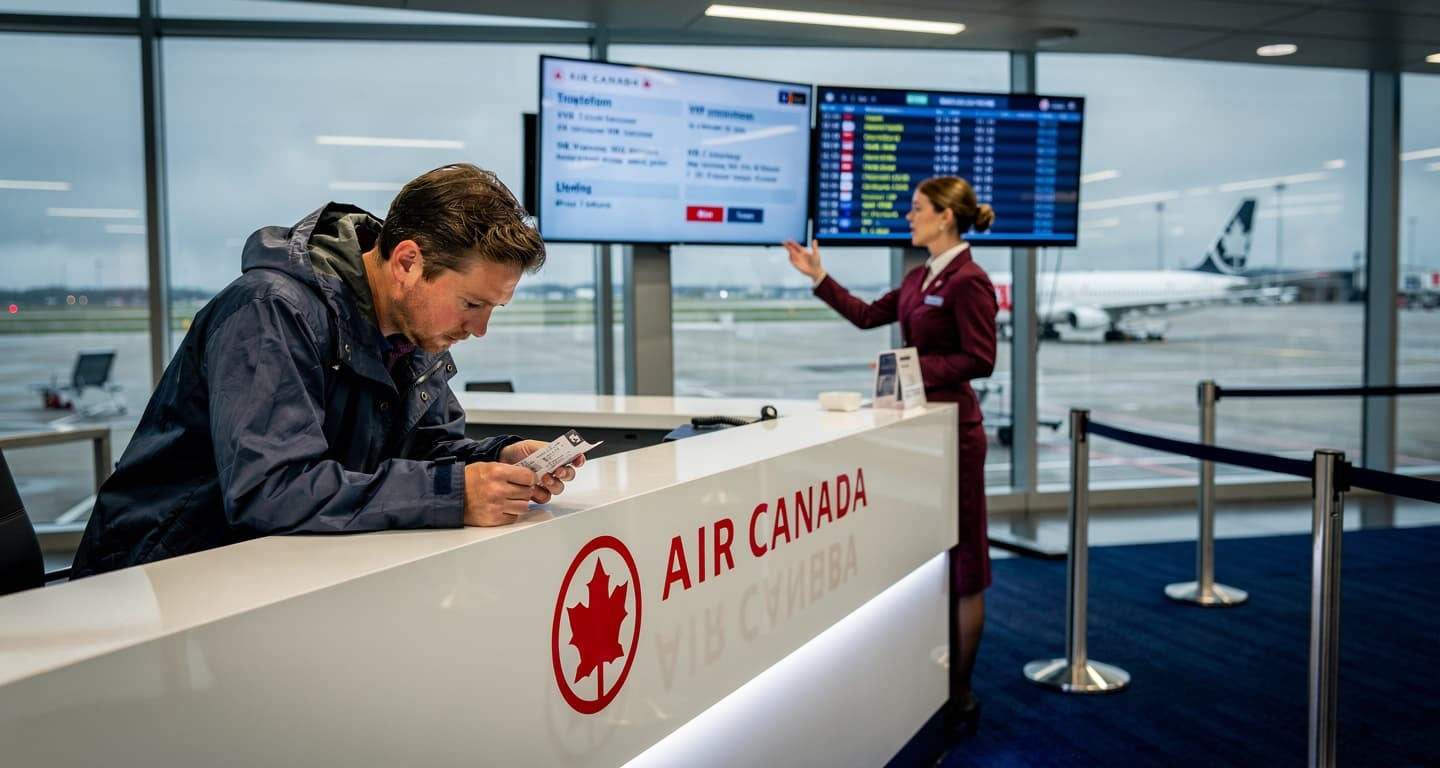
North American carriers are trimming transatlantic capacity. Delta suspended routes from New York to Memphis, St. Louis, and Houston until September 8, halted Detroit–Sacramento service until March 2027, and cancelled Boston–Nassau flights through September. Air Canada will eliminate four of its 38 daily New York services from June 1 through October 25, cutting flights from Toronto and Montreal to JFK.
The crisis affects travelers departing from North America, Europe, and Australasia on routes to Asia-Pacific destinations that rely on Gulf hub connections or European short-haul links. Passengers with bookings on Emirates, Etihad, Qatar Airways, or European carriers through October face the highest rebooking risk.
How the blockade created a supply crisis
The Strait of Hormuz — a 21-mile-wide chokepoint between Iran and Oman — normally handles roughly 20% of global oil shipments, including a significant portion of jet fuel exports from Gulf refineries. When the waterway was effectively blockaded following military escalation in late February, tanker traffic dropped by an estimated 70–80%, according to industry analysis cited by CBS News.
Europe depends on the Gulf for 25–30% of its jet fuel supply. With that pipeline severed, prices doubled — a 120% increase according to IATA data — while Asian markets saw an 80% surge. Jet fuel accounts for 25–30% of airline operating costs, making the price spike immediately unsustainable for low-margin routes.
Lufthansa was explicit in its announcement: the 20,000 cancelled short-haul flights represent routes that became financially unviable when fuel costs doubled. KLM noted its 160 cancellations affect less than 1% of total European flights but target the lowest-yield services. SAS cited “elevated oil and jet fuel prices” for its April cuts after already cancelling hundreds of flights in March.
The International Energy Agency issued a stark warning on April 21: Europe has approximately six weeks of jet fuel reserves remaining at current consumption rates. If supply lines don’t reopen, analysts expect mass cancellations to accelerate through June.
| Carrier | Routes affected | Cancellations | Duration |
|---|---|---|---|
| Lufthansa | European short-haul | ~20,000 flights | Through October |
| Delta Air Lines | JFK–Memphis, St. Louis, Houston; DTW–Sacramento; BOS–Nassau | 4 routes suspended | Through September 8 |
| Air Canada | Toronto/Montreal–JFK | 4 daily flights | June 1–October 25 |
| KLM | European routes | 160 flights | Next month |
| SAS | Scandinavian routes | 1,000 flights | April only |
Gulf carriers have reduced capacity for different reasons. Emirates is operating at roughly 70% of its typical schedule due to regional security concerns, not direct fuel shortages — the airline has access to Dubai’s refining capacity but faces airspace restrictions and demand uncertainty. The reduced Gulf hub capacity has pushed connecting traffic onto European and North American carriers, which are now cutting their own services due to fuel economics.
Flight deals
most people never see
Our AI monitors 150+ airlines for pricing anomalies that traditional search engines miss. Air Traveler Club members save $650 per trip per person on average: see how it works.
Each deal saves 40–80% vs. regular fares:

What changed from previous fuel crises
The 2019 Strait of Hormuz tanker attacks offer a reference point. When Iran seized vessels in May and June of that year, jet fuel premiums spiked 20–30% — significant but manageable. Airlines like Emirates and Qatar Airways added temporary fuel surcharges and reduced Middle East frequencies by 10–20%. Prices normalized within six weeks following the G20 summit on June 29, 2019, and no mass cancellations occurred.
The current crisis differs in scale and duration. The 2019 attacks disrupted tanker traffic temporarily; the 2026 blockade has effectively closed the strait for nearly two months with no diplomatic resolution in sight. The price surge — 120% in Europe versus 20–30% in 2019 — crosses the threshold where short-haul routes become loss-making even at full capacity.
Airlines are also responding differently. In 2019, carriers absorbed most costs through hedging contracts and temporary surcharges. In 2026, fuel hedging has become less common following the 2020 pandemic losses, leaving airlines more exposed to spot market volatility. The result: immediate capacity cuts rather than gradual fare adjustments.
The competitive picture shows clear winners and losers. Delta is cutting four US East Coast–Europe routes using A330 and 787 aircraft. Air Canada is trimming A220 service to New York. Lufthansa is grounding A320 family aircraft on 20,000 short-haul sectors. Meanwhile, carriers with access to non-Gulf fuel sources — particularly Asian airlines with Pacific supply chains — maintain fuller schedules, though at elevated fares.
Protect your booking before capacity tightens further
Airlines are announcing cuts on 48-hour notice as fuel economics shift daily — waiting to act increases rebooking difficulty.
- Check flight status daily if traveling through October on Lufthansa, KLM, SAS, Delta, or Air Canada. Use airline apps or FlightAware.com for real-time alerts.
- Request reprotection immediately if cancelled. European carriers must offer alternate routing under EU261; US carriers must provide refunds within 7 days for cancellations per DOT rules at transportation.gov/airconsumer.
- Book new travel with flexibility — refundable economy fares or premium cabin tickets with free changes. Google Flights’ “free cancellation” filter identifies qualifying fares.
- Avoid short-haul European connections on new bookings. Direct transatlantic flights face lower cancellation risk than itineraries requiring intra-Europe hops on A320/737 aircraft.
- Document delays for compensation claims. EU/UK departures qualify for €250–600 under EU261 for cancellations or delays over 2–4 hours. Canadian passengers receive CAD 400–1,000 under APPR rules at tc.gc.ca/eng/civilaviation/regulation/passenger.html.
Watch: The IEA’s next jet fuel inventory report, expected around May 1, will reveal whether Europe’s reserves have fallen below four weeks — the threshold analysts believe would trigger mass long-haul cancellations through June.

Questions? Answers.
Which airlines are most affected by the jet fuel crisis?
European carriers face the highest impact due to their dependence on Gulf fuel supplies. Lufthansa is cutting approximately 20,000 short-haul flights through October, KLM has cancelled 160 flights next month, and SAS cut 1,000 flights in April. North American carriers Delta and Air Canada are trimming transatlantic routes, while Gulf carriers like Emirates operate at 70% capacity due to regional security concerns.
Am I entitled to compensation if my flight is cancelled?
Yes, if departing from EU or UK airports. EU261 and UK261 regulations require airlines to pay €250–600 for cancellations or delays over 2–4 hours, regardless of the cause. US passengers receive full refunds within 7 days for airline-initiated cancellations under DOT rules. Canadian travelers qualify for CAD 400–1,000 under APPR regulations. File claims directly through airline websites with your booking reference.
How long will the fuel crisis last?
The International Energy Agency warned on April 21 that Europe has approximately six weeks of jet fuel reserves at current consumption rates. Resolution depends on diplomatic progress in the Middle East conflict and reopening of Strait of Hormuz tanker traffic. The 2019 Hormuz crisis resolved in six weeks following G20 intervention, but the current blockade shows no signs of easing after nearly two months.
Should I cancel my summer Europe trip?
Not necessarily, but book with flexibility. Direct long-haul flights face lower cancellation risk than itineraries requiring European short-haul connections. Purchase refundable fares or premium cabin tickets with free changes. Monitor your specific route — North Atlantic services to major hubs like Frankfurt, Amsterdam, and London maintain higher frequencies than regional European routes currently being cut.