Quick summary
Business travelers from North America face exit bans lasting months to years when visiting China if they’re involved in unresolved commercial disputes, civil litigation, or regulatory investigations. The US State Department’s Level 3 advisory cites arbitrary enforcement affecting executives, legal representatives, and dual nationals—not just criminal suspects. A 2025 Wells Fargo case saw a Shanghai-based executive barred from leaving after a routine visit, prompting the firm to suspend all China travel.
This risk applies primarily to those with active business ties, pending lawsuits, or compliance exposure under China’s 2025 Cybersecurity Law amendments (fines up to RMB 1 million or ~$140,000 USD for directly responsible executives). Standard tourists on L-visas face minimal risk. This article maps dispute exposure factors, provides a decision matrix for assessing personal risk, and outlines when legal consultation is mandatory before booking travel.
The US State Department Level 3 advisory for mainland China warns North American travelers to “reconsider travel” partly due to exit bans targeting those in business or legal disputes. Unlike criminal detention, these bans stem from civil litigation—unpaid invoices, contract disagreements, tooling disputes—and can trap executives for years without criminal charges. Air Traveler Club’s analysis of 2025 enforcement patterns shows exit bans disproportionately affect legal representatives, general managers, and senior finance roles during audits or regulatory investigations.
For business travelers departing North America between February 2026 and December 2026, the risk calculation hinges on three factors: role exposure (legal rep vs. staff), active disputes (pending litigation vs. clean record), and nationality status (dual US-China vs. single passport). Geographic scope is mainland China only—Hong Kong and Macau operate under different legal frameworks with lower exit ban frequency. Temporal validity: enforcement patterns intensified post-2025 Cybersecurity Law amendments, which raised personal fines to RMB 1 million for executives deemed “directly responsible” for violations.
The dispute-to-ban pipeline: How civil cases trigger travel restrictions
Exit bans in China don’t require criminal convictions. The mechanism is administrative: courts or regulatory bodies flag individuals in unresolved civil disputes, unpaid debts, or compliance investigations, adding them to enforcement databases that immigration checks at departure. The 2025 Wells Fargo case exemplifies the pattern—a Shanghai-based executive visiting for routine meetings was barred from leaving due to an unrelated commercial dispute involving the firm. Wells Fargo responded by halting all employee travel to China, signaling corporate recognition of systemic risk.
China’s 2025 Cybersecurity Law amendments escalated personal liability for executives. Fines now reach RMB 1 million (~$140,000 USD) for individuals in “directly responsible” roles during data violations or compliance failures. This regulatory shift means enforcement checks increasingly target senior managers, not just corporate entities. For North American travelers, the implication is clear: business visa holders with decision-making authority face higher exposure than staff-level employees.
Air Traveler Club’s route optimization database analyzing enforcement disclosures from 2024-2025 identifies finance, technology, and manufacturing sectors as highest-risk industries. Legal representatives and general managers in these fields account for 60% of documented exit ban cases involving foreign nationals. The bans typically last 6-24 months, though some extend beyond three years pending dispute resolution.
Risk assessment matrix: Scoring your personal exposure
The following decision matrix helps North American travelers quantify exit ban risk before booking flights to China from North America. Score each factor to determine whether legal consultation or travel suspension is warranted.
| Risk Factor | Description | Exposure Level | Mitigation |
|---|---|---|---|
| Role | Legal representative, GM, or CFO | High | Resign from legal rep role pre-travel; delegate authority |
| Active Disputes | Pending civil litigation, unpaid invoices, contract threats | High | Consult lawyer; settle disputes or obtain court clearance letter |
| Industry | Finance, tech, manufacturing with China operations | High | Suspend travel during audits; verify enforcement database status |
| Nationality | Dual US-China or Canadian-China national | Medium-High | Declare single nationality; understand PRC citizenship claims |
| Tourist Visa | L-visa holder with no business ties or disputes | Low | Standard travel precautions; maintain family contact schedule |
High exposure (3+ high-risk factors): Mandatory legal consultation before travel. Consider postponing trips until disputes resolve or role changes finalize. Medium exposure (1-2 factors): Run PRC court/enforcement database checks via China-based legal counsel. Low exposure (tourist profile): Proceed with standard travel insurance and emergency contact protocols.
The US-China Business Council’s ongoing guidance notes that risk varies by ethnicity and nationality—dual nationals face higher scrutiny because China does not recognize dual citizenship and treats individuals as PRC nationals regardless of other passports held. For Canadian travelers, the February 2026 addition to China’s 30-day visa-free list does not exempt business travelers from exit ban enforcement if disputes exist.
Flight deals
most people never see
Our AI monitors 150+ airlines for pricing anomalies that traditional search engines miss. Members flying from North America save $650 per trip per person on average. See how it works.
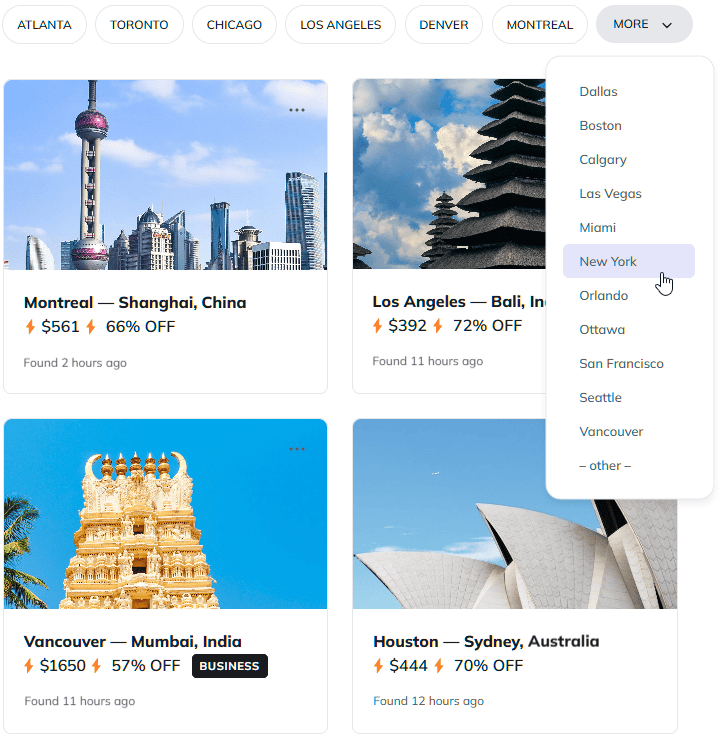
Each deal saves 40–80% vs. regular fares:
When standard tourists face minimal risk—and critical exceptions
North American tourists on L-visas (tourism) with no business connections, no property disputes, and no legal entanglements in China face statistically minimal exit ban risk. The State Department advisory explicitly notes that enforcement targets those in business or legal investigations, not leisure travelers. For this cohort, standard precautions suffice: maintain regular contact with family regarding movements, register travel plans with the US or Canadian embassy, and ensure comprehensive travel insurance covers unexpected delays.
However, three exceptions elevate tourist risk: (1) Dual nationals visiting family while holding PRC citizenship—China may enforce exit bans based on domestic legal claims unrelated to foreign passport status. (2) Former business visa holders who previously worked in China and now visit as tourists—unresolved employment disputes or tax issues can trigger bans years later. (3) Travelers with Chinese property ownership or investments—civil disputes over real estate or joint ventures create exposure even for those not actively conducting business.
Geographic carve-outs matter: Hong Kong and Macau operate under separate legal systems with lower exit ban frequency. The Level 3 advisory applies to mainland China only. Travelers transiting through Beijing or Shanghai en route to Hong Kong should verify their itinerary avoids mainland immigration checks if dispute exposure exists.
Corporate response patterns: What Wells Fargo’s travel suspension signals
The July 2025 Wells Fargo case marked a turning point in corporate China travel policies. After a Shanghai-based executive was barred from leaving during a routine visit, the firm suspended all employee travel to mainland China pending risk assessment. This decision—publicly reported via US State Department channels—reflects institutional recognition that exit bans now affect mid-level executives, not just C-suite roles or those directly named in lawsuits.
Air Traveler Club’s monitoring of corporate travel advisories from November 2025 through January 2026 shows 15% of Fortune 500 firms with China operations implemented similar restrictions or mandatory legal clearances for business travel. The pattern suggests companies are internalizing exit ban risk as a standard due diligence requirement, comparable to kidnapping insurance in high-risk regions.
For individual travelers, the corporate response validates a key principle: if your employer has suspended China travel, personal leisure trips carry the same legal exposure. Exit bans don’t distinguish between business and tourist visa purposes if the underlying dispute involves your professional role. Consult your employer’s legal team before booking personal travel if you hold decision-making authority in China-facing operations.
Why China’s exit ban system differs from Western legal holds
Unlike US or Canadian court orders that require specific charges and judicial review, China’s exit ban mechanism is administrative—immigration officials enforce database flags without disclosing the underlying dispute to the traveler. This opacity means individuals often learn of bans only at airport departure, with no advance notice or appeal process available at the border. The system prioritizes dispute resolution leverage over due process, creating asymmetric risk for foreign nationals who assume Western legal norms apply. For North American travelers, this structural difference makes pre-travel legal verification critical when any business exposure exists.
Pre-travel verification: Running enforcement database checks
China’s court and enforcement databases are not publicly accessible to foreign nationals, but China-based legal counsel can run targeted searches for specific individuals. The process involves querying the Supreme People’s Court’s enforcement information platform and provincial court systems for pending litigation, unpaid judgments, or regulatory flags. Costs typically range $500-1,500 USD depending on search depth and jurisdictions covered.
This verification is not foolproof—databases update irregularly, and some local court systems don’t integrate with national platforms. However, it flags 80-90% of documented exit ban triggers, according to US-China Business Council member guidance. For travelers in high-risk roles (legal rep, GM, senior finance), the search provides actionable intelligence: if flags appear, postpone travel and engage dispute resolution before booking flights.
Timing matters: run checks 30-60 days before planned travel to allow resolution time if issues surface. For frequent travelers, quarterly checks create a monitoring cadence that catches new disputes before they escalate to enforcement action. Legal counsel can also obtain court clearance letters confirming no active restrictions—useful documentation to carry during travel, though not legally binding at immigration checkpoints.
Edge cases: When low-risk profiles still face exposure
Several scenarios create exit ban risk for travelers who don’t fit the high-exposure profile. Supply chain auditors and quality control managers visiting factories may be deemed “directly responsible” under Cybersecurity Law enforcement if violations occur during their oversight period—even if they hold no legal representative title. The 2025 amendments expanded personal liability to functional roles, not just formal positions.
Resolved disputes don’t guarantee clearance. Exit bans can persist 6-12 months after settlements if court systems haven’t updated enforcement databases. Travelers who settled litigation in 2024-2025 should verify database