Quick summary
All four Western governments still rate Syria at their highest warning level on October 7, 2026: the U.S. at Level 4 Do Not Travel since December 11, 2025, and the UK, Canada and Australia at avoid-all-travel. No part of the country is considered safe, and the U.S. cannot provide emergency or routine consular help.
The surprise is the paperwork. U.S. citizens may be issued a 30-day tourist visa on arrival at Damascus airport, or from Lebanon or Jordan, for about $200 — even while Washington says do not go. Here is what each rule actually means.
Australia’s Smartraveller refreshed its Syria advice on September 2, 2026. The verdict did not change: do not travel. Five weeks later, on October 7, 2026, Syria still holds the top warning level on all four advisories a traveler is most likely to check. Those are the United States, the United Kingdom, Canada and Australia.
The agreement is clear; the rules beneath it differ. The U.S. State Department says no part of Syria is safe from violence. None of the four governments carves out a safe area.
The entry paperwork presents a separate problem. Current U.S. and Canadian advice describes different visa routes, even while both governments warn against the trip. Permission to enter and support once inside are separate questions.
Four governments still say do not travel
The State Department’s current Syria advisory, issued on December 11, 2025, still reads Level 4: Do Not Travel. It cites terrorism, civil unrest, kidnapping, hostage taking, crime and armed conflict.
The UK Foreign, Commonwealth & Development Office advises against all travel to Syria. Its update is dated July 22, 2026 and remained current on July 27, 2026. Global Affairs Canada updated its avoid-all-travel advice on July 23, 2026. It points to armed clashes, airstrikes, criminality, kidnappings and terrorism.
| Government | Advisory level | Last updated | Main risks cited |
|---|---|---|---|
| U.S. State Department | Level 4: Do Not Travel | Issued December 11, 2025 | Terrorism, unrest, kidnapping, hostage taking, crime, armed conflict |
| UK FCDO | Advises against all travel | July 22, 2026 | Unpredictable security conditions, terrorist attacks |
| Global Affairs Canada | Avoid all travel | July 23, 2026 | Armed clashes, airstrikes, criminality, kidnappings, terrorism |
| Smartraveller (Australia) | Do not travel | September 2, 2026 | Highest warning level maintained |
The December 2024 end of the Assad government has not brought the softer warnings some expected. The U.S. advisory followed a year later, with the same six risk indicators. Syria’s State Sponsor of Terrorism designation, held since 1979, also remains in force.
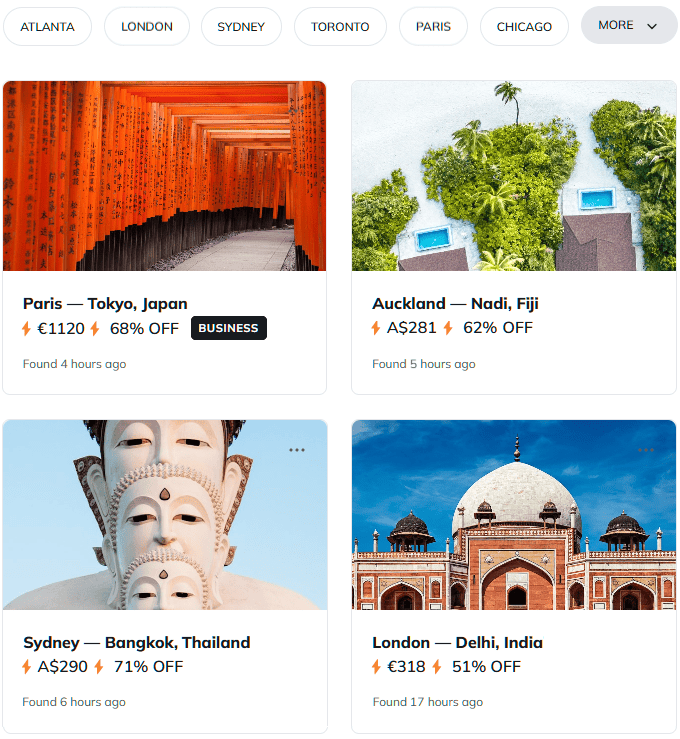
Superdeals cover departures from North America, Europe and Australia.
Flight deals most people never see
Air Traveler Club monitors thousands of routes for pricing anomalies that traditional search engines miss. With ATC Superdeals members save up to 80% on each flight vs. regular fares.
Too good to be true? Check it out yourself. It's free.
Delivered weekly. Unsubscribe anytime.
No embassy, no rescue on the ground
The U.S. Embassy in Damascus suspended operations in 2012, and the Czech Republic acts as the protecting power for U.S. interests in Syria. The State Department states the consequence plainly: the U.S. government cannot provide emergency or routine services to U.S. citizens in Syria.
The gap widened on October 15, 2025. Routine consular services, including full passport applications, consular reports of birth abroad and notarial services, stopped being available in Syria, according to the U.S. Embassy in Syria. The Czech protecting power now handles only emergency cases.
The UK is equally clear.
The FCDO says consular support is not available from within Syria. Its contact for British nationals is its office in London, rather than an office inside the country.
On June 4, 2026, the U.S. Embassy in Syria issued a security alert advising increased caution across the Middle East.
If you go anyway: visas and exit rules
The State Department says U.S. citizens may be issued a 30-day tourist visa on arrival at Damascus International Airport, or at land entry from Lebanon or Jordan, for about $200. Other visa categories require pre-approval from a Syrian mission. The Syrian Embassy in Washington, D.C. has suspended operations.
Canada’s advisory describes a different process. It says a tourist visa is required and non-Arab nationals cannot obtain one at a border point. The visa must come from a Syrian embassy or consulate before departure. Both statements are current.
Entry is only the first set of rules.
Passports must be valid for at least six months beyond the date you expect to leave. Stays longer than 14 days add an administrative step, described below.
Airport operations remain partial. Damascus airport is operational, and Aleppo airport has resumed limited commercial operations, but some airlines have not resumed Syria service. Airspace may close without notice. For U.S. carriers, an FAA NOTAM and SFAR prohibit U.S. flights within Syrian airspace and advise caution within 200 nautical miles; the FAA’s assessment of Syria’s civil aviation safety is not complete.
For the land route from Jordan, our Jordan travel warning on the northern borders sets out where the border-zone warnings start.
Insurance and the moving regional conflict
A policy that will not pay out is worth nothing.
Regional tension has been rising since July 8, 2026, with strikes and retaliatory attacks and a risk of further escalation, according to the FCDO. British nationals are told to prepare for possible flight cancellations, airspace closures and disruption.
The U.S. Embassy alert draws a regional divide. Bahrain, Israel, the West Bank, Jordan, Kuwait, Oman, Qatar, Saudi Arabia and the UAE sit at Level 3, Reconsider Travel, while Iran, Iraq, Lebanon, Syria, Gaza and Yemen remain at Level 4, Do Not Travel. Our Lebanon travel insurance guide explains what a Level 4 rating does to card and policy coverage on the other side of that line.
What the advisory means for your plans
Through the first week of October 2026, the decisions turn on rules rather than timing. The difference between entry permission and a workable way out matters for each of these travelers.
Visa-on-arrival planners. The U.S. and Canadian visa descriptions leave a gap to resolve for your passport. Confirm which applies with a Syrian mission before you book anything. Less suited: travelers who cannot verify their visa route in writing, given the suspended Washington mission and lack of a consular fallback inside Syria.
Men of Syrian descent aged 18 and over. Canada’s advisory says compulsory military service applies, or an exemption fee, and some travelers may need an exit permit from the General Security Department. That combination can turn a short visit into an open-ended stay. Less suited: anyone whose service or exemption status is unresolved, because leaving may require that permit.
Travelers routing through Lebanon or Jordan. Land crossings may close without notice, and Jordan’s northern border zones carry their own advisory warnings. Less suited: travelers whose onward plans depend on a single crossing staying open.
Anyone relying on standard travel insurance. The FCDO warns that cover may be invalidated when you travel against its advice, and it tells travelers to confirm a policy covers the itinerary and emergencies. Read the exclusion wording before departure, not after an incident. Watch the four advisories: a downgrade would be the first sign the calculation is shifting.
For help, British nationals can call the FCDO in London on +44 (0)20 7008 5000; U.S. citizens can call +1-202-501-4444 from abroad or 1-888-407-4747 from the U.S. or Canada. The State Department asks travelers to enroll in STEP for alerts, and the FCDO tells British nationals to monitor airports and airspace as the security environment can change quickly.
Reporting by




Questions? Answers.
Did the December 2024 change of government lower any Syria advisory?
No. All four governments still hold their highest-level warnings as of October 2026. The U.S. advisory was issued on December 11, 2025, a year after the government fell, and cites the same six risks: terrorism, civil unrest, kidnapping, hostage taking, crime and armed conflict.
Is any part of Syria, including Damascus, designated safe?
No. The State Department says no part of Syria is safe from violence, and none of the four governments carves out an exception. Damascus International Airport being operational is a statement about runways, not about safety on the ground.
Does travel insurance cover Syria under a Level 4 advisory?
The UK FCDO warns that travel insurance may be invalidated if you travel against its advice, and it tells travelers to confirm a policy covers the itinerary and emergencies. Read the exclusion wording before you rely on any policy.
What happens if I need to leave Syria but am denied an exit permit?
Canada’s advisory says some travelers may require an exit permit from the General Security Department. If it is refused, there is no Western embassy inside Syria to advocate for you; the June 4, 2026 U.S. Embassy alert points to the U.S. Embassy in Amman, Jordan as a fallback if the Czech interests section cannot be reached.