No — there is no single federal law requiring airlines to disinfect aircraft water tanks exactly four times a year; the Aircraft Drinking Water Rule instead requires each airline to follow an FAA-accepted operations and maintenance plan, which sets disinfection frequency using the aircraft manufacturer’s recommendation first, or an EPA-approved fallback interval only when the manufacturer gives none.
One of those fallback options happens to be “at least 4 times per year,” which is almost certainly where the widely repeated figure comes from. But most aircraft are governed by manufacturer guidance, not that fallback, so the real frequency varies by airline, airplane, and water system design.
Search “how often are airplane water tanks disinfected” and you’ll find the same number everywhere: four times a year. It shows up in listicles, forum threads, and the occasional aviation blog, always presented as a settled legal fact.
It isn’t one. The federal rule that actually governs onboard drinking water — the EPA’s Aircraft Drinking Water Rule, or ADWR — doesn’t set a universal disinfection schedule at all. It sets a process, one built after a federal testing program found contamination on a meaningful share of the aircraft it sampled. Understanding that process, rather than the misquoted number, is what actually tells you something about the safety of the water you’re drinking, brushing your teeth with, or getting in your coffee at 35,000 feet.
The plan-based system behind onboard water safety
The ADWR adapts the Safe Drinking Water Act’s public water system rules to a genuinely odd category: plumbing that flies, refills from different municipal sources in different cities, and sits in plastic tanks and lines where biofilm can build up between fills.
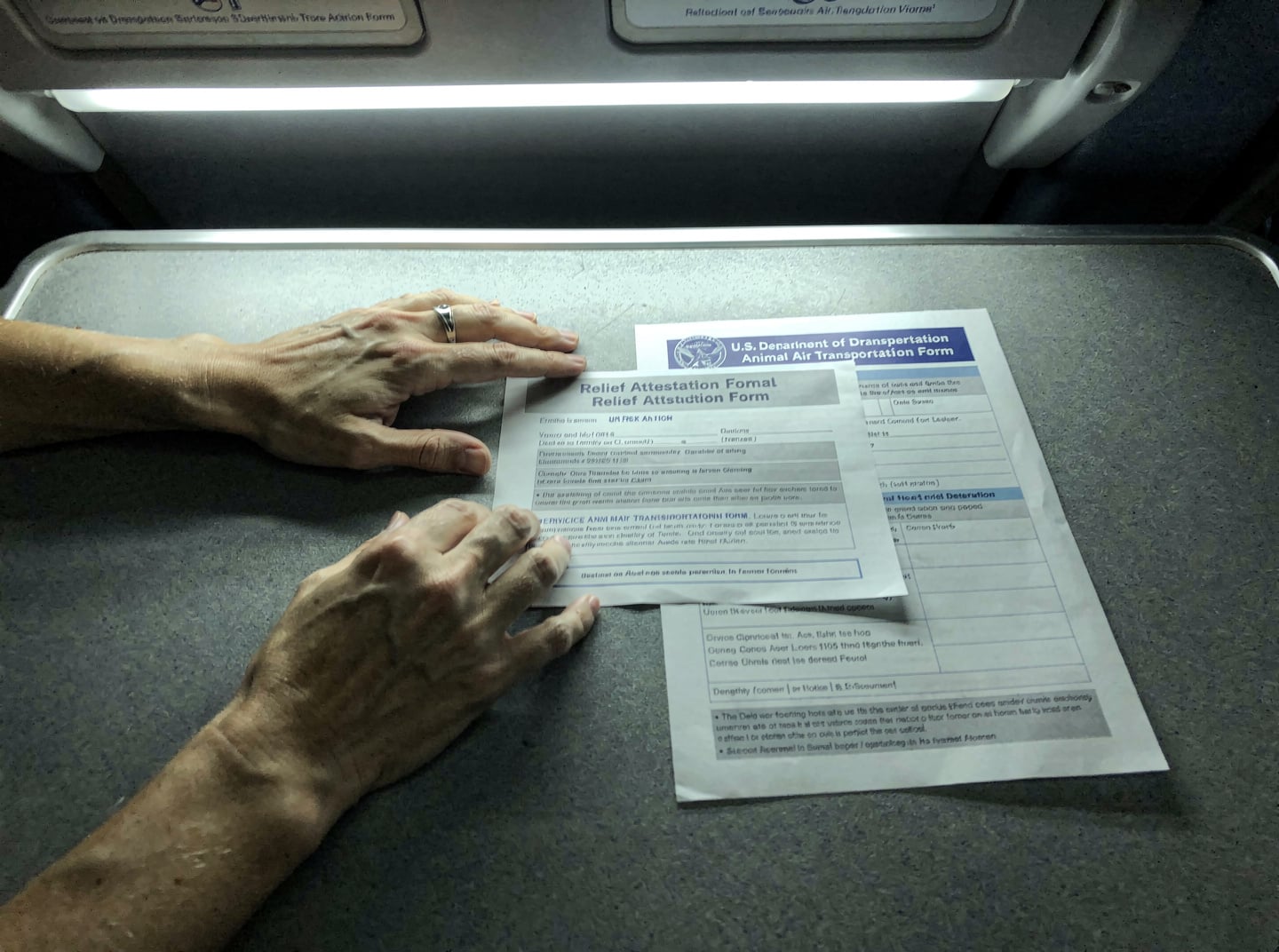
For every aircraft it operates, an airline must create — and the FAA must formally accept — an aircraft water system operations and maintenance plan. Five things have to be spelled out in that plan: the disinfectant used and its concentration, the contact time it needs to work, the flushing volume or duration, and the frequency of the whole routine.
That last item, frequency, isn’t the airline’s to invent freely. The water system manufacturer’s recommended interval sets the legal floor — carriers must disinfect and flush no less often than the manufacturer specifies. Only when a manufacturer gives no routine maintenance interval at all does the airline fall back to a frequency tied to the rule’s own monitoring requirements.
Flight deals
most people never see
Our AI monitors 150+ airlines for pricing anomalies that traditional search engines miss. Air Traveler Club members save $650 per trip per person on average: see how it works.
Each deal saves 40–80% vs. regular fares:

Where the “four times a year” number actually comes from
This is the part most coverage skips. In guidance dated April 9, 2008, the EPA gave carriers whose manufacturer sets no routine interval four possible frequency options; one of them is disinfecting and flushing “at least 4 times per year,” a rate the agency describes as once every three-month period.
So the number is real. It’s just not a floor for the whole industry — it’s one menu item, meant for a narrower situation than most articles imply.
Enforcement records add a wrinkle that likely explains why the phrase stuck.
Consent orders from the EPA bound American Airlines, Alaska Airlines, and United Airlines to disinfect their aircraft water systems no less often than quarterly. United’s order also covered an approved O&M program and monthly disinfection of watering points — the fixtures ground crews use to fill tanks. Those orders are carrier-specific settlements, not the rule’s own baseline, but they are likely where “four times a year” leaked into general circulation as if it applied to everyone.
Carriers also don’t get to set a frequency and forget it. Under the reporting requirements at 40 CFR 141.806, airlines must tell the EPA both their established disinfection and flushing frequency and how their O&M plan was developed — and once a maintenance period ends, the resulting disinfection and flushing events have to be reported within the deadline set out in the same rule. The plan itself is built under 40 CFR 141.804.
There’s no direct international equivalent to weigh this against. The closest comparable pandemic-era mandate — EASA’s rule requiring European passenger flights to be cleaned and disinfected at least once every 24 hours — covers cabin surfaces, not the plumbed water system the ADWR regulates. Aircraft drinking water sits in a regulatory category mostly unique to U.S. jurisdiction.
Why the rule doesn’t just prescribe one number
The performance-based design traces back to a specific embarrassment. In August and September 2004, the EPA tested 158 randomly selected passenger aircraft and found that 87.4 percent met drinking water standards — which meant 12.6 percent did not. Total coliform bacteria turned up in 20 of those 158 aircraft; E. coli, a more direct fecal-contamination marker, showed up in 2 of them.
Twenty out of 158 is small enough to remember and large enough to matter — it’s not an epidemic, but it’s not a rounding error either. That snapshot is what pushed the EPA toward rulemaking rather than a one-off crackdown.
A single fixed number — say, quarterly disinfection for every aircraft — would have ignored a genuine engineering problem: water systems differ by aircraft type, tank material, and route profile, so a one-size interval risks both over- and under-treating different fleets. The O&M plan structure lets the manufacturer’s engineering data drive the interval instead, with EPA’s fallback options as a backstop rather than a default.
What this means for you
None of this means onboard tap water is routinely unsafe. What it means is that the widely repeated “four times a year” figure won’t tell you what happens on your next flight. The real answer sits in your airline’s plan, which you’re unlikely to see unless you go looking for it.
Frequent flyers who want more certainty than “the plan is FAA-accepted” have one real lever: bottled or canned water for drinking and brushing teeth, especially on long-haul aircraft where tanks sit unrefreshed longest between major services.
If you want to check a specific carrier, the EPA’s own compliance reports are public and carrier-searchable — a more useful habit than trusting whatever number a travel blog has repeated without a citation.

Questions? Answers.
Is it safe to drink tap water on a plane?
Most tested aircraft meet EPA drinking water standards, but the 2004 federal testing found contamination on a meaningful minority of sampled planes. Many frequent travelers choose bottled water as a simple precaution rather than relying on tank water for drinking.
Do all airlines disinfect their water tanks on the same schedule?
No. Each airline follows its own FAA-accepted operations and maintenance plan, and the frequency depends on the aircraft manufacturer’s recommendation first, with EPA fallback options used only when no manufacturer guidance exists.
How can I find out how often my airline disinfects its aircraft water systems?
The EPA publishes carrier-specific data through its Aircraft Drinking Water Rule Compliance Reports, which cover disinfection events, test results, and violations from 2012 onward.
Why do American, Alaska, and United disinfect quarterly?
Those three carriers are bound to no-less-than-quarterly disinfection under EPA consent orders, which are carrier-specific enforcement settlements rather than a requirement that applies to the entire industry.