No. Under U.S. federal regulation, a passenger may not drink any alcoholic beverage in flight unless the operating carrier served it. Your sealed duty-free bottle is legal to buy and legal to carry, but it is not legal to open in your seat.
Most airlines enforce the same baseline. Where experiences diverge is at the boarding gate.
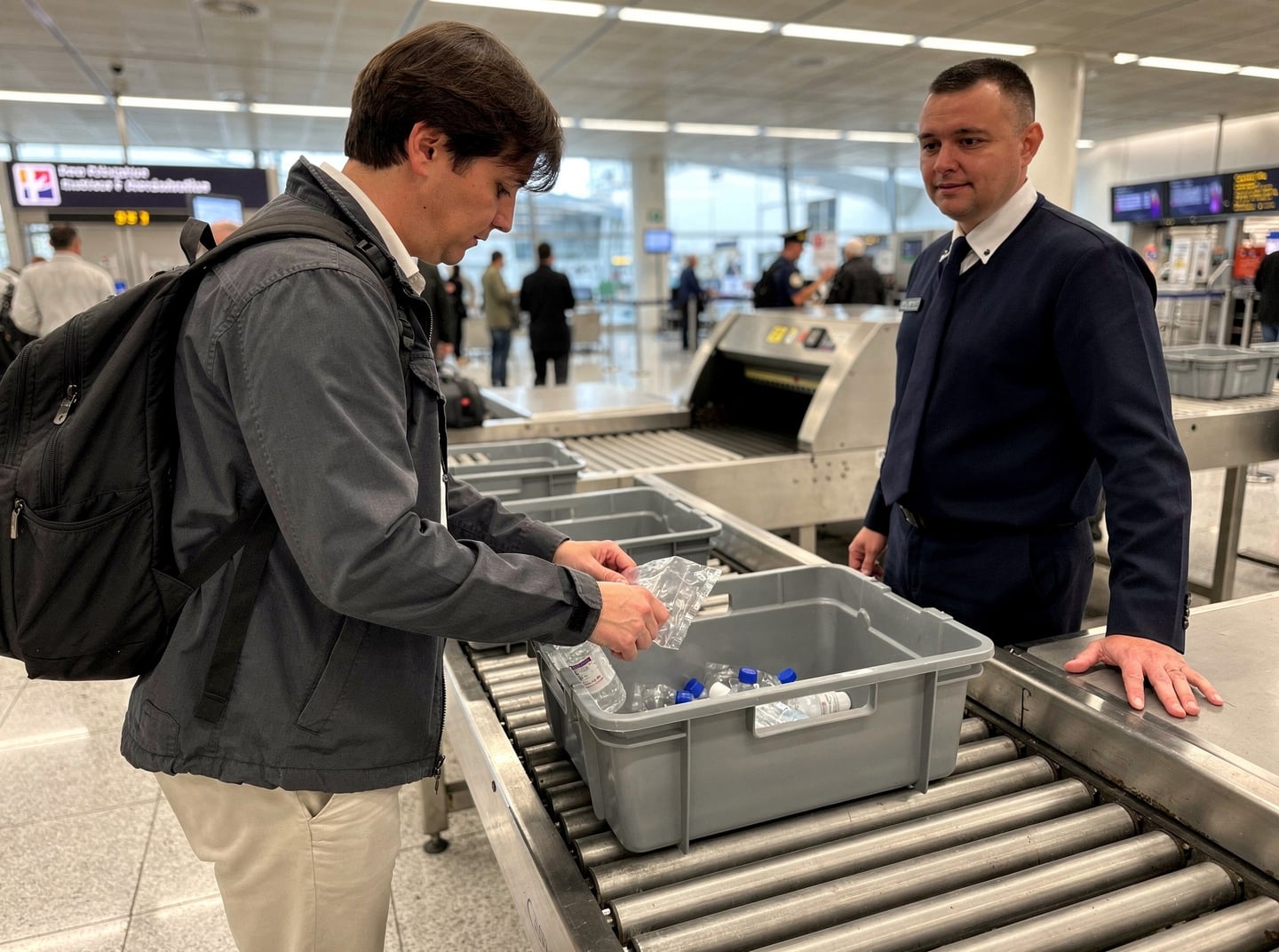
On certain Ryanair holiday routes, the bottle may be tagged for the hold or surrendered before you ever board. On a full-service carrier, the same bottle likely never leaves your bag.
Row 23 is where a perfectly legal purchase becomes a federal violation. There is no warning printed on the tamper-evident bag, and no airport retailer is required to mention it. You carried the whiskey through security and onto the aircraft without breaking a single rule.
The problem starts the moment you twist the cap.
The rule has three layers, and that is exactly why it confuses people. Buying duty-free alcohol is legal. Carrying it into the cabin is legal.
Drinking it from your own bottle in your seat is not — under U.S. regulation, airline conditions of carriage, and comparable laws in the UK, Singapore, Canada, and Australia. The airline did not serve it, so the airline did not authorize it.
Regulators wrote that distinction for a reason: in a pressurized cabin, intoxication is a safety problem the crew must be able to control.
What regulators never standardized is how the bottle gets enforced. A legacy-carrier passenger and a low-cost passenger can hold the same bottle and face very different outcomes.
That gap — between a settled rule and unsettled gate practice — is what most coverage stops short of explaining.
What the law says once the cabin door closes
The cleanest statement comes from the Government Publishing Office in its text of 14 CFR 121.575: no person may drink any alcoholic beverage aboard an aircraft unless the certificate holder operating that aircraft has served it. It is not a suggestion. It is the same regulation that requires carriers to refuse boarding to an intoxicated passenger and to report cabin disturbances once airborne.
The UK criminalizes the same behavior from the other direction. Article 242 of the Air Navigation Order 2016 makes it an offence to board an aircraft drunk, or to be drunk on one. Singapore’s Air Navigation Order takes a similar approach in article 47: general contraventions can draw fines up to S$10,000, while specified offences reach S$100,000 and five years.
Canada concentrates on crew fitness — Canadian Aviation Regulations section 602.03 bars a crew member from acting within 12 hours of drinking — while Australia’s Civil Aviation Safety Authority guidance says passengers cannot drink their own alcohol in flight, full stop.
That is the third legal layer. The purchase is one transaction, the carriage another, and the consumption a third. Most passengers only ever hear about the first two.
Flight deals
most people never see
Our AI monitors 150+ airlines for pricing anomalies that traditional search engines miss. Air Traveler Club members save $650 per trip per person on average: see how it works.
Each deal saves 40–80% vs. regular fares:

Why the same bottle meets very different gate agents
The rule is uniform, but enforcement is not. The clearest divide is between a carrier that checks bags at boarding and a carrier that handles the bottle in the air.
On some UK and Spanish holiday routes, Ryanair has published operational notices telling passengers that cabin bags containing duty-free alcohol will be tagged and placed in the hold free of charge, if the bag is suitable. If the bag is not suitable, the notice says, the alcohol must be left in the bins provided. Gate risk is explicit: boarding gates will be monitored, and anyone showing signs of anti-social behaviour or trying to conceal alcohol will be denied travel without refund or compensation.
The same airline later clarified it is not banning or confiscating bottles at the gate. Passengers can carry duty-free alcohol on board but must not consume it. The outcome at any given gate still depends on which operational notice was in force that week.
Other low-cost carriers have also used route-specific moves, but few full-service airlines publish comparable hold requirements. The available documents show a split between carriers that enforce at the boarding gate and those that keep the rule in the cabin, with carrier model, not the law, driving the difference.
What duty-free retailers tell you is an even softer layer. The voluntary UK Aviation Industry Code of Practice on Disruptive Passengers asks retailers to warn buyers not to open or drink the alcohol before or during the flight, while airlines agree to keep personal alcohol from being consumed on board by storing it separately in sealed tamper-evident bags.
But that advice sits in a voluntary code; no statutory provision reviewed makes it a legal duty. That is a gap in consumer expectation more than law.
| Carrier type | Personal alcohol consumption policy | Duty-free carriage rules | Gate enforcement practice | Route-specific restrictions |
|---|---|---|---|---|
| Low-cost carrier with route-specific notices (Ryanair) | Must not consume own alcohol; duty-free bottles must remain sealed. | May carry duty-free in the cabin but must not consume; gate tagging possible. | May deny travel to disruptive passengers; unsuitable bags may mean disposal. | Route-specific notices on some UK and Spanish routes require hold or surrender. |
| Full-service signatories to the UK code | Only crew-served alcohol may be consumed; personal or duty-free opening is not permitted. | Duty-free must stay sealed and be stored separately. | Commitments mostly in on-board messaging; no published route-level gate checks found. | No route-based checked-baggage requirement identified in the reviewed documents. |
The table’s sharpest contrast sits in the column passengers never think about: gate enforcement practice. A low-cost carrier with route-specific notices describes active gate-level intervention. Full-service signatories describe commitments that live mostly in on-board messaging, after someone has already become a problem.
The missing column in public data is outcome: there is no regulator-grade evidence that route-specific bans actually reduced disruptive incidents.
Why a sealed bottle becomes a financial problem for everyone
The cost uncertainty is why crews do not treat this as a policy quirk. A diversion driven by an intoxicated passenger typically runs between £10,000 and £80,000 depending on aircraft size and where it lands, according to the UK Civil Aviation Authority.
For a long-haul Emirates flight, the same reporting puts a diversion at US$50,000 to US$600,000, while UK criminal penalties for being drunk on an aircraft go up to £5,000 and two years in prison. One passenger’s bottle can become a five-figure or six-figure airline liability, plus dozens of stranded travellers.
No documented case turned up where a passenger was penalized solely for opening their own duty-free bottle without any other disorderly behaviour. The financial consequences are real and documented. The enforcement record for this specific rule is remarkably thin.
What this means for you
The safe default is simpler than the fine print: your bottle is cargo, not a bar. Keep it in its sealed tamper-evident bag with the receipt visible until you reach your final destination. Once you open it in the cabin, you have crossed from carriage to consumption without authorization.
Before boarding, read what your airline actually says about your flight. If you are on a low-cost carrier serving holiday-party routes, check your booking emails: a route-specific notice can mean your bag gets tagged for the hold, or your bottle gets surrendered at the gate.
Do not pre-drink at the airport lounge to get around the rule. Carriers have a legal duty to refuse boarding to someone who already appears intoxicated, and the gate is where that judgment happens.
None of this is likely to relax: gate-level enforcement and voluntary industry codes are moving in one direction, and the passenger’s best protection is knowing the bottle was never the part that was legal to drink from.

Questions? Answers.
Can I drink my duty-free alcohol on the plane?
No. Under U.S. federal rule 14 CFR 121.575, you may not drink any alcoholic beverage aboard an aircraft unless the operating carrier served it. Your duty-free bottle must remain sealed for the entire flight.
Can you fly with duty-free alcohol?
Yes. As Ryanair’s own clarifying statement puts it, passengers can carry duty-free alcohol on board but must not consume it during the flight. Most major airlines allow sealed duty-free alcohol subject to their usual liquid and security rules.
Can I put duty-free alcohol in my carry-on international?
You generally can, provided it stays in a sealed tamper-evident bag with the purchase receipt visible. On some Ryanair routes, a cabin bag containing alcohol may be tagged at the gate and placed in the hold, or the alcohol disposed of if the bag is unsuitable.
Can you take alcohol in hand luggage?
Yes, if it meets the carrier’s packing and safety thresholds. Canadian Aviation Regulations define intoxicating liquor as beverages above 2.5 per cent proof spirits, and alcohol above 70 percent ABV is generally barred from luggage for fire safety. Duty-free alcohol usually must stay sealed, and on certain routes it may be tagged for the hold.