No private jet can land at Courchevel Altiport. The published restriction limits the runway to propeller aircraft with a maximum take-off mass of 5.7 tonnes and to helicopters, which rules out every turbofan jet by type.
Even qualifying turboprop crews must hold a Part-FCL mountain rating with recent mountain landings, and the only airline licensed for fixed-wing commercial flights since 2014 is Alpine Airlines. Larger jets stage through Geneva or Chambéry instead.
The phrase “private jet to Courchevel” collapses on contact with the airport’s paperwork. Travellers picture a sleek twin-jet touching down beside the ski lifts; the published rules describe something closer to a mountain utility aircraft.
The altiport exists precisely to serve high-net-worth winter traffic — direct air access to the resort rather than a road transfer from Geneva or Lyon. But that premise only holds for a narrow slice of the aviation fleet, and the filter starts with aircraft type, not budget.
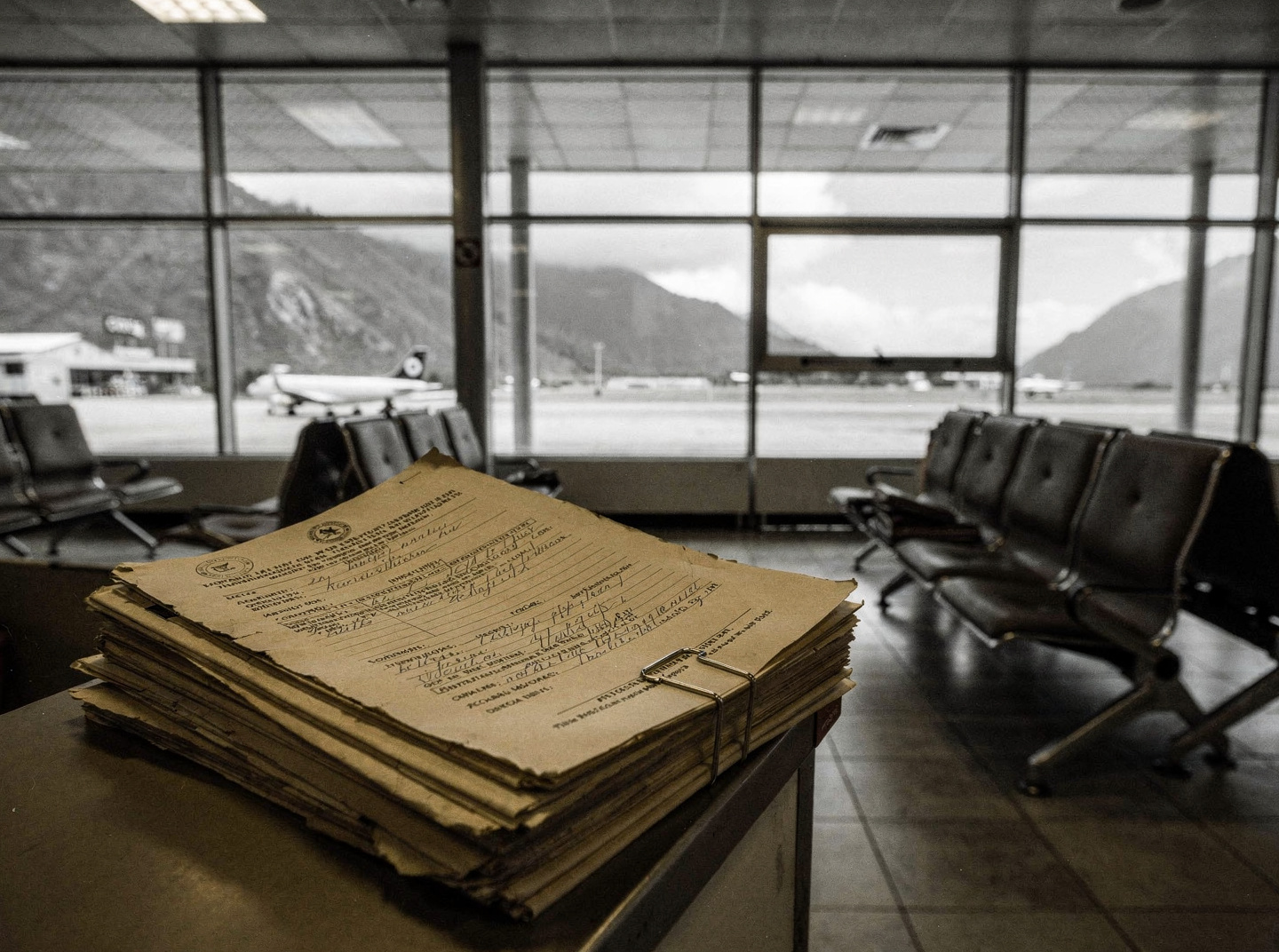
Perhaps the sharpest gap in most coverage is this: “private” and “commercial” access at Courchevel do not work the same way. Aircraft category is one gate. The pilot’s licence folder is another; the French state’s unpublished operator approvals are a third.
“Can we land at Courchevel?” is rarely a yes for crews in jets. It is often a yes for a small turboprop or a helicopter — and that difference reshapes the whole door-to-slope itinerary.
Why the word “jet” doesn’t survive contact with this runway
Courchevel Altiport is a high-altitude French mountain aerodrome. Its single asphalt strip, runway 04/22, is short and climbs at an average gradient of about 18.6%.
The slope has a practical consequence: once a pilot commits, there is no published go-around. The aircraft must climb the runway to the top, directly below the ski area and hotels of Courchevel 1850.
For comparison, Lukla’s Tenzing-Hillary Airport — itself shorthand for a challenging approach — reports a gradient of about 11.7%. Figures for St. Barthélemy, Funchal or Telluride circulate informally, but primary regulator data for those is harder to pin down.
Then the formal wall: the Service de l’Information Aéronautique‘s published VAC describes the site as an aerodrome with special characteristics, reserved for propeller aircraft whose maximum certificated take-off mass (MTOW) stays at or below 5.7 tonnes, plus helicopters accepted without restriction. That wording rules out jets by category, not just by runway length.
Flight deals
most people never see
Our AI monitors 150+ airlines for pricing anomalies that traditional search engines miss. Air Traveler Club members save $650 per trip per person on average: see how it works.
Each deal saves 40–80% vs. regular fares:

What actually lands here, type by type
Counting everything, Courchevel logs about 5,400 aircraft movements in a typical winter. Helicopters carry roughly 70% of that total, which leaves fixed-wing as the minority — but a commercially meaningful one.
The confirmed fixed-wing fleet is small. Alpine Airlines lists the Pilatus PC-6 Porter, which fits around 9 passengers in a commuter layout, and the Jodel D140 Mousquetaire — a piston type for 3–4 passengers plus a pilot, vintage in design but current in the operator’s fleet.
Other small turboprops may meet the published envelope, but no primary AIP or DGAC document ties a specific model to a based fleet — that is the gap between “suitable in theory” and “confirmed in service here.”
| Aircraft type | Category | Typical passenger capacity | Operational status at Courchevel |
|---|---|---|---|
| Pilatus PC-6 Porter | Single-engine turboprop | Around 9 passengers in commuter configuration | Confirmed commercial; listed in Alpine Airlines’ fleet for Courchevel mountain transport |
| Jodel D140 Mousquetaire | Single-engine piston | 3–4 passengers plus pilot | Confirmed commercial/training; used by Alpine Airlines |
| Airbus H125 (AS350 Écureuil) | Single-engine helicopter | Up to 5 passengers plus pilot | Confirmed for Courchevel transfers in alpine operator fleet descriptions |
| Airbus H145 | Twin-engine helicopter | Up to about 8–10 passengers | Confirmed on Geneva/Chambéry–Courchevel routes; helicopters accepted without restriction |
The French VAC defines which aircraft may operate, but it does not name individual models. Any fuller list of types goes beyond what primary documentation confirms, so it should be read as partly unverified.
Who’s allowed to sell a seat into Courchevel
Commercial access is where the paperwork quietly tightens. There is no Courchevel-specific public text laying out landing-distance thresholds or an operator-by-operator approval list. Those conditions live inside general EU-OPS and Part-CAT performance rules, plus individual DGAC air operator certificates.
The practical result is a very short list. The municipality and the operator both state that Alpine Airlines has held the sole fixed-wing commercial licence since 2014, with no recent official or operator source naming another fixed-wing carrier.
Charter brokers tend to compress all of this into one phrase — “authorised operator” — without showing the air operator certificate behind it.
For a charter buyer, that means a paying seat on a fixed-wing into Courchevel is not an open market. It funnels through Alpine Airlines, a helicopter operator — or another airport.
What a pilot’s licence actually proves here
France folded mountain-flying privileges into the EASA system through FCL.815 of Regulation (EU) No 1178/2011, implemented by the Arrêté du 14 décembre 2017. That piece is newer than a lot of skiers assume.
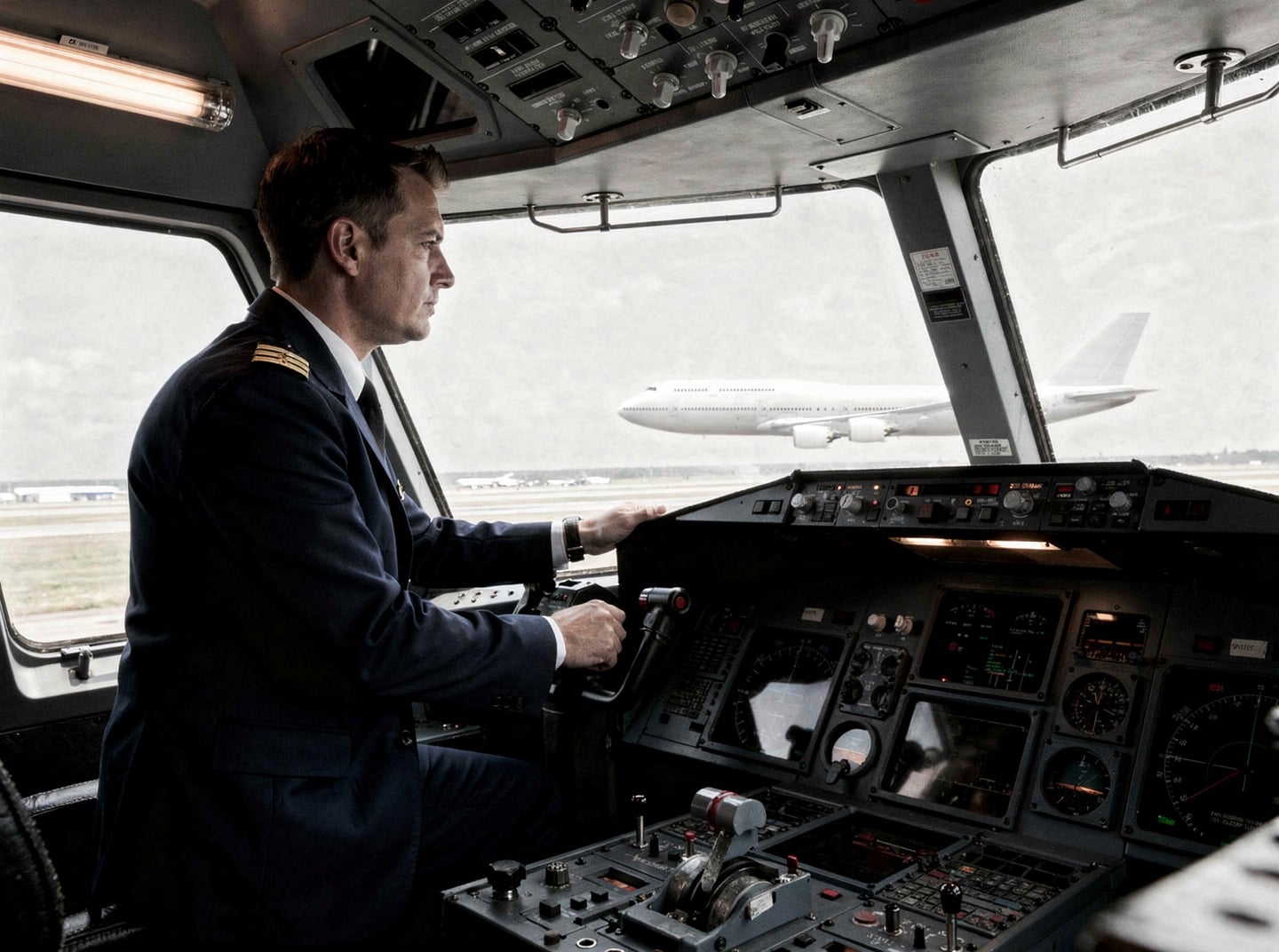
A pilot who already holds the older French national “qualification montagne roues” on an EASA licence gets the Part-FCL mountain rating without further conditions. Where the earlier training was for one site, the new privileges can be limited to that altiport — the modern form of the old site licence.
Staying current is concrete: the rating requires six mountain landings in the preceding 24 months, or a renewal test with an examiner. At a strip with no go-around, that recency is the difference between paperwork and preparation.
What this means when you book
Aircraft type, not cabin budget, is the first filter. A large-cabin business jet is not going to touch runway 04/22, however much the trip costs. Larger jets stage through Geneva, Chambéry, Lyon or Grenoble and finish by road or helicopter.
If the goal is true door-to-slope, the commercial fixed-wing route stays narrow: charter inquiries usually funnel through the licensed fixed-wing carrier or into helicopter operators.
For private fixed-wing, the same VAC envelope and mountain-rating rules apply, but commercial carriage adds a separate authorisation layer. If you’re chartering, verify the operator’s approval — don’t treat the aircraft’s technical compatibility as enough.

Questions? Answers.
Can private jets land anywhere?
No — the term “private jet” usually means a turbofan aircraft, and Courchevel’s published restriction admits only propeller aircraft at or below 5.7 tonnes MTOW plus helicopters. There is also no published Courchevel-specific list of landing-distance or operator criteria for commercial jet operations; larger jets stage through nearby airports instead.
What aircraft are actually permitted to operate at Courchevel Altiport?
The published envelope allows propeller aircraft with a maximum take-off mass not exceeding 5.7 tonnes and helicopters without restriction. Named types documented at the altiport include the Pilatus PC-6 Porter, Jodel D140 Mousquetaire, Airbus H125 and H145, with other small turboprops not confirmed as based aircraft in primary documents.
How do pilots keep a mountain rating valid for Courchevel?
Under France’s implementation of FCL.815, a pilot keeps the Part-FCL mountain rating current by logging six mountain landings in the preceding 24 months or passing a test. A former national French “roues” qualification converts without extra conditions, but privileges can be restricted to specific altiports where the original training was site-based.
What does a helicopter transfer from Geneva to Courchevel cost and how long does it take?
Operators advertise the Geneva–Courchevel helicopter sector at roughly 18–45 minutes. The Courchevel municipal winter landing fee for helicopters up to 2,599 kg MTOW is about €231, which covers only the airport side — not the full quoted transfer.