Australasia Syria 40–80% OFF
Cheap flights discovered by AI✨
Fly round-trip to Damascus for A$850, while others pay A$1900+.
Our AI finds Superdeals to Syria from all major airports in Australia and New Zealand. You book directly with airlines for half the price—or less.

Why are flights to Syria so expensive in 2026?
Flights to Syria cost so much because you simply can’t book them as one normal ticket.
Here’s the problem: big airlines like Emirates and Qatar Airways fly you from Australia to the Middle East just fine. But they won’t connect you to Damascus. International sanctions and safety concerns mean their systems don’t talk to Syrian airlines like Cham Wings. So you’re forced to buy two separate tickets.
A return flight from Sydney to Dubai might cost around AUD $2,100. But that short two-hour hop from Dubai to Damascus? That’s another AUD $1,020 on top. Your total hits about AUD $3,120 — roughly 41% more than flying a similar distance to somewhere like Istanbul.
Three things are driving this up. First, war risk insurance is massive. Insurers charge airlines huge fees to fly into Syrian airspace after years of conflict. Second, US and EU sanctions make it nearly impossible for Syrian carriers to work with global booking systems. You won’t even see Damascus as an option on Skyscanner or Google Flights. Third, the old backup plan of flying to Beirut and driving across has become risky and expensive due to instability in Lebanon.
The outlook: Don’t expect prices to drop anytime soon. Until sanctions ease and major airlines can sell through-tickets again, you’ll keep paying this premium.
Meet Superdeals
Never overpay for flights again
You can save between 40% and 80% on your flights to Syria — and to other Asian countries — with Air Traveler Club Superdeals.
We monitor all major airports in Australia and New Zealand for cheap flights to Asia, including:
- Sydney (SYD) — AU
- Melbourne (MEL) — AU
- Auckland (AKL) — NZ
- Brisbane (BNE) — AU
- Perth (PER) — AU
- Christchurch (CHC) — NZ
- Adelaide (ADL) — AU
- Cairns (CNS) — AU
- Gold Coast (OOL) — AU
- Wellington (WLG) — NZ
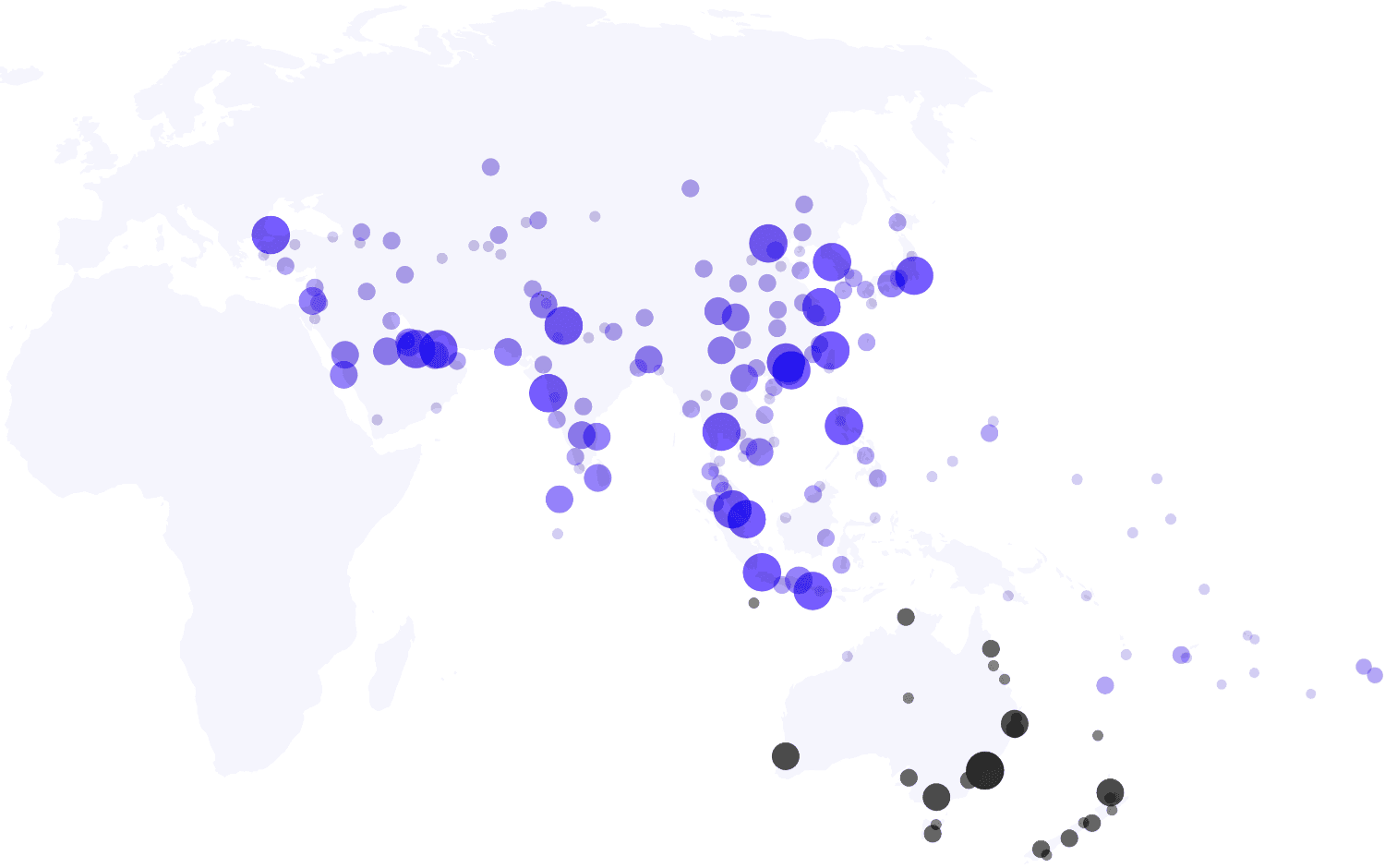
Departure airports in Australia/New Zealand and destinations in APAC covered by Superdeals.
Superdeals to Syria
Fly for half price (or less)
Airlines don't design their pricing systems to offer half-price tickets. However, when algorithms detect demand shortfalls for specific routes, automated systems apply steep discounts to fill planes. Airlines would rather accept losses than fly with empty seats.
ATC monitors thousands of routes from Australasia 24/7, detecting Superdeals with 40–80% discounts. While a typical return flight from Australia and New Zealand to Damascus costs A$1900+, with Superdeals you can often grab it for around A$850:
Which airlines have promotions to Syria right now?
We track and curate genuine offers from 150+ airlines, hand-picking only the most valuable for your wallet.
Which carriers have sales and special offers for flights in March, April, May and beyond? You can now browse the entire collection of active promotions:
Browse promos →Popular airlines with frequent offers from Australia and New Zealand:

Travel hacks and insights
for Australia and New Zealand — Syria flights
Verified strategies to save money and avoid friction on routes to Syria.
Australian “Do Not Travel” Advisory
Smartraveller (Australia) and SafeTravel (NZ) list Syria as “Do Not Travel” (Level 4). This means the Australian government likely cannot provide consular assistance, evacuation, or legal help if you are detained or injured.
Your passport does not guarantee safety. Dual nationals are particularly vulnerable to being treated solely as Syrian citizens. By flying in, you accept total self-reliance regarding security and medical extraction.
Flight cancellations occur with zero notice
Flights into Damascus are frequently cancelled or diverted to Latakia (LTK) due to security incidents or airstrikes on airport infrastructure. These cancellations often happen while the aircraft is in the air or taxiing.
Carriers offer minimal compensation or accommodation. Travelers must have contingency funds ($500-1,000 USD cash) to arrange ground transport from diversion airports like Latakia, which is a 4-hour drive from Damascus.
Insurance premiums exceed flight costs
Standard travel insurance (Cover-More, Allianz, Southern Cross) is void for Syria due to “Do Not Travel” advisories. Specialized “High Risk” policies from providers like Battleface or Global Guardian can cost $800-1,500 for a short trip—often more than the economy flight ticket.
Flying without this specific coverage leaves you exposed to hundreds of thousands in medical evacuation costs. Proof of insurance is not always checked at the border, but the financial risk is catastrophic.
Sanctions force cash-only ticket purchases
Due to Western sanctions, Australian and New Zealand credit cards (Visa/Mastercard) usually fail when booking flights on Syrian carriers like Cham Wings online. You often cannot book these legs via Skyscanner or Expedia.
Travelers typically purchase these tickets through specific authorized agents in Dubai or Beirut using cash, or via relatives within Syria. Do not rely on booking the final leg electronically from Australia; secure the ticket before leaving home via a specialist.
Flight schedule reliability is extremely low
Published schedules for routes into Syria are aspirational. Flights scheduled for 2 PM often depart at 6 PM or arguably earlier if the aircraft is full and airspace is clear. Do not rely on flight tracking apps like FlightRadar24 for accurate real-time data.
You must be at the airport and through security well in advance. Gate changes are announced verbally in Arabic; stay close to the service desk to monitor boarding status.
Mandatory currency exchange on entry
Syria previously enforced a rule requiring visitors to exchange $100 USD into Syrian Pounds at the official (low) rate upon entry. While enforcement varies, travelers should be prepared for this requirement.
This creates a surplus of local currency that is difficult to spend if your trip is short. Check the latest entry protocols with your sponsor immediately before flying, as this rule changes frequently.
What travelers ask most
Expert answers on routing, carriers, timing, and fees
Is the Masnaa border crossing from Lebanon open for tourists right now?
Check the status immediately before travel, as the Masnaa crossing (the primary route from Beirut to Damascus) faces intermittent closures due to regional instability in late 2025. While it remains the main artery for travelers, many tour operators have shifted to the northern Arida or Jousieh crossings for safety, adding 2-3 hours to the transfer time. If flying into Beirut, coordinate closely with your Syrian driver, who will know the safest active route that day. Alternatively, consider flying into Amman, Jordan, and taking the longer land route (Jaber/Nassib crossing) to avoid Lebanon entirely during volatile periods.
Has the Syria e-Visa processing time changed recently?
Yes, processing has stabilized to 3-5 business days for most European passport holders as of late 2025, a significant improvement over the initial launch delays. However, you still cannot apply independently without a “security clearance” reference number provided by a local tour operator. Once your guide secures this clearance (which takes 1-2 weeks), the actual online e-Visa issuance is quick and costs roughly €80-100 depending on urgency. Don’t attempt to use the portal until your operator confirms your background check is complete.
Can I travel to Syria without a tour guide?
No, independent tourism is currently illegal for European passport holders; you must be accompanied by a licensed guide at all times outside Damascus. Your visa security clearance is tied to your tour operator’s sponsorship, meaning they are legally responsible for you. While you may have some freedom to walk alone in the Old City of Damascus, inter-city travel and visiting sites like Krak des Chevaliers requires your guide and driver. Police checkpoints will ask for your guide’s papers, and traveling without them will result in detention and deportation.
How do I get from Europe to Syria since there are no direct flights?
The most common route is flying into Beirut (BEY) in Lebanon and taking a private taxi across the border to Damascus, which takes 3-5 hours depending on customs. Alternatively, fly into Amman (AMM) in Jordan for a northern overland crossing, though this drive is longer (5-7 hours). A third option is flying to Dubai or Sharjah and connecting to a regional flight with Cham Wings directly to Damascus, avoiding the land border entirely. The Beirut route is usually the cheapest and fastest, provided the border situation is stable.
What travel insurance covers trips to Syria?
Standard European travel insurers (Allianz, AXA, etc.) almost never cover Syria due to “Do Not Travel” advisories and sanctions. You need a specialized “High Risk” policy from providers like IATI Insurance, Battleface, or First Allied. Read the fine print carefully to ensure “War and Terrorism” coverage is included and that medical evacuation is valid in sanctioned territories. Without this specific coverage, you are personally liable for any medical costs, which must be paid in cash upfront.
What is the dress code for tourists?
Syria is relatively secular compared to some neighbors, but conservative dress is respectful and practical. For men, long trousers are preferred over shorts, especially when visiting religious sites. Women do not need to wear a headscarf in public streets, but must carry one for entering mosques (like the Umayyad Mosque). Avoid tight or revealing clothing; loose-fitting shirts and trousers/skirts are best. In nightlife districts of Damascus, dress codes are more relaxed and modern, similar to parts of Beirut or Southern Europe.
Are there strict photography restrictions?
Yes, photography rules are strictly enforced and violating them can lead to device confiscation or detention. Never take photos of military personnel, checkpoints, government buildings, bridges, or anything that looks like infrastructure. If you see a soldier or a barrier, put the camera away. In tourist sites (Palmyra, Krak des Chevaliers, Souks), photography is welcomed, but always ask permission before photographing locals. If in doubt, ask your guide first—they know exactly what is safe to shoot.
How does Air Traveler Club find cheap flights for Syria trips?
Since you can’t fly directly to Syria from Europe, we monitor price drops to the key “gateway cities”—Beirut (Lebanon), Amman (Jordan), and Larnaca (Cyprus). Our AI scans 150+ airlines 24/7 to find anomalies on routes like Frankfurt-Beirut or Paris-Amman, often finding fares for €250-350 instead of the usual €600+. We verify these deals manually to ensure the connections work for travelers planning an overland transfer to Damascus. You book the flight directly with the airline, and use the savings to pay for your Syrian private driver.
Nonstop (direct) vs 1-stop
How much do flights from Australasia to Syria cost?
No nonstop service exists between Australia or New Zealand and Syria. All routings require at least one connection, with total journey times of around 20-30 hours depending on hub choice.
This is standard for the route—most travelers connect through Dubai (DXB), Doha (DOH), or Istanbul (IST) with minimal hassle. Select connection times of 2.5-4 hours for international-to-international transfers—enough buffer for customs, security, and gate changes without excessive waiting.
All ATC Superdeals are manually verified for optimal connection times and efficient hub routing.
| Route | Airline(s) | Journey Time | Avg Price | Avg ATC Price |
|---|---|---|---|---|
| Sydney (SYD) → Dubai (DXB) → Damascus (DAM) | Emirates / local partner | 21h 30m | A$2,200 | A$715 (68% off) |
| Melbourne (MEL) → Doha (DOH) → Damascus (DAM) | Qatar Airways / local partner | 22h 00m | A$2,250 | A$730 (68% off) |
| Brisbane (BNE) → Dubai (DXB) → Damascus (DAM) | Emirates / local partner | 23h 00m | A$2,300 | A$750 (67% off) |
| Perth (PER) → Doha (DOH) → Damascus (DAM) | Qatar Airways / local partner | 20h 30m | A$2,000 | A$660 (67% off) |
| Adelaide (ADL) → Dubai (DXB) → Damascus (DAM) | Emirates / local partner | 22h 30m | A$2,250 | A$730 (68% off) |
| Auckland (AKL) → Dubai (DXB) → Damascus (DAM) | Emirates / local partner | 24h 00m | A$2,400 | A$780 (68% off) |
| Christchurch (CHC) → Doha (DOH) → Damascus (DAM) | Qatar Airways / local partner | 25h 00m | A$2,450 | A$805 (67% off) |
| Sydney (SYD) → Istanbul (IST) → Damascus (DAM) | Turkish Airlines | 22h 30m | A$2,300 | A$750 (67% off) |
| Melbourne (MEL) → Istanbul (IST) → Damascus (DAM) | Turkish Airlines | 23h 00m | A$2,350 | A$780 (67% off) |
| Auckland (AKL) → Doha (DOH) → Damascus (DAM) | Qatar Airways / local partner | 25h 30m | A$2,450 | A$805 (67% off) |
*Avg ATC Price: Superdeal fare published on our platform (40-80% savings compared to standard market rates). Learn more.
The rise of Chinese airlines. Should you book that cheap flight?
Chinese carriers undercut Western competitors by 25-50% on long-haul routes—and the trade-offs aren’t always obvious.
We compared Hainan Airlines, China Southern, and 8 others against popular Western carriers. Here’s which save money without the misery…
Best stopovers
for Australasia to Syria flights
Not all connections are created equal. When flying from the Australasia to Syria, routing through major airport hubs can deliver lower total fares, better-equipped aircraft, and access to airline stopover programs.
Doha DOH
with Qatar Airways
- Average savings: 25-35% vs non-stop flights
- Flight segments: ~14h Australia/New Zealand-Doha + ~2.5h Doha-Damascus region
- Typical connection: 2-4 hours (minimum 45 minutes)
- Stopover perks: Hotels from $14/night
- Visa requirements: Most Australia/NZ passports need Syrian visa in advance
- Airport rating: 5-Star airport with top global rankings
- Best for: Sydney, Melbourne, Auckland travelers seeking award-winning business class comfort
Dubai DXB
with Emirates
- Average savings: 20-30% vs non-stop flights
- Flight segments: Australia/New Zealand-Dubai (~14-16h), then Dubai-Damascus region (~3h)
- Typical connection: 3-5 hours (minimum 60 minutes)
- Stopover perks: Complimentary accommodation package
- Visa requirements: Australia/NZ passports generally need Syrian visa beforehand
- Airport rating: High-ranked Middle East mega-hub
- Best for: Perth, Brisbane, Christchurch travelers seeking A380 long-haul comfort
Abu Dhabi AUH
with Etihad Airways
- Average savings: 18-28% vs non-stop flights
- Flight segments: Split into ~14h Australia/New Zealand-Abu Dhabi and ~3h Abu Dhabi-Damascus region legs
- Typical connection: 2-4 hours (minimum 60 minutes)
- Stopover perks: Complimentary 4-5 star accommodation
- Visa requirements: Syrian entry usually requires advance visa for Australia/NZ
- Airport rating: Modern hub with strong Skytrax scores
- Best for: Melbourne, Sydney, Auckland travelers seeking subsidized luxury stopover hotels
Istanbul IST
with Turkish Airlines
- Average savings: 22-32% vs non-stop flights
- Flight segments: Two-leg journey: ~19h Australia/New Zealand-Istanbul, ~2h Istanbul-Damascus region
- Typical connection: 2-5 hours (minimum 60 minutes)
- Stopover perks: Free city tours with meals
- Visa requirements: Syrian visa generally required in advance for Australia/NZ
- Airport rating: 4-Star airport with extensive amenities
- Best for: Sydney, Melbourne, Brisbane travelers seeking cultural stopover with free city tour
Get real-time deal alerts
Activate real-time alerts and get notified the instant a new Superdeal to Syria has been discovered.
Book these incredible price drops before they’re gone.
Set alerts →
Best airlines and aircraft
for long-haul flights to Syria
Most travelers book Australasia–Syria flights by price and schedule—but aircraft choice determines whether you arrive refreshed or wrecked. Cabin pressurization, humidity, seat configuration, and service standards vary dramatically on this route.
Below are carriers we recommend—with superior configurations on flights from the US and Canada to Syria.
Singapore Airlines
A350-900
Five-time Skytrax Airline of the Year winner, Singapore Airlines’ A350-900 delivers ultra-low cabin altitude and advanced air filtration for long-haul comfort, making it a top choice for Australasia to Syria via Changi—world’s best airport.
- Route: Sydney/Melbourne/Auckland → Damascus via Singapore (18-22hrs, 1-stop)
- Economy: 32″ pitch, 18″ width, 3-3-3 config, USB-C ports, personal IFE
- Business: 1-2-1 config, 78″ lie-flat, direct aisle access, premium bedding
- Standouts: 18.5″ HD touchscreen IFE, free Wi-Fi (messaging), gourmet meals, Changi lounge access
- Typical Pricing: Economy A$2,400-A$3,200; Business A$5,800-A$7,500;
Qantas
787-9 Dreamliner
Australia’s national carrier, Qantas, operates the 787-9 Dreamliner with advanced cabin pressure and humidity control, ensuring reduced jet lag and enhanced comfort on Sydney/Melbourne to Damascus via Dubai or Doha.
- Route: Sydney/Melbourne → Damascus via Dubai/Doha (19-23hrs, 1-stop)
- Economy: 31″ pitch, 17.8″ width, 3-3-3 config, USB-A ports, personal IFE
- Business: 1-2-1 config, 76″ lie-flat, direct aisle access, premium bedding
- Standouts: 13.3″ HD touchscreen IFE, Wi-Fi (paid), Qantas dining, lounge access
- Typical Pricing: Economy A$2,300-A$3,100; Business A$5,600-A$7,300;
Emirates
A380-800
Skytrax five-star airline, Emirates’ A380-800 offers spacious cabins, premium amenities, and seamless connections via Dubai, making it a leading choice for North America and Australasia to Syria.
- Route: Sydney/Melbourne/Auckland → Damascus via Dubai (18-22hrs, 1-stop)
- Economy: 32″ pitch, 18″ width, 3-4-3 config, USB-A ports, personal IFE
- Business: 2-2-2 config, 78″ lie-flat, direct aisle access, premium bedding
- Standouts: 18.5″ HD touchscreen IFE, free Wi-Fi (messaging), gourmet meals, premium lounge access
- Typical Pricing: Economy A$2,200-A$3,000; Business A$5,400-A$7,100;
Qatar Airways
777-300ER
Skytrax five-star airline, Qatar Airways’ 777-300ER features advanced cabin comfort and seamless connections via Doha, making it a top pick for North America and Australasia to Syria.
- Route: Sydney/Melbourne/Auckland → Damascus via Doha (18-22hrs, 1-stop)
- Economy: 32″ pitch, 18″ width, 3-3-3 config, USB-A ports, personal IFE
- Business: 1-2-1 config, 78″ lie-flat, direct aisle access, premium bedding
- Standouts: 18.5″ HD touchscreen IFE, free Wi-Fi (messaging), gourmet meals, premium lounge access
- Typical Pricing: Economy A$2,100-A$2,900; Business A$5,200-A$6,900;
Fly better for less
Travel insights, proven strategies, and insider tips.

Best aircraft for long-haul flights

Priced out of Asia? How the fifth-freedom loophole can cut your flight costs by thousands.

Why booking early doesn’t always mean the cheapest flight