Quick summary
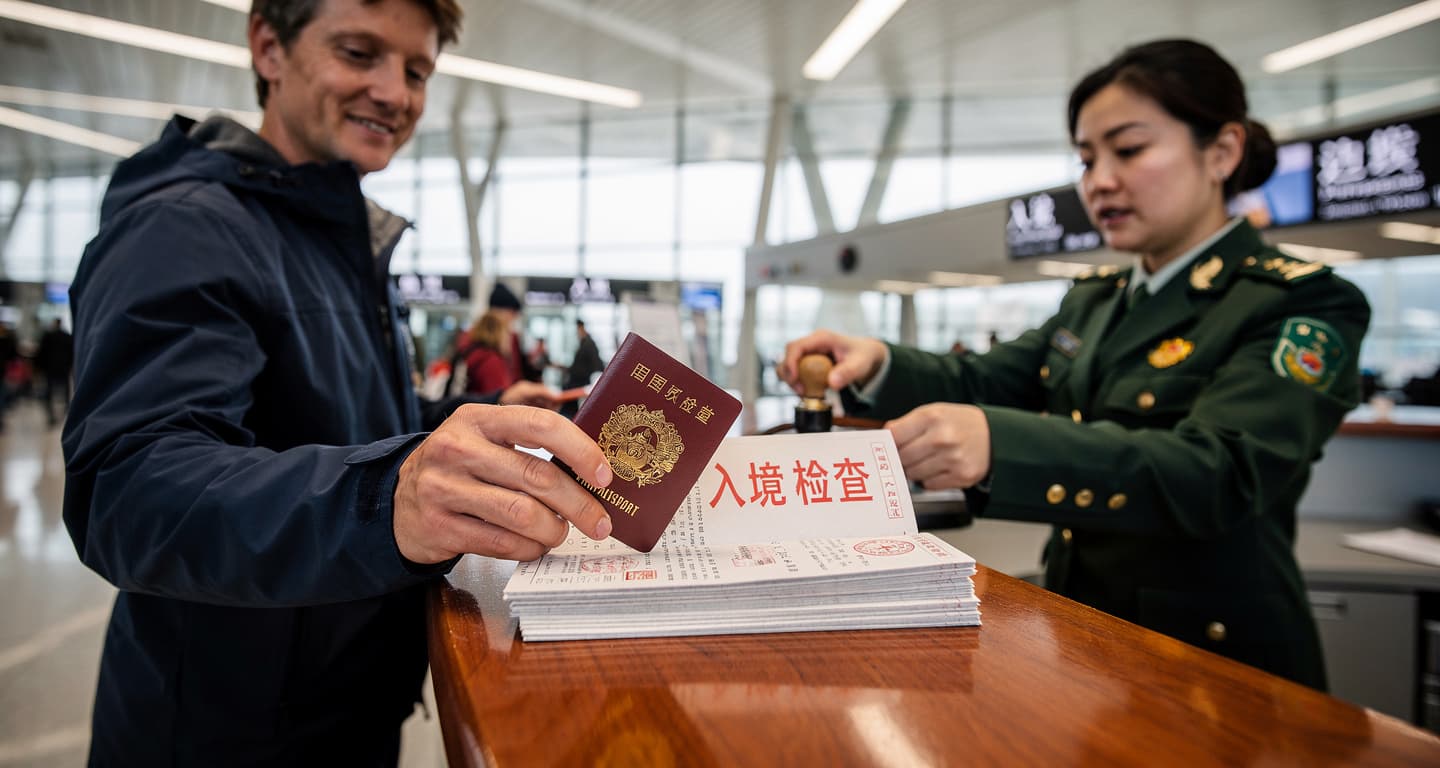
Australian and New Zealand ordinary passport holders can enter mainland China visa-free for stays up to 30 days through December 31, 2026. The policy covers tourism, business, family visits, exchanges, and transit — eliminating visa application lead times and fees for short trips. The extension applies to 50 nationalities including Canada, the UK, and Sweden, with Russia granted access through December 31, 2027.
Passport validity of six months beyond your return date remains standard airline practice. The 30-day clock starts on entry and cannot be extended once inside China — travelers needing longer stays must apply for a traditional visa before departure.
China extended its unilateral visa-free entry policy for Australian and New Zealand passport holders through the end of 2026, giving Australasian travelers a 13-month window to visit without the consulate appointments, postal submissions, and multi-week processing times that previously defined China travel planning.
The policy took effect November 10, 2025, and runs through December 31, 2026. It permits stays of up to 30 days per entry for business, tourism, family visits, cultural exchanges, or transit purposes.
This applies to ordinary passport holders only — official and diplomatic passports remain outside the scope. The regime now covers 50 countries, including recent additions Canada, the UK, and Sweden.
For travelers based in Sydney, Melbourne, Auckland, or Brisbane, this removes a significant friction point from China itineraries. Direct flights to China from Australasia operate daily from multiple hubs, and the visa-free window makes spontaneous or short-notice trips commercially viable for the first time in years.
What the extension covers — and what it doesn’t
The official Chinese visa-free FAQ lists 50 eligible nationalities, with Australia and New Zealand among 48 countries granted access through December 31, 2026. Brunei has no expiration date; Russia’s arrangement runs through December 31, 2027.
Visa-free entry does not waive existing requirements for work, study, or long-term residence. Those purposes still require appropriate visas or residence permits obtained before arrival.
The 30-day limit is strict. Overstays trigger fines and potential complications for future entries — there is no in-country extension mechanism for visa-free visitors.
China operates separate visa-free transit programs — 24-hour, 144-hour, and 240-hour schemes through designated ports — that remain available to travelers from 55 countries not covered by the 30-day national waiver. Hainan Island maintains its own 30-day visa-free regime for 59 countries, which can complement the national policy for eligible travelers.
| Parameter | Requirement | Notes |
|---|---|---|
| Maximum stay | 30 days per entry | No in-country extension available |
| Passport type | Ordinary passports only | Official/diplomatic excluded |
| Eligible purposes | Tourism, business, family, transit, exchanges | Work/study require traditional visa |
| Policy expiry | December 31, 2026 | Russia: Dec 31, 2027; Brunei: no expiry |
Flight deals
most people never see
Our AI monitors 150+ airlines for pricing anomalies that traditional search engines miss. Air Traveler Club members save $650 per trip per person on average: see how it works.
Each deal saves 40–80% vs. regular fares:

Why China is doing this — and what it means for Australasian travelers
The 30-day visa-free regime is part of China’s broader effort to rebuild inbound tourism and business travel after years of pandemic-era restrictions. It narrows the gap with regional competitors like Japan and South Korea, which already maintain extensive visa-waiver lists for Western travelers.
For Australia and New Zealand-based flyers, the policy eliminates visa fees — standard single-entry visas typically cost over USD 100 per person — and removes the multi-week lead time previously required for consulate appointments and postal submissions. That makes China viable as an add-on destination for broader Asia itineraries or short-notice business trips.
The fixed end date creates a defined window. Travelers who have postponed China visits due to visa friction now have 13 months to act before the policy potentially reverts to traditional visa requirements.
New Zealand separately introduced a 12-month trial allowing Chinese passport holders traveling from Australia to enter visa-free for up to three months using an NZeTA, provided they hold an eligible Australian visa. That reciprocal facilitation reflects the commercial importance of the Australia-China-New Zealand travel corridor.
Steps to confirm eligibility before booking
The visa-free policy is active now, but verifying your specific circumstances prevents complications at check-in or immigration.
- Passport validity: Ensure your passport has at least six months remaining from your planned return date. Renew now if it expires in early 2027.
- Passport type: Confirm you hold an ordinary passport, not an official or diplomatic document. The visa-free regime does not cover government-issued travel documents.
- Trip duration: Calculate your total stay from entry to departure. If you need 31+ days, apply for a visa before traveling — there is no extension mechanism for visa-free visitors.
- Purpose of visit: Verify your trip falls under tourism, business, family visits, exchanges, or transit. Work and study purposes require traditional visas regardless of nationality.
- Onward proof: Have a return or onward ticket accessible on your phone. Immigration officers may request proof of departure within 30 days.

Questions? Answers.
Can I extend my stay beyond 30 days once I’m in China?
No. The 30-day visa-free limit cannot be extended from within China. If you anticipate needing more time, apply for a traditional visa before departure. Overstays incur fines and can complicate future entry attempts.
Does this policy apply if I’m transiting through China to another country?
Yes, transit is an eligible purpose under the 30-day visa-free regime. However, China also operates separate 24-hour, 144-hour, and 240-hour visa-free transit programs through designated ports. If your layover is short and you’re continuing to a third country, check whether the transit-specific schemes offer more flexibility for your routing.
What happens if the policy is not renewed after December 31, 2026?
If China does not extend the visa-free regime beyond December 31, 2026, Australian and New Zealand travelers will revert to traditional visa requirements — consulate appointments, application fees, and multi-week processing times. Monitor the Chinese visa center FAQ and consulate announcements in late 2026 for renewal decisions.
Can I use this visa-free entry multiple times in a year?
Yes, the policy permits multiple entries, each allowing a stay of up to 30 days. There is no published annual cap on the number of visa-free entries, but immigration officers may question frequent short-term visits if they suspect undeclared work or residence intent.
Does this policy cover Hong Kong and Macau?
No. The 30-day visa-free regime applies to mainland China only. Hong Kong and Macau maintain separate immigration systems. Australian passport holders can visit Hong Kong visa-free for up to 90 days; New Zealand passport holders receive 90 days as well. Macau grants 30 days visa-free to both nationalities. Check the specific entry requirements for each territory before traveling.