Quick summary
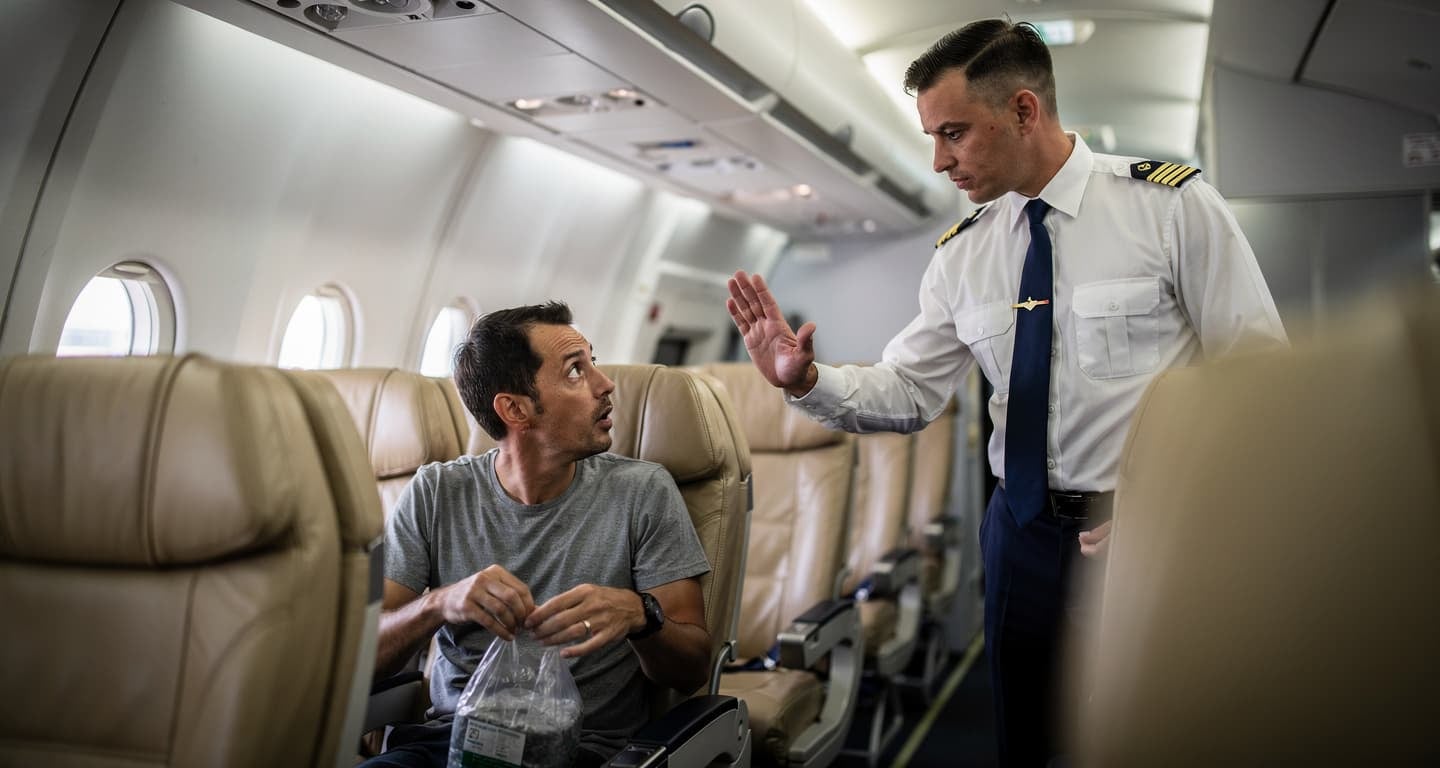
A United Express flight attendant stopped the boarding process twice on a regional jet to force economy passengers to move their carry-on bags out of the first class overhead bins, after discovering the premium cabin bins were full while space remained above economy rows. The incident, which originated with a bulkhead first class passenger finding no bin space upon boarding, has reignited debate about whether cabin-specific bin enforcement is a crew-by-crew judgment call or an emerging operational standard across the airline.
No formal policy change has been announced by United. What changed on this flight was one crew member’s willingness to enforce a rule that exists on paper but rarely gets applied mid-boarding.
On a recent United Express regional jet departure, a first class passenger seated at the bulkhead boarded early and found the forward overhead bin already packed — filled by economy passengers who had walked past their own empty bins and stashed bags up front. The flight attendant, spotting the problem from the galley, halted boarding and demanded the bags be moved. Economy passengers complied, grudgingly. Then, ten seconds later, another economy traveler slid a bag into the newly cleared space and kept walking toward the back of the plane.
The crew member stopped boarding a second time.
That sequence — two boarding halts, two confrontations, one flight attendant holding the line — is now circulating widely in aviation forums and drawing a reaction that splits almost perfectly along cabin lines: premium passengers calling it overdue, economy travelers calling it humiliating. Both reactions miss the more important point. This is not a new rule. It is a rarely enforced old one, and the gap between what the signs on the bins say and what actually happens during boarding is wide enough to drive a roller bag through.
United Express operates regional routes across the US domestic network, typically on smaller narrowbody and turboprop aircraft where overhead bin space is genuinely scarce. On those aircraft, the difference between a first class bin and an economy bin is often just a few rows — and the temptation to grab forward space early is real, especially for passengers who board before their group is called or who simply move fast.
What the bins actually say — and what crews actually do
Airlines including United have placed cabin-specific signage on overhead bins for years. The signs exist. The enforcement, until incidents like this one, largely does not. Passenger rights organization Travelers United notes that flight attendants can direct late-boarding passengers to any available overhead space — but only after confirmed passengers have boarded, reinforcing that bin access is operationally controlled during the boarding sequence, not a free-for-all from the moment the door opens.
Flight attendant guidance published by Condé Nast Traveler is consistent: personal items such as backpacks, laptop bags, and purses belong under the seat in front unless overhead room genuinely remains after boarding. That guidance is widely ignored in practice, particularly on full regional jets where under-seat space is also tight.
The boarding etiquette analysis from Live and Let’s Fly frames it clearly: first class and business class bins should serve those cabins first, especially early in boarding when economy still has space. Economy passengers using forward bins late in boarding — when crew directs it — is acceptable. Walking past your own empty bin to dump a bag in first class is not.
One complication specific to bulkhead rows: passengers seated there have no floor storage, which means they must stow both a carry-on and a personal item overhead. That makes forward bin access a functional necessity for bulkhead passengers, not a preference — and it is exactly why the crew member in this incident intervened when she found that space already taken.
| Situation | Official guidance | Real-world outcome |
|---|---|---|
| Economy passenger uses first class bin early in boarding | Not permitted; cabin-specific signage prohibits it | Rarely enforced; bags typically stay unless crew intervenes |
| Bulkhead passenger needs overhead space for personal item | Priority access; no floor storage available | Bin often already full when they board despite early boarding group |
| Late-boarding passenger with no space above their row | Crew may direct to any available bin or gate-check | Passengers often self-direct to forward bins without asking |
| Personal item (laptop bag, backpack) in overhead bin | Should go under seat unless overhead space remains | Frequently placed overhead first, crowding out larger carry-ons |
| Crew stops boarding to relocate misplaced bags | Within crew authority; operationally disruptive | Uncommon; this incident involved two stops on a single flight |
Flight deals
most people never see
Our AI monitors 150+ airlines for pricing anomalies that traditional search engines miss. Air Traveler Club members save $650 per trip per person on average: see how it works.
Each deal saves 40–80% vs. regular fares:

Why this keeps happening — and why it is getting worse
The overhead bin problem is structural, not behavioral. Twenty-five years ago, airlines allowed two full-sized carry-ons per passenger and planes flew less full. Checked bag fees changed the calculation entirely: passengers now bring everything onboard to avoid fees, aircraft load factors are consistently high, and the bins — even the larger ones airlines have installed in recent years — cannot absorb the volume. That upgrade, incidentally, was not a passenger amenity. It was an on-time departure tool. Gate-checking bags at the last minute costs time, and airlines know it.
On regional jets, the math is worse. Smaller aircraft, smaller bins, and the same passenger incentive to avoid checked bag fees creates a zero-sum scramble from the moment boarding opens. The unwritten norm — grab forward space fast, sort it out later — developed precisely because enforcement was absent. When one crew member enforces the rule visibly and twice, it feels like a policy shift. It is not. It is one person doing what the signs already ask.
Forum reports from United passengers confirm this pattern is recurring: some travelers describe crew members insisting bags go in the cabin where the passenger is seated; others describe boarding halts to reassign luggage. The gap is that the official etiquette language frames bins as shared space, while passengers experience them as cabin-bound whenever flights are full and crews choose to act.
Steps to protect your boarding position now
Bin enforcement on United Express regional jets is crew-dependent and unpredictable — which means the risk of a boarding delay or a forced bag relocation falls entirely on passengers who have not planned for it.
- Check your boarding group before you leave for the airport. Open the United app and confirm your group and carry-on allowance. Earlier boarding groups get first access to bins above their own rows — which is where your bag should go regardless of what forward space looks like.
- Pack your personal item to fit under the seat. Laptop bags, backpacks, and purses belong under the seat in front unless overhead space genuinely remains after boarding. Putting a small bag overhead first crowds out larger carry-ons and gives crew a reason to redirect you.
- Do not self-direct to forward bins. If you are in economy and the bin above your row is full, ask a flight attendant before moving forward. Assuming an empty first class bin is available to you is the mistake that gets bags moved — and boarding stopped.
- If you are in a bulkhead seat, board as early as your group allows. You have no floor storage, which means you need overhead space for both your carry-on and your personal item. Early boarding is your only reliable protection.
- If you see bin crowding developing, wait for crew direction. Crew can and will police cabin boundaries on some flights. Moving bags yourself without permission creates friction and can cost you boarding time.
Watch: United Express gate-agent and flight-attendant scripting changes on regional-jet boarding over the next 3–12 months. If cabin-specific bin language appears in boarding announcements, enforcement is becoming standardized. If it does not, this remains a crew-by-crew practice — and the scramble continues.

Questions? Answers.
Can a United flight attendant legally make me move my bag from a first class bin?
Flight attendants have full authority over cabin safety and boarding procedures, which includes directing where bags are stowed. If a crew member instructs you to move your bag, you are required to comply. Refusing can be treated as a failure to follow crew instructions, which carries serious consequences under FAA regulations.
What happens if there is genuinely no space above my economy row?
If overhead space above your assigned row is full, ask a flight attendant for direction before moving forward. Crew can authorize use of available bins in other cabins or arrange a gate check. Gate-checking at the door is free on most United flights and gets your bag back at the jet bridge on arrival — it is a better outcome than a boarding confrontation.
Does United have a written policy on cabin-specific bin use?
United uses cabin-specific signage on overhead bins indicating which cabin they serve, but there is no publicly posted bright-line rule that explicitly prohibits economy passengers from using forward bins in all circumstances. The practical standard — confirmed by passenger rights guidance and flight attendant interviews — is that premium cabin bins serve premium passengers first, and economy passengers should use space above their own rows unless crew directs otherwise.
Is this incident connected to broader safety concerns about carry-on bags?
Overhead bin disputes are a boarding and comfort issue, not a direct safety emergency. However, carry-on bag behavior does intersect with safety in evacuation scenarios — passengers retrieving bags from overhead bins during emergencies has been documented as a serious hazard, as seen in the Frontier Airlines Denver incident in May 2026, where travelers opened bins during an active evacuation despite repeated crew commands to leave everything behind.