Quick summary
United Airlines is replacing its Guam-based Boeing 737-800 fleet with 737 MAX 8 aircraft on the legendary Island Hopper route through Micronesia, phasing in between February and December 2026. The upgrade adds seatback entertainment, in-seat power, and Starlink Wi-Fi to a 16-hour, 5-to-6-stop journey that currently offers none of these amenities—the first significant cabin improvement in decades.
Schedule variants determine whether you land on four, five, or six islands per flight, and monopoly pricing keeps fares steep at roughly $960 roundtrip or 35,000 miles one-way for partial segments. The full route map, day-by-day stop differences, and booking strategies follow below.
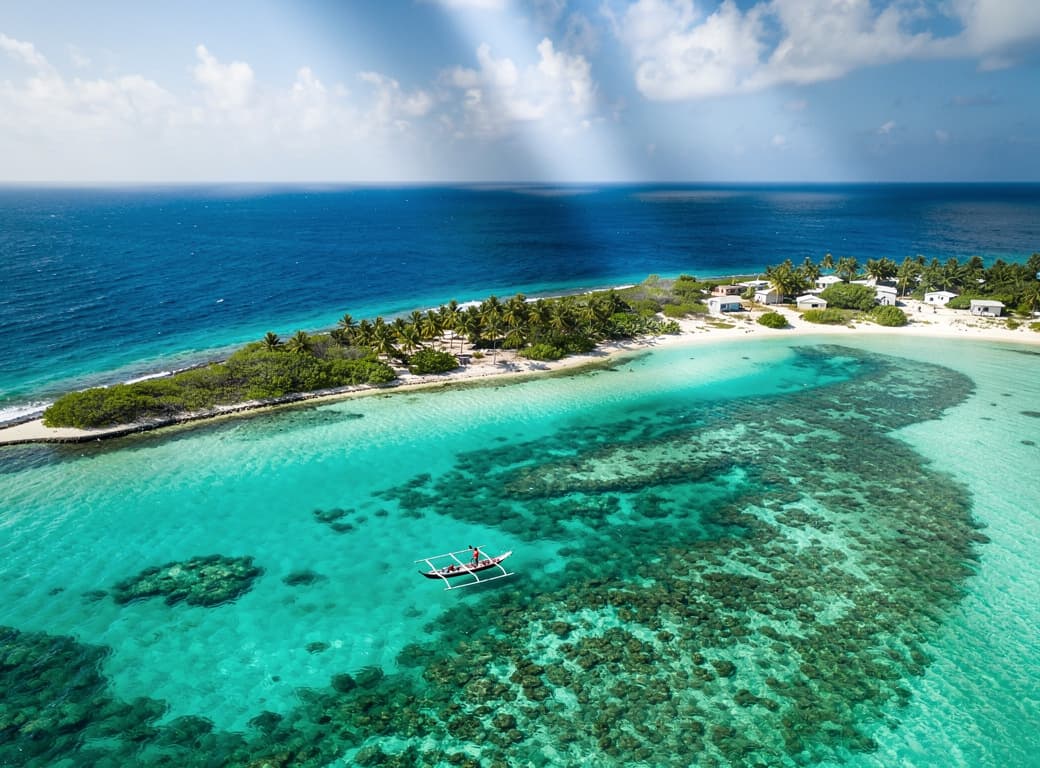
United Airlines flight UA155 departs Guam at 7:55 AM, touches down on six Pacific islands across 14 hours, and lands in Honolulu after midnight. It is one of commercial aviation’s most extraordinary scheduled services—and it hasn’t had a meaningful cabin upgrade in decades. That changes in 2026, when United begins swapping its dedicated Boeing 737-800 subfleet for new 737 MAX 8 aircraft equipped with United Next interiors: seatback screens, USB-A and USB-C power at every seat, and Starlink high-speed Wi-Fi.
The phase-in begins February 2026 and targets full MAX 8 coverage across the Micronesia network by December 2026. For travelers flying between Guam (GUM) and Honolulu (HNL) via Chuuk, Pohnpei, Kosrae, Kwajalein, and Majuro, this marks the first time modern in-flight entertainment will be available on what can stretch to a 16-hour eastbound journey. Air Traveler Club’s route analysis of Pacific island services identifies this as the most significant upgrade to Micronesia connectivity since Continental Micronesia merged into United in 2012.
What the Island Hopper actually is—and why it matters
The Island Hopper is not a charter, a scenic tour, or a cruise ship alternative. It is a scheduled commercial service operating three times weekly on dedicated 737 aircraft based permanently in Guam. Flight UA155 runs westbound GUM to HNL; UA154 flies the reverse. The route serves as the primary passenger and cargo lifeline for the Federated States of Micronesia (FSM) and the Republic of the Marshall Islands—nations where United holds a near-total monopoly on jet service.
That monopoly drives pricing. Cash fares for the full hopper run approximately $960 roundtrip GUM-HNL. Individual segments command disproportionate premiums: Honolulu to Pohnpei (HNL-PNI) books at around 35,000 United miles one-way. Passengers receive up to six boarding passes for a single flight number, deplaning at each stop for roughly 45 minutes while cargo is loaded and unloaded.
For aviation enthusiasts and Pacific travelers, the experience is bucket-list material. For island residents, it is essential infrastructure. The MAX 8 upgrade serves both audiences by transforming a grueling multi-stop marathon into something approaching modern comfort standards. Our detailed evaluation of long-haul aircraft rates the 737 MAX family’s cabin pressure and reduced noise levels as measurably superior to legacy 737-800s—advantages that compound across six takeoffs and landings.
The schedule: not all Island Hoppers visit the same islands
A critical booking detail most guides overlook: the Island Hopper’s stops change by day of the week. Choosing the wrong departure day means missing entire islands.
| Day Pair | Route (Stops) | Block Time | Key Difference |
|---|---|---|---|
| Mon/Tue & Thu/Fri | GUM–TKK–PNI–KSA–KWA–MAJ–HNL | 14 hours | Full 6-stop hopper (UA155) |
| Sat/Sun | GUM–TKK–PNI–MAJ–HNL | ~10.5 hours | Skips Kosrae; 4 stops (UA133) |
| Wed/Thu | GUM–TKK–PNI–KWA–MAJ–HNL | ~13 hours | 5 stops; no upgrade detail yet |
The Monday/Tuesday and Thursday/Friday departures deliver the complete six-island experience, including Kosrae (KSA)—the least-visited of the FSM states and arguably the most pristine. Weekend flights skip Kosrae entirely, shaving three hours but eliminating one of the route’s most compelling stops. According to AeroRoutes’ December 2024 schedule filing, these variants have been locked in since the latest seasonal update, though United can adjust with minimal notice.
Six boarding passes, one flight number
Island Hopper passengers receive a separate boarding pass for each segment—up to six per direction. At every stop, all passengers deplane, clear through the terminal, and reboard. You can collect passport stamps at Majuro and Kwajalein even if they’re not your final destination. The 45-minute ground stops are tight but sufficient for a quick walk outside the terminal.
How to cut fares to Asia by 40–80%
Our custom AI ✨ tracks pricing anomalies that traditional search engines miss.
Get the these deals in your inbox, for free:

What the MAX 8 upgrade actually changes
The current 737-800s serving this route are functional but spartan. The 150-seat, 3-3 economy configuration offers no seatback entertainment, no reliable Wi-Fi, and limited power outlets. On a 14-hour journey with six takeoffs and landings, that’s a significant endurance test.
The incoming 737 MAX 8 with United Next interiors addresses every major complaint:
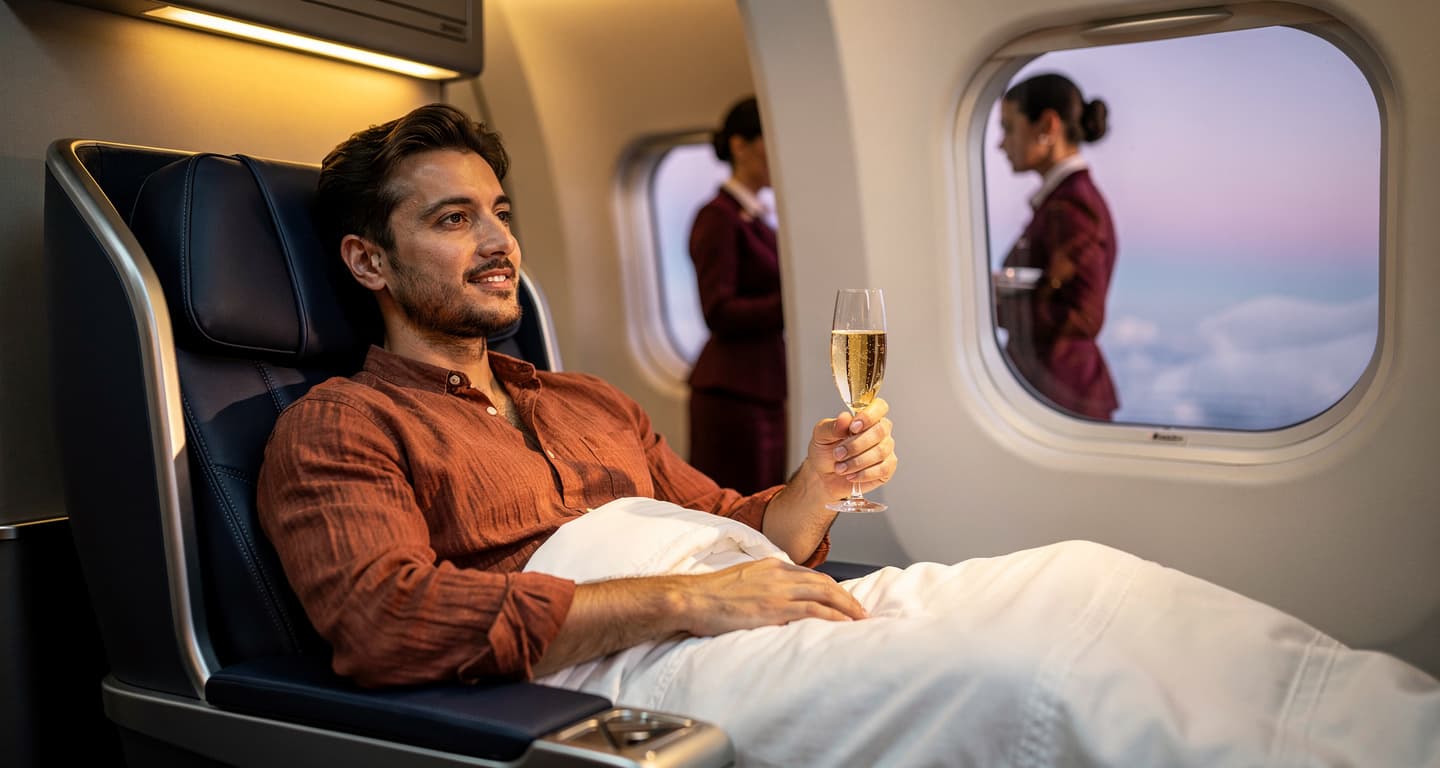
- Seatback IFE screens at every seat replace the current bring-your-own-device void. For a journey crossing the International Date Line, having entertainment options beyond downloaded content matters.
- In-seat power (USB-A, USB-C, and AC outlets) ensures devices survive the full 14-hour routing—critical since the 45-minute ground stops don’t include terminal charging infrastructure at most Micronesian airports.
- Starlink Wi-Fi delivers high-speed connectivity across some of the most remote airspace on Earth. For the first time, passengers will have internet access between Chuuk and Kwajalein—a stretch where the nearest cell tower can be 500 miles away.
- Improved cabin pressure and noise from the MAX 8’s architecture reduce fatigue across repeated climb-and-descent cycles. Our aircraft comfort analysis documents measurable improvements in passenger-reported fatigue on MAX variants versus legacy 737s.
The upgrade also brings improved fuel efficiency, which matters operationally on a route where every pound of cargo and fuel is calculated against Pacific headwinds. Whether United passes any efficiency savings to passengers on this monopoly route remains to be seen.
Booking strategies and connections
The Island Hopper connects to the broader Pacific network at both ends. From Honolulu, US mainland connections are plentiful on United, Hawaiian, and Southwest. From Guam, Japan Airlines operates NRT-GUM and United connects to Tokyo Narita, Manila, and other Western Pacific points.
For travelers from Australia and New Zealand, the routing works via HNL on Qantas (SYD-HNL, BNE-HNL) or Jetstar, connecting to the westbound hopper. Our analysis of Australia-to-Asia airline options covers Qantas’ Honolulu service quality and connection logistics in detail.
US citizens travel visa-free to FSM and the Marshall Islands under the Compact of Free Association. Australian, New Zealand, and EU passport holders should verify entry requirements directly with each nation’s consulate, as visa policies differ between FSM, the Marshall Islands, and Palau.
When the upgrade timeline gets complicated
United has not published a detailed aircraft-by-aircraft phase-in schedule. The February 2026 start and December 2026 completion target come from secondary reporting, not an official United press release. This creates three practical uncertainties:
- Mixed fleet period. Between February and December 2026, some departures will operate MAX 8s while others retain 737-800s. United’s booking system may not specify aircraft type far in advance on these routes.
- Guam-Yap service excluded. United’s separate twice-weekly Guam-Yap (GUM-YAP) service is not part of the confirmed upgrade and continues on 737-800 equipment.
- Weather and operational disruptions. Typhoon season in the western Pacific (June-November) has historically caused Island Hopper cancellations and schedule modifications. Dedicated Guam-based maintenance mitigates this, but the remote routing leaves little backup flexibility.
Travelers specifically seeking the MAX 8 experience should book for late 2026 departures when fleet conversion is expected to be complete. Those wanting the legacy 737-800 experience—arguably the more “authentic” Island Hopper adventure—should book before mid-2026.
Questions? Answers.
Can you get off at one island and reboard a later Island Hopper flight?
Yes. You can book multi-city itineraries on United stopping in Pohnpei, Majuro, or other islands for days or weeks before catching the next UA155 or UA154 departure. Since the hopper operates three times weekly in each direction, plan around the schedule gaps carefully.
Is there a first or business class cabin on the Island Hopper?
No. The current 737-800 and incoming MAX 8 both operate in a single-class economy configuration with 150 seats in 3-3 layout. United First is not available on any Micronesia routing. Seat selection for extra legroom exit rows is the only upgrade option.
How does the Island Hopper work for United MileagePlus redemptions?
Award availability exists but is limited. Individual segments like HNL-PNI have been reported at 35,000 miles one-way in economy. The full GUM-HNL hopper can price higher depending on availability. Search United.com segment by segment for the best redemption rates, and check Excursionist Perk eligibility if building a multi-stop Pacific itinerary.
Do Australian or European travelers need visas for Micronesia?
Australian and New Zealand citizens can enter the Federated States of Micronesia visa-free for up to 30 days. The Marshall Islands also permits visa-free entry for Australians. EU citizens should check directly with FSM and Marshall Islands embassies, as policies vary by nationality. US and Canadian citizens enter freely under the Compact of Free Association with no visa required.
What happens to checked bags during the island stops?
Checked luggage remains on the aircraft through all intermediate stops. You deplane with carry-on items only during the 45-minute ground times. Bags are tagged to your final destination and handled alongside cargo operations at each island.
Are there alternative ways to fly between these Pacific islands?
Effectively, no. United holds a near-monopoly on jet service across Micronesia. Some inter-island propeller services exist on smaller aircraft, but for the GUM-HNL corridor via FSM and the Marshall Islands, the Island Hopper is the only practical scheduled option. This monopoly position is the primary driver of elevated fares on the route.