Quick summary
A Delta passenger was charged $45 three times in 30 minutes under TSA’s ConfirmID program — the paid identity verification service launched February 1, 2026 for domestic U.S. travelers without REAL ID-compliant documents. The Transportation Security Administration confirmed to CNN that the fee is non-refundable under any circumstances, including duplicate charges and failed verifications. Travelers who arrive at a U.S. checkpoint without a REAL ID or passport now face this fee to proceed, with no TSA dispute mechanism if billing goes wrong.
The fee jumped from an announced $18 to $45 between November and December 2025 — before the program even launched. A single payment covers a 10-day window, but the no-refund policy applies even when the system charges you twice.
TSA’s ConfirmID program has its first high-profile billing failure, and the agency’s response tells you everything about how it’s designed to work — for TSA, not travelers.
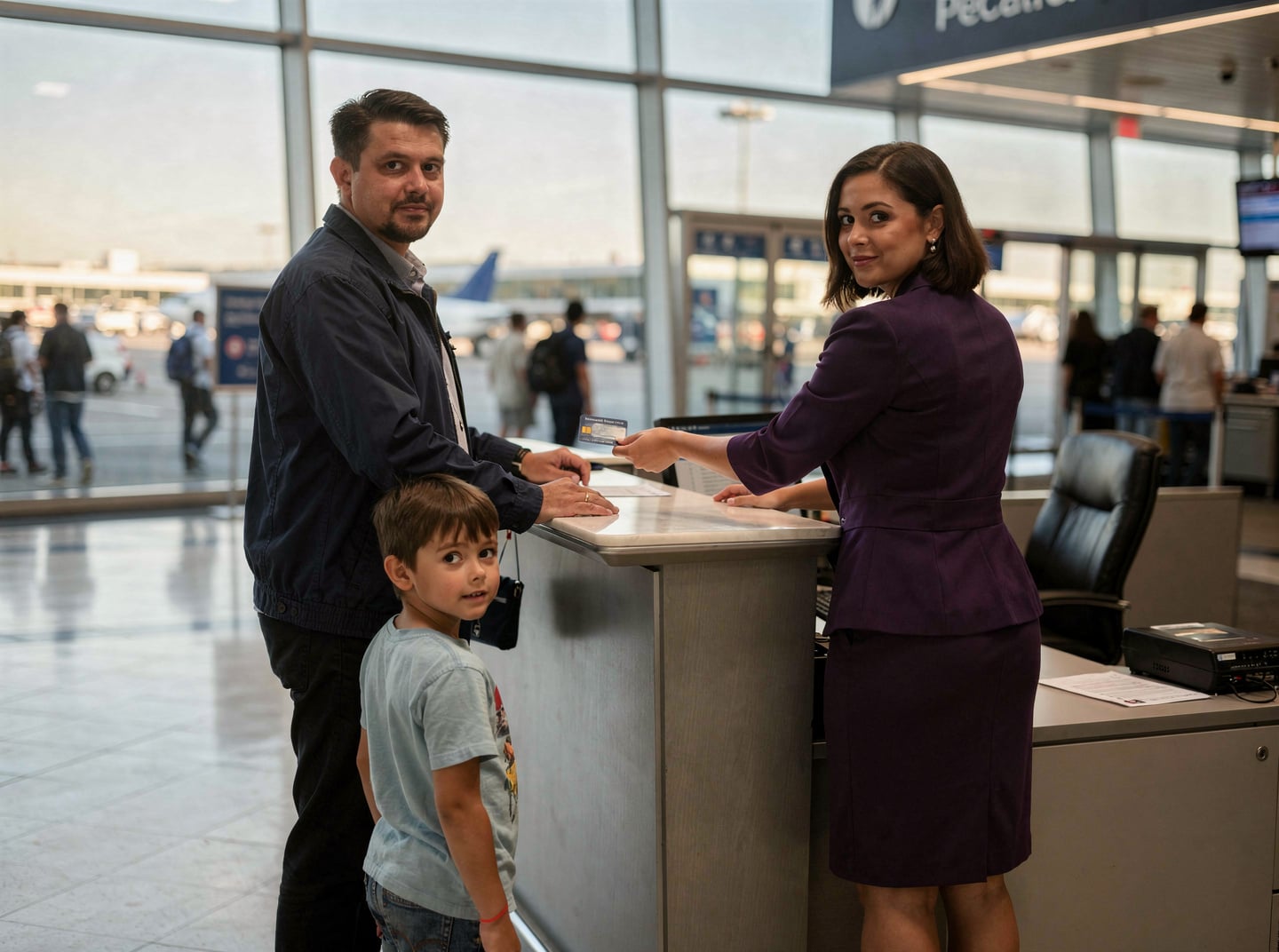
A passenger flying Delta Air Lines reported being charged $45 three separate times within a 30-minute window at a U.S. airport checkpoint. When the traveler contacted TSA, the agency declined to issue any refund and directed them to contact their financial institution instead. That’s not a customer service failure — it’s the written policy.
The ConfirmID program, which went live on February 1, 2026, requires travelers aged 18 and older who arrive at TSA security without a REAL ID-compliant license or a passport to pay $45 via the government’s Pay.gov portal before proceeding. The fee covers a 10-day window from the selected travel start date. It does not guarantee that TSA will successfully verify your identity. And it does not come back if the system charges you in error.
For anyone flying domestically in the U.S. — or connecting through a U.S. airport on an international itinerary — this program is now an operational reality with real financial exposure.
What the ConfirmID fee structure actually means for travelers
The mechanics are straightforward, and the official ConfirmID payment form on Pay.gov makes no effort to soften them. Pay $45, enter a travel start date, and the payment is valid for 10 days across multiple TSA checkpoints. The intent is that a single payment covers a round-trip itinerary. In practice, the Delta incident suggests the system can charge the same traveler multiple times in a single session — and TSA’s position is that this is the traveler’s problem to resolve elsewhere.
The fee’s trajectory is worth noting. TSA initially announced ConfirmID at $18 in November 2025. By December 2025, that figure had risen to $45. The program launched six weeks later. A Department of Defense travel advisory issued ahead of the launch explicitly warned that identity verification is not guaranteed even after payment — a detail that most travelers would reasonably assume was implied by the transaction.
TSA’s own cost justification breaks the $45 into two parts: $19.50 attributed to the per-passenger cost of running the verification program, and $25.50 directed toward purchasing CT baggage scanners in states with low REAL ID compliance. That second allocation — using identity verification fees to fund unrelated security equipment — is the basis for legal challenges to the program’s authority. TSA cites a 2006 appropriations act covering registered traveler programs rather than going through standard federal rulemaking, which would require public notice and comment.
| Date | Event | Impact on travelers |
|---|---|---|
| November 2025 | ConfirmID fee announced at $18 | Initial public disclosure; no program yet active |
| December 2025 | Fee raised to $45 before launch | 150% increase before first traveler charged |
| February 1, 2026 | Program goes live at U.S. checkpoints | Travelers without REAL ID or passport must pay or be denied |
| Post-launch | Delta passenger charged $45 three times in 30 minutes | TSA declines refund; directs traveler to bank |
| Ongoing | $25.50 per fee allocated to CT scanner purchases | Fee funds equipment unrelated to identity verification |
American Airlines‘ customer support page advises passengers to budget extra time at the airport when using ConfirmID, noting that payment does not guarantee TSA can complete verification. That’s a significant caveat for anyone with a tight connection — you can pay, fail verification, and still miss your flight, with no recourse on the fee.
Flight deals
most people never see
Our AI monitors 150+ airlines for pricing anomalies that traditional search engines miss. Air Traveler Club members save $650 per trip per person on average: see how it works.
Each deal saves 40–80% vs. regular fares:

Why the no-refund policy is the real story here
The triple-charge incident is striking, but the deeper issue is structural. TSA bypassed the standard federal rulemaking process — which requires public notice, comment periods, and legal scrutiny — by anchoring ConfirmID to appropriations language from 2006. That maneuver means the fee was never subject to the kind of independent review that might have required, say, a dispute resolution mechanism or a refund pathway for billing errors.
The cost-splitting arrangement compounds this. When a government agency charges travelers $45 and routes more than half of it toward purchasing equipment that has nothing to do with the service being rendered, the fee starts to look less like cost recovery and more like a tax — one that disproportionately falls on travelers who either haven’t yet obtained a REAL ID or can’t afford the time and documentation costs to do so.
Internationally, the U.S. approach is unusual. Most countries — including EU member states, the UK, and Canada — handle travelers who arrive without standard identification through secondary screening, additional questioning, or outright denial of boarding. None publicly advertise a fixed per-use cash fee at the checkpoint as an alternative pathway. For Asia-Pacific travelers transiting through U.S. airports, ConfirmID is a distinctly American wrinkle that doesn’t have a direct equivalent elsewhere in the global aviation system.
Steps to protect yourself from ConfirmID billing errors
TSA has no refund mechanism and no published dispute process — which means your protection has to be built before you reach the checkpoint, not after.
- Get REAL ID or carry a passport. The cleanest solution is eliminating the need for ConfirmID entirely. A REAL ID-compliant driver’s license or a U.S. passport bypasses the fee and the billing risk. Check your state DMV’s current processing times — backlogs have grown since enforcement began.
- Pre-pay via Pay.gov, not at the checkpoint. The official ConfirmID payment form allows advance payment. Doing this before you travel gives you a receipt with a timestamp, which is your primary evidence if a duplicate charge appears.
- Screenshot every confirmation. Save the Pay.gov confirmation page and email receipt. If you’re charged again at the checkpoint, you need documentation showing the 10-day window was already active and paid for.
- Dispute duplicates immediately through your card issuer. TSA will not help. File a chargeback with your bank or credit card network as soon as you see an unauthorized charge — attach the Pay.gov receipt. Credit cards offer stronger protections than debit cards under U.S. consumer law.
- Budget extra time regardless. American Airlines and the Department of Defense advisory both flag that verification is not guaranteed. If TSA cannot confirm your identity, you may be denied at the checkpoint — fee paid or not.
Watch: Any Federal Register notice or congressional inquiry into TSA’s legal authority for the ConfirmID fee structure — particularly the $25.50 per-passenger allocation to CT scanner purchases. If a court or the Government Accountability Office finds the fee exceeds TSA’s statutory authority, the entire program’s structure could be challenged. No timeline is set, but legal advocacy groups have flagged the rulemaking bypass as a priority target.

Questions? Answers.
What happens if TSA can’t verify my identity after I pay the $45 ConfirmID fee?
You are denied access past the checkpoint. The $45 fee is non-refundable regardless of outcome — TSA’s spokesperson confirmed this to CNN. You will need to rebook your flight and, if you want to try again, pay the fee again. The 10-day window only matters if verification succeeds.
Does the $45 ConfirmID fee cover both legs of a round trip?
Yes, in theory. A single payment is valid for 10 days from the travel start date you enter on the Pay.gov form, covering multiple checkpoint uses within that window. The Delta triple-charge incident suggests the system does not always enforce this correctly — which is why keeping your Pay.gov receipt is essential.
Can I use ConfirmID if I’m an international traveler connecting through a U.S. airport?
ConfirmID applies to domestic U.S. security screening. International travelers entering the U.S. go through Customs and Border Protection, not TSA identity verification. However, if your itinerary includes a domestic U.S. leg and you lack acceptable ID for that segment, ConfirmID would apply to that checkpoint.
Is there any way to get a refund from TSA directly?
No. TSA’s stated policy is that ConfirmID fees are non-refundable under all circumstances, including duplicate charges and failed verifications. The agency’s only guidance for billing errors is to contact your financial institution. Your bank or credit card issuer — not TSA — is your only avenue for recovering an erroneous charge.
Which forms of ID are accepted at TSA checkpoints without paying the ConfirmID fee?
A REAL ID-compliant driver’s license or state ID, a U.S. passport or passport card, a DHS trusted traveler card (Global Entry, NEXUS, SENTRI), a U.S. military ID, and several other federally issued documents. The TSA maintains a full list on its official identification page. If you carry any of these, the ConfirmID fee does not apply.