Quick summary
A major investigative report has exposed how organized crime groups are exploiting corrupt insiders at Canadian airports — primarily Toronto Pearson International Airport (YYZ) — to swap baggage tags onto drug-laden suitcases, leaving innocent passengers facing narcotics charges abroad. At least 17 Canadians have been wrongly caught up in these schemes in the past year, with cases spanning France, Germany, Morocco, Bermuda, the Philippines, and South Korea. Transport Canada data shows 7,500 employees flagged for security concerns were still granted access to restricted airport areas over a five-year period.
The scheme can be executed in under five seconds in conveyor blind spots, and CATSA has confirmed its mandate covers explosives, not narcotics — a regulatory gap that organized crime is actively exploiting. One Toronto passenger was pulled off a Vancouver–Auckland flight after 20.52 kilograms of methamphetamine was found bearing her bag tag.
You check your bag at the counter, board your flight, and think nothing more of it. Somewhere in the 30 kilometres of conveyor belts beneath Toronto Pearson, a corrupt ramp worker peels your tag off in five seconds flat and attaches it to a suitcase packed with narcotics. Your name is now on the drugs. You have no idea.
A landmark investigative report has laid bare the mechanics of a systematic insider threat at Canadian airports that has already destroyed the travel plans — and nearly the lives — of at least 17 innocent Canadians in the past year. The investigation, which involved firsthand accounts from victims, whistleblowers, and convicted traffickers, reveals that organized crime networks have embedded themselves inside airport operations, exploiting blind spots in baggage systems and a critical gap between aviation security and narcotics enforcement mandates.
The geographic reach of the consequences is what makes this genuinely terrifying. Destinations where victims have faced drug-smuggling allegations include Morocco, South Korea, the Philippines, and the Dominican Republic — jurisdictions where drug-trafficking convictions can carry life imprisonment or execution. One couple was detained for 12 hours at Pearson itself after 66 kilograms of marijuana was found tagged under their names. Three Canadians spent 10 weeks in the Dominican Republic before charges were dropped. In nearly every documented case, the tag switch happened at Pearson Airport.
The W5 investigation — which obtained internal Transport Canada clearance data, CCTV footage, and certified border agent notes — has triggered calls for immediate regulatory reform and is expected to prompt political hearings in Ottawa. For travelers with upcoming international departures from Canadian hubs, the risk is real and the protective steps are specific.
How the scheme works — and why it keeps working
The mechanics of bag tag switching are deceptively simple. A corrupt airport employee identifies a target bag in the baggage handling system, waits for a camera blind spot along the conveyor, and removes the legitimate tag. The tag is then attached to a pre-positioned suitcase loaded with drugs. To prevent the original passenger from raising an alarm at the destination carousel, a rush tag — the kind issued when a bag loses its label — is placed on the now-tagless original bag so it still travels. The drug suitcase moves under the passenger’s name, often tracked by an AirTag-style device so criminal associates can intercept it at the destination or in non-public baggage areas.
If foreign customs agents detect the narcotics, they detain the person whose name is on the tag. Not the insider. Not the network. The traveler who handed their bag over at the check-in desk and did everything right.
The investigation’s most damning finding concerns the systemic failure that enables this. Transport Canada data obtained by investigators shows that over a five-year period, 125,000 security clearances were approved at Canada’s four largest airports. Of those, approximately 7,500 applicants had been flagged for security concerns — yet were still granted access to restricted airside areas. A retired RCMP investigator who spent years recommending clearance denials described seeing targets from organized crime investigations dating back to 2007 and 2008 still holding active Restricted Area Identity Cards years later. His recommendations to revoke access were overridden by Transport Canada bureaucrats. His summary of how often that happened: “It happens.”
For a detailed breakdown of the documented cases and the RCMP arrests that followed, the Toronto Pearson baggage tag swap investigation covers the 17 confirmed incidents and the six ramp workers arrested in connection with the scheme.
| Incident | Origin airport | Destination | Drugs found | Outcome for traveler |
|---|---|---|---|---|
| Toronto woman (Nicole), family of four | Toronto Pearson (YYZ) | Auckland, NZ (via Vancouver) | 20.52 kg methamphetamine | Arrested, released after ~7 hours; cleared by surveillance |
| Winnipeg couple (Charlene & Yan) | Toronto Pearson (YYZ) | Frankfurt, Germany | 66 kg marijuana (two bags) | Charlene released after 6 hrs; Yan formally arrested, released after 12 hrs |
| David Bennett & two Canadians | Toronto Pearson (YYZ) | Punta Cana, Dominican Republic | 79 packages of marijuana | Detained; held approximately 10 weeks before charges dropped |
| Elderly Canadian traveler | Toronto Pearson (YYZ) | Bermuda | Not specified | Detained; charges later withdrawn |
| Multiple passengers (aggregate) | Toronto Pearson (YYZ) | France, Morocco, Philippines, South Korea | Various narcotics | Detained; all eventually released |
Flight deals
most people never see
Our AI monitors 150+ airlines for pricing anomalies that traditional search engines miss. Air Traveler Club members save $650 per trip per person on average: see how it works.
Each deal saves 40–80% vs. regular fares:

The regulatory gap that organized crime is counting on
Here is the structural problem that no amount of passenger vigilance fully solves. CATSA — the agency that physically screens checked baggage at Canadian airports — has confirmed its legal mandate is to detect threats to aviation security: explosives, weapons, prohibited items. Not drugs. When narcotics are found during threat screening, CATSA informs police. But the agency is not resourced, mandated, or legally directed to conduct narcotics interdiction. That responsibility sits with the Canada Border Services Agency and the RCMP — agencies that operate at different points in the airport process.
The investigation also surfaced a specific vulnerability at domestic baggage carousels. International bags can be physically moved from the international conveyor to the domestic belt by a corrupt insider, where they emerge in a publicly accessible area with no customs barrier. Investigators demonstrated this on camera: walking in off the street, reaching the domestic carousel, and picking up a bag — no pass required, no record created.
Warnings about this exact vulnerability are not new. A 2004 Auditor General’s report estimated 4,500 airport workers had potential links to organized crime. A 2009 review flagged that Transport Canada may be granting clearances to high-risk individuals. The W5 findings suggest those warnings were never fully acted upon — and the same systemic gaps remain open today.
Steps to protect yourself before your next departure
Sixteen of the 17 documented cases trace back to Pearson — if you are departing from YYZ on an international itinerary, these precautions are not optional extras.
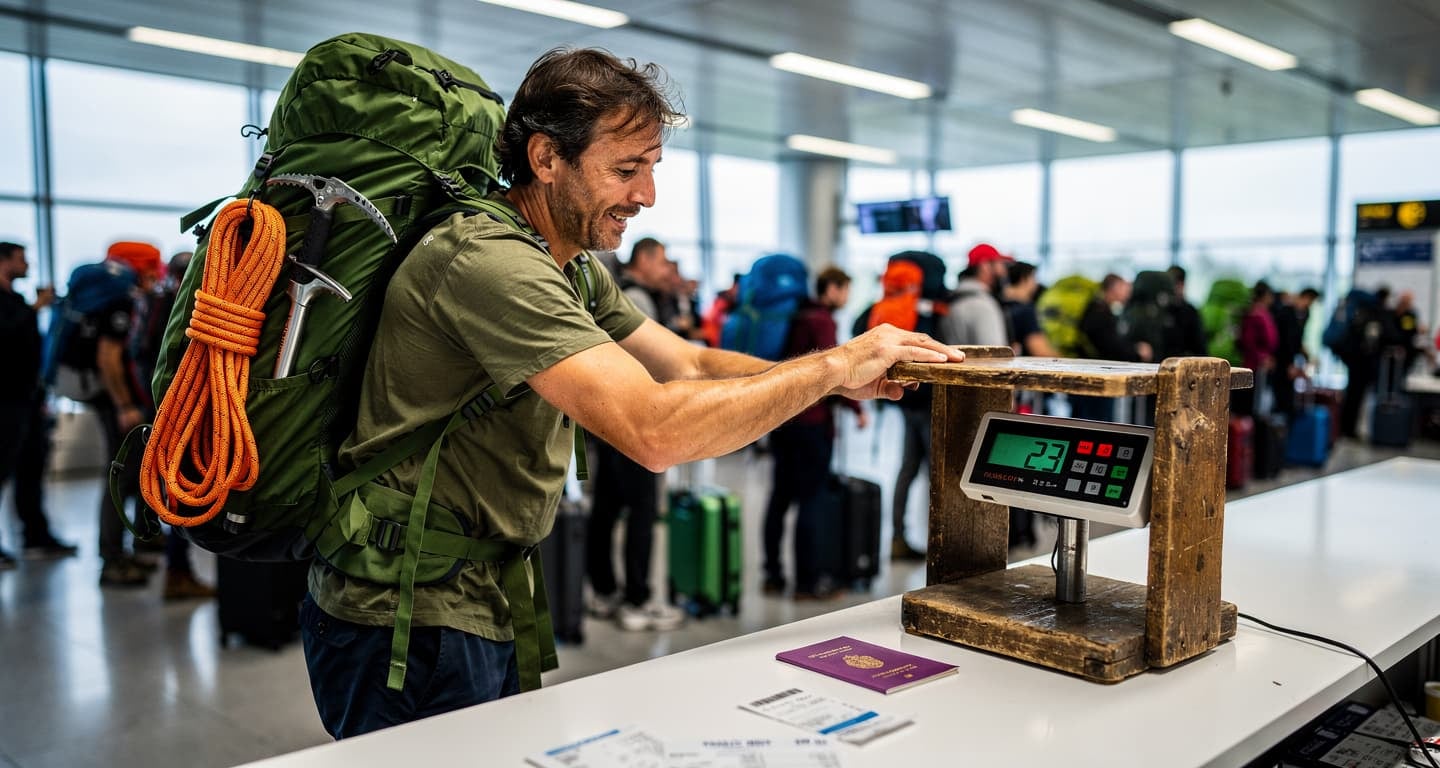
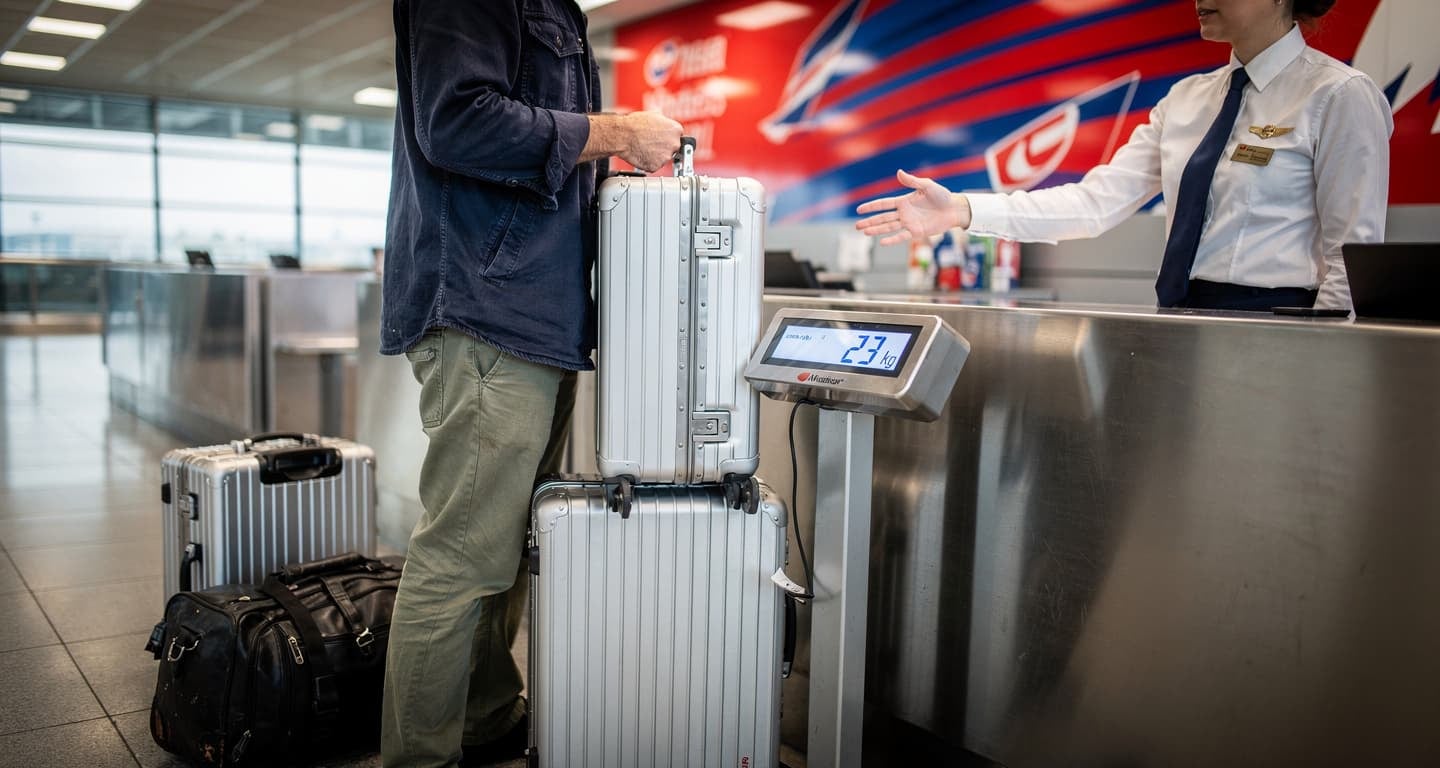
- Photograph everything at check-in. Capture your bag on the scale showing the tag number, the weight, and the claim stub in the same frame. Video the bag as it moves onto the conveyor. This is the evidence that cleared Nicole — surveillance footage showing her checked bag looked nothing like the drug suitcase.
- Place a tracker inside every checked bag. An AirTag or equivalent device lets you demonstrate your bag’s actual routing to authorities. Yan’s AirTag showing his backpack had already reached Frankfurt — while he was still detained at Pearson — was critical to his case. It also means you will immediately know if your bag is diverted.
- Keep your claim stub with your passport, not in your bag. If your bag is seized, you need that stub in your hand, not inside the luggage that’s been taken away.
- If detained abroad over baggage, request consular contact immediately. For Canadians, the Global Affairs Canada emergency line is listed at travel.gc.ca. Do not answer substantive questions about the bag before a consular officer or legal representative is present.
- Report any tag irregularity before boarding. If you notice your tag looks tampered with, snipped, or reprinted, go back to the airline desk and ask for a re-issued tag in your presence. Request that any baggage incident be noted in your PNR (passenger name record) in writing.
Watch: The W5 findings may prompt a formal Transport Canada update on its ongoing insider-risk and clearance review at major hubs. If new directives or a public report emerge in 2026, expect operational changes at YYZ and YVR — revised access rules, mandatory employee screening at shift end, or expanded CCTV monitoring. If no substantive update follows, political pressure could lead to hearings at the House of Commons Standing Committee on Transport, Infrastructure and Communities, where aviation security oversight and CATSA’s mandate would be central agenda items.

Questions? Answers.
Does standard travel insurance or credit card coverage protect me if I’m detained abroad because of a switched bag tag?
Aviation passenger rights regulations — including Canada’s APPR, EU Regulation EC 261/2004, and US DOT rules — cover flight disruptions like delays and cancellations, not wrongful detention or criminal investigations. Premium credit cards such as the Amex Platinum and Chase Sapphire Reserve offer trip cancellation and delay coverage for specific covered events, and may reimburse hotels or missed flight segments if extended questioning causes you to miss a connection — but they do not cover criminal defense costs or fines. Any compensation for wrongful detention would arise, if at all, under local civil or criminal law at the destination country.
Is this risk limited to Toronto Pearson, or should travelers departing Vancouver or other Canadian airports also take precautions?
Sixteen of the 17 documented cases in the past year trace back to Toronto Pearson (YYZ). However, the investigation confirmed that other major Canadian airports — including Vancouver (YVR), Calgary, and Montreal — have no physical barriers preventing public access to domestic baggage carousels, creating a structurally similar vulnerability. The same documentation precautions (photos, trackers, claim stubs) apply to any international departure from a Canadian airport.
If I’m cleared as a victim of bag tag switching, will I still face problems on future flights?
Potentially yes. One victim in the investigation reported being flagged for secondary screening on every subsequent flight even after being formally cleared as a victim. He now travels with an RCMP letter confirming he has no criminal record. If you are detained and subsequently cleared, ask the investigating authority for written documentation of your victim status and carry it when you travel internationally.
What is CATSA actually responsible for screening, and why doesn’t it catch drugs in checked bags?
CATSA’s legal mandate is to screen passengers and baggage for items that threaten aviation security — primarily explosives and weapons. It is not mandated or resourced to conduct narcotics interdiction. If drugs are discovered incidentally during threat screening, CATSA notifies police. Narcotics enforcement at airports falls to the Canada Border Services Agency and the RCMP, who operate at different points in the process. This division of responsibility is a structural gap that the W5 investigation identified as central to how the scheme operates undetected. CATSA’s mandate is detailed at catsa-acsta.gc.ca.