Quick summary
Spirit Airlines ceased all operations on May 2, 2026, grounding its 205-aircraft fleet and ending service for roughly 10 million annual passengers after two Chapter 11 filings and a final cash collapse. Within days, TikTok creator Hunter Peterson launched a crowdfunding campaign targeting $1.75 billion to relaunch the carrier as “Spirit 2.0” — owned collectively by its backers. Reported pledge totals vary widely, from $22.8 million across 37,000 supporters to claims of $88 million from 124,755 patrons, with no cash transferred and all pledges non-binding.
The gap between pledges and purchase price is not a rounding error — it is a $1.7 billion chasm. What happens in bankruptcy court over the next six weeks will determine whether budget competition on Spirit’s routes survives at all.
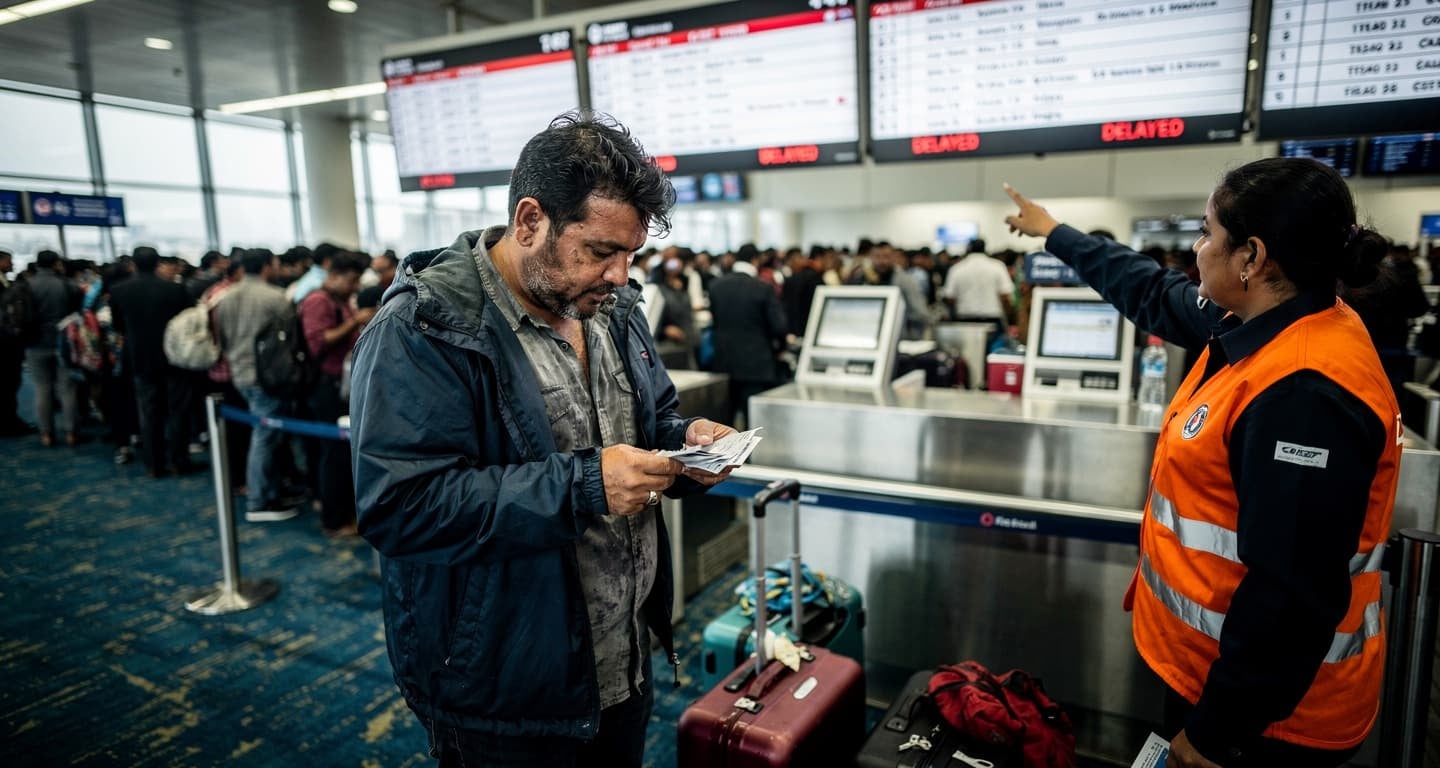
A viral crowdfunding campaign is attempting something commercial aviation has never seen: a people-powered buyout of a collapsed US airline. The target is Spirit Airlines, which halted every flight on May 2, 2026, stranding passengers, terminating 17,000 employees, and triggering a bankruptcy liquidation process that private equity firms are already positioning to exploit.
Hunter Peterson, a TikTok creator with no disclosed aviation background, launched the letsbuyspiritair.com campaign within 48 hours of the shutdown. The pitch: Spirit failed not because travelers stopped flying its routes, but because Wall Street debt-loaded the carrier until it broke. The solution, per Peterson, is community ownership — one member, one vote, modeled loosely on the Green Bay Packers cooperative structure.
The website crashed under traffic. The Instagram page went up as a placeholder. The pledges — whatever the actual figure — are symbolic gestures, not capital.
For travelers who lost bookings when Spirit went dark, none of this changes the immediate reality. Rebooking, refund claims, and credit card chargebacks are the only tools available right now. The crowdfunding story is about what comes next: whether budget competition on routes like Fort Lauderdale–Las Vegas or Detroit–Los Angeles survives the coming asset auction, or gets absorbed into the remaining ultra-low-cost carriers at higher fares.
What the campaign is — and what it isn’t
The mechanics matter here. Peterson’s campaign collects pledges starting at $45 per patron, with no money moved to any account. There is no escrow, no legal entity registered to bid, and no disclosed aviation expertise on the team. The campaign website directs visitors to an Instagram page while infrastructure upgrades are underway — not exactly the operational posture of a serious acquisition vehicle.
Reported pledge figures conflict sharply across industry sources. One set of figures puts the total at $22.8 million from 37,000 supporters; the campaign itself has claimed as high as $88 million from over 124,000 patrons. The discrepancy likely reflects different snapshot moments and the non-binding nature of the pledges — supporters can register interest without committing funds, which means the headline numbers are closer to a petition than a bank balance.
Spirit’s history makes the $1.75 billion target look even steeper. The carrier rejected a $500 million federal bailout offer during its restructuring — not because it was too small, but because the conditions were unworkable. A $3.8 billion acquisition bid from JetBlue was blocked by regulators in 2022. The airline then filed Chapter 11 in November 2024, restructured briefly, refiled in August 2025, and finally ceased operations entirely on May 2, 2026 — an 18-month spiral that ended in full liquidation. For more on the financial collapse that preceded this moment, ATC’s earlier reporting on Spirit’s liquidation and the cash crisis driving it covers the April 30 financials in detail.
| Metric | Reported figure | Status |
|---|---|---|
| Acquisition target | $1.75 billion | Stated campaign goal |
| Pledges (low estimate) | $22.8 million / 37,000 supporters | Non-binding, no cash moved |
| Pledges (high claim) | $88 million / 124,755 patrons | Non-binding, campaign-reported |
| Minimum pledge | $45 per patron | No escrow established |
| Employees affected | 17,000 | All terminated May 2, 2026 |
| Bankruptcy court bid deadline | Mid-June 2026 (expected) | Binding offer required to participate |
Flight deals
most people never see
Our AI monitors 150+ airlines for pricing anomalies that traditional search engines miss. Air Traveler Club members save $650 per trip per person on average: see how it works.
Each deal saves 40–80% vs. regular fares:

Why the bankruptcy process makes this harder than it looks
US airline bankruptcies run through federal court under either Chapter 11 (reorganization) or Chapter 7 (liquidation). Spirit is now in liquidation territory, which means a court-supervised auction of assets — slots, routes, aircraft leases, gate agreements — to the highest qualified bidder. “Qualified” is the operative word. The DOT requires any new airline operator to pass a Part 121 certification covering safety systems, financial fitness, and operational infrastructure. That process takes between 6 and 18 months under normal circumstances, and there is nothing normal about launching a carrier from a crowdfunding campaign.
Private equity firms don’t face that delay in the same way — they acquire assets and fold them into existing certified operations. That structural advantage is why incumbents like Frontier and Allegiant are the realistic buyers, not a social media movement. The crowdfunding campaign would need to submit a binding offer to the bankruptcy court — with actual capital, not pledges — to even participate in the auction.
History offers a calibration point. Spirit’s own 2024 Chapter 11 bought 18 months but no lasting revival. Trans States Airlines liquidated in 2015 and its routes were absorbed by competitors with minimal disruption to travelers — but fares on those routes crept upward once the competitive pressure disappeared. That is the more likely template here.
Steps for affected travelers right now
Spirit’s liquidation is complete — there is no rebooking assistance, no automatic transfer to another carrier, and no US legal requirement for Spirit to rebook you on a competitor. These steps must happen in sequence.
- File a credit card chargeback immediately if you paid for a future Spirit flight. This is the fastest and most reliable refund route under US law. Contact your card issuer directly — do not wait for Spirit to process anything.
- Rebook on alternatives now via DOT’s airline refund dashboard to understand your rights, then book replacement flights on Frontier, Southwest, or Allegiant for affected routes. Fares on Spirit’s former routes are already moving upward.
- Track the bankruptcy auction at PACER (pacer.uscourts.gov, search “Spirit Airlines”) for court-filed auction dates. If a credible buyer emerges, route continuity may follow — but assume nothing until a certified operator is confirmed.
- Do not pledge to the crowdfunding campaign expecting a refund mechanism or any legal claim on Spirit’s assets. Pledges are non-binding, no cash has moved, and the campaign has no standing in bankruptcy court without a formal bid backed by real capital.
- Monitor Frontier and Allegiant route announcements over the next 60 days — both carriers have historically expanded quickly into vacated ultra-low-cost markets after competitor shutdowns.
Watch: The bankruptcy court bid deadline, expected mid-June 2026, is the single most important date for travelers on Spirit’s former routes. A credible institutional buyer preserves some route competition. No credible buyer means consolidation and higher fares by summer.

Questions? Answers.
Are the crowdfunding pledges real money that could actually buy Spirit Airlines?
No. Every pledge reported so far is non-binding — no funds have been transferred to any account or escrow. The campaign has no legal standing in Spirit’s bankruptcy proceedings unless it submits a formal bid backed by actual capital. Even the highest reported figure ($88 million) represents roughly 5% of the $1.75 billion target.
What happens to Spirit’s routes if no credible buyer emerges?
The routes themselves are not owned by Spirit — they are operated under gate agreements and slot allocations that revert or go to auction. Carriers like Frontier and Allegiant are positioned to absorb the most profitable routes. Travelers should expect reduced competition and fares 10–20% higher on those corridors within 3–6 months of the auction closing.
How long would DOT certification take for a genuinely new “Spirit 2.0” carrier?
The DOT’s Part 121 certification process — covering safety systems, financial fitness, and operational infrastructure — typically takes 6 to 18 months for a new entrant. A crowdfunding-backed startup with no existing aviation infrastructure would likely sit at the longer end of that range. Realistically, no new service before 2027 even under an optimistic scenario.
Can I get a refund on my Spirit ticket?
Spirit is not legally required to rebook you on another carrier. Your best option is a credit card chargeback for future travel dates. For flights that were cancelled, the DOT’s airline refund dashboard at transportation.gov/airconsumer/airline-refunds outlines your rights, though enforcement against a liquidating carrier is limited. Act quickly — chargeback windows are typically 60–120 days from the transaction date.