Quick summary
South Korea has extended its temporary suspension of the Korea Electronic Travel Authorization (K-ETA) requirement for travelers from the United States and Canada through December 31, 2026. The waiver covers 22 countries and regions total, allowing visa-free entry for tourism or business stays up to 90 days without pre-authorization or the KRW 10,000 ($7.30 USD) application fee.
The K-ETA will be required again starting January 1, 2027. From January 2026, all exempt travelers must submit a mandatory e-Arrival Card online before departure, though those holding valid K-ETAs remain exempt from this requirement.
South Korea’s Ministry of Justice formalized the extension on January 9, 2026, continuing a policy first introduced in April 2023 to boost post-pandemic tourism. The move supports the government’s “Visit Korea Year” initiative targeting 30 million tourists in 2026.
Travelers from the US and Canada can now enter without pre-authorization for stays up to 90 days. No application, no fee, no waiting period.
The exemption applies to passport holders from 22 countries and regions, including Australia, Japan, Germany, France, Italy, Spain, the United Kingdom, and Singapore. Eligibility is determined strictly by passport nationality, regardless of residence location.
How the exemption works
The K-ETA was originally mandatory for 112 visa-free nationalities starting in September 2021. The temporary suspension removes this requirement for the 22 exempt countries through the end of 2026.
Travelers can verify their exemption status by scanning their passport on the official K-ETA portal. A pop-up notification confirms eligibility for exempt nationalities.
The K-ETA remains optional for exempt travelers. Those who already hold approved K-ETAs—valid for up to three years or until passport expiry—can continue using them until expiration. The KRW 10,000 application fee is non-refundable for existing approvals.
Starting January 2026, all exempt travelers must complete a mandatory e-Arrival Card online within 72 hours before departure. This free, one-time form replaces the paper arrival card at immigration. Travelers holding valid K-ETAs remain exempt from the e-Arrival Card requirement.
The policy has already shown results. Arrivals from exempt markets like Finland rose 22% in 2025 compared to the prior year.
What happens in 2027?
South Korea plans to re-evaluate the K-ETA exemption after Europe’s ETIAS system launches in late 2026. The government may reinstate the K-ETA requirement for reciprocity purposes, meaning US and Canadian travelers could face pre-authorization again starting January 1, 2027.
Flight deals
most people never see
Our AI monitors 150+ airlines for pricing anomalies that traditional search engines miss. Air Traveler Club members save $650 per trip per person on average: see how it works.
Each deal saves 40–80% vs. regular fares:

The wider picture for North American travelers
For travelers ineligible for the exemption—such as those from non-exempt countries or requiring stays beyond 90 days—the standard K-ETA application remains available. Processing takes up to 72 hours, and approval allows multiple entries with stays up to 90 days per visit.
Business travelers may qualify for the APEC Business Travel Card, which covers short stays without K-ETA for eligible applicants. More complex or longer stays require a short-term C-3-9 visa through a Korean embassy, which involves invitation letters and supporting documentation.
The exemption applies differently across regions. European travelers from exempt countries like Germany and France benefit equally, while return ticket enforcement has tightened for European arrivals in recent months. Australian and Japanese passport holders also qualify for the full exemption through 2026.
For North American travelers booking flights to South Korea from the US or Canada, the exemption removes a pre-travel step but adds the e-Arrival Card requirement. Budget extra time to complete the online form before departure.
What to do before you fly
Before booking: Verify your exemption status by selecting your nationality on the K-ETA portal. A pop-up confirmation indicates eligibility. Use Chrome for best compatibility.
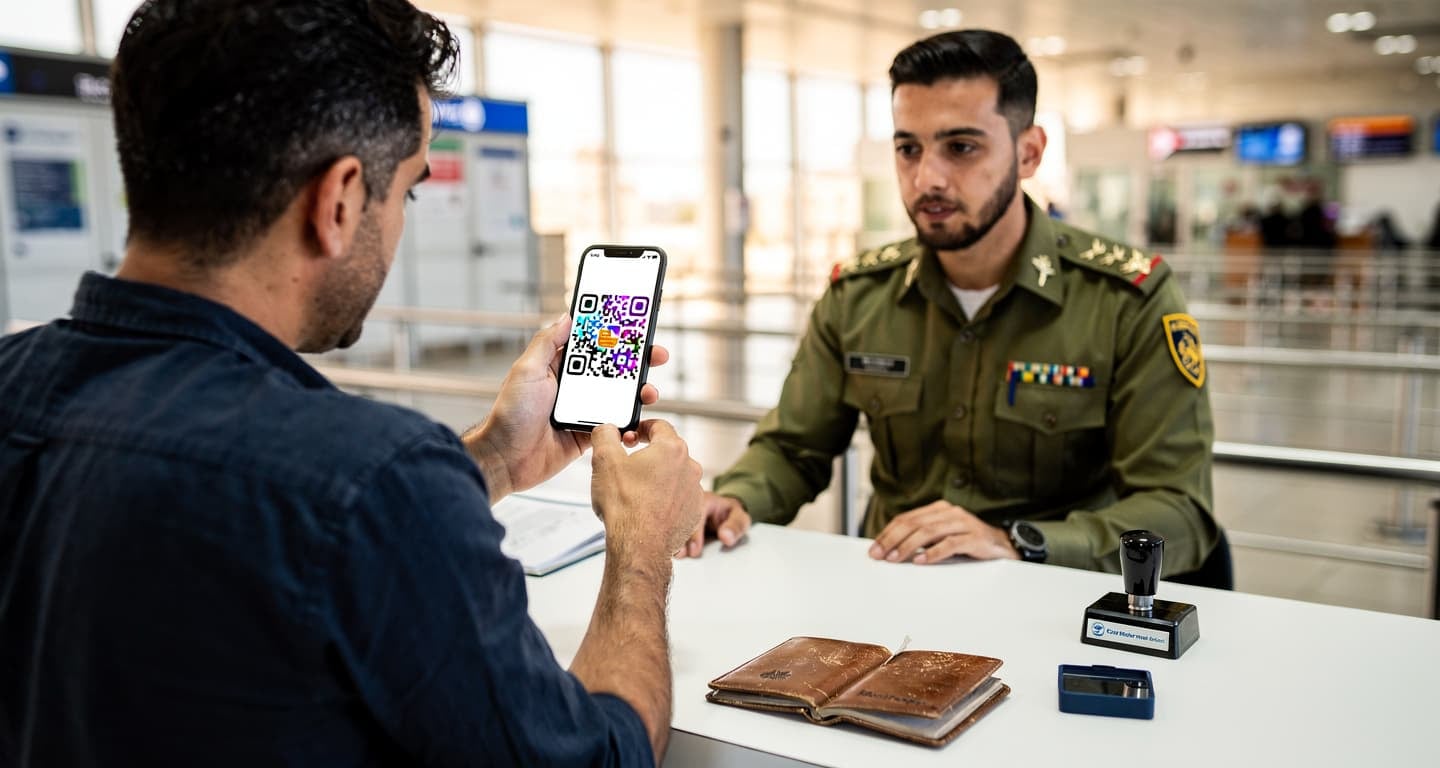
From January 2026: Complete the mandatory e-Arrival Card online within 72 hours before departure via the official portal announced on k-eta.go.kr. Include all group members and print the QR code for immigration. Parents or guardians must complete the form for children under 14.
If you hold a valid K-ETA: Check expiration via the portal login. Existing approvals remain valid until expiry and exempt you from the e-Arrival Card requirement.
Monitor updates: Check hi-korea.go.kr or contact immigration for policy changes, especially after Europe’s ETIAS launches in late 2026.
Questions? Answers.
Does the exemption apply to dual nationals or passport holders from exempt countries residing elsewhere?
Eligibility is determined strictly by passport nationality, not residence. A US passport holder living in China qualifies for the exemption. Third-country residents use their exempt passport and receive pop-up confirmation on the K-ETA portal.
What happens if I apply for K-ETA now as an exempt national?
The portal restricts new applications for exempt nationalities. If you already paid the fee and received approval before the exemption, your K-ETA remains valid until expiry. The KRW 10,000 fee is non-refundable.
How does the e-Arrival Card differ from K-ETA?
The e-Arrival Card is a free, one-time pre-travel form for entry details, replacing the paper arrival card. K-ETA is pre-authorization that waives the e-Arrival Card requirement. For exempt travelers, the e-Arrival Card is mandatory unless you hold a valid K-ETA.
Can I still enter South Korea if I forget to complete the e-Arrival Card?
No. Starting January 2026, the e-Arrival Card is mandatory for all travelers without valid K-ETAs. Complete it within 72 hours before departure to avoid delays at immigration. The form is available on the official portal announced via k-eta.go.kr.
Will cheaper flights to South Korea be available during the exemption period?
The exemption itself doesn’t affect airfares, but increased tourism demand may influence pricing. Air Traveler Club’s fare tracking occasionally flags temporary drops on routes like Los Angeles to Seoul, with savings of 40-80% lasting a few days. Cheaper flights from the US to Asia often route through Seoul, making the exemption a practical bonus for stopover travelers.