Quick summary
South Korea has extended its Korea Electronic Travel Authorization (K-ETA) exemption for travelers from the United States and Canada through December 31, 2026. The waiver allows visa-free entry for tourism or business stays up to 90 days without pre-authorization, saving the KRW 10,000 (~USD 7.70) application fee and 72-hour processing wait. The exemption covers 22 countries total, including Australia, Germany, Japan, New Zealand, and the United Kingdom.
The K-ETA requirement returns on January 1, 2027. Travelers must still meet standard entry requirements: passport valid six months beyond stay, proof of onward travel, and sufficient funds.
South Korea’s Ministry of Foreign Affairs confirmed on January 14, 2026, that the temporary K-ETA suspension will continue for another year as part of the government’s “Visit Korea Year” tourism initiative targeting 30 million visitors in 2026. The extension applies to 22 countries and regions, with US and Canadian passport holders among the primary beneficiaries.
Travelers from exempt countries can enter South Korea for up to 90 days without applying for the electronic authorization normally required since September 2021. The policy eliminates both the application fee and the typical 72-hour processing window, streamlining entry for short-term tourism and business trips.
The exemption runs from January 1, 2026, through December 31, 2026 (Korea Standard Time). Starting January 1, 2027, all 112 visa-free nationalities—including the US and Canada—will need to obtain K-ETA approval before boarding flights or ships to South Korea.
Who qualifies and how it works
The full exemption list includes Australia, Austria, Belgium, Canada, Denmark, Finland, France, Germany, Hong Kong, Italy, Japan, Macao, Netherlands, New Zealand, Norway, Poland, Singapore, Spain, Sweden, Taiwan, the United Kingdom, the United States (including Guam), and South Korea itself. Travelers from these 22 countries can verify their exemption status by scanning their passport on the official K-ETA website, which displays a pop-up confirmation for eligible nationalities.
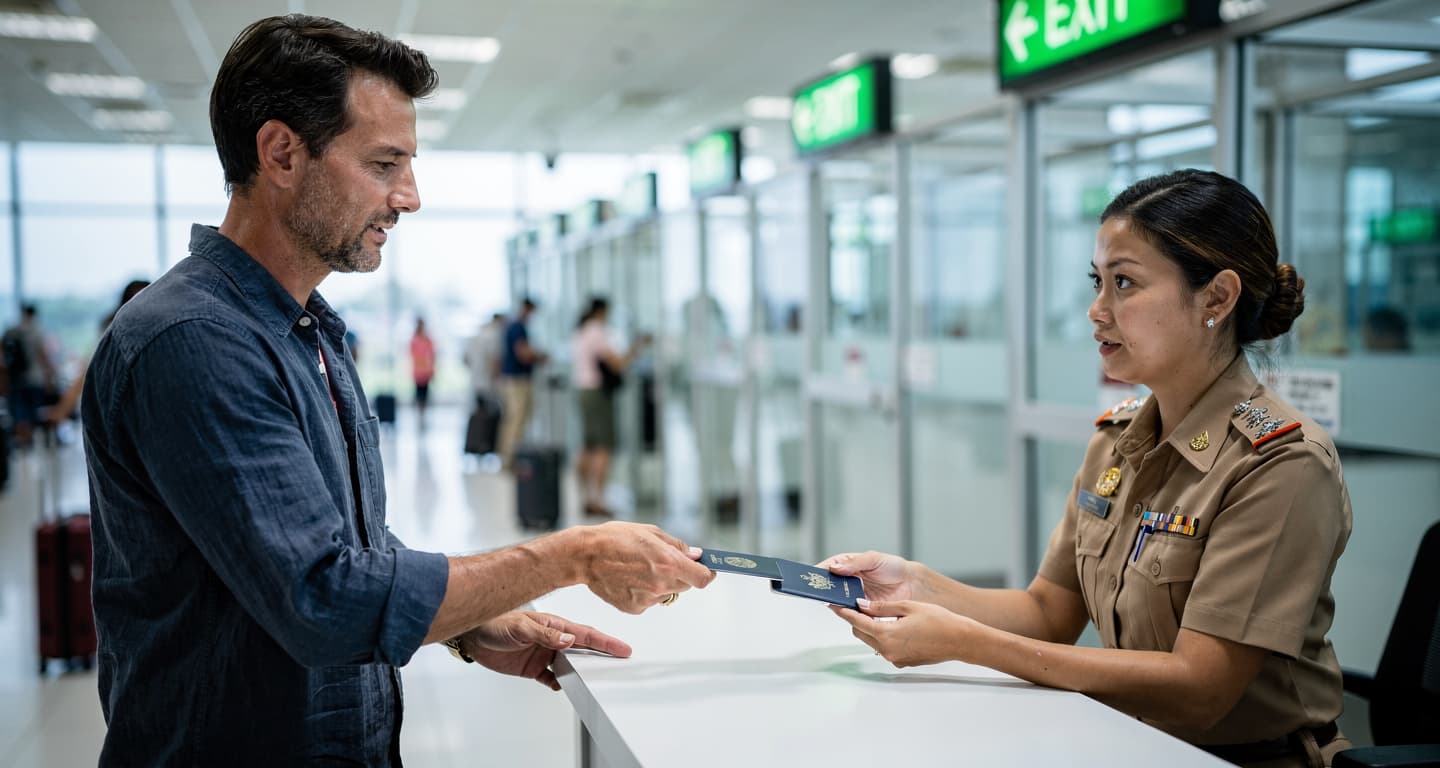
Standard entry requirements remain in force. Immigration officers expect proof of onward or return travel—enforcement has tightened for European travelers in recent months, and US/Canadian arrivals should carry printed or digital confirmation. Passports must be valid for at least six months beyond the planned departure date, and travelers should demonstrate sufficient funds (approximately USD 100 per day).
Applying for K-ETA remains optional during the exemption period. Travelers who choose to apply anyway—paying the KRW 10,000 fee—gain the ability to skip the arrival card submission at immigration. Existing K-ETAs issued before the exemption remain valid for their full term (typically three years or until passport expiry) and can be used for multiple entries. The South Korean government does not refund fees for authorizations obtained before the waiver took effect.
Military service trap for dual nationals
Male dual US-Korean nationals aged 18-35 face mandatory military conscription upon entry to South Korea, regardless of K-ETA exemption status. South Korea does not recognize dual citizenship for military service purposes. The Korean Military Manpower Administration enforces conscription at immigration, and affected travelers should consult a Korean consulate before booking flights.
Flight deals
most people never see
Our AI monitors 150+ airlines for pricing anomalies that traditional search engines miss. Air Traveler Club members save $650 per trip per person on average: see how it works.
Each deal saves 40–80% vs. regular fares:

Why the extension matters beyond convenience
The K-ETA waiver is part of a broader government push to revive South Korea’s tourism industry following COVID-19 disruptions. The “Visit Korea Year” campaign aims to attract 30 million international visitors in 2026, up from pre-pandemic levels, by reducing entry friction and promoting cultural events.
For North American travelers, the timing aligns with increased flight capacity. Airlines have added nonstop routes and frequencies to Seoul’s Incheon International Airport, with competitive fares from major US and Canadian gateways appearing more frequently in the USD 600-900 range for economy roundtrips. The exemption removes one administrative hurdle for spontaneous bookings or last-minute business trips.
The policy also clarifies a gray area for travelers who changed passports mid-validity. Any K-ETA tied to an expired or replaced passport becomes void, requiring a new application. Under the current exemption, travelers with new passports issued in 2025 or 2026 avoid reapplication fees entirely—though they’ll need to apply from scratch when the requirement returns in 2027.
What to do before you fly
Verify exemption status: Scan your passport on the official K-ETA website (www.k-eta.go.kr) to confirm the pop-up exemption message appears. This takes 30 seconds and prevents surprises at check-in.
Prepare entry documents: Print or save digital copies of your return ticket, hotel reservations, and travel itinerary. Immigration officers increasingly request proof of onward travel, especially for one-way ticket holders.
Check passport validity: South Korea requires six months of validity beyond your departure date. Renew now if your passport expires before mid-2027.
Set a 2027 reminder: Mark January 1, 2027, on your calendar. If you plan to visit South Korea after that date, you’ll need to apply for K-ETA at least 72 hours before departure.
Questions? Answers.
Can I still apply for K-ETA during the exemption period?
Yes. Applying is optional but grants one benefit: you can skip filling out the arrival card at immigration. The application takes 10 minutes online, costs KRW 10,000 (~USD 7.70), and processes within 72 hours. Most travelers skip it to save the fee.
Does the exemption apply if I’m transiting through Incheon Airport?
Transit passengers staying airside (not passing through immigration) never needed K-ETA. The exemption only affects travelers entering South Korea for tourism or business. If you’re connecting to another international flight without leaving the airport, no authorization is required.
What happens if I overstay the 90-day limit?
Overstays trigger exit bans, detention, and fines. South Korea enforces departure dates strictly. If you need to stay longer than 90 days, apply for a C-3-9 tourist visa through a Korean embassy or consulate before traveling—K-ETA and visa-free entry do not extend beyond 90 days.
Will my existing K-ETA still work after the exemption ends?
Yes. K-ETAs remain valid for three years or until your passport expires, whichever comes first. If you obtained authorization in 2024 or 2025, you can use it for multiple entries through its expiration date, including trips after January 1, 2027.
Are there cheaper flight options from North America to South Korea?
Fares from major US and Canadian cities to Seoul typically range from USD 600-900 for economy roundtrips, with occasional drops during airline sales. Air Traveler Club’s fare tracking occasionally flags temporary price reductions to the USD 500-700 range lasting a few days. Nonstop routes from Los Angeles, San Francisco, Seattle, Vancouver, and Toronto offer the shortest travel times.