Quick summary
South Korea has extended its Korea Electronic Travel Authorization (K-ETA) exemption for Australian and New Zealand passport holders through December 31, 2026. The extension — confirmed by South Korea’s Ministry of Justice on January 9, 2026 — covers tourism and business stays up to 90 days, removing the need to pre-register or pay the KRW 10,000 (~USD 7.70) K-ETA fee before travel.
The exemption does not mean zero pre-departure admin. A mandatory digital e-Arrival Card now applies to all K-ETA-exempt travelers, including Australians and Kiwis, and must be submitted within 72 hours before departure.
What changed and who qualifies
South Korea has quietly become one of the easiest destinations in Asia to enter from Australasia. No visa. No K-ETA. No pre-authorization fee. Just a digital arrival card submitted before you board.
The K-ETA exemption has been running since April 2023, originally framed around Visit Korea Year to rebuild post-COVID inbound tourism. It was extended once to December 31, 2024, again to December 31, 2025, and now runs through December 31, 2026. Australia and New Zealand are among 22 countries and regions covered — alongside the US, Canada, UK, Japan, Germany, and Singapore.
If you try to apply for a K-ETA anyway, the system will stop you. The k-eta.go.kr portal now displays a pop-up notification when it detects an exempt passport, blocking the application. That’s the government’s way of confirming you’re covered.
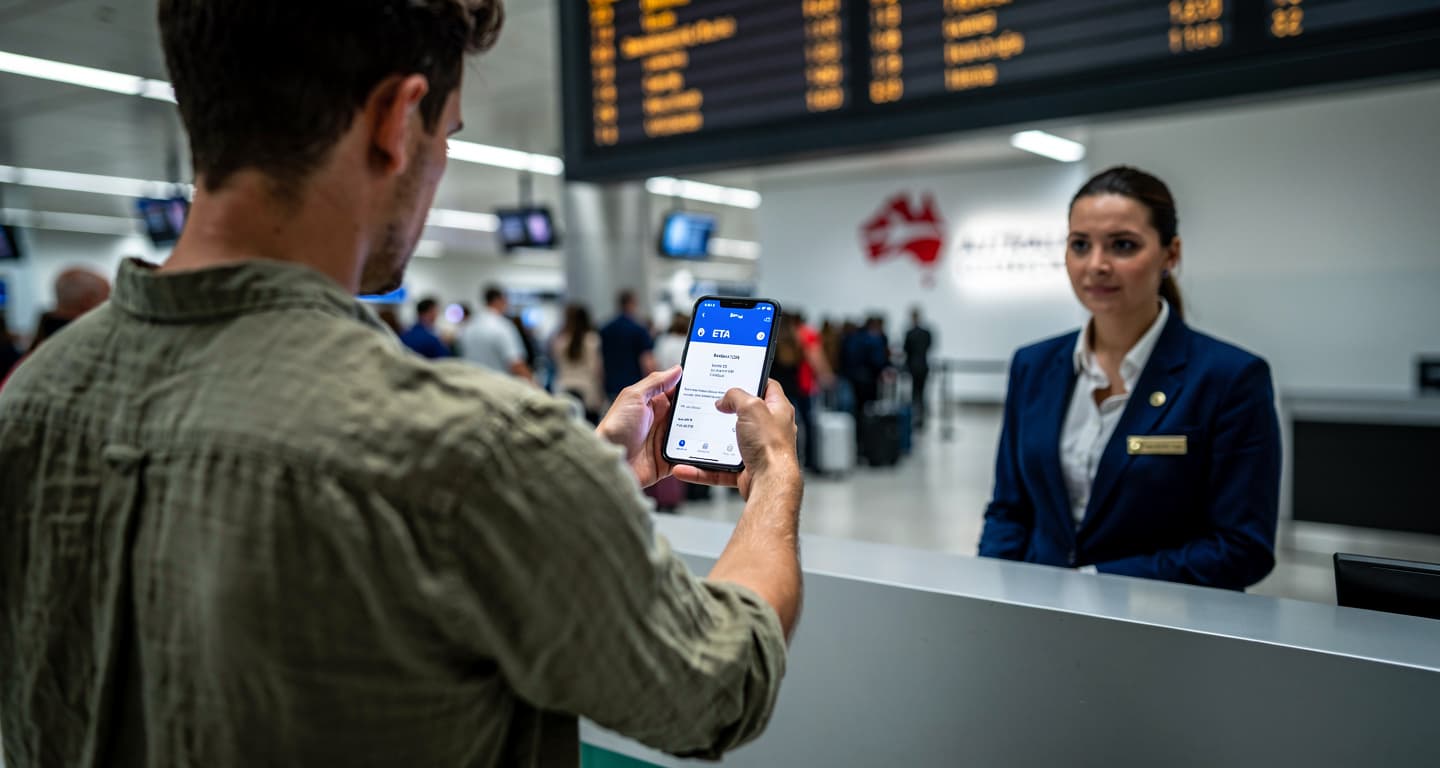
What you cannot skip is the e-Arrival Card. Introduced in 2026, it replaces the paper landing card previously completed on the plane. It’s mandatory for all K-ETA-exempt travelers, short-term visa holders, APEC Business Travel Card holders, and US military personnel under SOFA. The only people exempt from it are valid K-ETA holders, South Korean residents, and airline crew.
For full details on the exemption and the e-Arrival Card requirements, Fragomen’s immigration brief covers the confirmed timeline and process.
Why South Korea keeps extending the exemption
The K-ETA launched in 2021 as a permanent pre-authorization system modeled on the US ESTA. Within two years, South Korea suspended it for 22 countries to accelerate post-pandemic tourism recovery. Inbound arrivals from Australia and New Zealand have grown significantly since the exemption began — enough that the government has now extended it three consecutive times rather than reinstate the requirement.
Flight deals
most people never see
Our AI monitors 150+ airlines for pricing anomalies that traditional search engines miss. Air Traveler Club members save $650 per trip per person on average: see how it works.
Each deal saves 40–80% vs. regular fares:

The e-Arrival Card: what it is and how to submit it
Think of the e-Arrival Card as a digital version of the form you used to fill out on the plane. It collects flight details, accommodation address, and a basic health declaration. It takes under five minutes.
Submit it via k-eta.go.kr or at self-service kiosks at the airport on arrival. The online route is strongly preferable — completing it before you fly means no queue at the kiosk and no risk of a delay at immigration. The 72-hour window before departure is the submission period; earlier is fine, but it cannot be submitted more than three days out.
Travelers flying Qantas from Sydney to Seoul Incheon, or Air New Zealand from Auckland, should complete the card before check-in opens. Pack a printed copy of your accommodation itinerary as a backup — immigration officers occasionally ask for it.
Missing the e-Arrival Card is not a minor inconvenience. Failure to complete it can result in entry denial or fines up to KRW 500,000. The airline will not catch this for you at check-in.
Planning beyond 2026
Three consecutive extensions suggest South Korea is in no rush to reinstate the K-ETA for these nationalities. But the exemption has a hard expiry date, and there is no guarantee of a fourth extension. Travelers booking trips that depart after January 1, 2027 should plan for the K-ETA to be required again.
If that happens, the process is straightforward: apply via k-eta.go.kr at least 72 hours before departure, pay the KRW 10,000 fee, and expect a 96% approval rate. Assisted processing through services like VisaHQ or iVisa is available for roughly USD 50 extra if you want someone else to handle the paperwork.
For stays longer than 90 days — or for work and training purposes — the K-ETA exemption does not apply regardless of timing. A C-4 visa (short-term employment) or C-3-9 tourist visa (up to 90 days, extendable) must be obtained through South Korean embassies in Sydney or Wellington. Processing takes approximately 14 working days and costs around AUD 110.
What to do
- Verify your exemption status by entering your passport details at k-eta.go.kr — a pop-up confirmation will appear. Do not apply for a K-ETA; the system will block it anyway.
- Submit the e-Arrival Card online within 72 hours before your flight departs. Do not leave this for the airport kiosk.
- Carry printed accommodation details as a backup for immigration, even though the card is digital.
- If your trip departs after January 1, 2027, monitor for a K-ETA reinstatement announcement and allow at least 72 hours for processing before departure.
Questions? Answers.
Does the K-ETA exemption cover business travel, or only tourism?
Both. The exemption applies to tourism and short-term business stays up to 90 days. It does not cover work, paid employment, or training engagements exceeding 90 days — those require a C-4 visa obtained through a South Korean embassy before travel.
I already paid for a K-ETA before the exemption was announced. Can I get a refund?
No. The Ministry of Justice has confirmed there are no refunds for previously paid K-ETA fees. However, a valid K-ETA remains usable until its expiry date — and holders of a valid K-ETA are exempt from the e-Arrival Card requirement, which is a minor practical benefit.
What happens if I forget to submit the e-Arrival Card before my flight?
You can complete it at self-service kiosks on arrival at Incheon International Airport or other Korean entry points. However, this adds time at immigration and carries risk. Failure to complete it at all can result in entry denial or fines up to KRW 500,000. Submit it online before you leave.
Is the exemption confirmed for all Australian and New Zealand passport holders, or only certain visa categories?
It applies to all Australian and New Zealand passport holders entering for short-term tourism or business — no sub-categories or restrictions by age, residency, or prior travel history. The full list of 22 exempt countries is published on the k-eta.go.kr portal.