Quick summary
Australian and New Zealand passport holders can enter South Korea without applying for a Korea Electronic Travel Authorization (K-ETA) through December 31, 2026, eliminating a 10,000 KRW (~AUD$12) fee and 72-hour processing requirement per person. The exemption, confirmed by South Korea’s Ministry of Justice on January 9, 2026, applies to 67 visa-exempt countries and covers tourism or business stays of up to 90 days.
The waiver expires on December 31, 2026 — K-ETA applications become mandatory again from January 1, 2027. Travelers entering without K-ETA during the exemption period must complete a new digital e-Arrival Card within three days of arrival, replacing the paper form phased out in late 2025.
South Korea has extended its K-ETA waiver for Australasian travelers through the end of 2026, removing a pre-departure paperwork requirement that cost AUD$12 per person and required 72 hours advance processing.
The exemption applies to Australian and New Zealand passport holders entering for tourism or business stays of up to 90 days. It’s part of a 67-country waiver designed to support South Korea’s goal of attracting 30 million international visitors by 2030.
Travelers planning trips after January 1, 2027 will need to reinstate K-ETA applications — the waiver is time-limited, not permanent.
What the exemption covers — and what it doesn’t
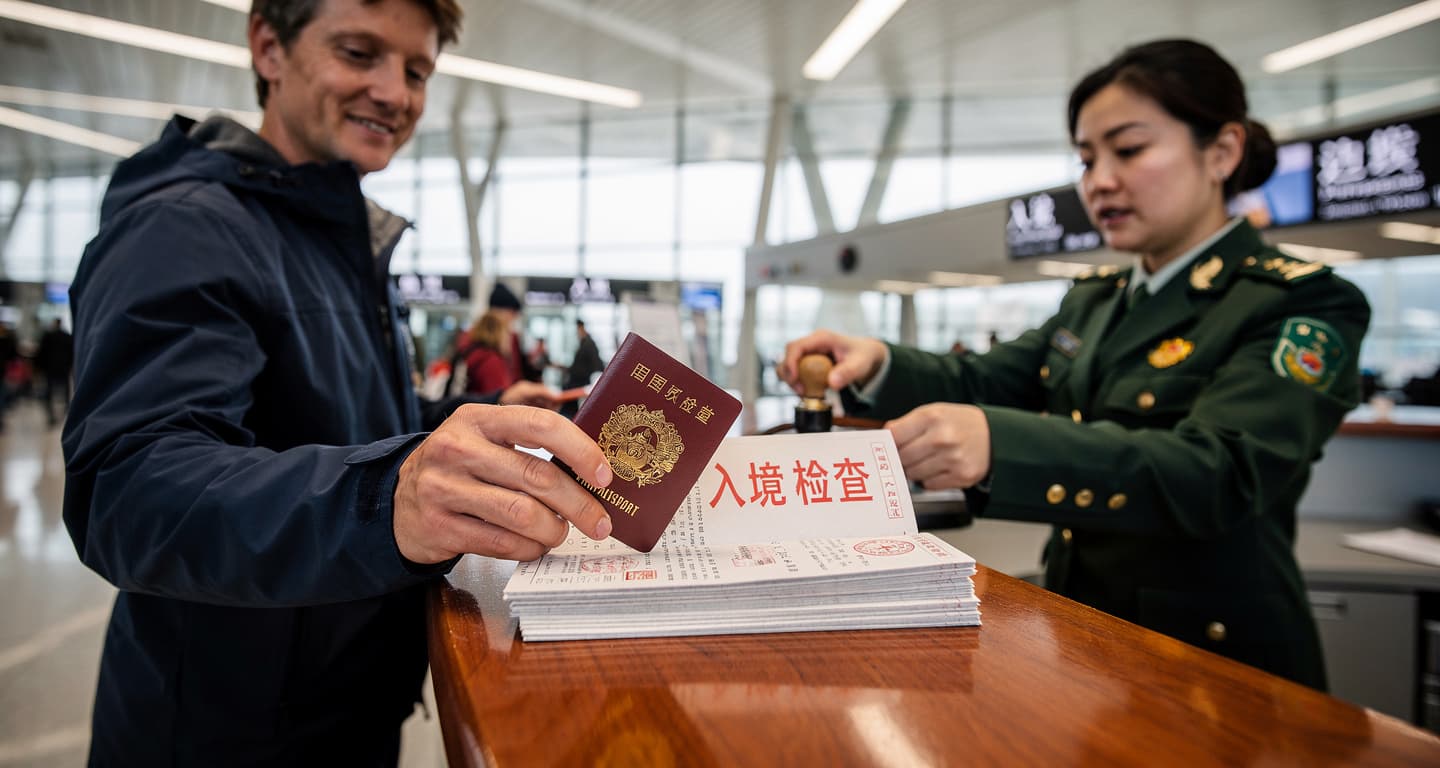
The K-ETA waiver removes the requirement to apply online before departure, but it does not eliminate all entry documentation. From January 1, 2026, travelers entering without K-ETA must complete a digital e-Arrival Card within three days of arrival — paper forms are no longer accepted.
The e-Arrival Card is submitted through South Korea’s official immigration portal. Travelers who voluntarily apply for K-ETA during the waiver period can skip this step entirely — K-ETA holders are exempt from the arrival card requirement.
Existing K-ETAs remain valid until their original expiration date, typically two years from issuance. No refunds are issued for unused K-ETAs purchased before the waiver was announced.
The 90-day maximum stay applies regardless of whether travelers enter with or without K-ETA. Extensions beyond 90 days require a separate visa application through South Korea’s immigration authorities.
| Period | K-ETA required | Arrival card | Cost per person |
|---|---|---|---|
| Through Dec 31, 2026 | No (optional) | Digital e-Arrival Card | Free |
| From Jan 1, 2027 | Yes | Exempt if K-ETA held | 10,000 KRW (~AUD$12) |
| K-ETA voluntary use (2026) | Optional | Exempt | 10,000 KRW (~AUD$12) |
Australasian travelers can compare flight options to South Korea from Australia and New Zealand to lock in travel before the K-ETA requirement resumes.
Flight deals
most people never see
Our AI monitors 150+ airlines for pricing anomalies that traditional search engines miss. Air Traveler Club members save $650 per trip per person on average: see how it works.
Each deal saves 40–80% vs. regular fares:

Why South Korea extended the waiver — and why it ends December 31, 2026
The K-ETA waiver is a facilitation policy, not a geopolitical signal. South Korea’s Ministry of Justice extended the exemption to reduce administrative friction for short-term visitors, supporting the country’s 30 million tourist target by 2030.
Unlike visa-free upgrades in Southeast Asia — such as Thailand’s 60-day exemption for Australians — South Korea’s approach emphasizes convenience over promotion. The waiver removes a 72-hour processing window and a AUD$12 fee, but it does not extend the 90-day maximum stay or change entry eligibility.
The December 31, 2026 sunset creates a booking cliff. Travelers planning trips in early 2027 should expect K-ETA requirements to resume, adding pre-departure planning time and cost. South Korea has not announced whether the waiver will be extended beyond 2026 — the Ministry of Justice’s January 9 statement confirmed only the current end date.
Steps to enter South Korea under the waiver
The K-ETA waiver removes pre-departure applications, but entry still requires documentation — here is the sequence for Australian and New Zealand travelers through December 31, 2026.
- Confirm passport validity: Your passport must be valid for at least six months beyond your planned departure date from South Korea. Immigration officers check this at entry — expired or near-expired passports trigger denial.
- Complete the digital e-Arrival Card: Submit the form online within three days of arrival using the official Korean immigration portal (immigration.go.kr). Save the confirmation email — immigration may request proof during processing.
- Prepare proof of onward travel: Airlines and immigration officers may request evidence of departure within 90 days — a return ticket or onward flight booking. This is standard for visa-free entry globally.
- Check accommodation details: The e-Arrival Card requires a Korean address — hotel name and location, or a private residence if staying with contacts. Have this information ready before starting the form.
- Monitor the January 1, 2027 reinstatement: If planning trips after December 31, 2026, apply for K-ETA at least 72 hours before departure. Processing typically takes 24 hours, but delays occur during peak travel periods.
Watch: South Korea’s Ministry of Justice has not announced whether the waiver will be extended beyond 2026 — travelers booking 2027 trips should confirm K-ETA requirements 90 days before departure.

Questions? Answers.
If I apply for K-ETA voluntarily during the waiver period, can I get a refund after December 31, 2026?
No. K-ETAs issued during the waiver remain valid until their original two-year expiration date — no refunds are issued. If you apply now and your K-ETA expires in 2028, you can use it through 2028 even after the waiver ends. The 10,000 KRW (~AUD$12) fee is non-refundable regardless of whether the waiver is active when you travel.
What happens if I arrive in South Korea on December 31, 2026 vs. January 1, 2027 without a K-ETA?
December 31, 2026: You can enter visa-free under the waiver — complete the digital e-Arrival Card within three days of arrival. January 1, 2027: K-ETA becomes mandatory — you must have applied at least 72 hours before arrival or hold a traditional visa. Immigration will deny entry if you arrive without K-ETA after the waiver expires.
Can I use an existing K-ETA issued before the waiver was announced?
Yes. K-ETAs remain valid until their original expiration date, typically two years from issuance. If you hold a K-ETA issued in 2024 or 2025, you can use it through 2026 and into 2027 without reapplying. K-ETA holders are exempt from the digital e-Arrival Card requirement — this is the primary advantage of holding K-ETA during the waiver period.
Does the waiver apply to travelers transiting through South Korea to another country?
Transit passengers who remain airside (do not pass through immigration) do not need K-ETA or the e-Arrival Card, regardless of the waiver. If you plan to leave the airport during a layover — even for a few hours — you must enter South Korea officially, which requires either K-ETA (if traveling after January 1, 2027) or the digital e-Arrival Card (if traveling during the waiver period). Check K-ETA fee and application timeline for transit-specific rules.
What happens if I overstay the 90-day visa-free period?
Overstaying triggers automatic penalties — fines, deportation, and entry bans ranging from one to ten years depending on the overstay duration. South Korea’s immigration system tracks entry and exit dates electronically. If you need to stay longer than 90 days, apply for a visa extension through the Korea Immigration Service before your initial 90-day period expires. Extensions are not guaranteed and require proof of purpose (employment, study, or family ties).