Quick summary
As of January 30, 2026, Singapore’s Immigration & Checkpoints Authority requires airlines to verify all entry requirements—passport validity (minimum six months), visas, and a submitted SG Arrival Card—before boarding. Travelers flagged as inadmissible receive a No-Boarding Directive at their departure gate, not on arrival at Changi. Airlines face fines up to SGD 10,000 per violation.
This applies globally to all Singapore-bound flights, including transit passengers. Denied travelers must obtain ICA clearance before rebooking. The policy follows 41,800 border rejections in 2025 and shifts refusal upstream to departure airports worldwide.
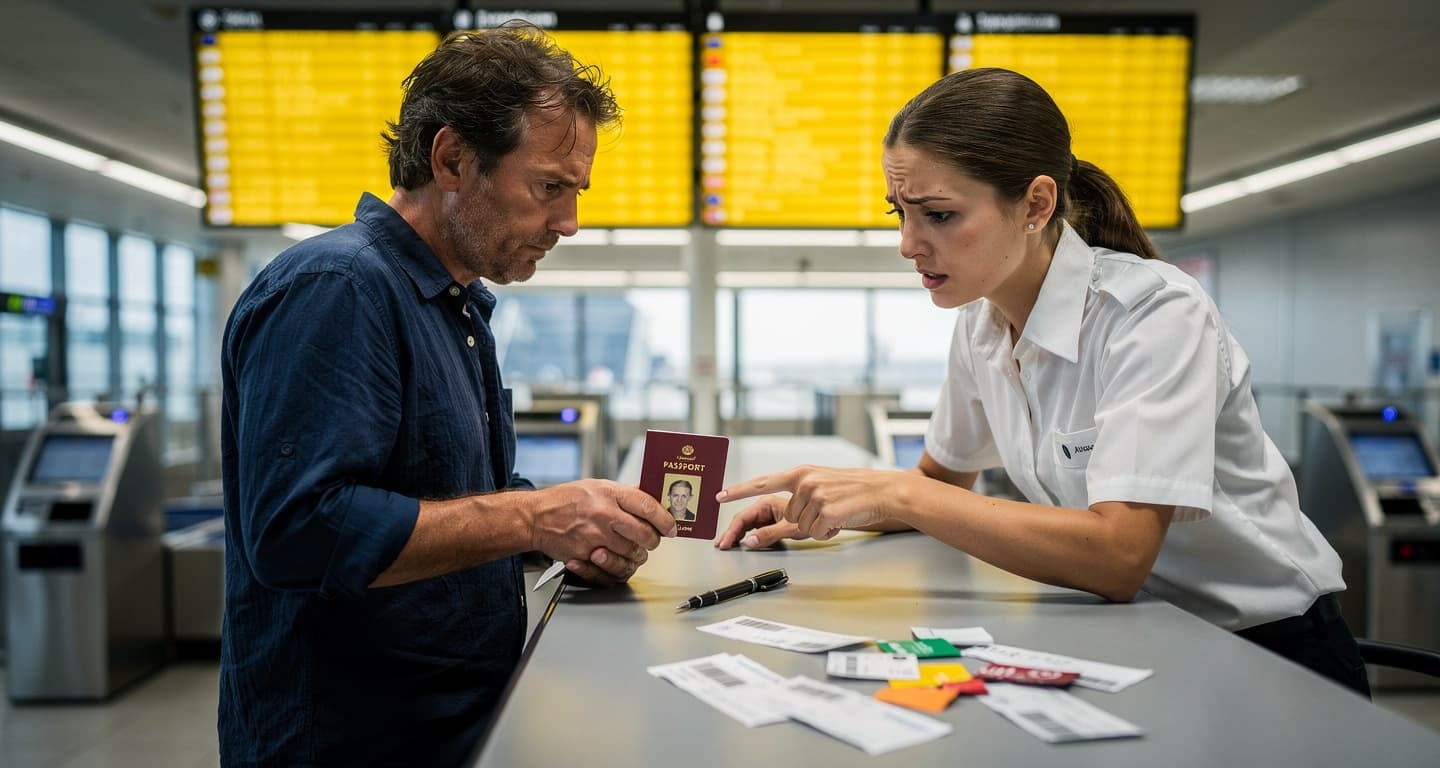
Singapore has moved immigration enforcement to your departure gate. The Immigration & Checkpoints Authority now issues real-time No-Boarding Directives to airlines when advance passenger screening flags travelers as inadmissible—before they board flights to Changi or Seletar airports.
For travelers from Europe, North America, and Australia, this means document checks that previously happened on arrival in Singapore now occur at check-in counters and boarding gates in London, Los Angeles, Sydney, and every other origin city. Airlines must verify passport validity, visa status, and SG Arrival Card submission before issuing boarding passes.
The policy targets travelers with prior overstays, illegal work history, criminal records, or security flags. But it also catches anyone with a passport expiring within six months of arrival, missing visa documentation, or an incomplete arrival card. Gate agents receive ICA alerts via secure messaging systems integrated with departure control software—and they are legally required to deny boarding on the spot.
If you hold a ticket to Singapore or are transiting through Changi to Southeast Asia or Australia, verify your documents at least seven days before departure. A denied boarding costs you the flight, rebooking fees, and potentially your entire itinerary.
How the No-Boarding Directive works
ICA uses advance passenger information from airline manifests and the SG Arrival Card system to pre-screen every traveler. When the system flags someone as prohibited or undesirable under Singapore’s Immigration Act, it sends a No-Boarding Directive to the airline operating that flight. The directive is legally binding—carriers must refuse boarding or face penalties of up to SGD 10,000 per passenger, plus potential jail terms of up to six months for employees who ignore the order.
The screening happens in real time as passengers check in. Airlines like Singapore Airlines, British Airways, and Emirates have integrated ICA’s alert system into their departure control platforms. Gate agents receive notifications on the same screens they use to scan boarding passes. There is no manual override—if the system says no, the passenger does not board.
| Check point | Verified requirement | Consequence of failure |
|---|---|---|
| Check-in counter | Passport validity (6+ months), visa if required | Boarding pass denied |
| Gate screening | SG Arrival Card submission, ICA clearance | Boarding refused, ticket forfeited |
| ICA database | No prior overstay, criminal record, security flag | No-Boarding Directive issued to airline |
| Airline compliance | Must deny boarding upon ICA directive | SGD 10,000 fine + jail for non-compliance |
The official No-Boarding Directive policy applies to all nationalities and all entry types—tourist, business, transit. Even if you are connecting through Changi without clearing immigration, the system checks your eligibility. A passport expiring in five months will trigger a refusal at your origin airport, not in Singapore.
Travelers denied boarding must submit an appeal through ICA’s Feedback Channel before purchasing a new ticket. Response times average 3–7 days, and approval is not guaranteed. If you are flagged for a prior immigration violation, expect to provide supporting documentation—proof of departure from Singapore, character references, or legal clearances—before ICA lifts the directive.
For flights to Singapore from Europe, this means Heathrow, Frankfurt, and Paris CDG gate agents now enforce Singapore’s entry rules with the same authority as Changi immigration officers. The refusal happens at the departure gate, but the legal consequence is identical to being turned away on arrival.
Flight deals
most people never see
Our AI monitors 150+ airlines for pricing anomalies that traditional search engines miss. Air Traveler Club members save $650 per trip per person on average: see how it works.
Each deal saves 40–80% vs. regular fares:

Why Singapore moved enforcement upstream
Between January and November 2025, ICA rejected 41,800 travelers at Singapore’s borders—an average of 127 refusals per day. Each inadmissible arrival costs the airline a return flight, ICA processing time, and detention facility resources. The No-Boarding Directive shifts that cost and logistical burden to departure airports, where airlines already perform document checks.
This aligns Singapore with a global trend. The UK’s Electronic Travel Authorization system and the EU’s upcoming ETIAS program both require pre-travel screening before boarding. Malaysia and Indonesia are planning similar advance passenger information mandates for 2026. The difference is enforcement mechanism—Singapore’s system issues binding refusal orders in real time, while most countries rely on airline liability without active government intervention at foreign airports.
For travelers routing through Singapore to Australia or Southeast Asia, this creates a multi-layer compliance burden. A Los Angeles–Singapore–Perth itinerary now requires meeting US exit requirements, Singapore transit rules, and Australian entry conditions—all verified before the first boarding pass is issued at LAX. If any single check fails, the entire journey is blocked.
Airlines are updating their software to handle the increased verification load. British Airways and Virgin Atlantic are rolling out enhanced document scanning at European check-in counters in Q2 2026, and Singapore Airlines has integrated ICA’s alert system into its mobile app. Passengers can now upload passport and visa images for pre-clearance before arriving at the airport—but the system does not guarantee approval, and gate agents retain final authority.
The policy also affects business aviation. Private jets flying to Seletar Airport fall under the same No-Boarding Directive rules, but smaller operators may lack the real-time API integration that commercial airlines use. This creates a compliance gap—charter passengers may not receive advance warning of ICA flags until they attempt to board, and operators face the same SGD 10,000 fines if they fly an inadmissible passenger.
What to verify before your flight
Your passport must be valid for at least six months from your Singapore arrival date—not your departure date, not your return date. If you are transiting through Changi, the six-month rule applies even if you remain airside.
- Submit the SG Arrival Card three days before departure via ICA’s online portal. Screenshot the confirmation page showing your reference number—gate agents may request proof at check-in.
- Check ICA’s e-Service portal for personal flags if you have any prior immigration issues in Singapore or other countries. A denied boarding costs you the flight and requires ICA clearance before rebooking.
- Carry printed visa documentation if you are not from a visa-waiver country. E-visas must be verifiable via ICA’s API—if the automated check fails, airlines will deny boarding without manual verification.
- Verify your passport expiration date against your Singapore arrival, not your home departure. A passport expiring in five months will trigger a refusal at your origin airport.
- For transit passengers: confirm your onward flight is within 96 hours and you meet the destination country’s entry requirements. Singapore’s No-Boarding Directive applies even if you do not clear immigration at Changi.
Watch: Malaysia and Indonesia are implementing similar advance passenger screening systems in mid-2026—expect gate-level document checks for Kuala Lumpur and Jakarta flights to follow Singapore’s model by Q3.

Questions? Answers.
Does the No-Boarding Directive affect transit passengers who stay airside at Changi?
Yes. ICA’s advance passenger screening applies to all travelers entering Singapore’s jurisdiction, including those who remain airside. If your passport expires within six months of your Changi arrival or you are flagged for a prior immigration violation, the airline will deny boarding at your origin airport—even if you never planned to clear Singapore immigration. Carry transit visa documentation if your nationality requires it, and verify your passport validity against your Changi arrival date, not your final destination.
How do airlines receive ICA’s No-Boarding Directive alerts in real time?
ICA sends alerts via secure EDI messaging integrated with airline departure control systems. When a passenger checks in, the system transmits their passport and visa data to ICA’s screening database. If the traveler is flagged, the airline receives a binding refusal notice on the same screen used to issue boarding passes. Carriers like Singapore Airlines and Emirates began testing the integration in December 2025, and all airlines serving Singapore must comply as of January 30, 2026. There is no manual override—gate agents cannot board a passenger once the directive is issued.
What happens if my passport expires mid-trip after I leave Singapore?
The six-month validity rule applies only to your Singapore arrival date, not your departure or return. If you are flying Sydney–Singapore–London and your passport expires seven months from your Sydney departure but only five months from your Singapore arrival, you will be denied boarding in Sydney. For multi-leg Asia-Pacific itineraries, calculate validity from each entry point—not the start of your trip. Renew your passport before booking if any segment falls within the six-month window.
Can I appeal a No-Boarding Directive after being denied at the gate?
Yes, but you must obtain ICA clearance before purchasing a new ticket. Submit an appeal through ICA’s Feedback Channel with supporting documentation—proof of prior departure from Singapore, character references, or legal clearances if you were flagged for a past violation. Response times average 3–7 days, and approval is not guaranteed. If ICA upholds the directive, you will not be permitted to board any Singapore-bound flight until the issue is resolved. Do not assume rebooking on a different airline will bypass the system—the directive applies to all carriers.
Does the No-Boarding Directive apply to private jets and business aviation?
Yes. Flights to Seletar Airport and all other Singapore entry points fall under the same policy. However, smaller charter operators may lack the real-time API integration that commercial airlines use, creating a compliance gap. Passengers on private jets may not receive advance warning of ICA flags until they attempt to board, and operators face the same SGD 10,000 fines if they fly an inadmissible traveler. If you are chartering a flight to Singapore, confirm the operator has integrated ICA’s screening system and verify your documents independently before departure.