Quick summary
A 45-year-old Scandinavian Airlines captain was arrested at Nice Côte d’Azur Airport on June 10, 2026 after a routine drug check returned positive for cocaine. A French court sentenced him the following day to 10 months suspended imprisonment and a one-year ban on operating aircraft over French territory. The arrest immediately triggered the cancellation of SAS Connect flight SK1828 from Nice to Stockholm, leaving up to 180 passengers stranded and potentially entitled to €400 each under EU261/2004 — a total liability approaching €72,000 ($83,300).
The flying ban applies only to French airspace, meaning the pilot is not automatically grounded elsewhere in Europe. Passengers who were on the cancelled flight have a strong EU261 claim — and the airline cannot invoke extraordinary circumstances to avoid paying it.
A cocaine-positive drug test at Nice Airport has handed SAS Connect a compensation bill that could reach $83,300 — and exposed a harder question about the passengers who actually flew with the impaired captain before he was caught.
French authorities arrested the 45-year-old Scandinavian Airlines captain on June 10, 2026 following a routine fitness-for-duty check at Nice Côte d’Azur Airport. The test returned positive for cocaine. The next day, a French court handed down a 10-month suspended sentence and a one-year ban on flying over French territory. The pilot was immediately removed from duty.
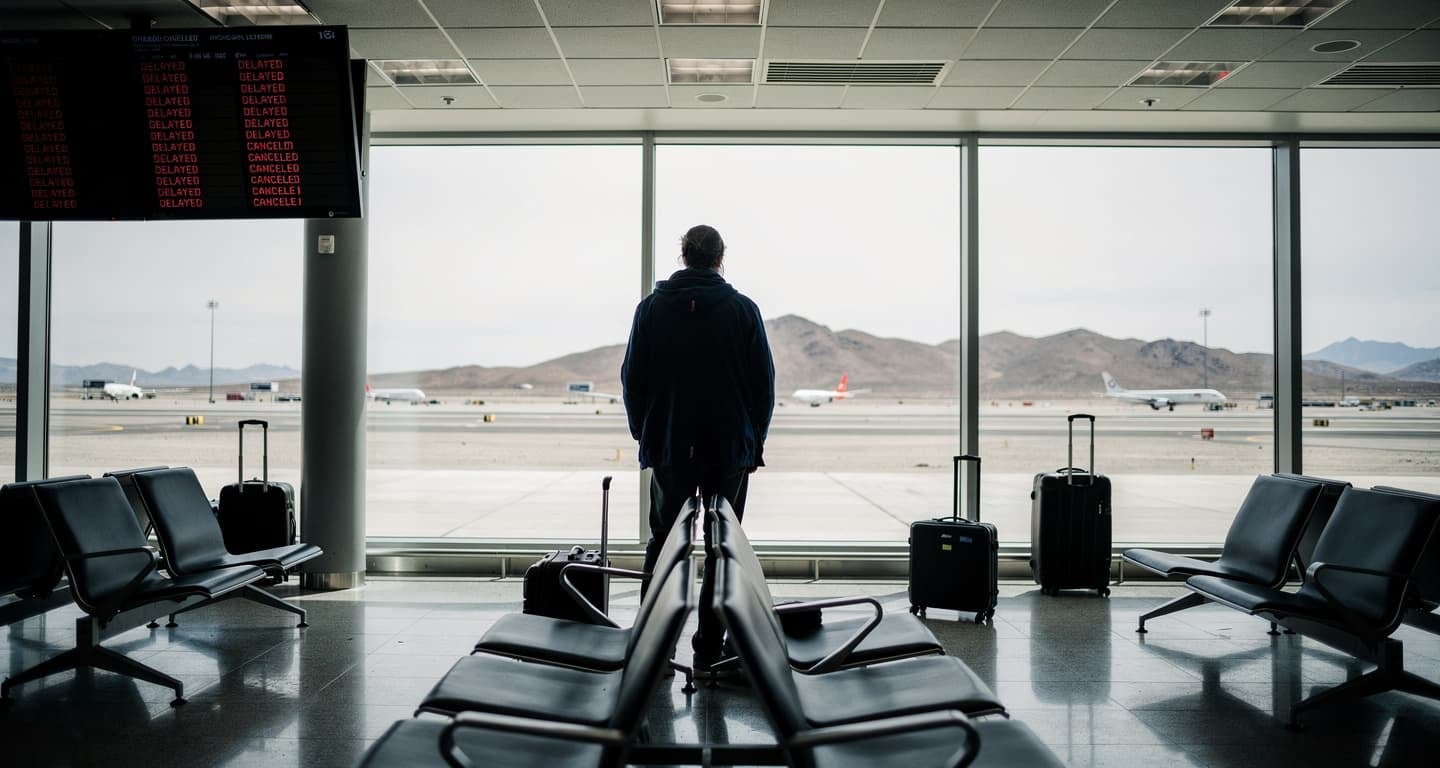
The operational fallout was swift. SAS Connect cancelled flight SK1828, the Nice–Stockholm service the pilot was scheduled to operate, using aircraft EI-SIG — the same plane that had just completed the inbound SK1827 from Stockholm. Most passengers were reportedly rebooked the following day, though some may have traveled the same day with delays of at least four hours, including missed connections.
Nice to Stockholm covers 1,922 kilometers, placing the route squarely in EU261‘s €400 per passenger compensation band. At full load — 180 seats on an Airbus A320 — that is €72,000, or roughly $83,300, before any right-to-care costs for meals, hotels, and ground transport are added.
What the cancellation means for SK1828 passengers
Under EU261/2004, a cancellation or arrival delay of three or more hours on a flight departing an EU airport triggers cash compensation. The Nice departure means EU261 applies directly. Crucially, SAS Connect cannot claim extraordinary circumstances here. The European Court of Justice has already ruled that unexpected crew unavailability — including illness or death — is inherent in airline operations and does not qualify as an extraordinary circumstance. A pilot removed from duty after failing a drug test sits in the same category. The airline pays.
Passengers do not receive compensation automatically. There is no regulatory requirement for airlines to proactively offer it, though pressure to change that rule is building across the EU. Affected travelers must file claims themselves through SAS‘s customer-claims channel, supported by boarding passes and written confirmation of the cancellation or delay.
| Factor | Detail | Passenger impact |
|---|---|---|
| Route distance | Nice to Stockholm: 1,922 km | Falls in €400 EU261 band |
| Aircraft capacity | Airbus A320, up to 180 seats | Maximum €72,000 ($83,300) liability |
| Rebooking outcome | Most rebooked next day; some same-day with 4+ hour delay | Compensation threshold likely met for most passengers |
| Right to care | Meals, hotel, ground transport required | Additional costs above €72,000 estimate |
| Extraordinary circumstances defence | ECJ precedent: crew unavailability not extraordinary | SAS cannot avoid cash compensation on this basis |
The incident also raises a question the compensation framework does not answer: the passengers on the inbound SK1827 from Stockholm to Nice flew with the same captain before the drug test was administered. They landed safely — but they were never told. EU261 covers the disrupted passengers. It has nothing to say about the ones who were already on board.
This is not the first time a major carrier has faced regulatory scrutiny over crew substance issues. The FAA proposed a $255,000 civil penalty against American Airlines in April 2026 after 12 flight attendants who tested positive for drugs including cocaine were allowed to return to safety-critical duties without completing mandatory follow-up testing — a pattern that stretched across nearly five years.
Flight deals
most people never see
Our AI monitors 150+ airlines for pricing anomalies that traditional search engines miss. Air Traveler Club members save $650 per trip per person on average: see how it works.
Each deal saves 40–80% vs. regular fares:

Why the airline cannot escape this compensation bill
The extraordinary circumstances defence is the standard tool airlines reach for when they want to avoid EU261 payouts. Severe weather, air traffic control strikes, security incidents — these can qualify. Crew unavailability, in almost any form, does not. The European Court of Justice has drawn that line clearly: if a crew member becomes unavailable for any reason that is part of the normal risk of running an airline, the carrier absorbs the cost.
A pilot testing positive for cocaine is, by that logic, an operational risk the airline is expected to manage. The drug-testing framework exists precisely because impairment is a known hazard in aviation. The fact that the system worked — the test caught the problem before the flight departed — does not transform the resulting cancellation into something beyond the airline’s control.
France’s testing thresholds are set in law: 10 ng/mL for cocaine in saliva or blood, 300 ng/mL in urine. There is no impairment threshold in aviation — any positive result is disqualifying. The one-year French airspace ban is a criminal sanction, not an aviation-authority suspension, which is why it applies only to French territory. EASA and the pilot’s home licensing authority would need to act separately to ground him more broadly.
Steps to protect your claim now
EU261 claims on this cancellation are strong — but passengers must file them. SAS will not send a check unprompted.
- Confirm your delay or cancellation in writing: Log into your SAS booking and download or screenshot the cancellation notice. Email confirmation from the airline is the strongest supporting document for a claim.
- Calculate your compensation tier: Nice to Stockholm is 1,922 km, placing it in the €400 per passenger band. If your arrival at the final destination was delayed by three or more hours, you are entitled to that amount regardless of how the airline rebooked you.
- File directly with SAS first: Submit your EU261 claim through SAS’s official customer-service channel. Include your booking reference, boarding pass, and the delay or cancellation confirmation. Keep copies of everything.
- Claim right-to-care costs separately: Meals, hotel accommodation, and ground transport incurred because of the cancellation are reimbursable on top of the €400 cash compensation. Keep all receipts.
- Check your credit card benefits: If you paid for the ticket on a Chase Sapphire Reserve or Amex Platinum, trip-delay and trip-cancellation benefits may cover additional out-of-pocket costs. File through the card’s benefits administrator with receipts and the airline’s disruption notice.
Watch: SAS’s formal passenger-claims response in the coming days will indicate whether the airline is processing EU261 payouts as a standard closed event or pushing back — if claims are being disputed, escalate to your national enforcement body (in France, the DGAC; in Sweden, the Swedish Consumer Agency).

Questions? Answers.
Are passengers who flew on the inbound flight with the cocaine-positive pilot entitled to any compensation?
EU261 covers delays and cancellations — not the risk of having flown with an impaired crew member who was later caught. Passengers on the inbound SK1827 from Stockholm to Nice have no EU261 claim because their flight operated and arrived. Any legal recourse for those passengers would fall outside the standard passenger-rights framework and would likely require individual civil action, which is rarely pursued when a flight lands without incident.
Does the one-year French airspace ban mean the pilot cannot fly anywhere in Europe?
No. The ban is a French criminal sanction covering French territory only. It does not automatically suspend the pilot’s EASA licence or bar him from operating flights in other European countries. A broader grounding would require separate action by EASA or the licensing authority in his home country. The distinction matters: the pilot could, in principle, operate flights elsewhere in Europe while the French ban is in effect, unless his employer or home regulator acts independently.
Can SAS argue extraordinary circumstances to avoid paying EU261 compensation?
No. The European Court of Justice has ruled that crew unavailability — for any reason, including illness or unexpected incapacity — is inherent in airline operations and does not qualify as an extraordinary circumstance. A pilot removed from duty after failing a drug test falls squarely within that ruling. SAS is liable for the full €400 per passenger on this route, plus right-to-care costs.
How long does SAS have to respond to an EU261 claim?
EU261 does not set a specific response deadline for airlines, but national enforcement bodies generally expect a substantive response within four to six weeks. If SAS does not respond or rejects a valid claim, passengers can escalate to the relevant national enforcement body — in France, the Direction Générale de l’Aviation Civile (DGAC); in Sweden, the Swedish Consumer Agency. Alternatively, an alternative dispute resolution (ADR) body or small claims court can be used.