Quick summary
A 61-year-old passenger who forced a Ryanair flight to abort its landing by refusing to sit down and fasten his seatbelt has been sentenced to 10 months in prison by Bristol Crown Court on April 8, 2026. Stephen Blofield pleaded guilty in February to being drunk on an aircraft, threatening crew, and failing to obey pilot commands during flight FR5518 from Krakow to Bristol on November 11, 2025. The sentence represents the harshest penalty yet under Ryanair’s zero-tolerance policy, which has included fines exceeding €15,000 and mandatory offload fees since 2024.
Judge Euan Ambrose stated only a custodial sentence was justified given the severity of the disruption. Ryanair welcomed the outcome as confirmation that UK courts now prioritize aviation security charges—a shift that changes the risk calculation for anyone considering disruptive behavior on European flights.
How a go-around turned into a prison sentence
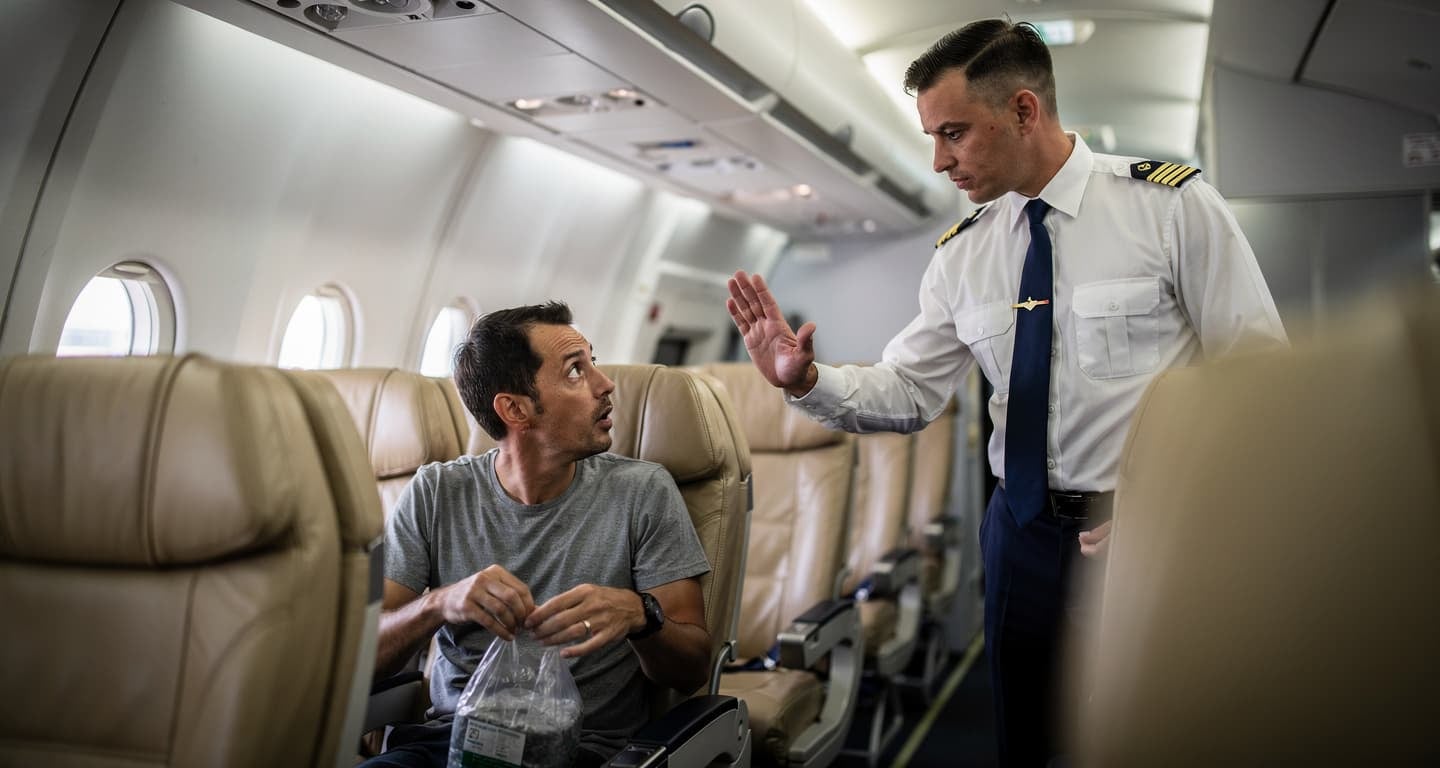
The incident unfolded on a routine evening flight from Krakow to Bristol. Blofield consumed duty-free alcohol during the flight, became verbally abusive toward crew, and refused repeated instructions to return to his seat as the Boeing 737 began its descent. His refusal to comply during the critical landing phase forced the pilots to execute a go-around—a maneuver that burns additional fuel, delays the flight, and introduces unnecessary operational risk.
Upon landing on the second attempt, Blofield continued acting aggressively. Police met the aircraft at Bristol Airport and took him into custody. He was charged under the UK Aviation Security Act with being intoxicated on an aircraft, threatening behavior, and failing to obey lawful commands from the crew.
In February 2026, Blofield pleaded guilty to all charges. Two months later, Bristol Crown Court handed down the sentence: 10 months behind bars. Judge Ambrose made clear that the disruption to the flight, the risk to passengers and crew, and the defiance of safety protocols left no alternative to imprisonment.
Ryanair issued a statement welcoming the sentence and reiterating its zero-tolerance policy. The airline noted that even a single unruly passenger can disrupt travel for hundreds of others and create an unsafe environment. The carrier has made no secret of its desire to crack down on disruptive behavior, and this case demonstrates the consequences passengers now face when they ignore crew instructions.
| Date | Incident | Consequence |
|---|---|---|
| January 2025 | Dublin–Lanzarote diversion | €15,000 civil lawsuit |
| April 2025 | Unruly passenger | €3,000 fine |
| May 2025 | Policy shift | €500 mandatory offload fee introduced |
| November 2025 | Krakow–Bristol (FR5518) | 10 months prison (sentenced April 2026) |
The airline’s approach has evolved from reactive to proactive. In January 2025, Ryanair sued a drunken passenger on a Dublin–Lanzarote flight for €15,000 in damages after the flight diverted. In April 2025, another abuser was fined €3,000. By May 2025, the carrier had implemented mandatory €500 offload fines for passengers removed before departure. A 2024 Glasgow–Krakow flight diverted due to an unruly passenger, leading to a conviction that Ryanair publicly welcomed.
The Blofield case represents the harshest penalty yet—and the first to result in significant prison time. Court records confirm that the sentence reflects both the severity of the disruption and the UK judiciary’s willingness to treat aviation security violations as serious criminal matters.
What changed in the enforcement landscape
The Blofield sentence marks a shift in how UK courts handle aviation disruption cases. Historically, unruly passengers faced fines, travel bans, or suspended sentences—consequences that often failed to deter repeat behavior. The 10-month custodial sentence signals that judges now view in-flight disruption as a threat to public safety, not merely a regulatory violation.
Under the UK Aviation Security Act, being intoxicated on an aircraft carries a maximum penalty of two years in prison. Threatening crew or failing to obey pilot commands during critical flight phases—such as landing—compounds the severity. Judge Ambrose’s decision to impose a custodial sentence reflects the court’s assessment that Blofield’s actions endangered everyone on board.
For passengers, the practical impact is immediate. Ryanair has increased pre-boarding checks at airports like Krakow and Bristol, with gate staff authorized to refuse boarding to anyone showing signs of intoxication or aggressive behavior. The €500 offload fee applies before departure; criminal prosecution and civil lawsuits follow if the passenger boards and disrupts the flight.
The airline’s zero-tolerance policy extends beyond fines. Ryanair actively cooperates with law enforcement, providing evidence and witness statements to support prosecutions. The carrier has also pursued civil damages in cases where Portuguese authorities declined to prosecute, demonstrating its willingness to use multiple legal avenues to hold disruptive passengers accountable.
Flight deals
most people never see
Our AI monitors 150+ airlines for pricing anomalies that traditional search engines miss. Air Traveler Club members save $650 per trip per person on average: see how it works.
Each deal saves 40–80% vs. regular fares:

What to do if you’re flying Ryanair
The Blofield case makes clear that Ryanair enforces its conduct rules with legal consequences—here is the priority order for protecting your trip.
- Review the rules before booking: Ryanair’s passenger security terms at ryanair.com/gb/en/useful-info/passenger-security outline prohibited behaviors, including alcohol consumption from duty-free purchases during the flight. Violating these terms voids your ticket and exposes you to fines, bans, and criminal charges.
- Comply immediately during critical phases: Crew instructions during descent and landing are not negotiable. Refusing to sit, fasten your seatbelt, or stow items can force a go-around—an action that triggers both operational costs and legal liability. The Blofield case demonstrates that UK courts treat such refusals as criminal offenses.
- Expect stricter gate enforcement: Ryanair gate staff at airports like Krakow and Bristol now conduct behavioral assessments before boarding. If you appear intoxicated or aggressive, you will be denied boarding and charged the €500 offload fee. No refund, no rebooking.
- Understand the legal risk: UK and EU aviation security laws criminalize intoxication, threats, and non-compliance on aircraft. A conviction can result in prison time, fines, and a criminal record that affects future travel. The Blofield sentence—10 months for forcing a go-around—sets a precedent that other UK courts are likely to follow.
- Monitor similar cases: Check Avon and Somerset Police updates at avonandsomerset.police.uk for similar prosecutions affecting Bristol arrivals. If enforcement patterns continue, expect increased police presence at UK airports handling Ryanair flights.
Watch: Ryanair’s Q2 2026 earnings call, expected in July, will reveal whether unruly incidents have dropped by 20% or more—confirming whether the deterrence strategy is working across the network.

Questions? Answers.
Can Ryanair sue passengers for damages even if they’re convicted?
Yes. Ryanair has pursued civil lawsuits for damages in addition to criminal prosecutions. In January 2025, the airline sued a passenger for €15,000 after a Dublin–Lanzarote diversion, even though the passenger faced criminal charges. Civil damages cover operational costs like fuel, crew overtime, and passenger compensation—expenses not addressed by criminal fines.
Does the €500 offload fee apply if I’m removed before boarding?
Yes. Ryanair’s €500 offload fee applies when gate staff deny boarding due to intoxication or aggressive behavior. The fee is non-refundable, and you forfeit your ticket. If you board and then disrupt the flight, you face the offload fee plus criminal charges and potential civil lawsuits.
Are other European airlines adopting similar zero-tolerance policies?
Not yet at Ryanair’s level. While carriers like easyJet and Wizz Air have conduct policies, they have not pursued criminal prosecutions or civil lawsuits as aggressively. Ryanair’s approach is currently the most stringent in Europe, though the Blofield sentence may encourage other airlines to escalate enforcement.
What happens if I’m convicted of an aviation security offense in the UK?
A conviction under the UK Aviation Security Act creates a criminal record that can affect future travel. Some countries, including the United States, require visa applicants to disclose criminal convictions. Airlines may also place you on internal no-fly lists, restricting your ability to book future flights with that carrier or its partners.