Quick summary
Philippine Airlines received its second Airbus A350-1000 at Ninoy Aquino International Airport in Manila on May 29, 2026, advancing a fleet modernization program built around nine aircraft on order. The widebody seats 382 passengers across three cabins — including 42 business class suites with sliding doors and fully flat beds — and is earmarked for transpacific routes to North America that regularly exceed 14 hours in the air. PAL remains the first and only Southeast Asian carrier operating the type.
Five more A350-1000s are expected before the end of 2026, with the remaining aircraft following in 2027. Travelers booking Manila–North America premium cabins later this year are watching a fleet that is still being assembled.
Philippine Airlines is building its transpacific operation one widebody at a time — and the pace is accelerating. The carrier’s second Airbus A350-1000 touched down in Manila at 5:18 p.m. on May 29, joining a fleet that will absorb five more of the type before 2026 is out. For travelers on Manila–Los Angeles, Manila–San Francisco, and Manila–New York routes, the practical question is when these aircraft start showing up on their specific booking.
PAL President Richard Nuttall framed the delivery in operational terms: the A350-1000 is central to the airline’s long-haul modernization, not a prestige acquisition. That framing matters. With a total order of nine aircraft and only two in hand, PAL is managing transpacific growth on a delivery schedule it does not fully control — Airbus handover timing, not passenger demand, sets the pace right now.
The airline is also celebrating 85 years of operations, and the timing of this delivery lands against an unusually strong operational backdrop. Cirium ranked PAL the most punctual airline in Asia-Pacific in 2025 — a signal that the infrastructure supporting these new aircraft is in better shape than it was during the carrier’s restructuring years.
North American travelers connecting through Manila, and Filipino diaspora communities on the US West Coast and in Canada, are the most directly affected. Routes from Los Angeles, San Francisco, New York, Toronto, and Vancouver are all part of PAL’s existing North America network, and the A350-1000 is specifically positioned for these ultra-long sectors.
What the second delivery means for transpacific passengers
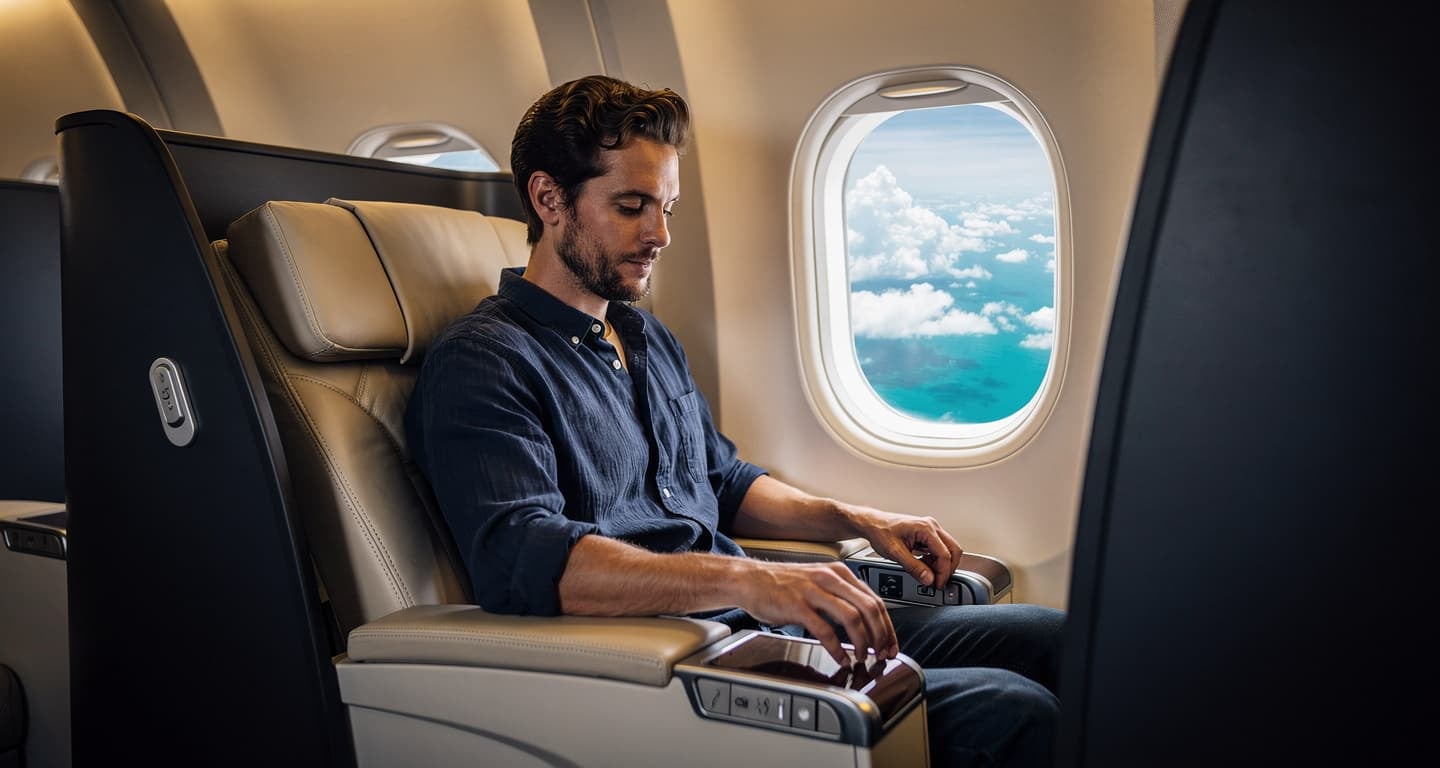
The A350-1000 configuration PAL is deploying is not a stripped-down long-haul workhorse. Business class runs to 42 suites with sliding doors, fully flat beds, and 20-inch 4K screens. Premium economy offers 24 seats with leather trim and 38 inches of pitch. Economy fills the remaining 316 seats at 32 inches of pitch, with 13.3-inch 4K screens and Bluetooth connectivity throughout — a meaningful step up on sectors that can push past 14 hours. For context on how the A350 family compares to other widebodies on long sectors, the aircraft that make 10-hour flights actually comfortable is worth reading before you book a cabin class.
PAL confirmed the aircraft will support transpacific services, and the airline holds the distinction of being both the first Southeast Asian carrier to operate the A350-1000 and, so far, the only one. That exclusivity has a shelf life — other regional carriers will eventually follow — but for now it gives PAL a genuine product differentiator on North America routes where the competition is flying older widebody configurations.
The fuel efficiency story also has a pricing dimension. The A350-1000 delivers up to 25% better fuel efficiency than previous-generation widebodies, which reduces per-seat operating costs on long sectors. Whether that flows through to fares or stays on the balance sheet depends on load factors and competitive pressure — but it gives PAL more flexibility to price aggressively when it chooses to.
Confirmed North America destinations in PAL’s network include Los Angeles, San Francisco, New York, Toronto, and Vancouver, with Chicago announced for November using an A350-900. The flights from North America to the Philippines page tracks current availability on these corridors.
| Cabin | Seats | Key features | Pitch |
|---|---|---|---|
| Business class | 42 suites | Sliding doors, fully flat bed, 20-inch 4K screen | Fully flat |
| Premium economy | 24 seats | Leather trim, enhanced recline | 38 inches |
| Economy | 316 seats | 13.3-inch 4K screen, Bluetooth throughout | 32 inches |
Flight deals
most people never see
Our AI monitors 150+ airlines for pricing anomalies that traditional search engines miss. Air Traveler Club members save $650 per trip per person on average: see how it works.
Each deal saves 40–80% vs. regular fares:

Why the delivery cadence is the real story to watch
Two aircraft in hand against a total order of nine tells you where PAL actually is in this expansion — early. The operational constraint is straightforward: Airbus handover timing governs how quickly PAL can reassign routes, add frequencies, or retire older widebody configurations from transpacific flying. Until more aircraft arrive, the airline is managing growth with a mixed fleet and limited premium-cabin flexibility on its longest sectors.
That constraint also shapes the competitive picture. On Manila–North America, PAL is up against major US and Canadian carriers with established widebody fleets. The A350-1000’s cabin product — particularly those 42 business suites — is competitive hardware, but product alone doesn’t win routes. Frequency and schedule timing matter more to most travelers, and PAL’s ability to add frequencies depends directly on how many aircraft it has available. Chicago in November on an A350-900 is a signal that the airline is willing to open new markets before the A350-1000 fleet is fully built out.
The punctuality ranking from Cirium adds a layer that doesn’t show up in fleet announcements. An airline that runs on time is an airline whose connections work — and for travelers routing through Manila to onward Asian destinations, that reliability has compounding value.
Avios collectors should also note that PAL went live as an earn-and-burn partner through Qatar Airways Privilege Club’s Avios program in May 2026, covering 42 international destinations including North America routes — without PAL joining any alliance. That’s a meaningful redemption option for British Airways Executive Club members sitting on Avios balances.
How to position yourself as the fleet builds out
PAL’s A350-1000 rollout is moving fast enough that booking decisions made in the next few months will land in a meaningfully different product environment than bookings made today — especially in premium cabins.
- Check aircraft assignment before booking premium cabins. Use Google Flights or PAL’s own booking engine and filter by aircraft type. A350-1000 assignments on Manila–Los Angeles and Manila–San Francisco are the most likely to shift as deliveries continue.
- Target late-2026 travel dates for the best hardware odds. With five more A350-1000s expected before year-end, flights departing from October onward have a higher probability of operating on the new type than summer departures.
- Compare premium economy specifically. PAL’s 38-inch pitch in premium economy is competitive on 14-hour sectors — check it against the premium economy products on competing US and Canadian carriers before defaulting to a legacy carrier.
- Avios holders: check the Qatar Airways Privilege Club portal. PAL’s new Avios partnership covers North America routes dynamically priced — worth checking before paying cash for a business class seat on a transpacific sector.
- Monitor Chicago launch performance. The November A350-900 launch to Chicago is PAL’s first move into a new North American market in this expansion cycle. How it performs will signal whether additional frequencies or new cities follow in 2027.
Watch: The next A350-1000 delivery announcement — expected later in 2026 — will likely trigger the first confirmed route reassignment or frequency addition on a Manila–North America sector. That’s the moment to act on premium cabin bookings.

Questions? Answers.
Is Philippine Airlines’ A350-1000 already flying to North America?
PAL has confirmed both A350-1000s will be deployed on transpacific services to North America, but specific route assignments and start dates had not been publicly confirmed as of the May 29 delivery. Travelers should check aircraft type on their specific flight when booking, as assignments may shift as more aircraft arrive.
How does PAL’s A350-1000 business class compare to competitors on Manila routes?
PAL’s configuration offers 42 suites with sliding doors, fully flat beds, and 20-inch 4K screens — hardware that is competitive with the business class products on major US and Canadian carriers flying the Pacific. The sliding door suite format is a meaningful differentiator on a 14-hour sector. Premium economy at 38 inches of pitch is also strong for the cabin class.
Can I use Avios points to book Philippine Airlines flights to North America?
Yes. PAL went live as an Avios earn-and-burn partner through Qatar Airways Privilege Club in May 2026, covering 42 international destinations including North America routes. Bookings must be made via Qatar Airways, not ba.com. Avios are drawn from your personal British Airways Executive Club balance — household account Avios cannot be used.
What is the full delivery schedule for PAL’s A350-1000 fleet?
PAL has a total order of nine A350-1000s. Two have been delivered as of May 29, 2026. Approximately five more are expected before the end of 2026, with the remaining aircraft following in 2027. The exact delivery sequence depends on Airbus production and handover timing.