Quick summary
Bhutan’s Department of Immigration activated a biometric Automated Immigration Clearance System (AICS) at Paro International Airport (PBH) on 20 February 2026, installing 12 e-gates — 6 in arrivals, 6 in departures. Processing time drops from 3–5 minutes per passenger to approximately 1 minute for eligible travelers, with waiting times expected to fall by 75%.
E-gate access requires adults with eligible passports and valid travel authorization; minors and some foreign visitors must still use staffed counters. The system, eligibility criteria, and what it means for your Paro arrival are covered below.
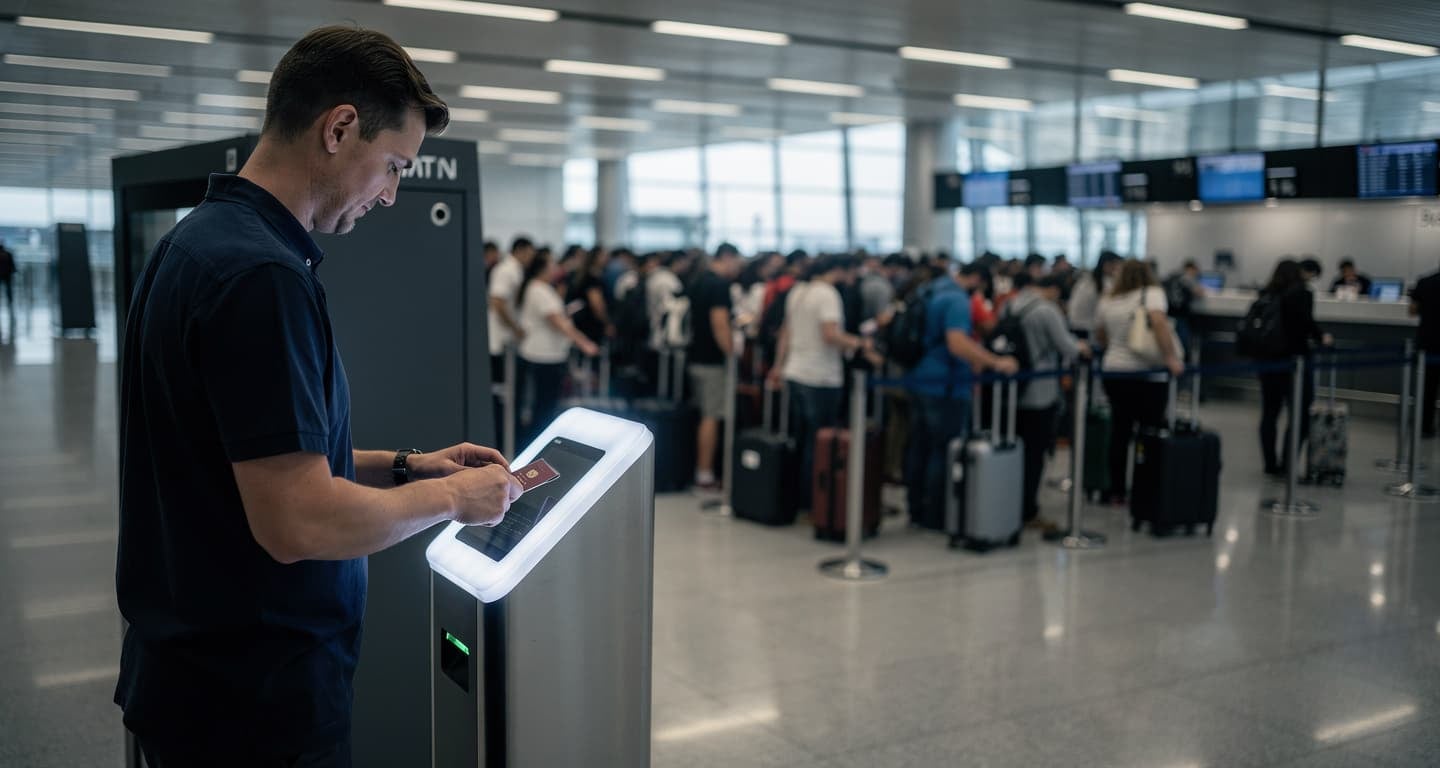
Paro International Airport has a new first impression to offer. Bhutan’s Department of Immigration switched on its Automated Immigration Clearance System at PBH on 20 February 2026, replacing fully manual processing with biometric e-gates for eligible international arrivals and departing passengers. The change is the most significant upgrade to Paro’s border infrastructure in years.
For travelers flying into Bhutan from Europe — where the journey already involves a long-haul connection through Druk Air or Bhutan Airlines via Delhi, Kathmandu, or Bangkok — a faster immigration lane is a genuine quality-of-life improvement at the end of a tiring trip. The old system was a known friction point: manual counters, limited staffing, and multiple flights landing in close succession created queues that could stretch well beyond the time it took to actually fly there.
The upgrade applies to both arriving and departing passengers at Paro. It does not affect land border crossings at Phuentsholing or other entry points — though those already have their own AICS installations. European travelers planning a Bhutan trip in 2026 can check current flight options to Bhutan from Europe alongside this new arrival experience.
Twelve e-gates, one minute per passenger: what the system actually does
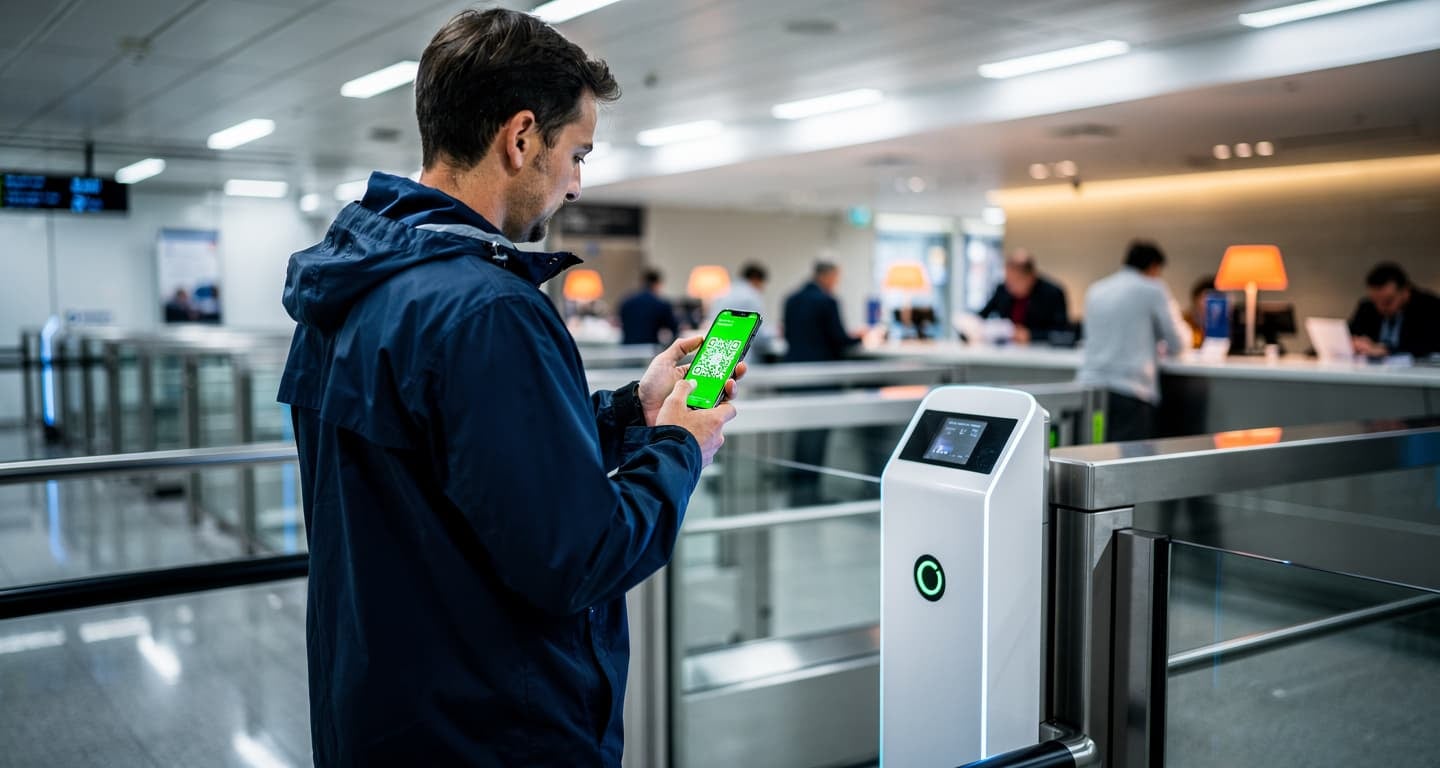
The AICS installation at Paro comprises 12 electronic gates — split evenly between the arrival and departure terminals. Each gate uses biometric verification and machine-readable passport scanning to authenticate identity, then runs automated checks against immigration databases. The Department of Immigration says this reduces human error and improves detection of fraudulent documents, not just queue length.
The time numbers are striking. Bhutan’s Home Minister confirmed that manual processing previously averaged 3–5 minutes per passenger. With e-gates, that figure falls to roughly 1 minute for eligible travelers. The Department of Immigration projects an overall 75% reduction in waiting times — a figure consistent with throughput data from the earlier Phuentsholing pedestrian terminal installation, where each automated lane clears one eligible individual every 4 seconds at peak capacity.
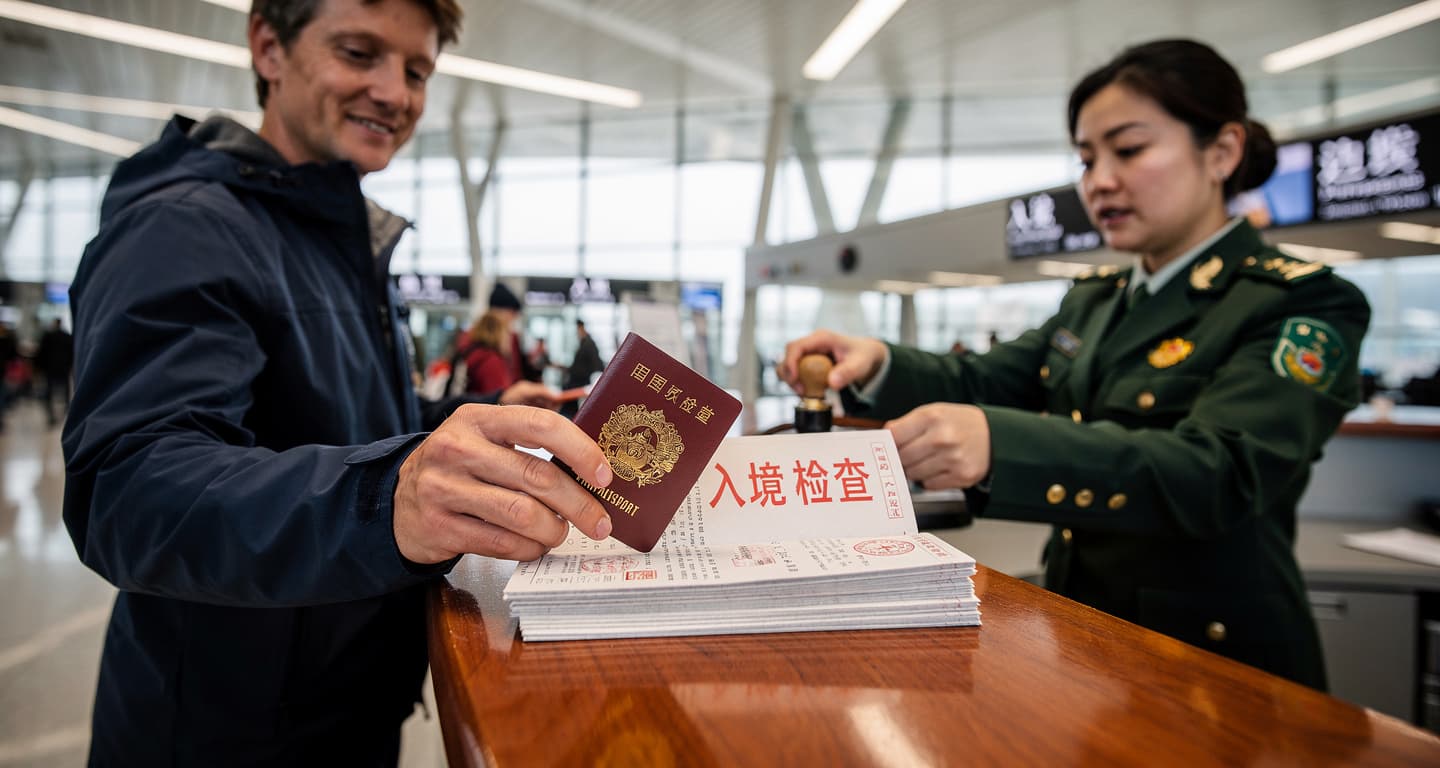
The system is described in the official Automated Immigration Clearance System press release from Bhutan’s Department of Immigration as augmenting — not replacing — existing manual counters. Staffed lanes remain open for those who cannot use e-gates.
| Factor | Before AICS | After AICS | Impact |
|---|---|---|---|
| Processing time per eligible passenger | 3–5 minutes | ~1 minute | Up to 75% faster |
| E-gate count (arrivals) | 0 | 6 | New self-service lanes |
| E-gate count (departures) | 0 | 6 | Faster outbound clearance |
| Biometric verification | Manual officer check | Automated facial recognition + passport scan | Reduced human error |
| Minors (under 18) | Manual counter | Manual counter (unchanged) | Families process together manually |
| Ineligible foreign visitors | Manual counter | Manual counter (unchanged) | No change for this group |
Flight deals
most people never see
Our AI monitors 150+ airlines for pricing anomalies that traditional search engines miss. Air Traveler Club members save $650 per trip per person on average: see how it works.
Each deal saves 40–80% vs. regular fares:

A digital arrival experience — and what comes next
AICS at Paro does not exist in isolation. It sits on top of Bhutan’s earlier shift to paperless visa processing, meaning visitors now encounter a more fully digital entry sequence: advance visa issuance online, biometric e-gate clearance on arrival, and automated record-keeping replacing paper logs. The arrival logjam that faster biometric e-gates at Paro Airport were specifically designed to address had previously prompted recommendations to space airline arrivals at least 30 minutes apart — a workaround that constrained scheduling flexibility.
The broader national rollout is funded at Nu 603 million (approximately USD 7 million). E-gates are already operating at Phuentsholing’s pedestrian terminal, and budget has been allocated to extend AICS to Gelephu and other designated entry ports before the end of Bhutan’s 13th Five-Year Plan.
More change is coming. At a government review meeting on 22 April 2026, Bhutan’s immigration authorities discussed introducing a Digital Arrival Card and an Electronic Travel Authorization (ETA) — signals that AICS is a foundation layer, not the finished product. For European travelers, that trajectory matters: pre-travel data submission could eventually determine e-gate eligibility before you even board.
How to make the most of Paro’s new e-gates
AICS is live and processing passengers, but eligibility gaps and early-stage teething issues mean the 75% time saving is not guaranteed for every traveler on every arrival.
- Confirm e-gate eligibility before you fly: Check the Department of Immigration website (doi.gov.bt) for your nationality and visa type. Foreign tourists on group visas should ask their licensed Bhutanese tour operator to clarify whether their visa category qualifies for e-gate processing.
- Keep your passport in good condition: AICS relies on machine-readable passport data. A damaged, demagnetized, or heavily worn passport chip will fail the automated scan and route you to a manual counter — negating the time saving entirely.
- Remove obstructions for facial recognition: Biometric matching requires a clear facial capture. Hats, heavy scarves, and non-medical face coverings can cause a mismatch. Have them off before you approach the gate.
- Travel with families? Plan for manual counters: Children under 18 are excluded from e-gate use. Families will process together at staffed counters, so the 1-minute figure does not apply to groups traveling with minors.
- Build in buffer time for the first year: System calibration, biometric enrollment gaps, and passenger unfamiliarity with e-gate procedures can create secondary queues even at automated lanes. Do not schedule a tight onward connection out of Paro assuming frictionless clearance.
Watch: Bhutan’s April 2026 government review flagged a Digital Arrival Card and ETA as active policy discussions. When either is formally announced, eligibility rules for Paro’s e-gates will likely be updated — and pre-travel data submission may become part of the process for foreign visitors.

Questions? Answers.
Do all foreign tourists qualify to use the e-gates at Paro International Airport?
Not automatically. Bhutan’s Department of Immigration states that foreign visitors must meet specific criteria — including being an adult and holding valid travel authorization — to use the e-gates. The department has not published a public nationality-by-nationality eligibility list. Travelers on group visas issued through licensed Bhutanese tour operators should confirm their eligibility directly with their operator or with the Department of Immigration before departure. Those who do not qualify are processed at staffed manual counters, which remain open.
Will traveling with children slow down immigration at Paro under the new system?
Yes. E-gate use at Paro is restricted to adults. Minors under 18 must use staffed immigration counters, and families will typically process together manually. The 1-minute processing time and 75% queue reduction figures apply only to eligible adult travelers using the e-gates — not to family groups. Build extra time into your arrival schedule if you are traveling with children.
Does the AICS change anything about Bhutan’s visa process or Sustainable Development Fee?
No. The Automated Immigration Clearance System handles identity verification and border clearance only. It does not alter Bhutan’s visa requirements, the Sustainable Development Fee (currently USD 100 per person per night for most international visitors), or the requirement to book travel through a licensed Bhutanese tour operator. Your visa and SDF payment must still be arranged in advance through the standard channels before you arrive at Paro.
What happens if the e-gate cannot verify my biometrics?
A failed biometric match — caused by a damaged passport chip, facial recognition obstruction, or a data mismatch — will redirect you to a staffed immigration counter for manual processing. The e-gates are designed to augment, not replace, manual border controls. Staff remain on duty to handle these cases. The practical consequence is that your clearance time reverts to the pre-AICS average of 3–5 minutes, so the time saving is lost for that individual. Ensuring your passport is undamaged and your face is clearly visible before approaching the gate reduces this risk.