Quick summary
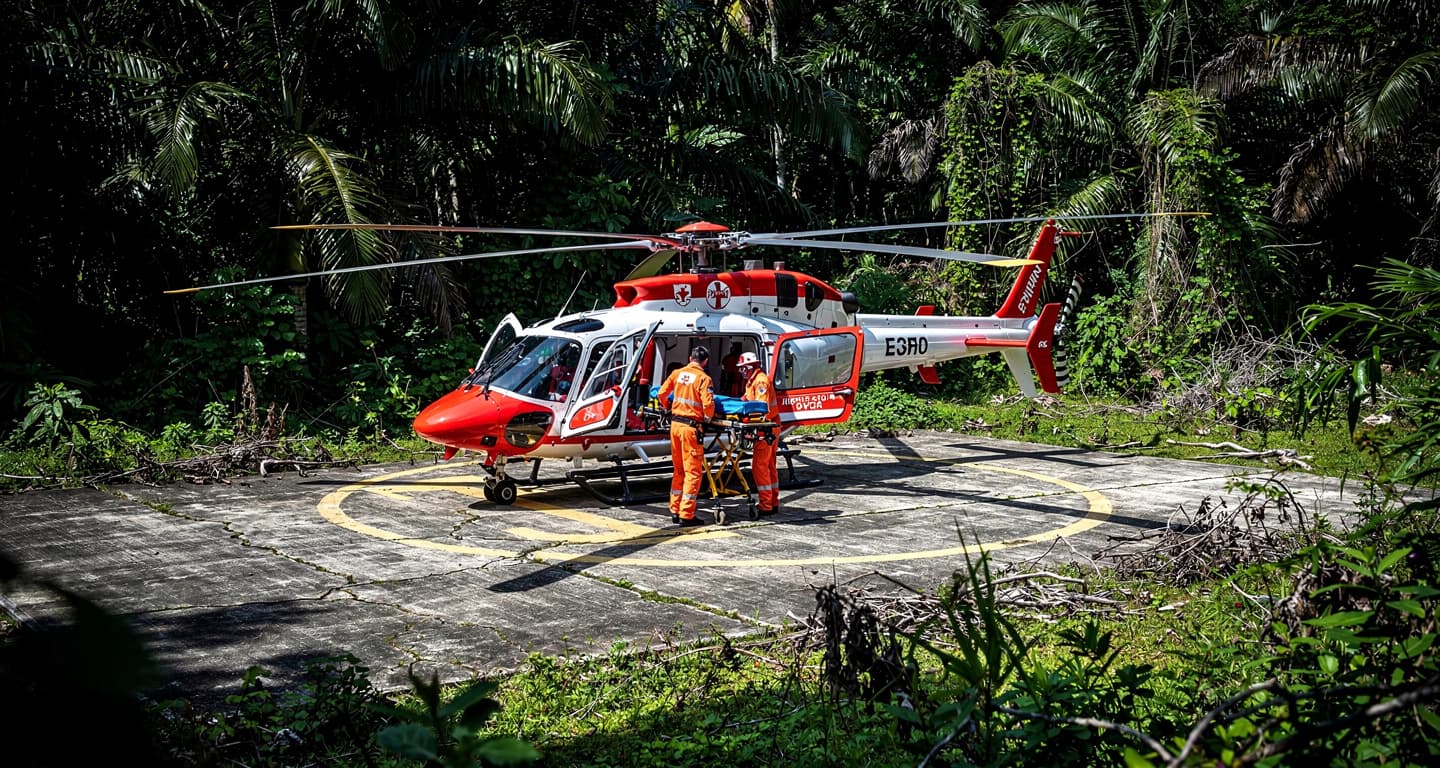
Munich Airport’s air traffic control tower was evacuated at 8:33 p.m. local time on Sunday, June 7, 2026, after controllers reported an intense smell of burning smoke inside the facility. Deutsche Flugsicherung immediately suspended all takeoffs and landings, triggering diversions, gate holds, and cascading cancellations across central Europe. Partial operations resumed around 10:15 p.m., but severe residual delays and schedule backlogs are expected to ripple into Monday morning.
Firefighters found no active fire inside the tower. Authorities are still inspecting ventilation and electrical systems to identify the odor source — and until that investigation closes, the disruption is not fully over.
Munich Airport went dark for air traffic control on Sunday evening, and the knock-on effects are still spreading. At 8:33 p.m. local time, controllers inside the tower reported a strong burning smell and the facility was immediately cleared. With no one in the tower, Deutsche Flugsicherung — Germany’s air traffic control authority — issued a NOTAM halting all inbound and outbound movements at MUC, Germany’s second-busiest airport.
Inbound aircraft were pushed into holding patterns, then systematically diverted to airports across Germany and central Europe. Outbound flights sat at gates. Passengers were stranded on the tarmac and in terminals with no clear timeline.
Emergency crews and airport firefighters responded quickly — and found no fire, no flames, no visible smoke. A police spokesperson described the situation as “highly unclear but managed.” That ambiguity is exactly what makes this disruptive: operations cannot fully normalize until investigators confirm what caused the smell and clear the tower for unrestricted use.
A partial resumption began around 10:15 p.m., with Lufthansa announcing a small number of late-night arrivals. But the evening’s bank of flights — a critical window for long-haul connections — was already broken. Travelers with Monday morning itineraries through Munich should not assume the schedule has recovered.
What the tower evacuation actually did to Munich’s schedule
The mechanics here matter. Munich operates on a banked schedule — waves of arrivals and departures timed to maximize connections. When the tower empties, the entire bank collapses simultaneously. Inbound aircraft that were holding or diverted cannot simply slot back in; they need new sequencing, crew rest calculations, and gate assignments. Outbound aircraft that missed their departure windows face curfew constraints and crew duty-time limits.
The roughly 100-minute suspension between the 8:33 p.m. evacuation and the partial 10:15 p.m. resumption hit the Sunday evening bank directly — one of the busiest windows for intercontinental arrivals feeding into Monday morning European connections. Confirmed reports show multiple inbound flights diverted and arrivals boards showing widespread delays across the network.
Authorities confirmed firefighters found no active fire or smoke inside the tower structure. The investigation is focused on ventilation and electrical systems. Until a cause is identified and cleared, controllers returning to full operations face uncertainty about whether the hazard has been resolved.
| Time (local) | Event | Traveler impact |
|---|---|---|
| 8:33 p.m. | Tower evacuated after burning smell reported by controllers | All takeoffs and landings suspended; NOTAM issued |
| 8:33–10:15 p.m. | Inbound flights held in patterns, then diverted; outbound held at gates | Passengers stranded on tarmac and in terminals across MUC |
| ~10:15 p.m. | Partial operations resumed; Lufthansa confirmed limited late arrivals | Severe residual delays; full schedule recovery not confirmed |
| Ongoing | Ventilation and electrical systems under inspection; cause unconfirmed | Monday morning connections at risk; ripple delays expected |
For travelers with Asia-Pacific itineraries routing through Munich — a common one-stop path for flights from Europe to East and Southeast Asia via Lufthansa‘s long-haul banks — the timing is particularly damaging. Sunday evening is a peak departure window for overnight flights to Tokyo, Bangkok, and Singapore. This is not Munich’s first major disruption this year; a Lufthansa pilot strike in April 2026 grounded over 800 flights and reduced hub capacity by 67%, demonstrating how quickly MUC’s schedule can fracture under pressure.
Official confirmation of the resumption and the investigation status is available via AFP reporting on the tower evacuation and firefighter findings.
Flight deals
most people never see
Our AI monitors 150+ airlines for pricing anomalies that traditional search engines miss. Air Traveler Club members save $650 per trip per person on average: see how it works.
Each deal saves 40–80% vs. regular fares:

Your rights — and your card — when an airport emergency grounds your flight
The critical question for EU-departure passengers is whether this qualifies as extraordinary circumstances under EU261/2004. A safety-driven tower evacuation — initiated by airport authorities, not the airline — is a strong candidate for that classification. If it holds, airlines owe passengers duty of care (meals, refreshments, hotel if overnight stay required, communication) but are likely exempt from the €250–€600 cash compensation bands that apply to delays within carrier control. Do not assume compensation is off the table entirely; file the claim and let the airline prove the exemption.
Premium credit cards add a parallel layer. Amex Platinum, Chase Sapphire Reserve, and Capital One Venture X all carry trip delay and trip interruption benefits — but only when the fare was charged to the card and the delay meets the policy threshold (typically 6–12 hours depending on issuer). If a diversion separated you from your bags, baggage delay coverage may also apply. File promptly: most issuers require claims within 60 days of the incident, and you will need boarding passes, delay documentation, and receipts.
Steps to take right now if MUC is in your itinerary
Monday morning connections through Munich are at elevated risk — the evening bank failure has not fully cleared, and the tower investigation is still open as of the last confirmed update.
- Check flight status immediately: Use the Lufthansa app, Eurowings app, or Munich Airport’s official live status page before heading to the airport. Do not rely on email notifications alone — they lag behind real-time gate changes.
- Request rebooking proactively: If your flight is cancelled or delayed more than 3 hours, ask your airline for rebooking onto Frankfurt (FRA) or Vienna (VIE) rather than waiting for a Munich slot. Carriers have discretion to accommodate this under EU261 duty-of-care obligations.
- Document everything for claims: Screenshot your delay notification, keep all receipts for meals and accommodation, and photograph your boarding pass. EU261 duty-of-care claims and credit card trip delay claims both require contemporaneous documentation — collect it now, not later.
- If diverted: Stay airside and wait for airline instructions before exiting the terminal. Diversions to Nuremberg, Salzburg, or Stuttgart are possible — ground transport back to Munich or onward connections will be arranged by the carrier, but only if you remain in the system.
- Check your card benefits: If your fare was charged to Amex Platinum, Chase Sapphire Reserve, or Capital One Venture X, review your trip delay and interruption coverage thresholds now. Claims must typically be filed within 60 days.
Watch: Munich Airport and Deutsche Flugsicherung are expected to release an incident update once the tower inspection concludes. If the odor source is confirmed as a minor equipment fault or false alarm, schedule recovery should accelerate through Monday. If inspectors identify a ventilation or electrical issue requiring remediation, expect further intermittent restrictions and continued knock-on delays across the morning bank.

Questions? Answers.
Is Munich Airport fully open again after the tower evacuation?
A partial resumption began around 10:15 p.m. local time on June 7, but the investigation into the odor source was still ongoing as of the last confirmed update. Full unrestricted operations depend on inspectors clearing the tower’s ventilation and electrical systems. Travelers should check Munich Airport’s live status page before heading to the airport on Monday.
Am I entitled to compensation under EU261 for this disruption?
Possibly, but not automatically. A safety-driven tower evacuation initiated by airport authorities is likely to be classified as extraordinary circumstances, which exempts airlines from the €250–€600 cash compensation bands. However, airlines still owe duty of care — meals, refreshments, hotel accommodation if an overnight stay is required, and communication. File a claim with your airline regardless; the burden is on the carrier to prove the extraordinary circumstances exemption applies.
Which airports are the best alternatives to Munich right now?
Frankfurt (FRA) is the strongest alternative — it is Lufthansa’s primary hub and has deeper network connectivity than any other German airport. Vienna (VIE) and Zurich (ZRH) are viable for central European connections. Nuremberg, Salzburg, and Stuttgart are geographically closer to Munich but have significantly thinner route networks and are better suited as diversion landing points than as rebooking hubs.
What should I do if my inbound flight was diverted to another airport?
Stay airside and wait for your airline’s gate agents to provide instructions before exiting the terminal. Your carrier is responsible for arranging onward transport or connections from the diversion airport. If you leave the airport system without airline authorization, you may lose your rebooking entitlement. Document the diversion with screenshots and keep all receipts for any expenses incurred.