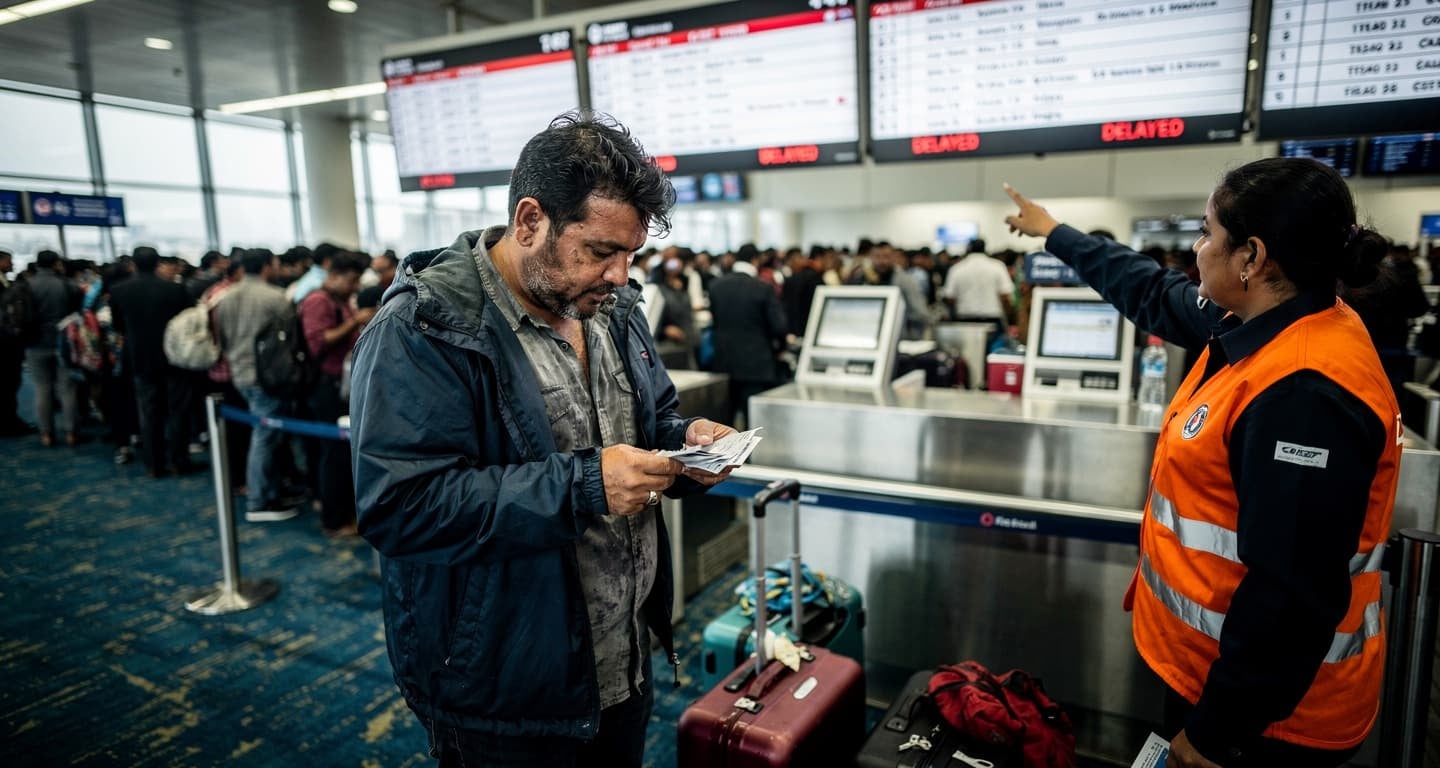
Quick summary
Global airlines suspended flights across the Middle East on February 28, 2026, after the United States and Israel launched coordinated strikes on Iran targeting military sites in Tehran, Isfahan, Qom, Karaj, and Kermanshah. Iran retaliated with approximately 35 missiles at Israel and struck 14 US bases in Bahrain, UAE, Kuwait, Jordan, and Saudi Arabia by 5:42 AM ET. Qatar Airways, Emirates, Lufthansa, Etihad, and British Airways canceled routes over Iraq, Iran, and Gulf states as airspace closures persist with no end date set for the ongoing campaign.
Travelers face immediate cancellations and rebooking chaos as the conflict continues to unfold. This article covers the strike details, airline responses, affected routes, and urgent steps to rebook or reroute travel.
Thousands of travelers woke Saturday to canceled flights and closed airspace after the US and Israel launched Operation Shield of Judah, a coordinated military campaign targeting Iranian military infrastructure. The strikes hit Tehran’s Supreme Leader compound, the presidential palace, and missile sites across five cities, triggering immediate Iranian retaliation and forcing airlines to suspend operations across the region.
If you have a flight booked through the Middle East in the next 72 hours, assume it will not operate as scheduled. Iraq’s flight information region closed entirely. Gulf carriers rerouted Europe-Asia traffic. US-originated flights to Dubai, Doha, and Abu Dhabi face indefinite delays.
The conflict affects travelers on routes between Europe and Asia-Pacific, North America and the Gulf, and any itinerary transiting Iraqi or Iranian airspace. Airlines issued waivers, but rebooking windows are narrow and alternative routings via India or Turkey are filling fast.
What happened and why flights stopped
US President Trump announced the strikes via video on February 28, 2026, stating goals include ending Iran’s nuclear program, dismantling its missile arsenal and navy, and regime change. Israel’s IDF reported hitting hundreds of military sites in western Iran to degrade retaliation capacity. The campaign remains ongoing with no declared end date.
Iran responded by 5:42 AM ET with approximately 35 Emad and Ghadr missiles targeting Israel and 14 US military bases across Bahrain, UAE, Kuwait, Jordan, and Saudi Arabia. The UN Security Council convened an emergency session, with Secretary-General Guterres warning of a “grave threat to international peace.” Iran’s representative called the strikes “war crimes.”
Airlines suspended flights as airspace over Iraq, Iran, and parts of the Gulf became militarily active. Qatar Airways, Emirates, Lufthansa, Etihad, and British Airways canceled Middle East routes. FlightAware data showed zero commercial traffic over Iraq’s FIR by midday Saturday. Carriers rerouted Europe-Asia flights via India and Turkey, adding 90-120 minutes to flight times and straining alternate corridors.
This escalation revives tactics from the June 2025 Israel-Iran conflict but adds explicit US regime-change objectives and joint operations beyond nuclear sites. The buildup began January 23 when Trump deployed the USS Abraham Lincoln carrier strike group and signaled regime-change intent on February 13. The timing coincides with Israel’s election year and deepening Trump-Netanyahu coordination, raising risks of wider Gulf state involvement. For context on regional travel risks, see the Syria Level 4 Do Not Travel advisory, which remains active alongside Iran’s longstanding warning.
Flight deals
most people never see
Our AI monitors 150+ airlines for pricing anomalies that traditional search engines miss. Air Traveler Club members save $650 per trip per person on average: see how it works.
Each deal saves 40–80% vs. regular fares:

Which airlines and routes are affected
Qatar Airways canceled all Doha-Europe flights scheduled for February 28-29 and suspended Doha-Tehran indefinitely. Emirates grounded Dubai-London, Dubai-Frankfurt, and Dubai-Singapore departures through March 2. Lufthansa pulled Frankfurt-Dubai and Munich-Doha until further notice. Etihad suspended Abu Dhabi-Paris and Abu Dhabi-Sydney. British Airways canceled London-Dubai through March 1.
US carriers operating Gulf routes — including United’s Newark-Dubai and American’s Dallas-Doha — issued travel waivers allowing free rebooking through March 7. FAA NOTAMs prohibit US-registered aircraft from entering Iraqi and Iranian airspace until at least March 3, with extensions likely as strikes continue.
Asia-Pacific travelers face the widest disruption. Singapore Airlines, Cathay Pacific, and Thai Airways rerouted Europe-bound flights via India, adding fuel stops in Mumbai or Delhi. Australia-Europe itineraries via the Gulf now require rebooking onto longer southern routes or accepting 6-12 hour delays. Air Traveler Club’s flight search shows alternate routings, though availability tightens as demand surges for India and Turkey transits.
The 2025 precedent
June 2025’s Israel-Iran air campaign closed Gulf airspace for 11 days, stranding 40,000 passengers and costing airlines an estimated $280 million in diversions and cancellations. That conflict involved Israeli strikes on Iranian nuclear facilities but no US ground coordination. The current operation’s explicit regime-change goal and multi-base Iranian retaliation suggest a longer disruption window.
What to do if your flight is affected
- Check flight status now — Use FlightAware or Flightradar24 to confirm your flight’s real-time status. Airlines are canceling with as little as 2-4 hours notice as airspace restrictions shift.
- Rebook immediately via airline apps — Qatar Airways, Emirates, Etihad, and British Airways issued waivers through March 7 for free changes. Alternate routings via India (Mumbai, Delhi) and Turkey (Istanbul) are filling fast; book the first available option even if timing is suboptimal.
- Monitor FAA NOTAMs if flying from the US — The FAA updates airspace restrictions every 6-12 hours at notams.aim.faa.gov. US-originated flights to the Gulf will not resume until the NOTAM lifts.
- Avoid new bookings on Middle East routes until the UN Security Council issues a ceasefire statement or airlines confirm airspace reopening. The campaign has no declared end date.
Questions? Answers.
Are flights to Dubai, Doha, and Abu Dhabi safe to book for next week?
No. The military campaign has no end date, Iranian retaliation continues, and airspace closures persist. Airlines are issuing waivers through March 7, but that does not guarantee operations will resume. Wait for a UN ceasefire statement or airline confirmation that Gulf airspace is stable before booking.
Will my travel insurance cover cancellations due to military strikes?
Standard policies exclude “acts of war” unless you purchased a Cancel For Any Reason (CFAR) rider before the strikes began. If you booked after February 28, the conflict is a known event and most policies will not cover it. Check your policy’s war/terrorism exclusions and contact your insurer immediately.
How long did the June 2025 Israel-Iran conflict disrupt flights?
Gulf airspace closed for 11 days in June 2025, stranding 40,000 passengers. That conflict involved Israeli strikes on Iranian nuclear sites but no US coordination or regime-change objective. The current operation’s scope suggests a longer disruption window, potentially 14-21 days or more if retaliation escalates.
Can I reroute through India or Turkey instead of the Gulf?
Yes, but availability is limited. Singapore Airlines, Cathay Pacific, and Thai Airways are rerouting Europe-Asia flights via Mumbai and Delhi, adding 90-120 minutes to flight times. Turkish Airlines via Istanbul is another option. Book immediately — alternate routings are filling as thousands rebook simultaneously.
What if I’m already in the Middle East and need to leave?
Contact your airline immediately for the next available outbound flight on any route. Embassies in Bahrain, UAE, Kuwait, and Qatar are issuing departure advisories for non-essential travelers. If commercial options are unavailable, register with your embassy’s crisis management system for potential evacuation coordination.