Quick summary
Max Air, Nigeria’s fourth-largest airline by passenger volume, has been grounded after the Aviation Ground Handlers Association of Nigeria (AGHAN) suspended all ground handling services on June 12, 2026, citing unpaid debts exceeding ₦1 billion (approximately US$735,000). All domestic flights across roughly a dozen Nigerian destinations and two international routes to Saudi Arabia are canceled, with immediate impact on travelers and Nigerian Hajj pilgrims holding Max Air tickets.
AGHAN’s chairman confirmed Max Air refused to enter debt negotiations — unlike other Nigerian carriers currently in arrears. Thousands of Hajj pilgrims face the most acute disruption, as government-financed pilgrimage slots are time-critical and cannot simply be rebooked independently.
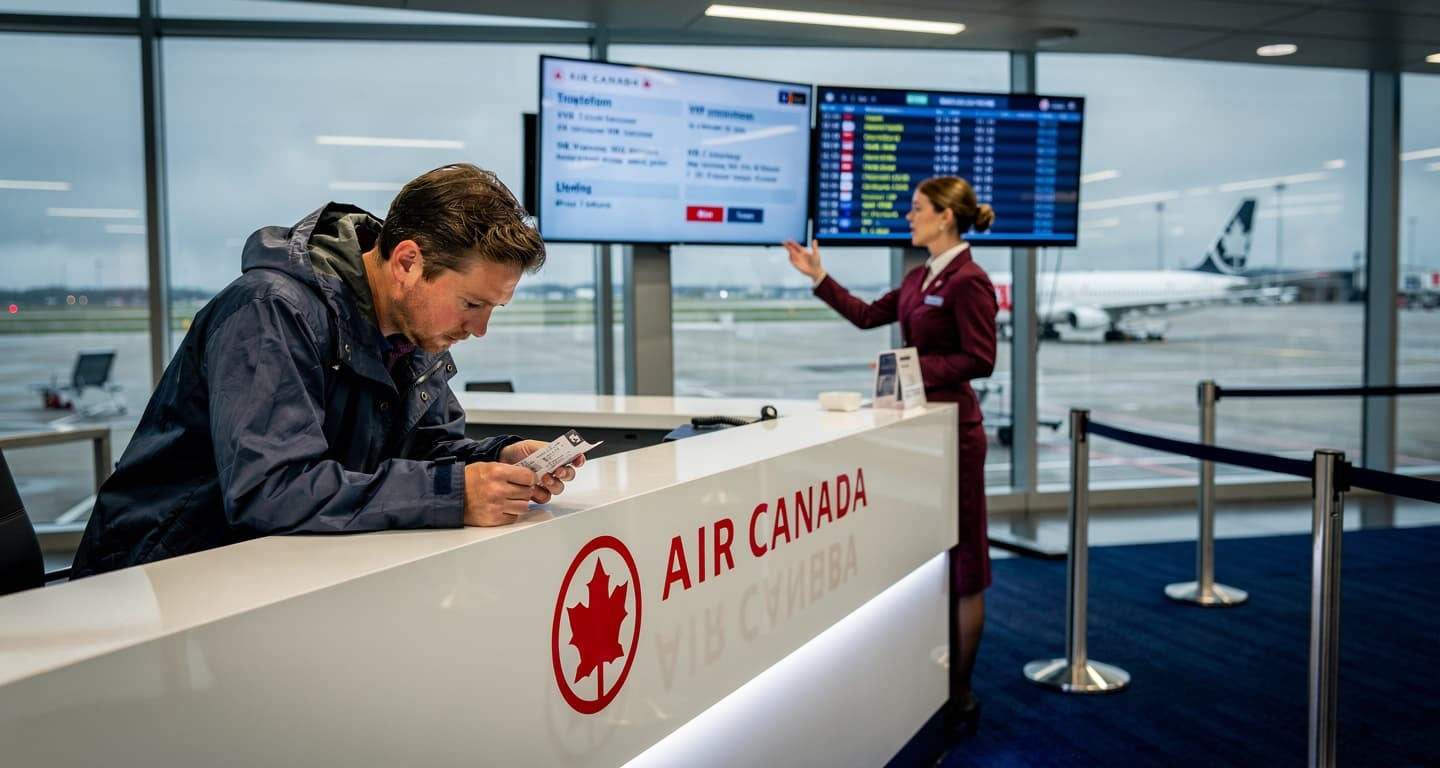
Max Air‘s entire operation went dark on June 12, 2026. No bags loaded. No passengers boarded. No aircraft turned. When AGHAN pulled its ground handling teams, the airline’s 11-plane fleet — predominantly Boeing 737s — became inert metal sitting on Nigerian tarmacs.
The trigger was a debt the airline apparently had no intention of addressing. AGHAN Chairman Olaniyi Adigun stated publicly that while nearly every Nigerian carrier is running arrears due to surging fuel costs, Max Air alone refused to come to the table. “Max Air has blatantly refused to negotiate with the handling companies,” Adigun said. That refusal ended the airline’s ability to operate — legally and practically — overnight.
The fallout is immediate and uneven. Domestic travelers on north–south trunk routes out of Mallam Aminu Kano International Airport face a scramble for seats on Air Peace, Ibom Air, and Dana Air — carriers that will fill fast and price accordingly. For Nigerian Hajj pilgrims, the situation is more serious: government-financed pilgrimage flights to Saudi Arabia are timed to specific religious windows, and missing them is not a scheduling inconvenience. It is a year-long wait.
Max Air has not issued a public statement. There is no restart date. There is no compensation framework. What exists right now is a grounded airline, stranded passengers, and a debt dispute with no visible resolution timeline.
What the AGHAN suspension actually means for Max Air passengers
Ground handling is not optional infrastructure. Without it, an airline cannot legally or operationally turn a single flight — no baggage loading, no fueling coordination, no passenger boarding, no pushback. AGHAN’s withdrawal of services is a total operational shutdown by another name, and it happened with the kind of abruptness that left passengers mid-journey or already at departure gates.
Regulatory filings and prior coverage confirm Max Air has been here before. The Nigeria Civil Aviation Authority previously ordered Max Air to suspend Boeing 737 operations pending a safety audit after multiple incidents involving its fleet — a pattern that signals this airline’s operational stability has been a concern well before the current debt crisis. A prior network-wide shutdown also ended after roughly 48 hours following stakeholder intervention, which is the closest thing to a precedent here. That restart came quickly. This one may not.
The debt figure itself — ₦1 billion, or roughly US$735,000 — is not enormous by global aviation standards, but in the context of Nigeria’s fuel-cost environment and currency pressures, it reflects a carrier that has been running on fumes financially. Jet fuel prices in Nigeria have surged dramatically in the wake of broader regional disruptions, and Max Air is far from alone in accumulating ground handler arrears. The difference, as AGHAN made explicit, is that every other debtor airline is negotiating. Max Air went silent.
| Factor | Before suspension | After AGHAN withdrawal | Passenger impact |
|---|---|---|---|
| Domestic network | ~12 Nigerian destinations | Zero flights operating | Passengers must rebook on Air Peace, Ibom Air, Dana Air |
| International routes | 2 routes to Saudi Arabia (Hajj) | Suspended indefinitely | Pilgrims must contact NAHCON for reallocation |
| Fleet status | 11 aircraft (primarily Boeing 737) | Grounded at Nigerian airports | No operational capacity available |
| Ground handling | AGHAN member services | Fully withdrawn | No legal basis to operate any flight |
| Debt in dispute | Ongoing arrears | >₦1 billion (~US$735,000) | No restart until settlement or intervention |
Flight deals
most people never see
Our AI monitors 150+ airlines for pricing anomalies that traditional search engines miss. Air Traveler Club members save $650 per trip per person on average: see how it works.
Each deal saves 40–80% vs. regular fares:

Why Nigerian airlines keep hitting this wall
This is not a Max Air-specific story. It is a Nigerian aviation story that Max Air happened to lose first. AGHAN’s chairman was explicit: almost every Nigerian carrier is in arrears to ground handlers right now. The fuel cost shock — accelerated by regional supply disruptions tied to the Iran conflict — has hit Nigerian operators with particular severity, compounding a pre-existing currency crisis that makes dollar-denominated costs like jet fuel and aircraft leases punishing to service in naira.
What separates Max Air from its peers in this moment is not the size of the debt. It is the refusal to negotiate. Ground handlers extended informal credit to keep the aviation system moving; when one airline stops engaging entirely, the association has no choice but to make an example. “This action should serve as a signal to other airlines,” Adigun said — and that is precisely the point. The suspension is as much a warning to the rest of the industry as it is a consequence for Max Air.
The broader pattern is worth noting for anyone tracking airline risk in emerging markets: this is the same fuel-cost pressure that led Lufthansa to ground 31 aircraft across European routes earlier this year. The mechanism differs — a European major idling capacity versus a Nigerian regional losing ground services — but the underlying force is identical.
Steps to take if you hold a Max Air booking
Max Air has no operational flights and no published restart date as of June 12, 2026 — every action below needs to happen within the next 24 hours.
- If you have a future Max Air booking: Contact your issuing channel — Max Air ticket office, online agency, or travel agent — and request written confirmation of cancellation. Do not assume the ticket is automatically refunded. Simultaneously search same-day or near-term alternatives on Air Peace, Ibom Air, and Dana Air from your origin airport and book before inventory tightens further.
- If you are a Hajj pilgrim ticketed on Max Air: Contact your State Pilgrims Welfare Board or the National Hajj Commission of Nigeria (NAHCON) within 24 hours to confirm revised arrangements. Do not self-rebook international Hajj segments — group visas and departure slot allocations are centrally managed, and acting independently could complicate your official placement on an alternative carrier.
- If you are already at the airport with a same-day Max Air ticket: Go to the Max Air counter if staffed and request a written disruption notice. Simultaneously check same-day availability at other airline desks. If you paid with a major credit card — Amex Platinum, Chase Sapphire Reserve, or equivalent — keep all receipts and disruption documentation to support a trip interruption or chargeback claim through your card issuer’s benefits administrator.
- If you paid by credit card for any Max Air ticket: Download your card’s travel benefit guide today and file a preliminary claim for trip cancellation or interruption. Nigerian consumer protection rules do not provide the structured compensation framework of EU261 or US DOT regulations — your credit card is likely your most reliable financial recourse here.
- If you are planning future travel involving Max Air: Treat the airline as unavailable for all near-term bookings. Do not purchase new Max Air tickets until a formal debt settlement and restart date are publicly confirmed by both AGHAN and the airline.
Watch: An official statement from Max Air or AGHAN confirming a debt settlement and resumption timetable — if one emerges in the next 48–72 hours, a partial restart is plausible, as it has happened before. If no deal surfaces by end of this week, rebook on alternative carriers and treat Max Air as unavailable through the Hajj season. Any NCAA directive imposing additional conditions on Max Air’s restart would extend that timeline further.

Questions? Answers.
Will Max Air refund my ticket automatically?
Do not expect an automatic refund. Nigerian consumer protection rules for airline financial shutdowns are not codified the way EU261 or US DOT rules are — there is no fixed compensation table or mandatory refund timeline. Your most reliable route is a chargeback through your credit card issuer if you paid by card, or a formal refund request through your travel agent or the Max Air ticket office with written documentation of the cancellation.
How do Hajj pilgrims get reallocated if Max Air cannot fly them?
Reallocation runs through official channels — specifically the National Hajj Commission of Nigeria (NAHCON) and individual State Pilgrims Welfare Boards. These bodies coordinate group visas, departure slot allocations, and approved carrier assignments centrally. Pilgrims should not attempt to self-rebook international Hajj segments, as doing so independently can conflict with group visa arrangements. Contact your state board within 24 hours for written confirmation of revised arrangements.
Could Max Air restart quickly, as it has done before?
It is possible but not guaranteed. A prior Max Air network-wide shutdown resolved in roughly 48 hours after stakeholder intervention. However, that stoppage was self-imposed for operational reasons — this one is externally enforced by AGHAN over a debt dispute the airline has refused to negotiate. A restart requires Max Air to either settle the debt or reach a formal repayment agreement with ground handlers. Until AGHAN publicly confirms a deal, no restart is operationally possible regardless of what the airline announces.
Are other Nigerian airlines at risk of the same fate?
AGHAN’s chairman confirmed that almost all Nigerian carriers are currently in arrears to ground handlers due to surging fuel costs. The difference is that other airlines are actively negotiating repayment terms. AGHAN has explicitly framed the Max Air action as a warning to the broader industry. Carriers that stop engaging with creditors face the same outcome — but those in active negotiation are, for now, continuing to operate.