Quick summary
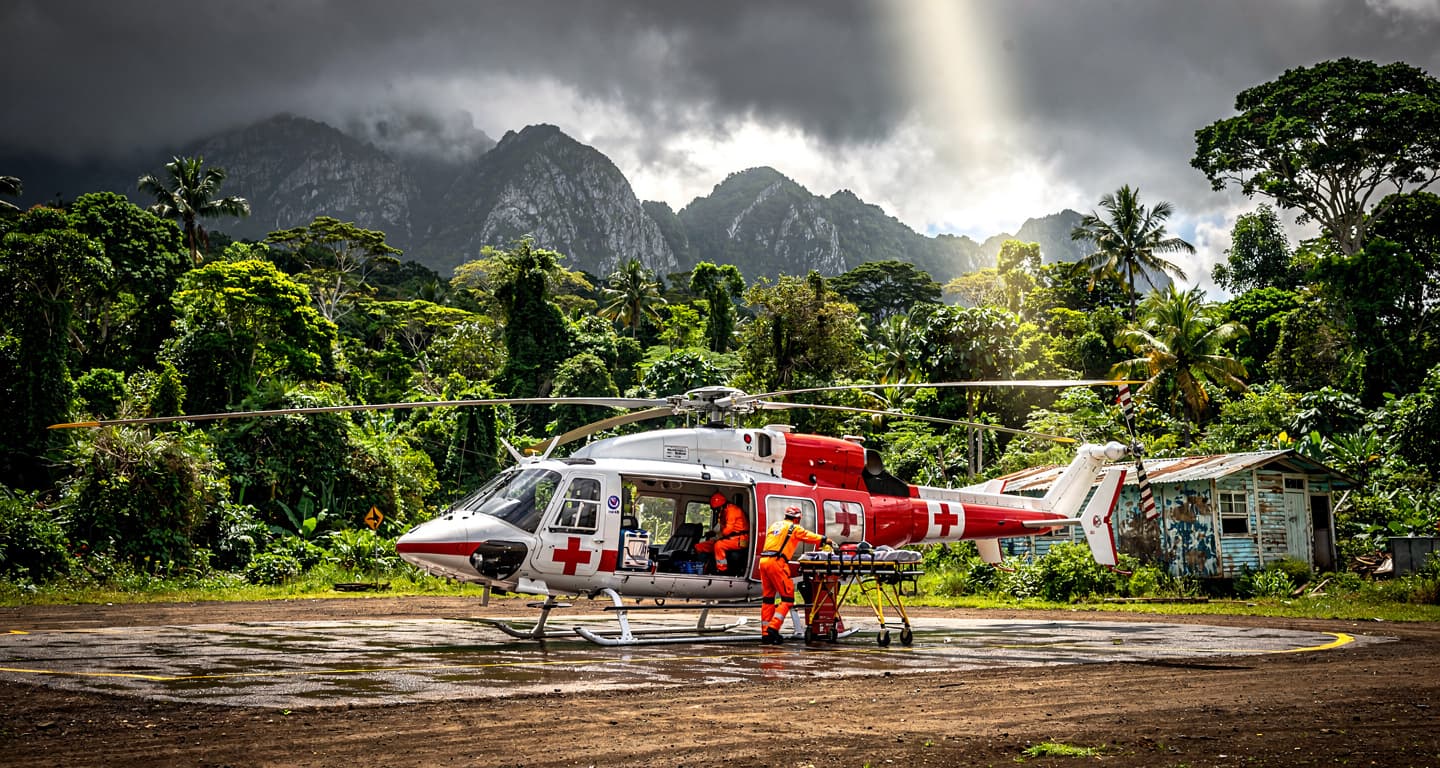
The nose landing gear of a Lufthansa Boeing 787-9 collapsed at a gate at Frankfurt Airport on Thursday, June 4, 2026, at approximately 12:45 p.m. local time, injuring several airline employees and forcing the cancellation of flight LH450 to Los Angeles. No passengers had boarded. The aircraft’s nose dropped forward and struck the ground; the damaged widebody has been taken out of service while Lufthansa, Boeing, and German aviation authorities investigate the cause.
The collapse removes one long-haul widebody from Lufthansa‘s operational fleet immediately and blocks a contact stand at FRA. Passengers rebooked on later services may face tight connection margins as the airline adjusts its long-haul schedule across the hub.
A nose-gear failure at a gate is not a runway incident — it is a maintenance and structural event, and that distinction matters for what happens next.
Lufthansa‘s 787-9, positioned at a Frankfurt gate and preparing to operate the FRA–LAX rotation as LH450, suffered a complete nose-gear collapse just before boarding. The front of the aircraft dropped forward, the nose contacted the ground, and crew members and ground staff on board were injured. Passengers had not yet been allowed to board — a detail that almost certainly prevented a far worse outcome.
The airline confirmed the injuries, said affected employees were receiving medical care, and cancelled the Los Angeles flight. Boeing confirmed it is aware of the incident and is supporting Lufthansa in the investigation, which will examine maintenance records and system logs to determine what caused the gear to fail while the aircraft was stationary.
For travelers at FRA today and over the coming days, the immediate question is not what caused the collapse — investigators will work that out — but what it means for a schedule built around one of Europe’s busiest intercontinental hubs.
What the collapse means for Frankfurt operations
Frankfurt Airport is Lufthansa‘s primary global hub, handling extensive long-haul connections to North America, Asia-Pacific, and beyond. Removing a 787-9 from the active fleet at short notice forces the airline to either cancel the affected rotation outright — which it has done for LH450 — or source a replacement aircraft from elsewhere in the widebody pool, pulling capacity from another route in the process.
The blocked contact stand adds a secondary complication. Emergency services and investigators must secure the scene before normal ground operations can resume at that position, which can slow turnaround and boarding processes in the affected pier. Travelers with tight connections at FRA today should treat their margins as compressed until Lufthansa confirms the stand is clear and operations have stabilized.
Boeing‘s involvement in the investigation is standard procedure for a structural event of this type. The company’s engineering teams will work alongside Lufthansa‘s maintenance division and German accident investigators to trace whether the failure is isolated to this airframe or points to something broader. That determination will take time — days to weeks, not hours.
This incident follows a pattern of ground-level structural events that have drawn renewed scrutiny to widebody maintenance procedures. Earlier this year, a United Airlines Boeing 767 struck a vehicle during approach to Newark, triggering parallel FAA and NTSB investigations — a reminder that aviation safety inquiries increasingly span both airborne and ground-handling environments.
| Factor | Detail | Status |
|---|---|---|
| Aircraft type | Boeing 787-9 Dreamliner | Removed from service |
| Flight affected | LH450, Frankfurt (FRA) to Los Angeles (LAX) | Cancelled |
| Time of incident | Approx. 12:45 p.m. local time, June 4, 2026 | Confirmed |
| Passengers on board | None — crew and ground staff only | Confirmed |
| Injuries | Several Lufthansa employees; medical care provided | Confirmed |
| Investigation lead | Lufthansa, Boeing, German BFU, EASA | Ongoing |
| Gate stand | Blocked pending scene clearance at FRA | Ongoing |
Full confirmed details are available in the Reuters incident report.
Flight deals
most people never see
Our AI monitors 150+ airlines for pricing anomalies that traditional search engines miss. Air Traveler Club members save $650 per trip per person on average: see how it works.
Each deal saves 40–80% vs. regular fares:

How regulators and investigators will handle this
A nose-gear collapse on a parked aircraft triggers a specific regulatory chain. Lufthansa, as a German carrier, operates under the oversight of the Luftfahrt-Bundesamt (LBA) and the European Union Aviation Safety Agency (EASA). Both bodies certify aircraft and maintenance systems under EU aviation safety rules — specifically Part-21 and Part-M/Part-CAMO frameworks, which govern how landing gear systems are designed, inspected, and maintained.
The primary accident investigation falls to Germany’s Bundesstelle für Flugunfalluntersuchung (BFU), the national body responsible for aviation accident and serious incident investigations. The BFU will examine maintenance logs, component service histories, and design data. The central question: is this an isolated maintenance error on one airframe, or does it point to a systemic issue with the 787’s nose-gear design or a specific component batch?
That distinction has fleet-wide implications. If investigators identify a systemic concern, EASA could issue an Airworthiness Directive requiring inspections across all 787 operators — which would mean short-notice maintenance windows, potential equipment swaps, and rolling delays well beyond Lufthansa. An isolated finding keeps the disruption contained to this aircraft.
Passenger rights under EU Regulation 261/2004 still apply to the care obligations — meals, accommodation, and rebooking — regardless of cause. However, if Lufthansa classifies the collapse as an extraordinary circumstance, the EUR 600 long-haul compensation payment for cancellation may not be owed. Rerouting and care duties are non-negotiable either way.
Steps to protect your trip right now
The LH450 cancellation is confirmed and the stand at FRA remains disrupted — act on your booking before rebooking inventory tightens.
- Check your flight status immediately: Use lufthansa.com/flightstatus or the Lufthansa app. If your flight shows cancelled or significantly delayed, the online rebooking tool is the fastest first step — phone queues will be long.
- Request Star Alliance rerouting if needed: Lufthansa agents can rebook affected passengers onto United Airlines, Swiss, or Austrian Airlines services. Ask specifically for rerouting via Munich (MUC), Zurich (ZRH), or Vienna (VIE) if FRA options are exhausted.
- Document everything for EU261 care claims: Keep receipts for meals, accommodation, and transport incurred because of the cancellation. Lufthansa must cover these costs regardless of whether compensation is owed. File claims via lufthansa.com/customer-relations.
- Check your credit card travel protections: Cards such as the Amex Platinum, Chase Sapphire Reserve, Citi Prestige, and Capital One Venture X carry trip cancellation and delay protections that can cover non-refundable expenses when tickets were purchased on the card. Gather your airline cancellation notice before filing.
- If connecting through FRA on a separate ticket: You are not automatically protected under EU261 for a misconnection caused by a separate booking. Speak to transfer desks proactively — do not wait for your original flight to formally cancel.
Watch: The BFU‘s initial statement on the nose-gear collapse — expected within days to weeks — will indicate whether this is an isolated maintenance event or a systemic concern. If EASA follows with an Airworthiness Directive on 787 nose-gear components, expect short-notice inspections and equipment swaps across multiple carriers operating the type.

Questions? Answers.
Was anyone on board when the nose gear collapsed?
Only Lufthansa crew members and ground staff were on board at the time. No passengers had boarded flight LH450 when the nose gear failed at approximately 12:45 p.m. local time on June 4, 2026. Several employees were injured and received medical care.
Am I entitled to EUR 600 compensation if I was booked on LH450?
Not automatically. Under EU Regulation 261/2004, airlines can classify a safety-related technical failure as an extraordinary circumstance, which removes the obligation to pay the EUR 600 long-haul cancellation compensation. However, Lufthansa‘s duty to rebook you or offer a full refund, and to provide meals and accommodation where necessary, applies regardless of cause. File a claim and let Lufthansa justify any denial in writing.
Should I be concerned about flying on a Boeing 787 after this incident?
The 787 Dreamliner has an extensive global operational record. A nose-gear collapse at a gate is a serious incident, but investigators — led by Germany’s BFU with EASA oversight — will determine whether the cause is specific to this aircraft’s maintenance history or indicative of a broader concern. If a systemic issue is found, EASA has the authority to issue an Airworthiness Directive requiring fleet-wide inspections before further flight. Until that determination is made, no broader operational restrictions are in place.
What alternative routings exist for FRA–LAX passengers?
Lufthansa Group hubs at Munich (MUC) and Vienna (VIE via Austrian Airlines), plus Zurich (ZRH via Swiss), all offer transatlantic services to Los Angeles or nearby US gateways. Star Alliance partners including United Airlines operate additional LAX-bound frequencies that Lufthansa agents can access for rebooking on a single ticket.