Quick summary
A woman infected with the Andes strain of hantavirus boarded KLM flight KL-592 at Johannesburg O.R. Tambo International Airport in late April 2026 before crew removed her due to visible illness. She died the following day at a Johannesburg hospital. Dutch health authority RIVM has since launched contact tracing for all passengers and crew on KL-592 — including codeshare bookings under Air France AF08282, Delta Air Lines DL-9560, and SAS SK-6855 — as well as the Airlink regional flight that brought the woman from St Helena to Johannesburg.
Three people connected to the outbreak have now died. The Andes strain is one of the few hantavirus variants capable of limited human-to-human transmission — which is why every name on those manifests matters.
A fatal hantavirus case has triggered an international aviation contact tracing operation after a visibly ill woman briefly boarded a packed KLM Royal Dutch Airlines widebody at Johannesburg in late April 2026. Crew on KL-592 — a nonstop service to Amsterdam Schiphol — identified her condition before departure and refused boarding. She died at a Johannesburg hospital the following day. Confirmation of Andes strain hantavirus came nine days later via PCR testing, setting off urgent alerts from KLM and the Dutch RIVM on May 6, 2026.
If your name is on the KL-592 manifest — or on the Airlink flight from St Helena that brought her to Johannesburg — you are now part of an active WHO-coordinated tracing operation. Check your email and SMS immediately.
The outbreak traces back to the Dutch-flagged cruise ship MV Hondius, which departed Ushuaia, Argentina, on April 1. The woman’s husband fell ill within days of sailing and died on April 11. The woman herself was symptomatic by April 24 when she accompanied his body ashore at St Helena and boarded an Airlink regional jet to Johannesburg — a flight carrying 82 passengers and 6 crew, all of whom are now subject to contact tracing. A third death, a female passenger aboard the ship, was reported on May 2. A male passenger remains in intensive care at a South African hospital.
No flights have been cancelled. The JNB–AMS route continues to operate. But the tracing net is wide, the virus is rare, and the stakes for anyone on those manifests are not abstract.
What happened on KL-592 — and who is being traced
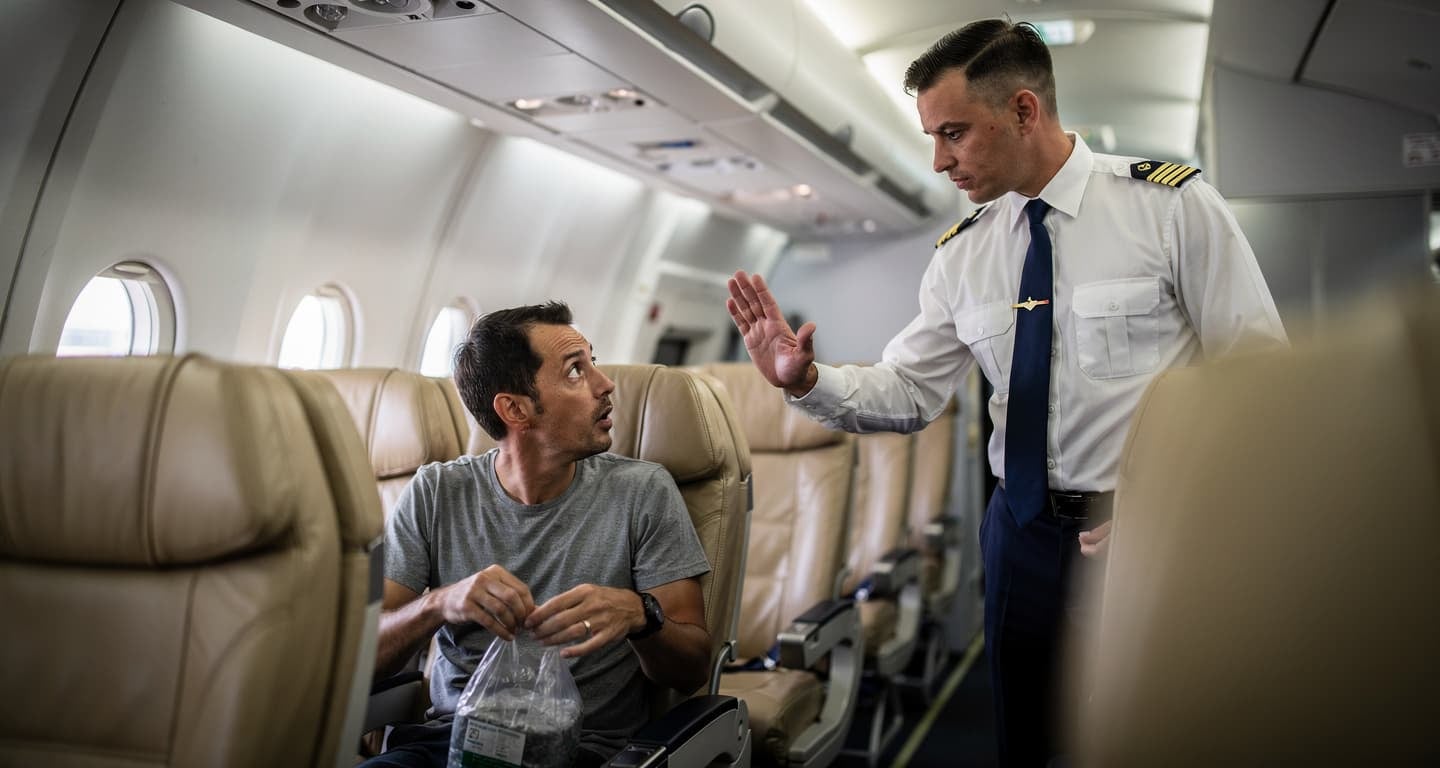
KLM crew on KL-592 removed the woman before the aircraft pushed back from the gate at O.R. Tambo International. That decision — made on visible clinical grounds — almost certainly prevented a far more complex tracing scenario. Under EASA Annex IV and ICAO Annex 9 standards, airlines are required to deny boarding to passengers unfit to fly; KLM’s crew acted within those protocols, and no regulatory violations have been reported.
The codeshare dimension widens the tracing pool significantly. Passengers who purchased tickets through Air France, Delta Air Lines, or SAS were physically on the same aircraft as KLM-ticketed passengers. RIVM and KLM are treating all manifests identically — the alert and tracing instructions apply regardless of which airline issued your ticket.
Separately, WHO initiated urgent contact tracing for all 82 passengers and 6 crew aboard the Airlink flight from St Helena to Johannesburg — a four-hour Embraer 190 service on which the woman was already symptomatic. That tracing operation runs in parallel to the KL-592 effort and is coordinated with South African health authorities.
| Flight | Route | Date | Passengers/Crew traced | Status |
|---|---|---|---|---|
| KL-592 (also AF08282 / DL-9560 / SK-6855) | JNB → AMS | Late April 2026 | Full manifest | RIVM tracing active |
| Airlink HLE–JNB | St Helena → Johannesburg | April 24–25, 2026 | 82 passengers, 6 crew | WHO/SA tracing active |
| MV Hondius (vessel) | Ushuaia → Cape Verde area | April 1 onward | ~88 passengers, 61 crew | 3 deaths; 1 ICU; evacuations ongoing |
Flight deals
most people never see
Our AI monitors 150+ airlines for pricing anomalies that traditional search engines miss. Air Traveler Club members save $650 per trip per person on average: see how it works.
Each deal saves 40–80% vs. regular fares:

Why Andes hantavirus changes the calculus for aviation health response
Most hantavirus strains do not spread person to person. The Andes strain is the documented exception. WHO has confirmed that limited human-to-human transmission has occurred in previous outbreaks — which is precisely why health authorities are not treating this as a standard rodent-exposure case requiring only environmental tracing.
In practical terms, that means proximity on an aircraft matters. The woman was removed before departure, so her time in the cabin was brief. But she transited the gate area, the jetbridge, and potentially the terminal — and she spent several hours on the Airlink flight from St Helena. Aviation health protocols under ICAO Annex 9 and WHO’s International Health Regulations (2005) require reporting of public health events with potential for international spread. Both KLM and Airlink are cooperating voluntarily beyond the minimum required — no regulatory mandate compelled the May 6 passenger alerts, but both airlines issued them anyway.
The regulatory picture is straightforward: Dutch RIVM leads the response under WHO IHR coordination. ILT — the Dutch Civil Aviation Authority — is monitoring RIVM’s coordination with KLM to ensure compliance, but has opened no investigation. KLM remains fully operational on the JNB–AMS route.
Steps for passengers on affected flights
RIVM contact tracing is active and time-sensitive — passengers on either manifest who have not yet been contacted should act now, not wait.
- Check your booking confirmation immediately: If your ticket shows KL-592, AF08282, DL-9560, or SK-6855 for a late April 2026 JNB–AMS departure, you are on the tracing manifest. The same applies to the Airlink St Helena–Johannesburg service on April 24–25.
- Contact RIVM directly: Call +31 30 274 9111 or monitor rivm.nl/en for tracing instructions. Do not assume no contact means you are cleared — the tracing operation is ongoing.
- Know the symptoms: Andes hantavirus presents with fever, headache, and gastrointestinal symptoms in early stages, progressing rapidly to respiratory distress. If any of these appear, isolate and call health authorities before presenting at a clinic or hospital.
- KLM passengers: Log into klm.com/my-trip or call KLM at +31 20 649 9123 to confirm whether you have received a tracing alert. Codeshare passengers should contact their booking airline — Air France, Delta, or SAS — who have received identical RIVM alerts.
- Upcoming JNB–AMS travelers: No cancellations are in effect. Check klm.com/health and who.int/emergencies before departure for any new screening requirements at O.R. Tambo.
Watch: RIVM tracing is expected to conclude around May 10–15. If no secondary cases emerge, JNB–AMS operations continue without disruption. If secondary cases are confirmed, expect enhanced health screening at JNB — and potentially at AMS on arrival. The WHO update on MV Hondius evacuation status, expected by approximately May 8, will also signal whether the outbreak is contained or expanding.

Questions? Answers.
Was the hantavirus-infected woman actually inside the KL-592 cabin?
Yes. She boarded the aircraft before crew identified how ill she appeared and had her removed prior to departure. The duration of her time in the cabin has not been officially specified, but she did not fly. The contact tracing covers all passengers and crew on the manifest regardless of where they were seated.
Can hantavirus spread on an aircraft?
The Andes strain is one of the few hantavirus variants with documented — though limited — human-to-human transmission. WHO has confirmed this in previous outbreak reports. Standard hantavirus strains spread only through contact with infected rodent urine, faeces, or saliva. The tracing operation exists precisely because the Andes strain’s transmission profile is different from typical hantavirus cases.
Do I need to worry if I am flying KLM JNB–AMS in the coming weeks?
No flights have been cancelled and no blanket screening is currently in place. If you were not on the late April KL-592 flight or the Airlink St Helena service, you are not part of the active tracing operation. Monitor klm.com/health and who.int/emergencies for any updates before departure — if secondary cases are confirmed, screening protocols at JNB could be introduced.
Are codeshare passengers on Air France, Delta, or SAS covered by the same tracing?
Yes. Passengers who booked through Air France, Delta Air Lines, or SAS but flew on KL-592 as the operating carrier are on the same physical manifest and receive identical RIVM tracing alerts through their booking airline. Rebooking rights and baggage rules remain governed by KLM as the operating carrier; the tracing process is independent of which airline issued the ticket.
What compensation am I entitled to if I was on KL-592?
None under standard passenger rights regulations. EU261/2004 requires a delay of two or more hours on arrival to trigger compensation — KL-592 operated normally and arrived on schedule. Quarantine costs and medical expenses resulting from a health incident are explicitly excluded from EU261 coverage. The same applies under US DOT rules. This is a public health event, not an operational disruption.