Quick summary
A rodent filmed moving through the overhead light bar in the Mint first-class cabin of a JetBlue flight has gone viral, accumulating around 1 million views after passenger Brittney Brimway posted the footage on June 13, 2026. The flight was part of a Los Angeles–New York City–Turks and Caicos itinerary. JetBlue confirmed the aircraft has been taken out of service for cleaning and that the affected passenger’s flight will be refunded.
This is the third high-profile cabin rodent incident across major carriers in under two years. The aircraft removal creates downstream scheduling risk for travelers on that tail number’s subsequent rotations.
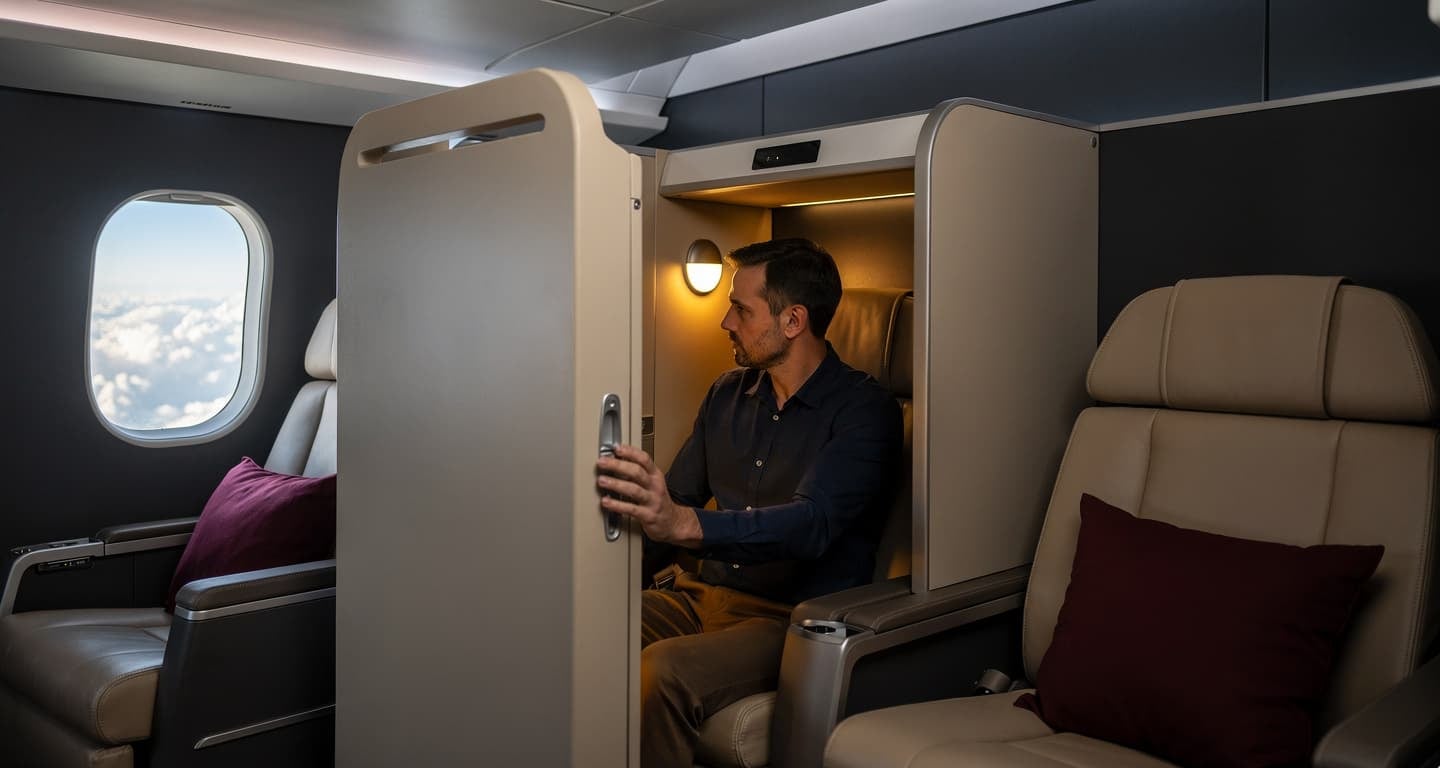
A family booked into JetBlue‘s premium Mint cabin got more than lie-flat seats on their June 13 flight toward Turks and Caicos. Brittney Brimway’s 13-year-old son spotted a rodent running along the overhead light bar — and instead of being dismissed, he was told to start filming.
The resulting video, captioned “You can’t make this s–t up! Our first class with JetBlue had a rat, yes a rat, in the overhead bin,” has since been viewed roughly 1 million times. JetBlue apologized publicly, confirmed the aircraft was pulled from service, and agreed to refund Brimway’s flight — a faster resolution than most passengers get for far more mundane complaints.
The incident is funny until it isn’t. Rodents on aircraft are classified as a maintenance and airworthiness issue, not a housekeeping inconvenience, because they chew through wiring. That classification is what triggers the out-of-service order — and the cascade of schedule disruptions that follows for everyone else booked on that aircraft.
What JetBlue confirmed — and what it means operationally
JetBlue’s official statement was brief: incidents of this nature are rare, the airline’s aircraft are regularly serviced and cleaned, and the specific aircraft has been identified and taken out of service. The passenger’s refund was confirmed separately. What the statement did not address is how long the aircraft will remain grounded or which routes are affected by its removal.
That gap matters. When a rodent is reported mid-flight, the crew documents the sighting and notifies maintenance and operations control. After landing, the aircraft cannot simply turn around — technicians must inspect wiring runs, panel interiors, and access points before it can be cleared. If an infestation or entry point is found, the jet stays down until licensed technicians sign off under the airline’s FAA-approved maintenance program. That unplanned downtime competes directly with scheduled maintenance slots and limited hangar capacity, which can cascade into equipment shortages on subsequent sectors using that tail number.
For travelers, the practical exposure is last-minute aircraft swaps, premium cabin downgauges, or rebooking onto later departures while the airline works through its pest-control and inspection procedures. Our earlier coverage of rodent incidents and aircraft safety classifications explains why airlines treat these as airworthiness events rather than cleaning jobs.
| Date | Carrier | Route | Outcome for aircraft | Outcome for passengers |
|---|---|---|---|---|
| June 2026 | JetBlue | Los Angeles–New York–Turks and Caicos | Taken out of service for cleaning and inspection | Affected passenger refunded |
| December 2025 | KLM Royal Dutch Airlines | Amsterdam–Aruba | Removed from operation for thorough cleaning; return flight canceled | Overnight lodging provided; alternative flights arranged |
| September 2024 | Scandinavian Airlines (SAS) | Oslo–Málaga | Flight diverted for inspection and fumigation | Passengers transferred to replacement aircraft |
| Mid-2024 | Spirit Airlines | Dallas–Los Angeles | Flight continued to destination; airline acknowledged video | No reported rebooking; airline said steps were being taken |
Flight deals
most people never see
Our AI monitors 150+ airlines for pricing anomalies that traditional search engines miss. Air Traveler Club members save $650 per trip per person on average: see how it works.
Each deal saves 40–80% vs. regular fares:

A pattern airlines can no longer call coincidence
Three confirmed cabin rodent incidents across four carriers in under two years — JetBlue, KLM, SAS, and Spirit — is not a statistical anomaly. It is a pattern, and the aviation industry’s response to each incident has been largely reactive: ground the aircraft, clean it, issue a statement calling the event “rare,” move on.
The KLM Amsterdam–Aruba case in December 2025 is the closest operational parallel to the JetBlue incident. A large rat was filmed running along the overhead rail mid-flight; the aircraft was taken out of service for thorough cleaning, the return flight from Aruba was canceled, and roughly 250 passengers were provided overnight lodging while alternative flights were arranged. Same playbook, different carrier, different ocean.
What none of these airlines have publicly addressed is the entry point — how rodents board aircraft in the first place. Ground handling, catering trucks, and cargo loading all create access windows at major hub airports. Until carriers or regulators mandate specific inspection protocols for those access points, the incidents will keep happening, and the “rare” language will keep wearing thin.
Steps to protect your booking now
The affected aircraft is out of service and JetBlue has not confirmed a return-to-service timeline — travelers on routes using that tail number face real rebooking risk in the short term.
- Monitor your flight status actively: Use the flight-status tool on jetblue.com to watch for last-minute aircraft swaps on your departure. A change in aircraft type is the first signal that your premium cabin configuration may have changed.
- Document any onboard incident immediately: If you witness a rodent or serious hygiene issue on any US carrier, photograph or film it, note the flight number and seat location, and press the call button. Documentation is the difference between a refund and a form letter.
- File with the DOT if the airline response is inadequate: JetBlue’s refund in this case came after public pressure. If you file a complaint and receive no meaningful response within a reasonable timeframe, submit a report to the U.S. Department of Transportation’s Aviation Consumer Protection office via transportation.gov — airlines track DOT complaint volumes.
- Ask specifically about aircraft history at check-in: If you are anxious about cabin hygiene, a gate agent can confirm whether the assigned aircraft has recently undergone maintenance or deep cleaning. You will not always get a useful answer, but asking creates a record.
Watch: JetBlue’s next operational or safety statement on cabin pest-control procedures — if the airline outlines new inspection steps in the coming weeks, it signals a more formalized response. If no update emerges, expect media and passenger pressure to continue building. Separately, any FAA airworthiness directive referencing rodent infestations in transport-category aircraft would mandate industry-wide action and is worth tracking.

Questions? Answers.
Is a rodent on an aircraft a safety issue or just a hygiene problem?
It is formally a safety issue. Rodents chew through wiring and insulation, which can affect critical aircraft systems. When a sighting is confirmed, the aircraft must be inspected by licensed maintenance technicians under the airline’s FAA-approved maintenance program before it can return to service — it is not treated as a routine cleaning matter.
Can I get a refund if there is a rodent on my flight?
JetBlue refunded the affected passenger in this case, but there is no automatic entitlement under US law for a hygiene incident that does not result in a cancellation or significant delay. Your strongest position is a documented complaint filed with the airline immediately after the flight, citing the specific incident with evidence. If the airline’s response is unsatisfactory, a DOT Aviation Consumer Protection complaint adds formal pressure.
How do rodents get onto aircraft in the first place?
The most likely entry points are ground-level access during catering, cargo loading, or ground handling at hub airports — particularly overnight when aircraft are parked and doors or cargo holds may be open for extended periods. No carrier involved in recent incidents has publicly identified a confirmed entry point, and there is currently no FAA directive mandating specific inspection of those access windows.
Which airlines have had confirmed cabin rodent incidents recently?
Four carriers have had publicly confirmed incidents since mid-2024: JetBlue (June 2026, Los Angeles–Turks and Caicos), KLM (December 2025, Amsterdam–Aruba), Scandinavian Airlines (September 2024, Oslo–Málaga diversion), and Spirit Airlines (mid-2024, Dallas–Los Angeles). Outcomes ranged from a full diversion and fumigation to the flight continuing with a post-landing statement.