Quick summary
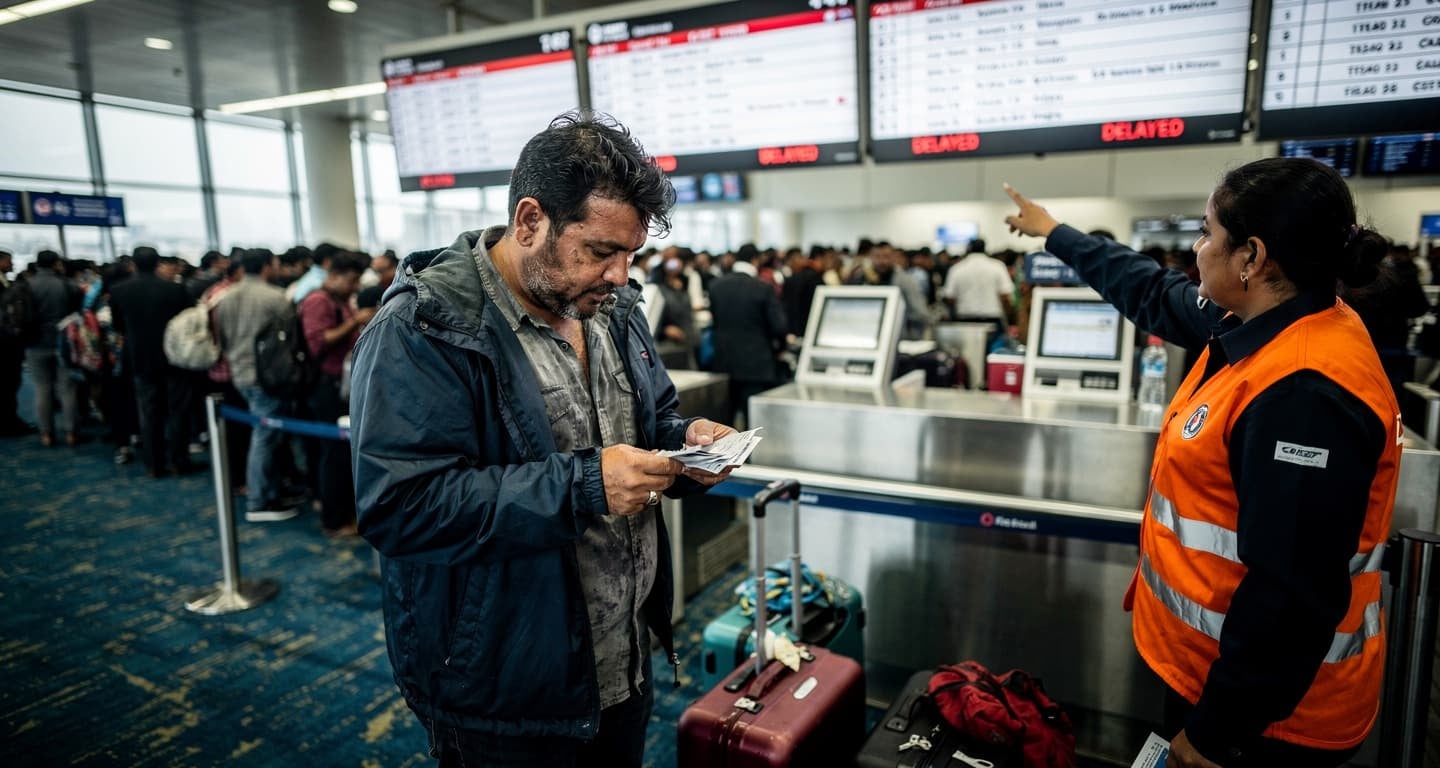
Jet fuel prices have doubled to approximately $200 per barrel since late February 2026, forcing airlines to impose surcharges of $50–$800 per ticket and raise base fares by 15–40%. United Airlines announced 15–20% summer fare increases, Cathay Pacific added an $800 fuel surcharge on Sydney-London routes alone, and 19 of the world’s 20 largest airlines have cut May capacity. Travelers booking flights from North America, Europe, and Australasia to Asia-Pacific face immediate price increases and potential schedule disruptions through at least June.
The International Energy Agency warned on April 16 that Europe has approximately six weeks of jet fuel remaining. If the Strait of Hormuz remains closed or conflict escalates, expect additional 5–10% fare increases and accelerated route suspensions by June.
Fuel crisis forces airlines to double fares and cut flights
The closure of the Strait of Hormuz in late February 2026 has triggered the sharpest jet fuel price spike in aviation history, with prices doubling from a $90 baseline to approximately $200 per barrel while crude oil rose more moderately to just over $100. Airlines cannot absorb a cost shock of this magnitude — fuel represents 30–40% of operating expenses — and are passing the burden directly to passengers through surcharges, base fare increases, and capacity cuts.
United Airlines CEO Scott Kirby announced the carrier will maintain 15–20% summer fare increases even if fuel costs decline. Cathay Pacific raised fuel surcharges twice in one month, with Sydney-to-London return fares now carrying an $800 fuel surcharge alone. Air France-KLM added €50 to long-haul economy returns from mid-March.
The impact extends beyond pricing. According to a Business Insider report, 19 of the world’s 20 largest airlines have cut flights scheduled for May 2026, with global capacity dropping 3 percentage points since early March. The International Energy Agency’s executive director stated on April 16 that Europe has approximately six weeks of jet fuel remaining, while IATA’s director general warned that cancellations could begin in Europe by the end of May due to fuel shortages. Travelers departing from North America, Europe, and Australasia for Asia-Pacific destinations face immediate fare increases of 15–40% on new bookings, with long-haul routes absorbing the steepest surcharges.
How the fuel shortage is reshaping global aviation
The Strait of Hormuz, through which 21% of global oil passes, was effectively closed by US-Israeli military operations against Iran beginning late February 2026. This disrupted two critical supply chains: finished jet fuel exports from Middle Eastern refineries cannot transit the strait, and crude oil shipments to Asian refineries are blocked, reducing their jet fuel production capacity. China has banned jet fuel exports, South Korea cut production, and Kuwait has fuel trapped behind the closure.
Jet fuel prices have moved faster than crude oil itself, exposing a structural bottleneck in global energy supply chains. While Brent crude initially surged after the conflict but began easing by late March to around $98.83, jet fuel continued climbing. The International Air Transport Association’s jet fuel monitor recorded prices at $195.19 per barrel for the week ending March 27, up from $99.40 at the end of February — a near-doubling in four weeks.
Airlines are deploying stopgap strategies including fuel tankering (loading extra fuel at cheaper locations), surcharges, and fare adjustments. However, carrying extra fuel impacts aircraft efficiency through payload drain, creating a complex trade-off. Even government interventions, such as India’s decision to cap domestic ATF price increases at 25% despite global benchmarks indicating a potential surge of over 100%, are temporary buffers rather than structural solutions. State-owned oil marketing companies absorbed the remaining burden, even as their own losses mounted.
| Carrier | Fuel cost increase | Fare/surcharge action | Capacity impact |
|---|---|---|---|
| United Airlines | 10.7% ($12.84B) | 15–20% summer fare increase | Maintaining higher fares post-crisis |
| Cathay Pacific | Data pending | $800 Sydney-London surcharge | Dual surcharge increases in March-April |
| Lufthansa | 13.8% ($9.40B) | €50+ long-haul increases | 20,000+ flight cancellations through October |
| Air France-KLM | 2.0% | €50 long-haul economy increases | Selective route suspensions |
| Delta Air Lines | 10.8% ($11.17B) | 15–19% Q2 fare increases | May capacity cuts |
The crisis intensifying through April, with a series of new capacity cuts, surcharges, and dire supply warnings announced in recent weeks. Industry analysts have revised 2026 growth forecasts from 4–6% to a potential -3% decline as carriers prioritize profitability over expansion.
For context on how airspace disruptions compound fuel costs, airspace closures across parts of West Asia are forcing airlines into longer routes. Flights between Europe and India are now detouring via the Red Sea, adding up to 2.5 hours of flying time. Routes to North America are also seeing delays of around two hours, translating directly into higher fuel burn.
Flight deals
most people never see
Our AI monitors 150+ airlines for pricing anomalies that traditional search engines miss. Air Traveler Club members save $650 per trip per person on average: see how it works.
Each deal saves 40–80% vs. regular fares:

What changed between February and now
Before late February 2026, jet fuel traded at approximately $90 per barrel, with airlines operating on predictable cost structures that allowed competitive pricing. A typical economy return fare from Los Angeles to Singapore cost around $980, London to Singapore around £720, and Sydney to London via Asian hubs around AUD $1,300 without fuel surcharges.
The Strait of Hormuz closure in late February severed that equilibrium. Within four weeks, jet fuel doubled to $200 per barrel while crude oil rose more moderately. Airlines faced an immediate choice: absorb losses that would bankrupt most carriers within months, or pass costs to passengers. They chose the latter. By April, those same routes cost $1,240–1,400 (LAX-SIN), £890–950 (LHR-SIN), and AUD $1,800–2,100 (Sydney-London), representing increases of 27–43% depending on route and booking date.
The mechanism differs from typical fare increases. Airlines are implementing both fuel surcharges (transparent, itemized charges ranging from $50 to $800) and base fare increases (15–20% adjustments to published fares). United Airlines explicitly stated it will maintain higher fares even if fuel costs decline, signaling a permanent reset in pricing expectations. This dual approach means travelers cannot simply wait for surcharges to disappear — the underlying fare structure has shifted upward.
The 2008 oil crisis saw jet fuel spike to $180 per barrel in July, forcing airlines to ground aircraft and impose fuel surcharges, but that crisis resolved within six months as crude prices collapsed. The current 2026 crisis differs structurally: the Strait of Hormuz closure creates a physical supply bottleneck independent of demand destruction. Current trajectory suggests sustained elevated prices through 2026 absent geopolitical de-escalation.
How to protect your travel plans
Airlines are cutting capacity and raising fares simultaneously — delaying a booking decision means fewer flight options at higher prices.
- Book domestic flights immediately at current fares before additional increases take effect. Check United Airlines, American Airlines, and Delta for summer fares before April 30 to lock in pre-surge pricing where still available.
- Compare routing via Singapore or Emirates against Cathay Pacific for Asia-Pacific travel to identify lowest total fare including fuel surcharges. Singapore Airlines and Emirates have implemented smaller surcharge increases than some competitors.
- Book intra-Asia flights before June 1 to avoid further capacity cuts and potential fuel rationing-driven price increases. Asian carriers face acute fuel shortages by June according to industry warnings.
- Review airline cancellation policies before booking. Most carriers are offering rebooking on alternative flights without penalty during this period, but policies vary by fare class and route.
- Avoid booking long-haul from Frankfurt, Paris, or Amsterdam through May due to Lufthansa and Air France-KLM capacity cuts. Consider routing via Middle Eastern hubs if available at lower total fares.
Watch: The International Energy Agency’s next supply update on May 15, 2026 will reveal whether jet fuel inventory forecasts improve, indicating strait reopening or alternative supply routes activated. If forecasts worsen, expect European capacity cuts to accelerate and Asian fuel rationing to begin, triggering additional 5–10% fare increases.

Questions? Answers.
Will fuel surcharges disappear if the Strait of Hormuz reopens?
Fuel surcharges would likely decrease within 4–6 weeks of a strait reopening, but airlines have stated they will maintain higher base fares even if fuel costs decline. Expect fares to stabilize 10–15% above pre-conflict levels due to airline margin protection.
Are bookings made before late February protected from these increases?
Yes. Tickets purchased before the fuel crisis began in late February are grandfathered at the original fare, including any fuel surcharges in effect at the time of booking. Airlines cannot retroactively add surcharges to existing tickets.
Do passenger rights laws cover compensation for fuel surcharges?
No. EU261/2004 compensation applies only to cancellations or delays over 3 hours caused by airline fault; fuel cost increases do not trigger compensation. US DOT regulations do not mandate compensation for fare increases. Australian Consumer Law and New Zealand’s CCCFA do not cover fuel surcharges as separate charges if disclosed at booking.
Which airlines have the lowest fuel surcharges right now?
Singapore Airlines and Emirates have implemented smaller surcharge increases than Cathay Pacific or European carriers. Compare total ticket price including surcharges across carriers for your specific route, as base fares and surcharges vary significantly by departure point and destination.