Quick summary
Japan Airlines has banned cabin crew from consuming alcohol during layovers before return flights, effective immediately, after a cabin attendant on flight JL252 from Hiroshima Airport (HIJ) to Tokyo Haneda (HND) tested positive for alcohol on May 23, 2026, concealed the result, and caused a 42-minute delay affecting 186 passengers. Japan’s transport ministry (MLIT) conducted on-site inspections of JAL on May 28, 2026, escalating the incident from an internal discipline matter to a formal regulatory review.
The new rule replaces JAL’s previous 12-hour no-drinking window with a full location-based prohibition during layover stays before homebound sectors. This is JAL’s second major alcohol-related crew incident in under a year — a pattern that points to something deeper than a single lapse.
A JAL cabin attendant drank at a hotel lounge the night before her shift, tested positive in a self-check the next morning, said nothing, and boarded a bus to Hiroshima Airport anyway. She tested positive again at the airport. Flight JL252 sat on the ground for 42 minutes while replacement crew were arranged. The 186 passengers on board had no idea why.
JAL’s response came five days later. On May 27–28, 2026, the airline announced an immediate ban on cabin crew drinking alcohol anywhere they stay during layovers before return flights — a significant tightening from the previous rule, which only prohibited drinking within 12 hours of duty. The shift is from a time-based limit to a location-based prohibition: no drinking at hotels, no drinking at local venues, for the duration of any duty trip before operating a homebound sector.
The same day JAL made its announcement, MLIT officials arrived at JAL’s offices for on-site inspections, interviewing personnel and reviewing documents. The airline told NHK World-Japan it was taking the loss of public trust extremely seriously.
What makes this incident harder to dismiss as an isolated lapse is the timeline behind it. JAL has been here before — and recently.
What the incident record actually shows
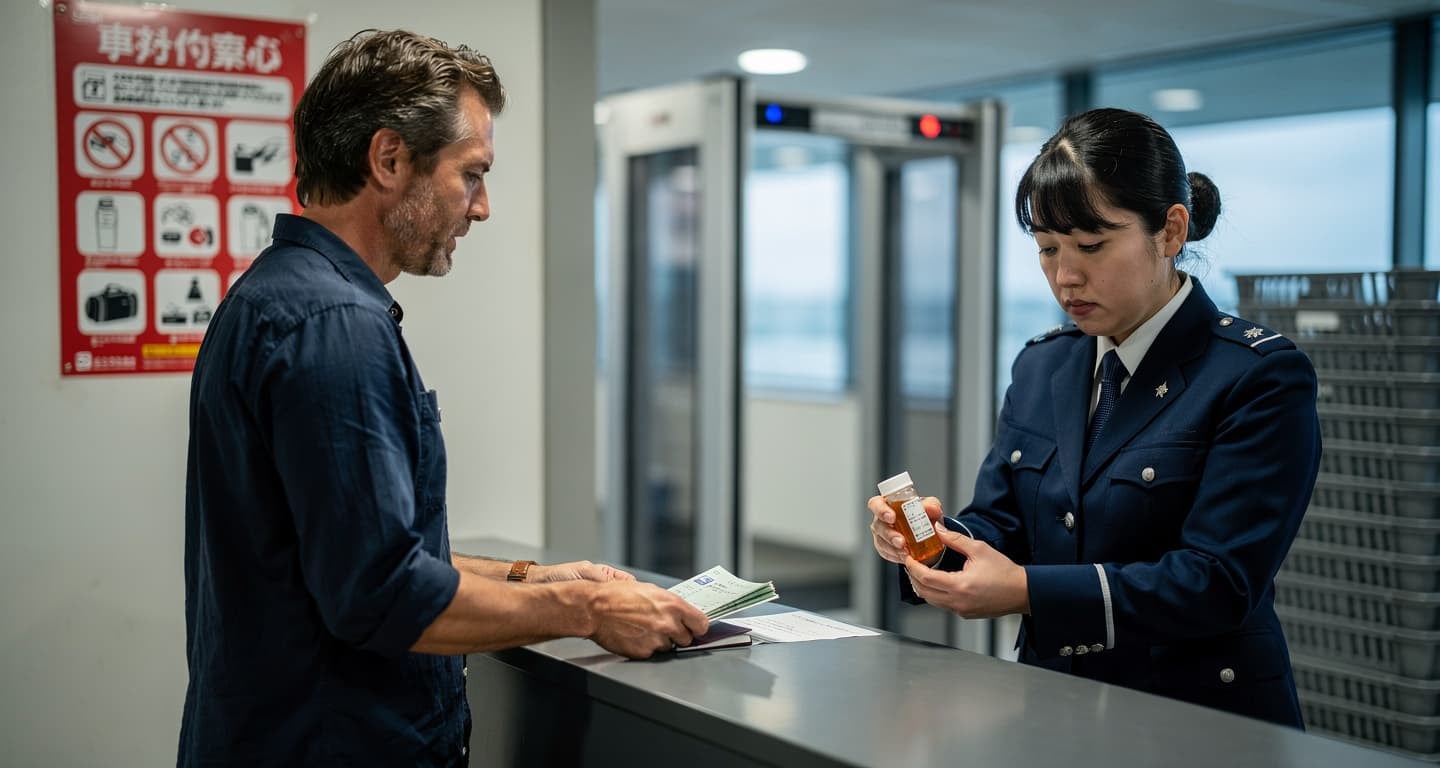
The May 23 sequence was worse than a rule violation. The attendant — who was serving as chief attendant on JL252 — tested positive during JAL’s mandatory self-check process, a system designed specifically to catch this. She did not report the result. She proceeded to the airport, where a second test confirmed what the first had already found. Her colleague, who had been drinking with her at the hotel lounge, reported feeling unwell and also could not board. Both had been rostered on the same flight.
JAL’s new layover alcohol ban for cabin crew goes beyond what aviation law strictly requires. MLIT sets legal thresholds for blood-alcohol concentration and obliges airlines to ensure crew fitness for duty — but JAL’s internal rules, including the previous 12-hour window and now the full layover prohibition, are company-level policy responses that exceed those minimums. The airline is, in effect, trying to close the gap between what the law demands and what its own compliance culture has failed to deliver.
| Date | Crew type | Incident | Passengers affected | Regulatory outcome |
|---|---|---|---|---|
| May 23, 2026 | Cabin attendant | Failed two breath tests; concealed first positive result; JL252 delayed 42 min | 186 | MLIT on-site inspection (May 28, 2026); JAL layover ban announced |
| August 2025 | Pilot (captain) | Drank excessively before international return service | Not disclosed | Formal MLIT warning issued to JAL |
| Prior to 2025 | Pilot (captain) | Consumed alcohol before flight from Hawaii; delays exceeded 18 hours across three flights | ~630 | JAL pilot layover ban introduced; internal alcohol watchlist created |
Flight deals
most people never see
Our AI monitors 150+ airlines for pricing anomalies that traditional search engines miss. Air Traveler Club members save $650 per trip per person on average: see how it works.
Each deal saves 40–80% vs. regular fares:

Why the pattern matters more than the policy change
The historical precedent here is instructive. When a JAL captain’s drinking before a Hawaii departure caused delays exceeding 18 hours across three flights and disrupted roughly 630 passengers, the airline’s response was a pilot-specific layover ban and an internal alcohol watchlist. That was supposed to be the fix. It worked — for pilots. The compliance culture apparently did not transfer to cabin crew.
That is the structural problem JAL is now confronting. Each incident has produced a targeted rule tightening for the crew category involved, rather than a system-wide cultural shift. The self-check process that failed on May 23 was not a gap in policy — it was a gap in enforcement and personal accountability. A ban on layover drinking addresses the opportunity; it does not, by itself, address the willingness to conceal a positive test and board anyway.
For travelers, the near-term operational picture is manageable but not zero-risk. Stricter pre-flight breath checks and more conservative crew rostering reduce the probability of alcohol-related delays. They also mean that when a violation is detected — and under tighter scrutiny, more will be — the response time for sourcing replacement crew becomes the critical variable. On thinner domestic routes like HIJ–HND, that window can be tight.
Steps to protect your JAL booking now
JAL’s tightened alcohol checks are already in effect, and MLIT‘s inspection findings are pending — meaning the short-term disruption window is open. Here is the priority order for protecting your trip.
- If you hold an existing JAL ticket: Check your flight status on JAL’s official site or app on the morning of departure and enable push notifications. If a crew-related delay appears, call JAL’s reservations hotline immediately — listed on the airline’s Contact Us page — to request same-day rebooking before seats fill on alternative services.
- If you are booking new JAL domestic travel: Build in at least a 90-minute connection buffer at Tokyo Haneda or Narita. For sectors where a missed connection would be costly, compare ANA or Skymark as alternatives on critical domestic legs.
- If you are already in transit and a JAL sector is delayed for crew reasons: Go directly to the JAL transfer or check-in desk — do not wait for an announcement — and ask staff to rebook misconnecting onward flights on the next available service. Retain all boarding passes and delay notifications for travel insurance claims.
- For international travelers connecting through Japan: The layover ban applies to cabin crew across JAL’s network. Tight connections at Haneda or Narita onto domestic sectors deserve extra buffer time while the new policy beds in and crew scheduling adjusts.
You can also review the full background on this incident — including the concealed positive test and the regulatory timeline — in ATC’s detailed breakdown of JAL’s layover alcohol ban and what it means for passengers.
Watch: MLIT‘s formal findings from the May 28 inspection — if an improvement order is issued, expect JAL to announce further procedural changes within weeks, which may temporarily increase crew substitution frequency across the network.

Questions? Answers.
Does JAL’s new alcohol ban apply to international flights, or only domestic routes like HIJ–HND?
JAL’s announcement covers all cabin attendants and applies to layovers before return flights across the network — not just domestic sectors. The Hiroshima–Haneda route was the trigger, but the policy is network-wide. International crew on layovers abroad are subject to the same prohibition.
What happens to passengers if a JAL cabin crew member fails a breath test on the day of departure?
JAL removes the crew member from duty and arranges replacement staff before the flight can depart. How long that takes depends on crew availability at the departure airport. On thinner domestic routes, sourcing a replacement can push departure back by 30–60 minutes. JAL is required to operate with minimum legal staffing, so the flight will not depart understaffed.
Can passengers claim compensation for a JAL delay caused by crew alcohol violations?
Japan does not have a mandatory compensation framework equivalent to EU261 for domestic flight delays. Passengers should check their travel insurance policy for delay coverage and retain all boarding passes and official delay notifications. For international JAL flights departing from EU airports, EU261 protections may apply depending on the circumstances — consult your insurer or JAL directly.
Has MLIT taken formal action against JAL following the May 28 inspection?
As of the time of publication, MLIT has conducted its on-site inspection and interviewed personnel, but no formal improvement order or administrative guidance has been publicly announced. The inspection outcome is the key development to watch — if an order is issued, JAL will be required to implement additional corrective measures under regulatory oversight.