Quick summary
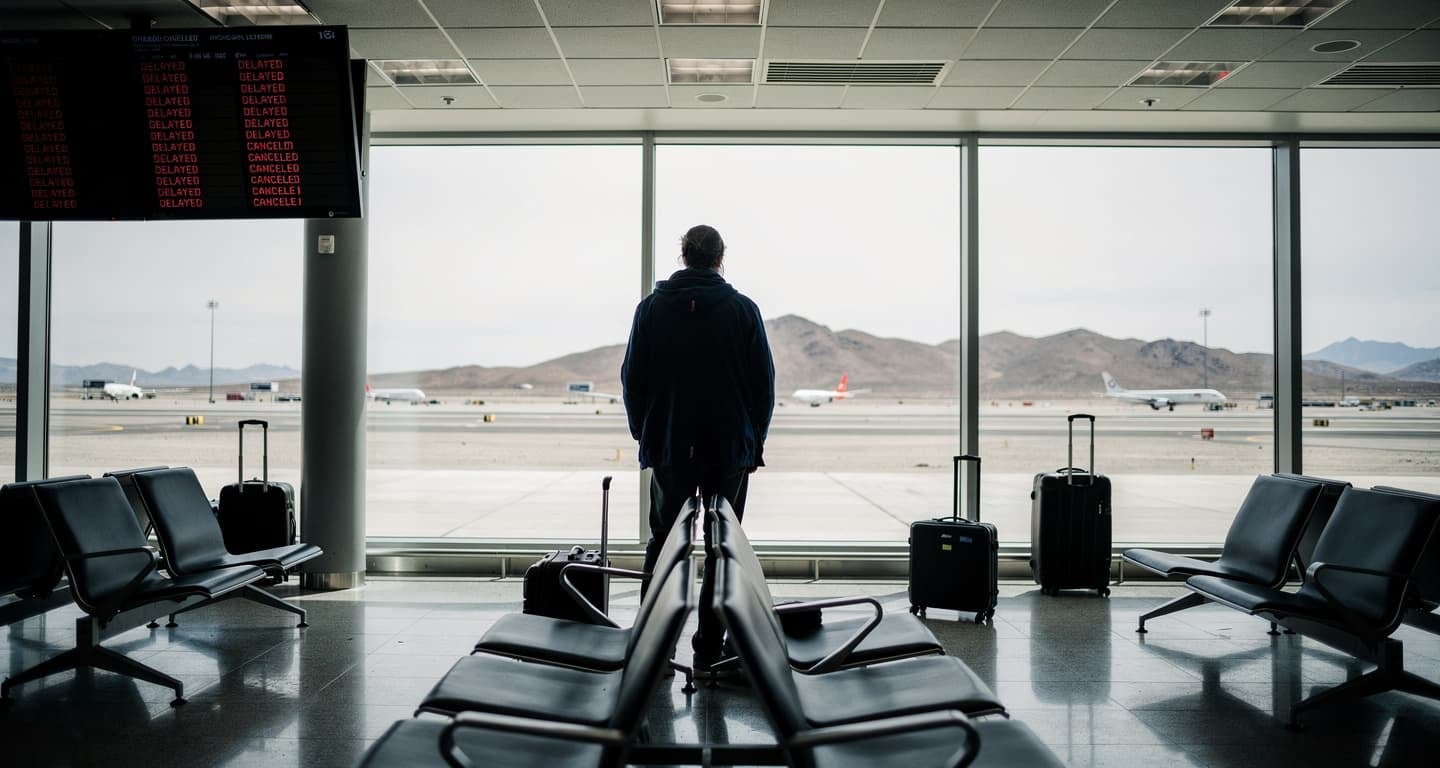
One person is dead and eleven injured after Iranian missile debris struck Abu Dhabi’s Zayed International Airport and Dubai International Airport on February 28, 2026, following Iran’s launch of 137 missiles and 209 drones at UAE territory. Dubai (DXB), Abu Dhabi (AUH), Doha (DOH), and Kuwait airports suspended operations, grounding Emirates, Qatar Airways, and other carriers as Gulf airspace partially closed pending safety reviews.
Falling interceptor debris also caused fires at Dubai’s Jebel Ali Port and near the Burj Al Arab hotel. Travelers with UAE or Gulf connections face immediate rebooking needs as operations remain halted with no confirmed restart timeline.
Iran fired 137 missiles and 209 drones at the United Arab Emirates overnight in retaliation for US and Israeli strikes on Iranian territory, killing one Asian national and injuring seven at Abu Dhabi’s Zayed International Airport when falling debris from intercepted projectiles struck the terminal. Four more airport staff sustained injuries at Dubai International Airport from minor concourse damage, while debris also hit Dubai’s Palm Jumeirah luxury development, injuring four civilians.
Dubai International Airport — the world’s busiest international hub — suspended all departures and arrivals as of 6:00 AM local time February 28. Abu Dhabi, Doha, and Kuwait airports followed with full service suspensions. Emirates and Qatar Airways grounded their fleets. The UAE General Civil Aviation Authority partially closed Gulf airspace after most missiles were intercepted but debris continued falling across the region.
This marks the first direct Iranian strikes on Gulf aviation hubs since the conflict escalated. The attack occurred during Ramadan peak travel, stranding thousands of passengers mid-journey. No timeline exists for airspace reopening.
What happened at the airports
Falling debris from intercepted missiles killed one worker and injured seven others at Abu Dhabi’s Zayed International Airport around 3:00 AM local time. A separate Pakistani civilian death was reported elsewhere in Abu Dhabi. At Dubai International Airport, four staff members sustained injuries when debris caused minor structural damage to a concourse. The airport’s operations center ordered an immediate ground stop at 6:00 AM.
Iran launched 137 missiles and 209 drones at UAE territory, most intercepted by US and Emirati air defenses. Debris from successful interceptions rained across Dubai, Abu Dhabi, and surrounding areas. A fire broke out at Jebel Ali Port — which hosts US Navy warships — and near the Burj Al Arab hotel. Civil defense teams extinguished the port fire by Sunday morning.
Qatar and Kuwait airports suspended services after interceptions over their airspace. Bahrain reported hits at a US military base and residential areas. Only Oman remained unaffected. Channel News Asia confirmed the missile counts and casualty figures through UAE government sources.
Panic-buying hit UAE supermarkets within hours, though authorities confirmed robust food reserves during Ramadan. The attack represents Iran’s first direct strike on Gulf commercial aviation infrastructure since US-Israeli operations began targeting Iranian sites.
Flight deals
most people never see
Our AI monitors 150+ airlines for pricing anomalies that traditional search engines miss. Air Traveler Club members save $650 per trip per person on average: see how it works.
Each deal saves 40–80% vs. regular fares:

Why this disrupts Gulf travel for weeks
Dubai International processes 88 million passengers annually, serving as the primary connection point between Europe, North America, and Asia-Pacific. A single day’s closure strands roughly 240,000 travelers. Abu Dhabi handles 24 million passengers yearly, mostly on Etihad Airways connecting flights.
The UAE General Civil Aviation Authority must inspect every runway, taxiway, and terminal for debris damage before clearing operations. Previous missile debris incidents in the region required 3-7 days of safety reviews before partial reopenings. Full service restoration typically takes two weeks as airlines reposition aircraft and crews.
European and US carriers like British Airways, Lufthansa, and United have already rerouted Asia-bound flights through European hubs, adding 4-6 hours to journey times. This mirrors disruption patterns seen during Russia airspace closures, where alternate routing became the norm for months.
The timing during Ramadan — when Gulf carriers operate at 95% capacity — means rebooking options are scarce. Travelers face waits of 5-10 days for available seats on alternate routes.
What to do if you have Gulf flights booked
- Check airline apps immediately: Emirates, Qatar Airways, Etihad, and Kuwait Airways are issuing rebooking waivers. Most allow free changes to flights within 14 days of original departure.
- Monitor NOTAMs: The UAE GCAA posts airspace status updates at gcaa.gov.ae. Dubai Airports updates operational status on X (formerly Twitter) at @DubaiAirports.
- Rebook through Europe or Asia: If traveling from North America or Australia to Asia, consider routing through Singapore, Hong Kong, or European hubs. Air Traveler Club’s flight search shows alternate routing options with current availability.
- Avoid new Gulf bookings: Do not purchase tickets connecting through DXB, AUH, DOH, or Kuwait until official all-clear announcements. Airspace may reopen in phases over 7-14 days.
Gulf airports handle 15% of global connecting traffic
Dubai, Abu Dhabi, and Doha collectively process 180 million passengers annually, with 65% connecting between continents. The three hubs account for 15% of all international transfer passengers worldwide. A week-long closure forces 1.7 million travelers onto alternate routes, overwhelming European and Asian hubs already operating near capacity during spring travel season.
Questions? Answers.
Are flights resuming at Dubai or Abu Dhabi airports?
No confirmed restart timeline exists as of February 28, 2026. The UAE General Civil Aviation Authority must complete debris inspections and safety reviews before clearing operations. Previous incidents required 3-7 days for partial reopenings.
Will my airline refund my ticket if I cancel my Gulf flight?
Most Gulf carriers (Emirates, Qatar Airways, Etihad) are issuing rebooking waivers allowing free changes within 14 days. Full refunds depend on fare rules, but force majeure clauses typically apply during airspace closures. Contact your airline directly.
Is it safe to fly through the Gulf region right now?
Airspace remains partially closed with no official all-clear. Even after airports reopen, debris cleanup and airspace security reviews continue for weeks. Avoid new bookings through DXB, AUH, DOH, or Kuwait until governments issue formal safety confirmations.
What alternate routes work for Asia travel from North America or Europe?
European hubs (Frankfurt, London, Paris) and Asian hubs (Singapore, Hong Kong, Tokyo) offer direct connections. Expect 4-6 hour longer journey times compared to Gulf routings. Check Air Traveler Club’s flight search for current availability on alternate carriers.