Quick summary
Indian airlines have cancelled 10,341 flights to West Asia since February 28, 2026, reducing daily capacity from 300–350 flights to 80–90 flights — a 73–80% collapse triggered by airspace closures across Israel, Jordan, Lebanon, Kuwait, Qatar, Bahrain, and the UAE following escalating conflict. Over 730,000 passengers have been rerouted or refunded, with existing bookings now forced onto longer Southeast Asian corridors adding 4–8 hours and 15–25% to fares.
Foreign carriers reported only 2,177 cancellations over the same period, suggesting Gulf-based airlines maintained higher operational capacity. On April 5 alone, Indian carriers cancelled 284 flights — the disruption shows no signs of immediate resolution.
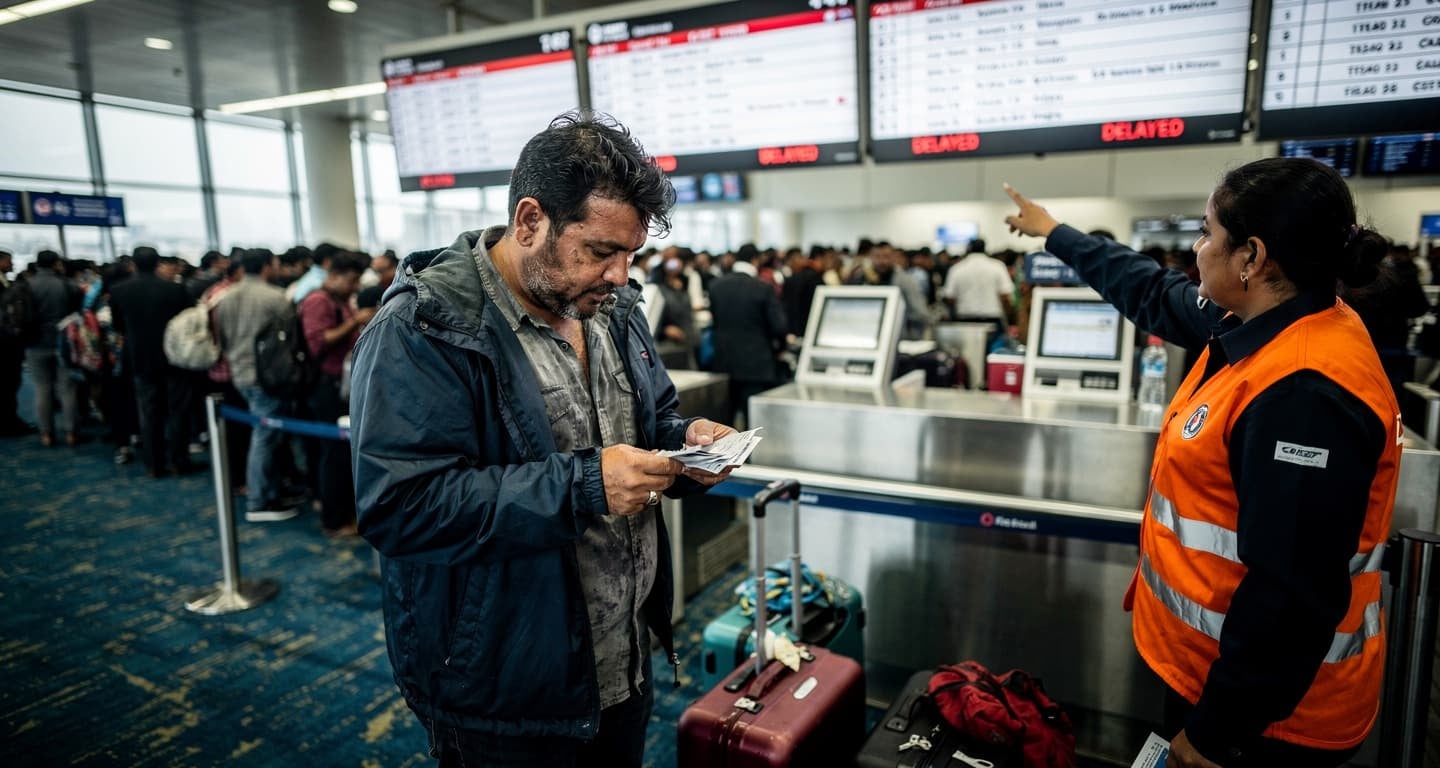
The West Asia conflict has triggered the largest aviation disruption in India since 9/11, with 10,341 cancelled flights in six weeks forcing hundreds of thousands of travelers to reroute through Southeast Asian hubs or accept refunds. Daily capacity to West Asia collapsed from 300–350 flights to 80–90 flights as airspace closures spread across seven countries following retaliatory strikes between the US, Israel, and Iran starting February 28.
Travelers with existing bookings to or from India via Gulf hubs face mandatory rebooking onto routes through Bangkok, Singapore, or Kuala Lumpur — adding 4–8 hours to journey times and raising economy fares by 15–25%. Those already in transit are experiencing extended layovers or overnight stops.
The disruption affects all travelers connecting through India to destinations in Europe, North America, or Australasia who relied on Gulf hub routing. Air India suspended all flights to Israel entirely; Indians seeking to leave Israel must now transit through Jordan or Egypt via land crossings.
How the airspace closures cascaded across Indian aviation
On February 28, US and Israeli strikes on Iran triggered Iranian retaliation, forcing airspace closures or severe restrictions across Israel, Jordan, Lebanon, Kuwait, Qatar, Bahrain, and the UAE. Indian carriers — which operate the majority of international capacity to West Asia — immediately began suspending routes. By April 5, the cancellation count reached 10,341 flights, with 284 cancelled on that single day.
Foreign carriers reported only 2,177 cancellations over the same period. Gulf-based airlines like Emirates, Qatar Airways, and Etihad maintained higher operational capacity, likely due to home-base airspace access that Indian carriers lack. This has shifted the competitive picture: travelers now face a choice between limited Gulf carrier availability at premium prices or longer rerouted journeys via Southeast Asia.
Over 730,000 passengers have been flown into India since disruptions began, while 1,777 Indian nationals exited Iran via land borders through Armenia and Azerbaijan. The scale exceeds the 2022 Russia-Ukraine airspace closures, which affected an estimated 2,000–3,000 flights and resolved within 3–4 weeks. No comparable aviation disruption of this magnitude has occurred since the post-9/11 airspace closures. Read more about how airspace closures reshape Asia flight routing.
| Carrier type | Cancellations | Daily capacity (before) | Daily capacity (current) |
|---|---|---|---|
| Indian carriers | 10,341 | 300–350 flights | 80–90 flights |
| Foreign carriers | 2,177 | Data pending | Data pending |
| April 5 alone (Indian) | 284 | — | — |
Flight deals
most people never see
Our AI monitors 150+ airlines for pricing anomalies that traditional search engines miss. Air Traveler Club members save $650 per trip per person on average: see how it works.
Each deal saves 40–80% vs. regular fares:

What the rerouting means for journey times and costs
Flights that previously took 8–10 hours via Gulf hubs now require 14–18 hours through Southeast Asian connections. The rerouting adds 4–8 hours to total travel time and typically increases economy fares by 15–25% and business fares by 20–30% on long-haul routes. A typical economy roundtrip from Europe to India that cost $600–$800 via Dubai or Doha now runs $750–$1,000+ via Bangkok or Singapore.
The shift benefits Southeast Asian carriers. Singapore Airlines, Thai Airways, and Malaysia Airlines are absorbing traffic that previously flowed through Gulf hubs, though their capacity cannot fully replace the 220–270 daily flights that vanished from the India-West Asia corridor.
What to do if your flight is affected
Gulf hub connections are high-risk through at least April 30 — here is the priority order for protecting your trip.
- Existing bookings via Gulf hubs: Contact your airline immediately to confirm flight status. Indian carriers are offering rebooking onto Southeast Asian routing or full refunds. Request rebooking first — refunds can take 7–14 days to process, and replacement fares may be significantly higher.
- Planning new trips: Avoid booking any route that transits Dubai, Doha, Abu Dhabi, or Kuwait City until airspace reopening is confirmed. Route through Bangkok, Singapore, or Kuala Lumpur instead, or book nonstop flights from major hubs if available.
- EU departures: EU261/2004 compensation rules apply if your flight departs from an EU or UK airport, but airspace closures qualify as “extraordinary circumstances” — airlines are not required to pay €250–€600 compensation, though rebooking or refund is mandatory.
- Connecting through Delhi: If your rerouted itinerary includes a Delhi connection, pad your layover to at least 4 hours — fog season delays are compounding the disruption for travelers transiting DEL.
- Travel insurance: File claims immediately if you purchased cancel-for-any-reason coverage. Standard policies may not cover airspace closures unless explicitly stated — review your policy’s force majeure clause.
Watch: Airspace reopening announcements from UAE, Qatar, or Kuwait aviation authorities — expected within 2–4 weeks if diplomatic de-escalation occurs. If airspace reopens, Indian carriers will restore capacity to 200–250 daily flights within 7–10 days, reducing fares and travel times. If closures extend beyond April 30, expect permanent rerouting of 30–40% of India-West Asia traffic via Southeast Asian hubs.

Questions? Answers.
Can I get compensation for my cancelled India flight?
If your flight departs from an EU or UK airport, EU261/2004 requires airlines to offer rebooking or a full refund, but airspace closures qualify as “extraordinary circumstances” — no automatic €250–€600 compensation is owed. US, Canadian, and Australian travelers are entitled to rebooking or refund but not automatic compensation under their respective consumer protection laws.
How long will the India-West Asia flight disruptions last?
Airspace reopening depends on diplomatic de-escalation between Iran, Israel, and the US. If airspace reopens within 2–4 weeks, Indian carriers can restore 200–250 daily flights within 7–10 days. If closures extend beyond April 30, expect 30–40% of India-West Asia traffic to permanently reroute via Southeast Asian hubs, increasing fares and travel times indefinitely.
What are the best alternative routes to India right now?
Nonstop flights from major hubs (Newark, San Francisco, London, Frankfurt, Sydney) to Delhi or Mumbai avoid the disruption entirely. If connecting, route through Bangkok, Singapore, or Kuala Lumpur instead of Gulf hubs. Expect 4–8 additional hours and 15–25% higher fares compared to pre-disruption Gulf hub routing.
Are Gulf-based airlines still operating flights to India?
Yes, but at reduced capacity. Emirates, Qatar Airways, and Etihad reported only 2,177 cancellations compared to 10,341 by Indian carriers, suggesting Gulf-based airlines maintained higher operational capacity due to home-base airspace access. Availability is limited and fares are elevated — book early if this is your preferred routing.