Quick summary
India’s three largest international carriers — Air India, IndiGo, and SpiceJet — have formally warned the Civil Aviation Ministry that they may be forced to ground aircraft and cancel international routes if fuel pricing is not urgently reformed. The Federation of Indian Airlines sent a letter dated April 26, 2026, citing aviation turbine fuel costs that have surged by Rs 73 per litre for international operations, against a capped Rs 15 per litre increase for domestic flights. Fuel now accounts for 55–60% of operating expenses, up from 30–40%, as Brent crude climbed from $72 to $118 per barrel following the West Asia conflict.
Air India has already raised international fuel surcharges to $280; IndiGo has followed with surcharges up to Rs 10,000 on international tickets. The government’s response — expected by early May — will determine whether cancellations follow.
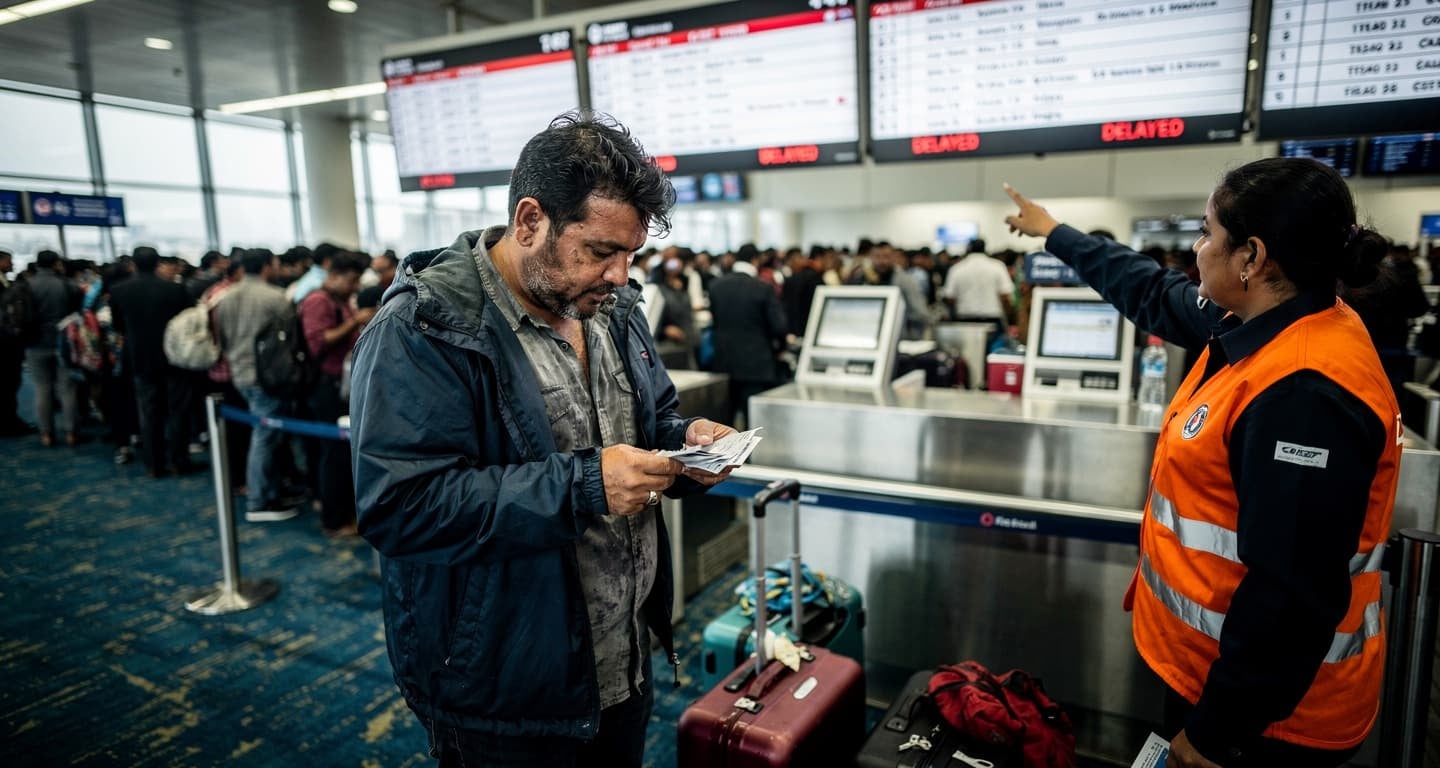
India’s international aviation network is closer to a capacity crisis than at any point since the 2022 Ukraine war fuel shock. The Federation of Indian Airlines has formally requested emergency government intervention, warning in writing that carriers face “insurmountable losses” and may halt operations on long-haul routes if aviation turbine fuel (ATF) pricing is not restructured before the end of the first week of May.
The trigger is a pricing asymmetry that has become impossible to absorb. When the West Asia conflict drove Brent crude from $72 to $118 per barrel, the government capped domestic ATF increases at Rs 15 per litre — a reasonable buffer for short-haul operations. International ATF, however, rose by Rs 73 per litre with no equivalent protection. Long-haul routes, which already operate on thinner margins than domestic flying, are now the most exposed.
Passengers are already paying for it. Air India has imposed fuel surcharges of up to $280 on international tickets; IndiGo has added up to Rs 10,000 to international fares. Those are surcharges on top of base fares — not replacements for them. If the government declines to act, the next step is not higher prices. It is fewer flights.
Routes from Delhi and Mumbai to London, New York, and other long-haul destinations are the highest-risk segments. Travelers with bookings on these corridors in May and June should treat this as an active developing situation, not a background concern.
What the FIA letter actually demands — and why the math is broken
The Federation of Indian Airlines is asking for two specific remedies. First, reinstatement of the crack band mechanism — a pricing framework that limits the spread between crude oil costs and refined ATF prices, preventing the kind of extreme divergence now hitting international operations. Second, a temporary suspension of the 11% excise duty on ATF, which has grown more punishing as the rupee has weakened alongside the fuel price spike.
The numbers behind the request are stark. Fuel costs have jumped from roughly 30–40% of operating expenses to 55–60% in a matter of weeks. Air India has reported significant losses, with sources citing figures up to Rs 22,000 crore for the 2025–26 fiscal year. That is not a carrier with room to absorb a doubling of its largest cost line. SpiceJet, which entered this period already financially constrained, faces the sharpest exposure of the three.
Regulatory filings and industry data confirm the crack spread — the gap between crude and refined ATF — has widened to over $130 per barrel, a level that makes long-haul economics genuinely unworkable without relief. You can read more about how this fuel crisis is hitting carriers across the region in ATC’s coverage of Asia-Pacific airline cancellations and surcharges as jet fuel approaches $200 per barrel.
Full details of the FIA’s formal appeal are confirmed in regulatory reporting on the ATF cost surge.
| Factor | Before crisis | Current level | Traveler impact |
|---|---|---|---|
| Brent crude price | $72/barrel | $118/barrel | ATF costs doubled |
| ATF price change (international) | Baseline | +Rs 73/litre | Long-haul routes unviable |
| ATF price change (domestic) | Baseline | +Rs 15/litre (capped) | Domestic routes protected |
| Fuel as % of operating costs | 30–40% | 55–60% | Margin collapse on long-haul |
| Air India international surcharge | Standard | Up to $280 | Immediate fare increase |
| IndiGo international surcharge | Standard | Up to Rs 10,000 | Immediate fare increase |
Flight deals
most people never see
Our AI monitors 150+ airlines for pricing anomalies that traditional search engines miss. Air Traveler Club members save $650 per trip per person on average: see how it works.
Each deal saves 40–80% vs. regular fares:

This has happened before — and the outcome was not painless
India’s airlines have been here twice in the past two decades. In 2022, the Ukraine war drove a comparable ATF spike, and the Federation of Indian Airlines made an almost identical appeal. The government responded with a Rs 4 per litre cap running from March through October 2022 — enough to avert mass cancellations, but not before industry losses reached an estimated Rs 10,000 crore. Surcharges still rose around 20% that cycle. The 2008 oil spike produced a similar pattern: FIA plea, duty cuts, stabilization.
The difference now is scale. The crack spread in 2022 was painful; at over $130 per barrel today, it is in territory that makes the 2022 episode look manageable. A weakening rupee amplifies every dollar move in crude. And the excise duty burden — 11% on a much higher base price — adds a layer that did not exist at the same magnitude in prior cycles.
History says the government will eventually act. It also says the relief comes after the industry has already absorbed significant damage — and after passengers have already paid higher fares. The question for travelers is not whether this resolves. It is whether it resolves before June bookings are affected.
Steps to protect your India booking now
DEL and BOM long-haul routes are at active risk through at least mid-May — here is the priority order for protecting your trip before the government’s response clarifies the situation.
- Check your current surcharge exposure immediately. Log into your booking on airindia.com or goindigo.in and confirm whether fuel surcharges have been added since you purchased. Surcharges of $280 (Air India) and up to Rs 10,000 (IndiGo) are now active on international routes.
- Identify your alternative routing now, before you need it. Qatar Airways via Doha and Lufthansa via Frankfurt currently offer the most stable alternatives for North America and Europe travelers respectively. Price and availability on these now — not after a cancellation notice arrives.
- Understand your compensation rights. If your flight is cancelled and you are departing from or arriving into the EU, EU261 entitles you to compensation and rerouting at no additional cost. US DOT rules cover departures from American soil. Document everything if disruption occurs.
- Do not wait for the airline to contact you. Set fare and schedule alerts on Google Flights for your route. Capacity cuts typically appear in schedule data before formal cancellation notices reach passengers.
- Consider travel insurance with cancellation cover now. Policies purchased after a cancellation is announced will not cover that event. If you have a May or June booking on an affected corridor, cover purchased today still protects you.
Watch: The Civil Aviation Ministry’s response to the FIA letter is expected in the coming days — if uniform ATF pricing or crack band reinstatement is announced, the cancellation risk drops sharply. If the government declines or delays, expect capacity reductions on DEL–LHR and DEL–JFK corridors, with IndiGo‘s Q1 FY26 earnings call in mid-May likely to confirm any route rationalization decisions.

Questions? Answers.
Which specific routes are most at risk of cancellation?
Long-haul routes from Delhi (DEL) and Mumbai (BOM) to London, New York, San Francisco, and Toronto carry the highest cancellation risk. These corridors rely heavily on Air India and IndiGo, both of which have flagged international operations as the most financially stressed. Short-haul intra-Asia routes to DEL and BOM face lower but non-zero risk.
If my Air India or IndiGo flight is cancelled due to this crisis, am I entitled to compensation?
It depends on where you depart from. EU261 applies to flights departing from EU airports or arriving into the EU on an EU-based carrier — it covers rerouting and financial compensation. US DOT rules cover departures from US soil. Indian consumer protection rules apply to domestic segments. Fuel cost crises are not automatically classified as force majeure under EU261, so compensation claims remain valid in most cancellation scenarios.
What is the crack band mechanism the airlines are requesting?
The crack band is a pricing framework that limits the spread between crude oil prices and the refined aviation turbine fuel price. When crude spikes sharply, the crack band prevents ATF from rising proportionally beyond a set ceiling. India used this mechanism during the 2022 Ukraine war fuel crisis to stabilize airline costs. Its reinstatement would cap the Rs 73 per litre international ATF increase that is currently driving the crisis.
Are alternative carriers like Qatar Airways or Lufthansa also affected by this crisis?
Qatar Airways and Lufthansa are exposed to the same global crude oil spike, but they do not face the specific Indian ATF pricing asymmetry that is hitting Air India, IndiGo, and SpiceJet. Their fuel hedging positions and non-Indian ATF sourcing provide a meaningful buffer. For travelers rerouting away from Indian carriers, these alternatives currently represent more operationally stable options — though their fares may also rise if the global crude situation persists.