Quick summary
A global survey commissioned by the International Air Transport Association (IATA) found that only 61% of passengers correctly understand they must leave all belongings behind during an aircraft emergency evacuation — meaning roughly four in ten travelers do not know this is a requirement. IATA launched its “Save a Life, Not a Bag” campaign at its annual meeting in early June 2026, backed by survey data from the UK, US, Singapore, and UAE, and is now urging member airlines to overhaul pre-flight briefings and gate-area messaging. If voluntary measures fail, IATA has signaled it will push for remotely lockable overhead bins — a retrofit that would cost the industry hundreds of millions of dollars.
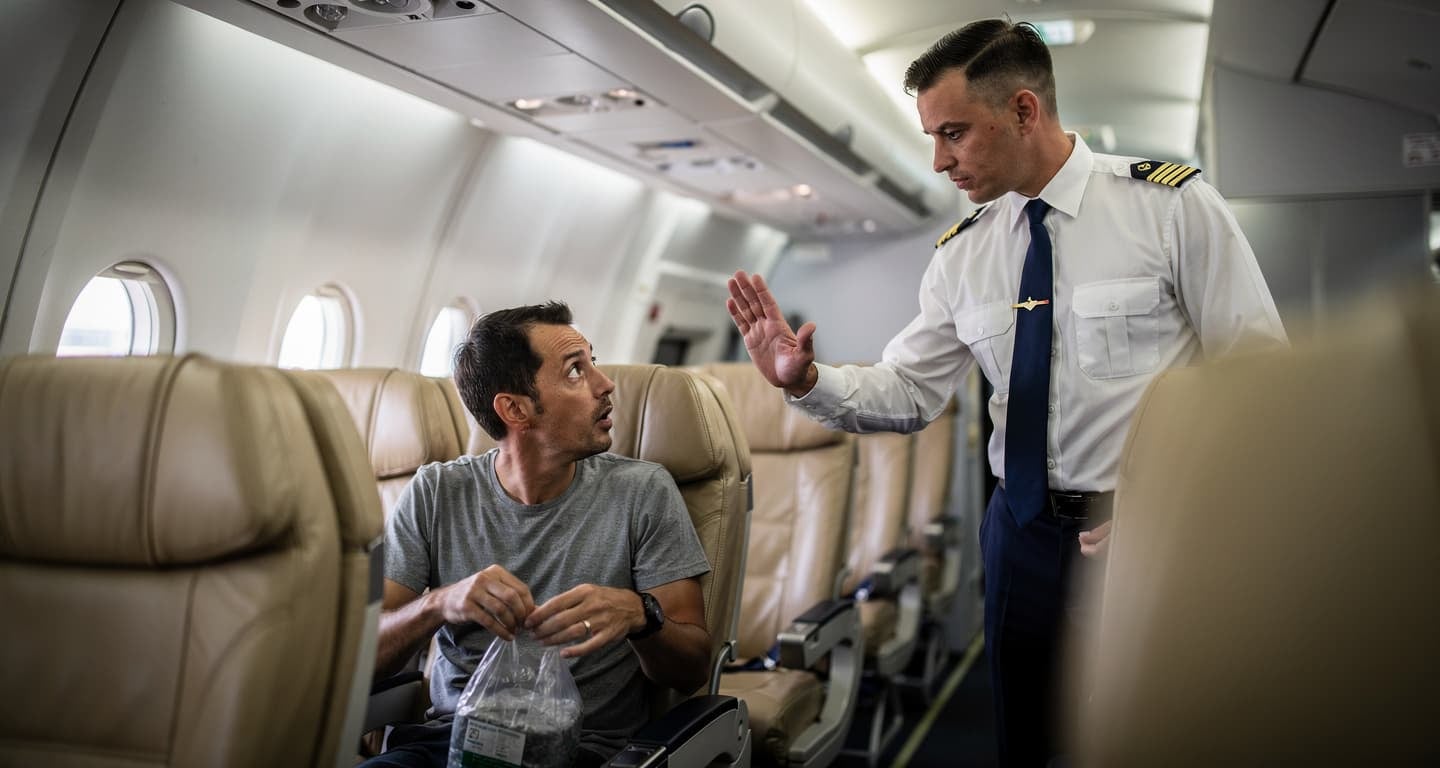
The stakes are not theoretical. A May 8, 2026 evacuation of a Frontier Airlines aircraft at Denver International Airport produced footage of passengers opening overhead bins mid-evacuation while crew repeatedly ordered them to leave everything behind. Twelve passengers were injured; five were hospitalized. NTSB has opened a formal investigation.
The gap between what passengers are told to do in an emergency and what they actually do has become one of commercial aviation’s most documented — and most dangerous — unsolved problems.
IATA’s survey, conducted across four countries and presented publicly in early June 2026, put a number on it: one in ten passengers admitted they might still grab their bag or copy others doing so even after being explicitly told not to. That is not a rounding error. On a fully loaded widebody, that is dozens of people blocking slides, jamming aisles, and puncturing evacuation equipment with hard-sided luggage — while the 90-second clock that aircraft certification assumes is already running.
Aircraft manufacturers certify emergency exits by demonstrating a full passenger load can escape in 90 seconds using only half the available exits. That test assumes passengers follow crew commands immediately and carry nothing. Real-world evacuations, as the Frontier incident at Denver made viscerally clear, do not always look like that.
The FAA issued a Safety Alert for Operators late last year urging U.S. airlines to update briefings, post gate-area warning posters, and use messaging built around collective responsibility — slogans like “Help everyone get out safely — leave your bags.” The agency stopped short of mandatory action. Whether that restraint holds is now an open question, with NTSB investigators actively reviewing the Denver footage and IATA’s campaign adding political pressure from the industry side.
What the survey data and Denver footage actually show
IATA’s findings are stark when read together. Four in ten passengers surveyed did not know they are legally required to leave bags behind. Among those who did know, a meaningful share said they would do it anyway — either because they do not trust airlines to return their belongings or because they calculate the hassle of replacement outweighs the perceived risk. That psychological calculus is precisely what makes this problem resistant to simple awareness campaigns.
The EASA’s official aircraft emergency evacuation guidance is explicit: bags block exits, damage inflatable slides, and injure other passengers. A hard-sided carry-on dragged onto a slide can puncture it entirely, eliminating that exit for everyone behind. NTSB and academic analyses of past evacuations have documented the downstream effect — congestion at exits, passengers bypassing closer doors to follow crowds, and evacuation times that exceed survivable limits before the last person is out.
The Frontier Airlines evacuation at Denver on May 8, 2026 is the most recent and most filmed example. Engine fire and cabin smoke. Crew commanding passengers to leave everything. Passengers opening overhead bins anyway. Twelve injured, five hospitalized. NTSB’s preliminary report is expected within 30 days — and whatever it finds, the footage already exists as evidence that voluntary guidance has limits.
| Finding | Share of passengers | Implication |
|---|---|---|
| Correctly understood they must leave all belongings behind | 61% | Nearly 4 in 10 passengers lack basic evacuation knowledge |
| Unaware they are required to leave bags behind | ~40% | Primary target of IATA’s “Save a Life, Not a Bag” campaign |
| Admitted they might still take bags or copy others even when told not to | 1 in 10 | Behavioral non-compliance persists even among informed passengers |
| Would ignore crew commands if they perceived no immediate personal risk (RAeS research) | up to 75% | Normalcy bias is the dominant driver of non-compliance |
| Would still retrieve luggage even perceiving personal risk (RAeS research) | ~35% | Behavioral change requires more than awareness alone |
Flight deals
most people never see
Our AI monitors 150+ airlines for pricing anomalies that traditional search engines miss. Air Traveler Club members save $650 per trip per person on average: see how it works.
Each deal saves 40–80% vs. regular fares:

Why awareness campaigns alone may not be enough
The aviation system’s approach to evacuation safety rests on a specific assumption: that passengers, when commanded by crew, will act immediately and without luggage. That assumption is baked into the 90-second certification test. It is also, demonstrably, wrong for a significant share of real passengers.
The commercial incentives are aligned — airlines want fast, injury-free evacuations to limit liability, hull loss, and reputational damage, which is why carriers support IATA’s campaign. But the psychological drivers pulling in the other direction are equally real. Passengers who have paid checked-bag fees, packed medications, or carry irreplaceable items make a rapid cost-benefit calculation that does not always land on “leave it.” IATA’s own research found that passengers are more likely to comply if their essentials are already on their person — a finding that points toward behavioral design, not just messaging.
The Royal Aeronautical Society flagged this in 2018, recommending remotely lockable overhead bins. No manufacturer built them. IATA is now revisiting the concept — reluctantly, given the retrofit cost — as a fallback if the current campaign fails to move the numbers. That is a significant signal from an organization that represents the airlines who would pay for it. For a deeper look at how safety standards translate (or don’t) into real-world airline behavior, the analysis of what EU-banned airline designations actually tell you about safety protocols is worth reading alongside this story.
Steps every passenger should take now
Voluntary guidance is the current standard — but the Frontier footage and IATA’s survey data together make clear that “I didn’t know” and “I didn’t think it was serious” are the two most dangerous phrases in a real evacuation.
- Pre-commit before boarding: Decide now, not during an emergency, that you will leave everything behind if crew orders an evacuation. Research consistently shows that passengers who have mentally rehearsed this comply faster and with less hesitation.
- Locate exits on every flight: Identify the two nearest exits when you sit down — including the one behind you. Count the seat rows. In smoke or darkness, you navigate by touch and count, not sight.
- Keep essentials on your person: IATA’s own data shows passengers comply more readily when passport, phone, and medication are already in a pocket or small pouch. This removes the calculation entirely.
- Do not film during an evacuation: Holding a phone while evacuating slows you, blocks others, and can damage slides. The footage is not worth it. The FAA’s current recommendations to airlines explicitly address filming as a compliance failure.
- Report non-compliance after the fact: If you witness passengers grabbing bags or filming during an actual evacuation, file a written report with the airline’s customer relations channel and, for US flights, with the FAA via its public safety hotline. Documented incidents are what move regulators from advisory to mandatory action.
Watch: An FAA or EASA formal safety bulletin specifically addressing carry-on baggage behavior in evacuations is expected within the next 6–12 months. If issued, it signals movement toward enforceable penalties. If regulators stay silent, the industry remains on voluntary campaigns — and the next incident will restart this debate from the beginning.

Questions? Answers.
What is the 90-second evacuation rule and why does it matter?
Aviation regulators require aircraft manufacturers to demonstrate that a fully loaded plane can be evacuated in 90 seconds using only half its exits. This benchmark is based on fire and smoke survivability limits. The test assumes passengers follow crew commands immediately and carry no luggage — conditions that real-world evacuations, including the May 2026 Frontier incident, have repeatedly failed to replicate.
Can passengers face legal penalties for grabbing bags during an evacuation?
Currently, no specific federal statute in the US or EU regulation imposes a direct criminal penalty solely for retrieving luggage during an evacuation. However, passengers who obstruct crew commands can face charges under broader interference statutes. IATA and the FAA are both signaling that this gap may close — expect clearer obligations and possible sanctions within the next 12 months if voluntary campaigns do not change behavior.
What are lockable overhead bins and are they actually coming?
Lockable overhead bins would be remotely secured by crew during taxi, takeoff, and landing, and released only once the aircraft is safely at the gate. The Royal Aeronautical Society recommended them in 2018; no manufacturer has built them. IATA is now revisiting the concept as a fallback if its current awareness campaign fails. The retrofit cost would run into hundreds of millions of dollars across the global fleet, and no manufacturer has committed to development — so treat reports of imminent rollout with skepticism.
What should I actually do if I’m on a plane being evacuated?
Leave everything behind — no exceptions. Stand up immediately when instructed, move to the nearest usable exit (not necessarily the one you boarded through), and follow crew commands without stopping. Do not open overhead bins. Do not film. If the aisle is blocked by passengers retrieving bags, push past them if you safely can and shout at them to move. Once outside and clear of the aircraft, do not re-enter for any reason.