Quick summary
FTC Commissioner Mark Meador publicly signaled opposition to United Airlines merger ambitions on April 29, 2026, citing cramped economy tray tables as evidence of consumer harm. Meador, one of only two sitting FTC commissioners, posted a photo of United’s notched tray table on X, writing that another merger would not fix the problem. The Congressional Monopoly-Busters Caucus has separately warned that a United-American deal would consolidate over one-third of the US market and eliminate competition on hundreds of routes.
American Airlines CEO Robert Isom already rejected merger talks during his company’s April 2026 earnings call, calling the idea anti-competitive. United CEO Scott Kirby’s next target remains unclear — JetBlue and Spirit assets are both in play.
A tray table with a notch cut into it just became a regulatory flashpoint for the US airline industry.
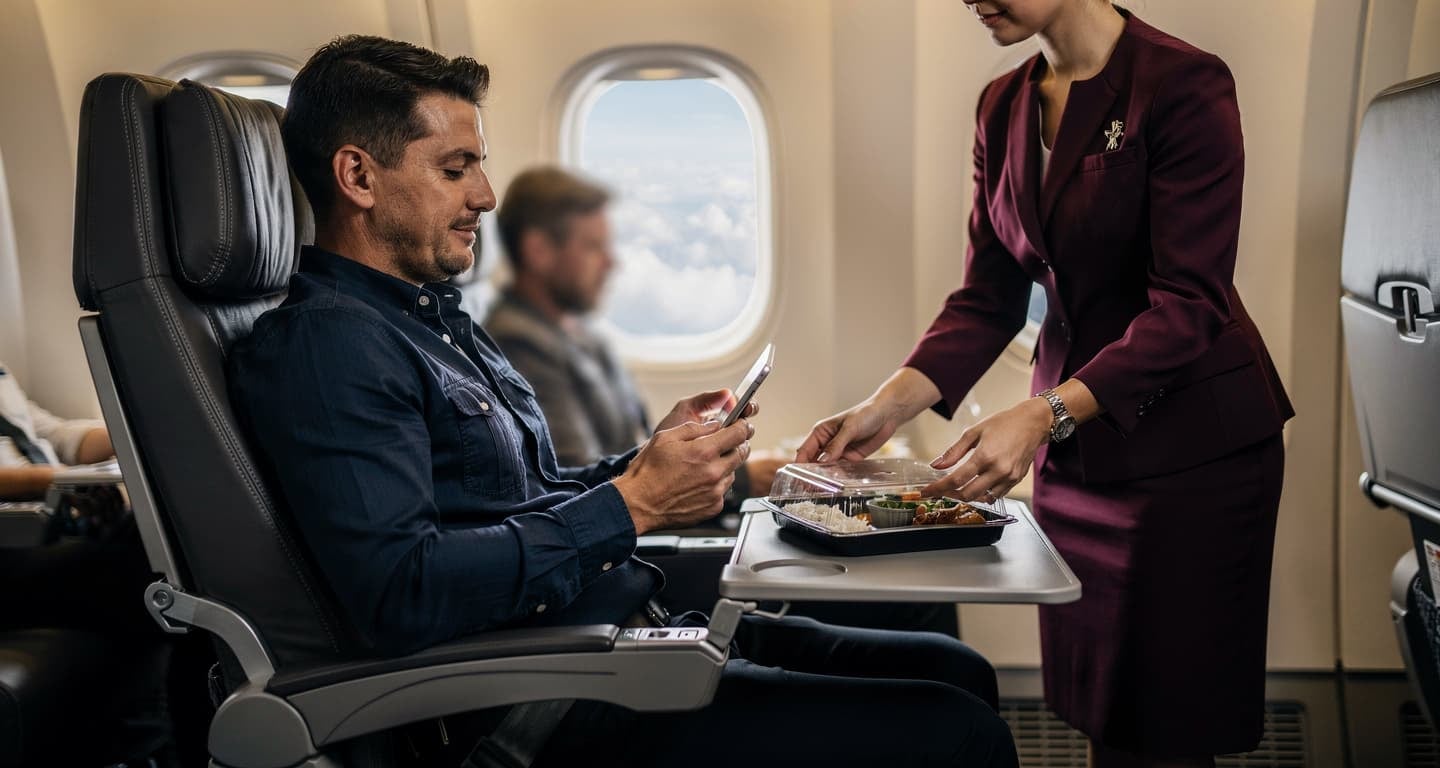
FTC Commissioner Mark Meador posted a photo of a United Airlines economy seat tray on April 29, 2026, pointing out the oval-shaped indent machined into the table so it can fully deploy without pressing into a passenger’s stomach. His caption was blunt: “Hey United, when you have to cut out indentations from your seat back tray to fit around passengers, your rows might be just a tad too cramped. And I don’t think another merger will fix it.” That last sentence is the one United’s legal team noticed.
Meador sits on the FTC board — one of only two commissioners currently confirmed — and the FTC shares jurisdiction with the Department of Justice over airline mergers under the Clayton Act. His public statement is not a formal investigation, but it is a signal from inside the room where these decisions get made.
The timing is pointed. United CEO Scott Kirby floated a merger with American Airlines to the Trump administration in late February 2026. American CEO Robert Isom rejected the idea during his company’s April 2026 earnings call, calling it anti-competitive. Kirby’s attention has since shifted toward JetBlue and potentially Spirit Airlines assets — and now a sitting FTC commissioner has put economy legroom at the center of the consumer-harm argument.
What Meador’s tweet actually means for United’s merger plans
The FTC and DOJ review airline mergers under Clayton Act Section 7, assessing whether a deal would substantially lessen competition or harm consumers. Criteria include market share — anything above 30% flags concern — and route overlap. A United-American combination would consolidate over one-third of the US domestic market, according to warnings issued by the Congressional Monopoly-Busters Caucus in April 2026. That is the kind of number that triggers a second-request data review, which can add months to any timeline.
There is no active merger filing as of late April 2026. United is still in the speculation phase. But Meador’s post establishes a public record: a sitting commissioner has linked United’s current service quality to the consumer-harm standard that governs merger reviews. If United files, that tweet will be cited.
| Deal | Filing year | Outcome | Key condition or result |
|---|---|---|---|
| United–Continental | 2010 | Approved | Slot divestitures at ORD and EWR required |
| JetBlue–Spirit | 2022 | Blocked January 2024 | DOJ challenge; monopoly risk on 67 routes; $3.8B deal collapsed |
| United–American (proposed) | Not filed (speculative, 2026) | Rejected by AA board | AA CEO called deal anti-competitive on April 2026 earnings call |
| United–JetBlue (speculative) | Not filed | Pending | JetBlue debt load flagged as complication; no timeline confirmed |
The American Airlines CEO’s rejection of the United merger proposal removes the most obvious consolidation path. Kirby’s next move — JetBlue, Spirit assets, or something else — will determine which regulatory review process gets triggered. For context on how the DOT is approaching this environment, the DOT’s stated openness to Big 4 mergers and the 5–10% fare risk that comes with them is worth reading alongside this development.
Flight deals
most people never see
Our AI monitors 150+ airlines for pricing anomalies that traditional search engines miss. Air Traveler Club members save $650 per trip per person on average: see how it works.
Each deal saves 40–80% vs. regular fares:

Why a tweet from a regulator carries more weight than it looks
The JetBlue-Spirit case is the clearest recent precedent. That deal was filed in 2022, survived an initial review, and was blocked by a federal judge in January 2024 after a DOJ challenge — a $3.8 billion transaction undone by a monopoly argument centered on 67 overlapping routes. The DOJ did not need a commissioner’s tweet to build that case. But public statements from regulators shape the political environment in which merger filings land, and they signal to corporate boards what arguments they will face.
Post-2008 consolidation reduced the US market from roughly a dozen major carriers to four. Each of those mergers was approved with conditions — slot divestitures, route commitments, labor protections — rather than outright blocks. The pattern suggests United could still get a deal done under a Trump-era DOJ, which historically leans toward approving mergers with conditions rather than blocking them. Meador’s tweet does not change that calculus alone. What it does is raise the cost of the argument United has to make.
How to protect your bookings while this plays out
No merger is filed and no routes are changing today — but the regulatory environment around US aviation is shifting fast enough that travelers with long-haul United bookings or connections through US hubs should stay informed.
- Check your seat assignment now. United’s economy pitch varies significantly by aircraft and route. Review seat maps at united.com before booking, particularly on domestic connections feeding international itineraries — these are the routes where pitch is tightest.
- Monitor FTC merger activity. The FTC’s news and events page at ftc.gov/news-events publishes formal statements and second-request notices. A second request issued to United would be the first hard signal that a deal faces serious scrutiny.
- Watch United’s Q2 earnings in July 2026. Kirby will almost certainly address merger strategy. Any mention of JetBlue or Spirit assets in that call moves speculation into something closer to intent.
- Fare-lock competitive routes now if prices are favorable. Stalled merger talks preserve competition on overlapping routes — that is good for fares in the short term. If a deal eventually closes, fares on consolidated routes historically move higher within 12–18 months.
Watch: An FTC formal statement on airline mergers — expected sometime in Q2 2026 post-earnings season — would be the clearest signal of whether Meador’s tweet reflects institutional FTC policy or a single commissioner’s personal view.
United Airlines at a glance

Questions? Answers.
Can an FTC commissioner’s tweet actually block a merger?
A tweet alone cannot block a merger. What it does is establish a public record of a commissioner’s position before any formal filing. If United submits a merger application, that statement becomes part of the political and legal environment the deal enters. The FTC and DOJ must both sign off on major airline mergers, and a commissioner who has already publicly linked United’s service quality to consumer harm will be a harder vote to win.
Is a United-American Airlines merger still possible after the AA board rejection?
American Airlines CEO Robert Isom rejected the idea during the company’s April 2026 earnings call, calling it anti-competitive. That effectively closes this specific path for now. United CEO Scott Kirby has not publicly withdrawn the concept, but without board engagement from American, no formal process can begin. Attention has shifted to JetBlue and potential Spirit Airlines asset acquisitions as more realistic near-term targets.
What happens to fares if United’s merger plans stall?
Stalled consolidation generally preserves competition on overlapping routes, which supports fare stability or modest downward pressure in the short term. The risk runs the other way if a deal eventually closes — post-merger fare increases on consolidated routes have been documented in prior US airline combinations. The Congressional Monopoly-Busters Caucus specifically warned that a United-American deal would eliminate competition on hundreds of routes, which is the scenario most likely to push economy fares higher.
What is the FTC’s standard for reviewing airline mergers?
The FTC and DOJ review airline mergers under Clayton Act Section 7, assessing whether a deal would substantially lessen competition or harm consumers. Key triggers include market share above 30% and significant route overlap. The review process starts with a 30-day initial period; regulators can issue a second request for additional data, which extends the timeline considerably and signals serious scrutiny. Consumer harm — including service quality, not just fares — is part of the assessment framework.