Quick summary
Fiji’s tropical cyclone season runs through April 30, 2026, with forecasters predicting 4–5 cyclones in the region and 1–2 systems potentially passing near Fiji’s Exclusive Economic Zone. Even distant storms can disrupt flights to Nadi, halt inter-island ferries for 24–48 hours, and trigger heavy rain or high surf across resort areas — as seen with Tropical Cyclone Urmil in late February, which brought strong winds and flooding to the Yasawa and Mamanuca islands.
La Niña conditions are suppressing overall storm intensity but may linger into late season, elevating risk through March and April. Travelers with trips booked in the next 60 days should monitor the Fiji Meteorological Service daily and secure travel insurance covering weather-related delays — a medical evacuation or multi-day hotel extension can cost $500–$1,000 without coverage.
Fiji’s cyclone season doesn’t end quietly.
While the official window closes April 30, 2026, the final two months carry elevated risk as La Niña conditions persist — a climate pattern that typically suppresses cyclone formation but can fuel late-season systems that track closer to populated islands. Forecasters at the Fiji Meteorological Service predict 4–5 named cyclones in their Area of Responsibility this season, with 1–2 systems potentially entering Fiji’s Exclusive Economic Zone. That’s below the long-term average of seven, but even one near-miss can ground flights, strand ferry passengers, and flood coastal roads for days.
Tropical Cyclone Urmil — a Category 2 storm that formed February 25 and dissipated March 1 — demonstrated the risk. It set a record as the latest first named storm of any South Pacific season, yet still delivered strong winds and heavy rain to the Yasawa Islands, Mamanuca group, and southwest Viti Levu. Nadi International Airport saw minor delays but no full closure. Inter-island ferries across Bligh Water halted operations for 48 hours, stranding travelers on outer islands.
The threat extends to all travelers flying into Nadi (NAN) or Suva (SUV) from the United States, Canada, Europe, or Australia/New Zealand. Routes like Los Angeles–Nadi and Sydney–Nadi are particularly exposed — a cyclone passing 300–500 kilometers offshore can still generate swells that close boat ramps, rain bands that delay departures, and wind shear that forces aircraft to divert. Check flight options to Fiji from North America for current schedules and fare trends.
What the forecast actually says
The Fiji Meteorological Service — operating as Regional Specialized Meteorological Centre Nadi — issued its seasonal outlook in October 2025. The headline number: 4–5 tropical cyclones across the broader South Pacific basin, with 1–3 systems reaching severe intensity (Category 3 or higher on the Australian scale). Of those, 1–2 cyclones are expected to pass through or near Fiji’s Exclusive Economic Zone, and one may intensify to severe strength.
New Zealand’s National Institute of Water and Atmospheric Research (NIWA) projects a similar range — 5–9 named cyclones basin-wide, which sits at or slightly below the historical average. Their analysis flags a 25–40% probability that any given storm will reach Category 3 or higher, based on analogue years with comparable La Niña conditions. A Category 5 event remains possible but unlikely.
| Forecaster | Total cyclones | Severe (Cat 3+) | Near Fiji EEZ |
|---|---|---|---|
| Fiji Met Service | 4–5 | 1–3 | 1–2 |
| NIWA | 5–9 | 2–4 | Normal risk |
| ESNZ/MetService | 5–9 | 2–4 | Data pending |
The U.S. Embassy in Fiji confirms the season runs November 1, 2025, through April 30, 2026, and notes that Fiji experiences multiple cyclone strikes annually. The DTN APAC seasonal outlook corroborates the FMS and NIWA projections, emphasizing that La Niña’s influence will likely suppress overall activity but could extend the tail end of the season into late March and April.
Urmil’s late formation — the first named storm didn’t appear until February 25 — underscores that risk. Historical data shows La Niña years often produce fewer but more erratic systems, with a higher proportion forming in the final 60 days of the season.
Flight deals
most people never see
Our AI monitors 150+ airlines for pricing anomalies that traditional search engines miss. Air Traveler Club members save $650 per trip per person on average: see how it works.
Each deal saves 40–80% vs. regular fares:

Why even distant storms disrupt travel
Fiji’s geography makes it vulnerable to cyclones that never cross its coastline.
The country spans 330 islands across 1.3 million square kilometers of ocean. Most resorts sit on outer islands — Yasawa, Mamanuca, Kadavu — accessible only by ferry, seaplane, or small aircraft. When a cyclone enters the region, operators cancel services 12–24 hours in advance based on swell forecasts, not just wind speed. A system tracking 400 kilometers south of Nadi can still generate swells that make boat ramps unusable for 48–72 hours.
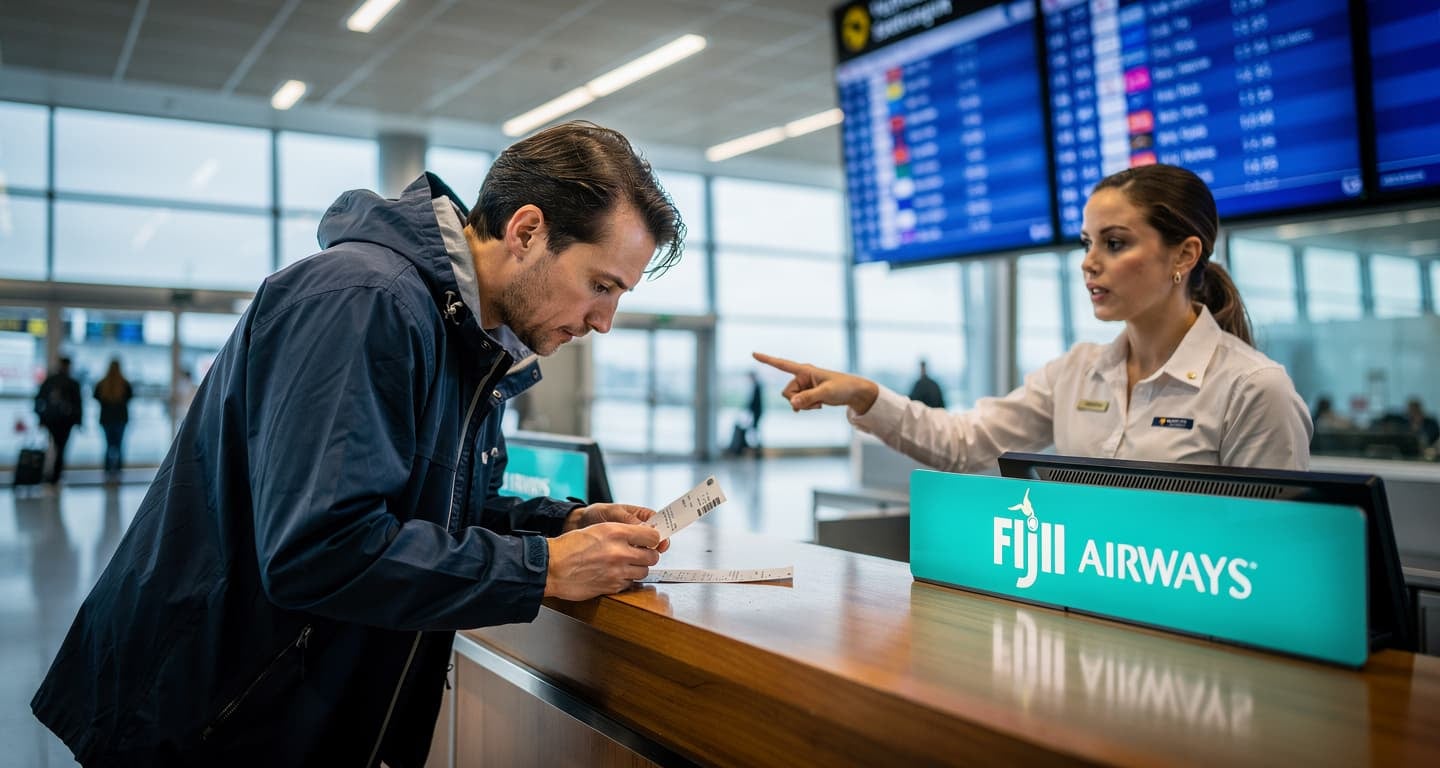
Nadi International Airport rarely closes outright, but wind shear and low visibility force delays. During Urmil, Fiji Airways and Qantas rescheduled 10–15% of flights over a two-day window. Passengers without flexible tickets faced rebooking fees of $300–$600, plus the cost of unplanned hotel nights in Nadi town.
The financial exposure adds up quickly. A single cyclone-related delay can trigger:
Hotel surcharges: Nadi properties raise rates 20–50% during weather events due to demand spikes.
Ferry rebooking: Inter-island operators like South Sea Cruises charge $150–$250 per person for last-minute changes.
Meal costs: Stranded travelers pay out-of-pocket for food if their resort package doesn’t cover extended stays — expect $50–$80 per day.
Travel insurance that explicitly covers weather-related delays mitigates this. Policies from Allianz or Travel Guard typically reimburse up to $500 per day for accommodation and meals, and waive change fees for flights rebooked due to named storms.
What to do before you book
Check the Fiji Meteorological Service daily. The FMS publishes updated outlooks every Monday at met.gov.fj, including 7-day forecasts and cyclone probability maps. Subscribe to email alerts for your travel dates — the service sends notifications when a tropical low forms or a cyclone watch is issued.
Buy insurance that covers weather delays. Standard policies exclude “foreseeable events,” so purchase coverage before a named storm appears in forecasts. Look for plans that reimburse accommodation, meals, and rebooking fees up to $500–$1,000 per day. Verify the policy covers inter-island ferry cancellations, not just flights.
Book flexible airfare. Fiji Airways and Qantas offer Flexi or Flexible Economy fares that allow free changes up to 24 hours before departure. The upcharge is typically $100–$200 per ticket — less than a single rebooking fee during a cyclone event.
Avoid low-lying resorts in late March and April. Properties on Mamanuca and southern Viti Levu are most exposed to storm surge and flooding. If traveling after March 15, prioritize resorts on higher ground or with reinforced structures — many publish cyclone preparedness plans on their websites.
Download the Fiji Met app. Available on iOS and Android, it provides real-time radar, satellite imagery, and push notifications for severe weather. The app works offline once initial data is cached, useful if internet access drops during a storm.
Watch for late-season upticks. NIWA’s outlook flags elevated risk in the final 60 days of the season due to lingering La Niña conditions. If booking travel after March 1, monitor the FMS weekly outlook and consider delaying trips if a tropical low forms in the Coral Sea — systems in that region often intensify rapidly and track toward Fiji within 3–5 days.

Questions? Answers.
Will flights from Los Angeles or Sydney to Nadi cancel often during cyclone season?
Full cancellations are rare — Nadi International Airport has closed only twice in the past decade due to cyclones. However, delays of 6–12 hours are common when systems pass within 300 kilometers, as wind shear and low cloud ceilings force aircraft to hold or divert. During Tropical Cyclone Urmil in late February 2026, Fiji Airways and Qantas rescheduled approximately 10–20% of flights over a two-day period. Travelers on tight connections should build in a buffer day, especially for trips after March 15 when late-season systems become more likely.
Is late April safer than early March for avoiding cyclones?
Not necessarily. While overall cyclone frequency drops in April, the 2025–2026 season’s La Niña tail increases the probability of late-forming systems. NIWA’s outlook notes that analogue years with similar conditions saw 30–40% of severe cyclones form in the final 60 days of the season. Tropical Cyclone Urmil — which appeared February 25 as the latest “first storm” on record — illustrates the risk. April trips face lower volume of storms but similar intensity potential. The safest window is after May 1, when the season officially ends and sea-surface temperatures cool.
How much do cyclone delays actually cost without insurance?
Budget $500–$1,000 for a single 24-hour delay. Nadi hotels raise rates 20–50% during weather events — a room that normally costs $150 can jump to $225. Rebooking a flight without a flexible fare adds $300–$600 in change fees, and meals run $50–$80 per day if your resort package doesn’t cover extended stays. Inter-island ferry cancellations compound costs: stranded travelers on outer islands often hire private boats at $200–$400 to reach Nadi in time for rescheduled flights. Travel insurance covering weather delays typically reimburses these expenses up to policy limits.
Do I need to monitor forecasts if I’m staying at a resort?
Yes. Resorts receive the same Fiji Meteorological Service alerts as the public, but they prioritize guest safety over travel logistics. A property may evacuate you to higher ground or a cyclone shelter 12–24 hours before a storm, but won’t necessarily help rebook flights or arrange transport to Nadi. You’re responsible for monitoring met.gov.fj and contacting your airline if a cyclone watch is issued. Set up email alerts for your resort’s zone (Yasawa, Mamanuca, or Viti Levu) and check the FMS mobile app daily starting two weeks before your trip.
Can I get a refund if I cancel my trip due to a cyclone forecast?
Only if a named cyclone triggers your travel insurance’s “cancel for any reason” (CFAR) rider, which typically costs 40–50% more than standard policies and must be purchased within 14–21 days of your initial trip deposit. Standard insurance does not cover cancellations due to forecasts — only actual disruptions like flight cancellations or resort closures. Airlines and hotels rarely issue refunds for weather that hasn’t yet occurred. If a cyclone watch is issued after you book, Fiji Airways and Qantas may waive change fees, but you’ll still pay fare differences for rebooking.