Quick summary
On May 18, 2026, 25-year-old Abdulrahman Oriyomi allegedly used a fake boarding pass to clear a TSA checkpoint at George Bush Intercontinental Airport (IAH) in Houston, boarded a United Airlines flight to Los Angeles without a valid ticket, and was not discovered until the aircraft was already taxiing — when a fellow passenger alerted crew that someone was hiding in a lavatory. The plane returned to the gate, all passengers were deplaned, and a K9 explosives sweep added roughly three hours to the delay. Oriyomi now faces a Texas felony charge of impairing a critical infrastructure facility.
His attorney told a Houston court on June 8 that Oriyomi was sold a fake ticket and had no idea the boarding pass was not genuine. The criminal case is active, and federal security reviews are underway.
A fake boarding pass — or what prosecutors believe was one — cleared a federal security checkpoint, survived two gate encounters, and got a passenger onto a full United Airlines aircraft before anyone in an official capacity noticed something was wrong. A traveler in the cabin did.
That sequence, which unfolded at IAH on May 18, is now the subject of an active felony case and what appears to be an operational review by both United and federal authorities. Oriyomi was initially cited for trespass and released — then arrested weeks later once investigators had built the case, at which point the story went public.
The attorney’s claim, entered in a Houston court on June 8, adds a new layer: that Oriyomi was himself defrauded, sold a ticket that was never real, and boarded in genuine confusion rather than deliberate evasion. Whether that defense holds will be tested in Harris County court. What is not in dispute is the security sequence that allowed it to happen.
For travelers connecting through IAH or flying United‘s Houston hub, the immediate concern is not the criminal case — it is what the incident reveals about the gap between TSA screening and airline gate control, and what that means for anyone whose boarding pass fails a scan.
How a fake pass moved through three checkpoints at IAH
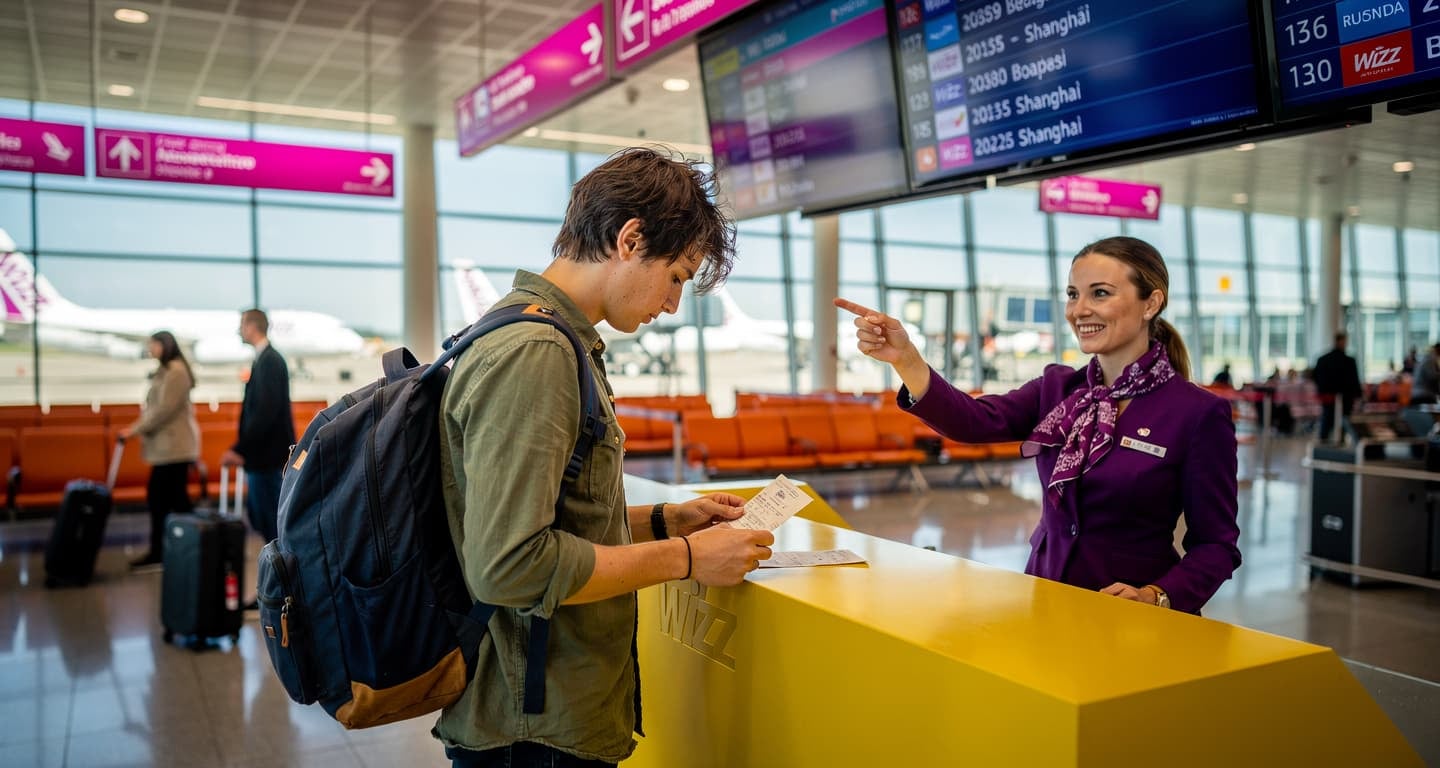
The sequence documented in court records is worth reading carefully, because each stage represents a separate failure point. Oriyomi presented his boarding pass at the TSA checkpoint. It did not work. He was directed to a second podium — and an agent let him through anyway.
Once airside, he went to Gate E16 and scanned the pass twice. It failed both times. After a brief confrontation with a United gate agent, he left and spent roughly an hour on the concourse. He then found Gate D4, where a second United flight to Los Angeles was boarding. He joined the line, apparently showed the pass without scanning it, and walked onto the aircraft.
Gate agents did not catch that the pass had not been scanned.
On board, Oriyomi appeared uncertain where to sit. He used a lavatory, exited, found every seat occupied, and returned to a second lavatory as the aircraft began taxiing. A passenger noticed, alerted a flight attendant, and crew checked the manifest — no “Lopez,” the name Oriyomi gave. The plane turned back. Houston Police, a K9 unit, and the FBI responded. The flight departed approximately three hours late. Full details of the boarding sequence are documented in the Associated Press report on the criminal filing.
Investigators believe Oriyomi’s United reservation had been canceled for nonpayment, making the boarding pass either fraudulent or generated against a dead booking. The attorney’s counter-claim — that a third party sold Oriyomi a fake ticket — does not change the security sequence, but it does change the criminal intent question significantly.
| Stage | What happened | Control that failed |
|---|---|---|
| TSA checkpoint | Pass did not scan; agent directed to second podium and admitted | Identity and boarding-document verification |
| Gate E16 (first attempt) | Pass scanned twice, failed both times; Oriyomi left after altercation | Gate denial did not trigger security alert or airside removal |
| Gate D4 (second attempt) | Pass shown but not scanned; Oriyomi boarded | Scan confirmation not enforced during boarding flow |
| Aircraft cabin (taxiing) | Passenger alerted crew; manifest check revealed no matching name | Boarding reconciliation not completed before pushback |
Flight deals
most people never see
Our AI monitors 150+ airlines for pricing anomalies that traditional search engines miss. Air Traveler Club members save $650 per trip per person on average: see how it works.
Each deal saves 40–80% vs. regular fares:

What the regulatory picture actually looks like right now
TSA controls access to the sterile area — the airside zone beyond the checkpoint. Airlines control boarding at the gate under security programs approved by the federal government. The FAA oversees airline operating authority and security compliance. What the IAH incident exposed is the handoff between those two layers: TSA’s job ends when a traveler enters the sterile area; the airline’s gate control is the next line of verification.
The current status is an active criminal case in Harris County plus what appears to be an operational review — not a formal enforcement action against United or IAH. That distinction matters. Enforcement actions are public and carry deadlines; operational reviews can produce changes quietly, folded into routine procedures with no public announcement. Travelers will not necessarily see a press release if boarding controls are tightened.
The most avoidable mistake in situations like this is trusting a third-party message — a text, an email, a reseller notification — that claims to fix a ticket problem. That channel is exactly where fake-pass scams operate. The correct move is to verify directly in the airline’s own app, confirm the itinerary shows as ticketed (not just reserved), and resolve any discrepancy with the carrier before approaching security.
Steps to protect your trip through IAH right now
Gate holds and secondary checks at IAH are a real possibility while the operational review runs — anyone transiting the airport should build in time and verify documents before arriving.
- Confirm your ticket is ticketed, not just reserved: Open the United app or website and check that your record locator shows a confirmed, paid itinerary. A reservation that was not fully paid can be canceled without a clear notification, leaving you with a pass that will not scan.
- Use only official channels to buy and manage bookings: Purchase on the airline’s official site or app. If you used a third-party reseller, cross-check the record locator in your confirmation email against what appears in your United account directly.
- If your pass fails at TSA or the gate, stop and resolve it with the airline: Step aside, ask a United agent to reissue or verify the ticket on the spot, and do not rejoin the security or boarding line until the airline confirms validity. Do not act on any text or email claiming to fix the problem — call United reservations using the number inside the app.
- Allow extra time at IAH: Until the review concludes, expect the possibility of additional document checks and gate verification steps, particularly on high-volume routes like Houston–Los Angeles.
Watch: The next Harris County court date will signal whether the fake-ticket defense changes the criminal framing — if it does, expect renewed scrutiny of how fraudulent tickets are sold and detected before the checkpoint.

Questions? Answers.
How did a fake boarding pass clear the TSA checkpoint at IAH?
Court records indicate the pass did not scan successfully at the checkpoint, but an agent directed Oriyomi to a second podium and admitted him anyway. TSA has separately stated it believes a valid boarding pass was presented — possibly for a different flight — which remains unresolved. The investigation is ongoing.
What charge does Oriyomi face, and what does his attorney claim?
Oriyomi was charged with impairing or interrupting the operation of a critical infrastructure facility, a Texas felony. His attorney told a Houston court on June 8 that Oriyomi was sold a fake ticket by a third party and had no knowledge the boarding pass was not genuine. He is held on a $15,000 bond with conditions including an ankle monitor.
Will this incident lead to visible security changes at IAH or other United hubs?
That depends on whether TSA and United announce findings from their operational review. If changes are made public, expect new checkpoint or gate-control procedures at IAH and possibly other hubs. If no announcement follows, any adjustments are likely to be folded into routine internal procedures without public disclosure.
What should I do if my boarding pass fails to scan at TSA or the gate?
Step aside immediately and ask a United agent to verify or reissue your ticket on the spot. Do not rely on any text, email, or third-party message claiming to resolve the issue — those channels are where fake-pass scams operate. Confirm your itinerary is fully ticketed in the United app before you leave for the airport.