Quick summary
Emirates has formally announced it is prepared to launch daily Boeing 777-300ER services to both Berlin Brandenburg Airport (BER) and Stuttgart Airport (STR), committing more than €100 million per year in operating costs. The flights are pending approval from Germany’s Federal Ministry of Transport, which controls the traffic rights under the bilateral air service agreement between Germany and the UAE.
A launch target of December 2026 has been reported, and the airline has already secured landing slots at Berlin — though slots do not equal traffic rights. The ministry has not yet issued a decision.
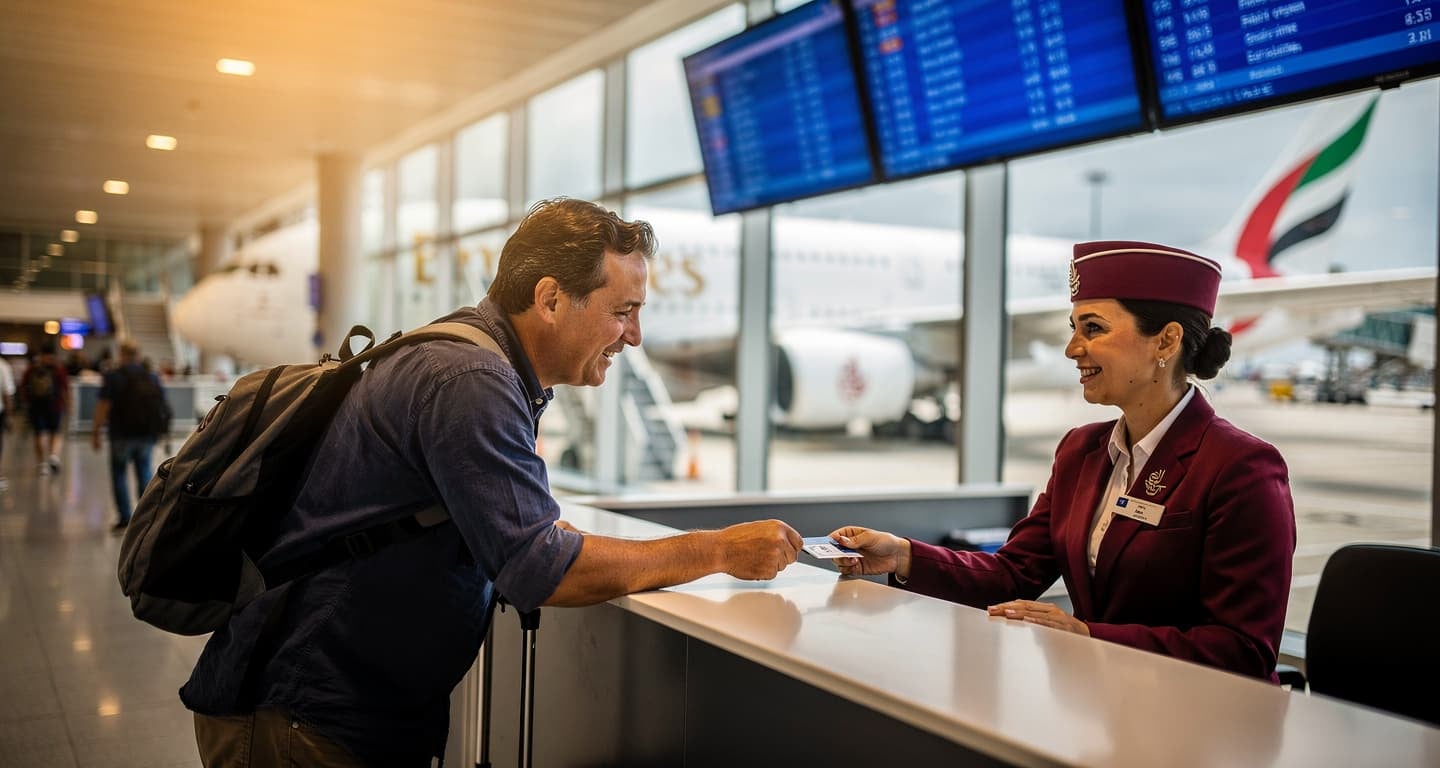
Emirates went public on June 9, 2026 with a direct appeal to German authorities: approve daily widebody flights to Berlin and Stuttgart, or leave two of Germany’s most economically significant cities without a proper long-haul hub connection. The airline says it is operationally ready, financially committed, and already holding slots at BER — but Germany’s Federal Ministry of Transport still holds the key.
The proposed services would use Boeing 777-300ER aircraft on both routes, connecting Berlin Brandenburg and Stuttgart Airport to Dubai International (DXB) and, through it, to 50 onward destinations across Africa, the Middle East, Southeast Asia, and Australasia that no German carrier currently serves from either city. Emirates President Sir Tim Clark said demand is confirmed: a 2023 Berlin Chamber of Commerce survey found 75% of respondents rated the city’s long-haul offering as deficient, with Dubai ranked the top priority.
Right now, both cities have only seasonal, narrowbody connections to Dubai — limited in range, comfort, and cargo capacity. A daily 777 would change that calculus entirely.
The geographic scope is broader than it looks. Of the 2.36 million passengers Emirates carried on Germany routes in 2025, 60% were connecting onward through Dubai rather than traveling point-to-point. The airline’s top Germany markets — Australia, Indonesia, Sri Lanka, and Vietnam — are served by no German airline from Frankfurt or Munich. Berlin and Stuttgart travelers currently have to route through those hubs to access the same connections.
What Emirates is actually proposing — and what’s still missing
The commercial case Emirates has assembled is unusually detailed for a route proposal still awaiting regulatory clearance. Beyond the passenger numbers, the airline says each daily 777-300ER service would deliver more than 280 tons of belly-hold cargo capacity per week — a meaningful figure for Stuttgart, the economic heart of Baden-Württemberg and one of Germany’s most export-intensive states, where pharmaceuticals, machinery, and transport technology components move in volume. The airline cites a 2012 German Aerospace Centre study projecting close to 1,000 direct and indirect jobs from daily services, and says the methodology remains broadly consistent today.
Tourism is part of the pitch too. Germany logged nearly 1.2 million overnight stays from Gulf Cooperation Council visitors in 2024, generating an estimated €2.3 billion for the German economy. The German National Tourist Board projects that figure reaching three million GCC visitors annually by the end of the decade — a segment Emirates argues direct Berlin and Stuttgart services would accelerate.
The airline has already secured landing slots at BER, which signals operational confidence. But as industry analysis confirms, slots and traffic rights are separate hurdles — holding one does not guarantee the other. Germany’s Federal Ministry of Transport must still decide whether the additional frequency and route rights fit within the current bilateral framework.
| Factor | Current situation | Proposed Emirates service | Traveler impact |
|---|---|---|---|
| Dubai connection from BER/STR | Seasonal narrowbody only | Daily Boeing 777-300ER | Year-round widebody access to DXB hub |
| Onward long-haul destinations | Via FRA/MUC hubs | 50 destinations not served by German airlines | Fewer transfers, single-ticket itineraries |
| Weekly belly cargo capacity | Limited (narrowbody) | 280+ tons per week per route | New channel for time-sensitive exports |
| Annual operating investment | N/A | €100 million+ | Signals long-term route commitment |
| Approval status | — | Pending German Ministry of Transport | No tickets on sale until rights granted |
Flight deals
most people never see
Our AI monitors 150+ airlines for pricing anomalies that traditional search engines miss. Air Traveler Club members save $650 per trip per person on average: see how it works.
Each deal saves 40–80% vs. regular fares:

Why Germany’s bilateral framework is the real bottleneck
The mechanism here is straightforward but often misunderstood. Bilateral air service agreements set the traffic rights a foreign airline can use — how many flights, on which routes, with what aircraft. Governments negotiate these frameworks; airlines then file schedules and secure airport slots before selling tickets. Emirates can hold slots at BER, announce a launch target, and commit €100 million in annual costs, but none of that moves a single passenger until Germany’s Federal Ministry of Transport decides whether the additional rights fit the current agreement with the UAE.
That regulatory bottleneck is also why this story is worth watching beyond the headline. Germany is not blocking Emirates on safety or operational grounds — EASA certification is not the issue. The question is purely commercial and political: does Germany want to expand capacity rights for a Gulf carrier in markets where its own airlines have limited presence? The answer shapes fares and connectivity for years.
Worth noting in this context: Lufthansa is simultaneously cutting up to 100 weekly domestic German flights from summer 2026, consolidating regional routes from Frankfurt and Munich. That retreat from secondary German cities makes Emirates’ connectivity argument harder for Berlin and Stuttgart officials to dismiss.
What travelers should do while approval is pending
The route is not bookable yet — and won’t be until Germany grants traffic rights — but the decision timeline is short enough that it should factor into your planning now if Berlin or Stuttgart is your departure point for Asia-Pacific travel.
- Don’t book connecting itineraries through FRA or MUC yet if you have flexibility: If your travel window extends into late 2026 or early 2027, hold off on locking in Frankfurt or Munich connections from Berlin or Stuttgart until the ministry decision is announced. A direct Dubai option could save you a transfer.
- Monitor Emirates’ booking engine and BER/STR timetable pages: If traffic rights are granted, Emirates will file schedules quickly. A newly listed Dubai service on those pages is your signal that tickets are imminent.
- Check slot filings at BER and STR for summer/fall 2026: Schedule filings at both airports would indicate Emirates believes approval is likely and is locking in operational timing — a useful early signal before official confirmation.
- Compare one-stop options now: If you regularly travel to Southeast Asia or Australasia from Berlin or Stuttgart, run a comparison between current Lufthansa routings via FRA/MUC and what an Emirates via-Dubai itinerary would look like on schedule and price. Air Traveler Club’s tracking occasionally flags temporary fare drops on Europe-to-Asia routes that can shift the math significantly.
- If you need certainty, book existing options: Approval is not guaranteed. If your travel is time-sensitive or the dates are fixed, the current hub-routing options are confirmed and on sale.
Watch: Germany’s Federal Ministry of Transport decision is expected within the next few weeks. If approval comes through, watch for summer or fall 2026 schedule filings at BER and STR — those filings would confirm Emirates is moving toward a December 2026 launch rather than pushing the timeline into 2027.

Questions? Answers.
Has Emirates actually launched flights to Berlin or Stuttgart yet?
No. As of June 2026, Emirates has announced its intention and secured landing slots at Berlin Brandenburg Airport, but the routes require approval from Germany’s Federal Ministry of Transport before any service can begin. No tickets are on sale for these routes.
What aircraft would Emirates use on the Berlin and Stuttgart routes?
Emirates has specified Boeing 777-300ER aircraft for both routes. The 777-300ER is a widebody jet with a four-cabin configuration, offering significantly more cargo capacity and passenger amenity than the narrowbody aircraft currently operating seasonal Dubai connections from both cities.
Why does Emirates need German government approval — isn’t it just an airline scheduling decision?
International routes require traffic rights under bilateral air service agreements between countries. Germany and the UAE have such an agreement, and Germany’s Federal Ministry of Transport must decide whether to grant Emirates the additional frequency and route rights for Berlin and Stuttgart. Holding airport slots — which Emirates has done at BER — is a separate operational step that does not substitute for traffic rights approval.
Which destinations would become accessible via a Berlin or Stuttgart to Dubai connection?
Emirates says the Dubai hub would connect Berlin and Stuttgart travelers to 50 destinations across Africa, the Middle East, Southeast Asia, and Australasia not currently served by German airlines. The airline’s top Germany markets in 2025 included Australia, Indonesia, Sri Lanka, and Vietnam.